

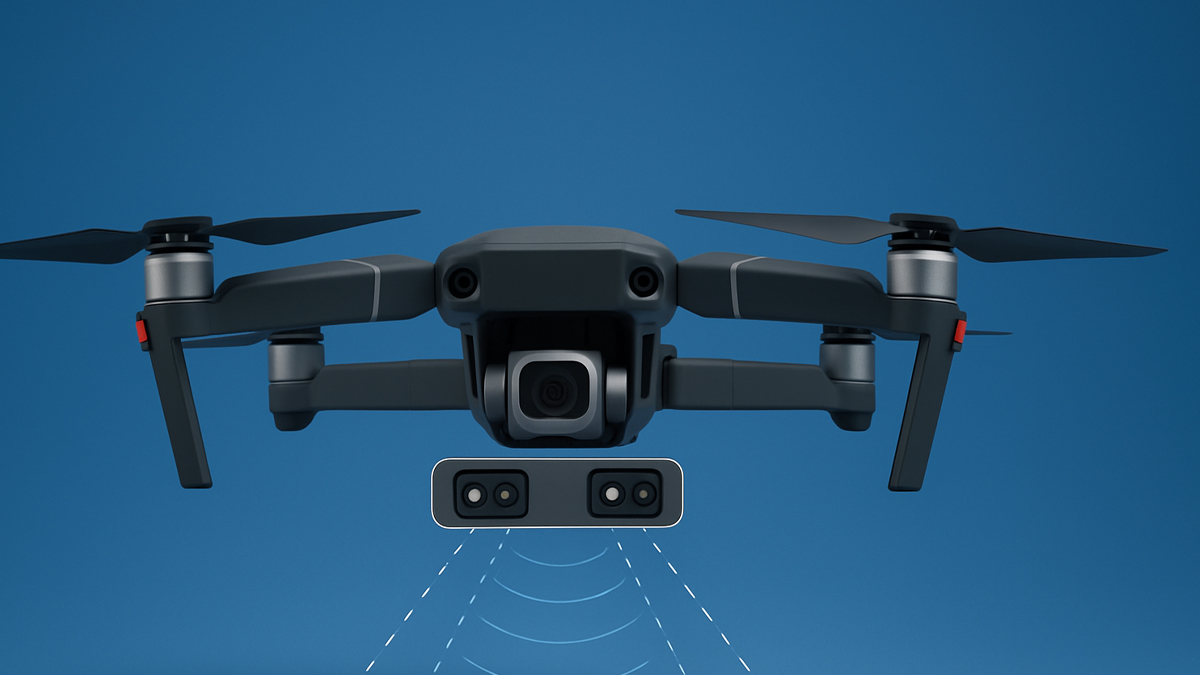
What is Vision Positioning System?
Vision Positioning System is a drone navigation and stability technology that uses onboard cameras and other short-range sensors to understand the environment and hold position accurately, especially when GPS is weak, blocked, or unreliable. In drone cinematography, this system is extremely valuable because it helps the aircraft hover steadily, fly smoothly at low altitude, and maintain precise framing in complex indoor or close quarter locations.
For cinematic work, Vision Positioning System is not just a safety feature. It is also a creative enabler. A stable drone makes camera movement feel intentional and refined. It allows subtle push ins, gentle lateral slides, and locked off aerial angles that can match the language of traditional cinema. When a scene demands slow, controlled flight through a set, a corridor, a warehouse, or a forest canopy, Vision Positioning System can provide the confidence and repeatability that cinematographers need.
How does Vision Positioning System Work?
Vision Positioning System works by capturing real time visual information from downward or omnidirectional cameras and comparing sequential frames to calculate movement relative to the ground or nearby surfaces. This process is often called visual odometry or optical flow. When the drone detects that it has drifted, the flight controller adjusts motor speed to correct position and stabilize hover.
In many modern drones, Vision Positioning System also combines data from additional sensors such as ultrasonic rangefinders, infrared sensors, or time of flight modules. This sensor fusion helps the drone estimate altitude and reduce errors caused by lighting changes or low texture surfaces.
In cinematography, this means the drone can perform stable shots at low heights where GPS alone cannot guarantee accuracy. It can also hold position over marked blocking points, enabling consistent takes. For example, if a director wants a drone to rise slowly from behind a wall into a reveal, Vision Positioning System can help keep that lift clean and centered without micro drifting that would ruin the composition.
What are the Components of Vision Positioning System
A typical Vision Positioning System in a cinematic drone includes the following core components:
Downward facing cameras: These cameras capture the ground pattern and detect motion from frame to frame. The quality of these sensors directly affects stability and responsiveness.
Image processing module: This may be a dedicated chip or part of the main onboard processor. It runs algorithms that interpret the camera feed, estimate movement, and support real time corrections.
Range sensing hardware: Ultrasonic sensors, infrared sensors, or time of flight sensors measure distance to surfaces. This improves altitude holding accuracy, especially during slow indoor moves.
Inertial measurement unit: The IMU includes accelerometers and gyroscopes. It tracks orientation and acceleration, providing essential data for sensor fusion.
Flight controller: This is the decision making core that integrates sensor inputs and outputs motor commands to stabilize and navigate.
Lighting and environmental tuning: Although not a physical component in the strictest sense, firmware tuning and exposure management for low light conditions are crucial for reliable performance.
For cinema drones, these components must be tuned for smoothness rather than aggressive responsiveness. The ideal system reduces abrupt corrections that could create jitters visible in footage.
What are the Types of Vision Positioning System
Vision Positioning System can be categorized in several practical ways based on sensor layout and operational intent:
Downward vision positioning: This is the most common type for consumer and prosumer drones used in filming. It focuses on ground reference for hover and low altitude stabilization.
Multi direction vision positioning: This type uses cameras on multiple sides of the drone to support obstacle awareness and more stable positioning near walls or vertical structures. It is useful for indoor tracking shots along corridors or through architectural set pieces.
Vision plus ultrasonic hybrid systems: These systems combine camera based motion tracking with ultrasonic altitude sensing. They are effective for slow, close to ground cinematic moves.
Vision plus infrared or time of flight systems: This combination improves accuracy on surfaces that may confuse optical flow, and can help in lower light environments or on reflective floors.
Advanced SLAM based systems: Some drones use simultaneous localization and mapping concepts to build a local map in real time. This is more common in specialized industrial or research platforms but is increasingly relevant for high end cinematic drones that must fly in GPS denied environments.
Each type supports a different level of precision and resilience. For filmmaking, the best choice depends on whether the primary environment is indoor, outdoor, low light, or densely structured.
What are the Applications of Vision Positioning System
Vision Positioning System has applications across many drone use cases, but in the context of cinematic technologies, the most relevant ones include:
Indoor drone filming: Studios, sound stages, and indoor sets often block GPS. Vision Positioning System enables stable flight for controlled camera moves.
Low altitude storytelling: Many powerful cinematic shots happen close to the ground, such as tracking a character running, gliding just above water, or moving through tall grass. Vision Positioning System supports these delicate maneuvers.
Precise hover shots: Aerial establishing shots are not always high altitude. Sometimes a director wants a low aerial locked frame that feels like a floating crane. Vision Positioning System helps maintain that stillness.
Complex reveal movements: Rising reveals, lateral parallax reveals, and obstacle based transitions often require stable proximity flight.
Rehearsed multi take action: Choreographed scenes may need repeated flight paths. A strong Vision Positioning System improves repeatability, which helps continuity.
Small crew productions: Independent filmmakers may rely on compact drones rather than large rigs. Vision Positioning System improves safety and reduces the skill barrier for clean shots.
What is the Role of Vision Positioning System in Cinema Industry
In the cinema industry, Vision Positioning System plays a quiet but vital role behind the scenes of modern aerial storytelling. It supports the shift from drones as novelty tools to drones as standard cinematic instruments.
The role can be summarized through creative, operational, and safety lenses:
Creative role: Vision Positioning System expands the vocabulary of drone cinematography beyond wide outdoor vistas. It allows indoor floating shots, close character follow sequences, and controlled movements that resemble dolly or steadicam motion. This lets directors integrate drone shots seamlessly into narrative scenes rather than treating them as separate spectacle shots.
Operational role: On set, time is precious. A drone that can hold position without constant manual correction reduces retakes and speeds up blocking. It supports smaller crews by reducing the need for extensive external tracking infrastructure.
Safety role: Cinema environments often involve lights, cables, props, and moving performers. Vision Positioning System helps the drone maintain predictable behavior at low altitude, reducing risk to people and equipment.
As virtual production and mixed reality sets grow, Vision Positioning System also complements other localization methods by providing local stability during tight on stage maneuvers.
What are the Objectives of Vision Positioning System
The primary objectives of Vision Positioning System in drone cinematography include:
Enhance positional stability: The system aims to minimize drift and keep the drone steady during hover and slow motion shots.
Support GPS independent flight: It provides reliable navigation cues when satellite signals are weak or absent.
Improve low altitude control: Many cinematic shots occur within a few meters of the ground. Vision Positioning System improves safety and accuracy in this range.
Enable smoother footage: Stable flight translates directly into cleaner, more professional visuals.
Reduce pilot workload: By assisting with micro corrections, it allows the pilot to focus on composition and timing.
Increase shot repeatability: It helps maintain consistent movement across multiple takes.
These objectives align well with the broader goal of cinematic technologies to deliver better storytelling tools while maintaining production efficiency.
What are the Benefits of Vision Positioning System
Vision Positioning System offers clear benefits for filmmakers at different scales:
Higher quality stabilization for cinematic framing: Subtle camera moves benefit from a stable platform. The system reduces the small oscillations that can break immersion.
Better indoor reliability: Filmmakers can capture shots in warehouses, sets, museums, or event spaces without relying on complex external positioning systems.
Safer proximity flight: The drone is less likely to drift into actors, props, or set walls during slow shots.
Greater creative freedom: Directors can plan shots that travel through doorways, under beams, or around set pieces with more confidence.
Reduced dependency on high end rigs: While large cinema drones and advanced tracking systems remain important, Vision Positioning System helps smaller drones deliver respectable results.
Improved learning curve: New drone pilots can achieve steadier shots sooner, which supports independent and documentary filmmaking.
In short, Vision Positioning System improves both artistry and practicality in modern drone cinematography.
What are the Features of Vision Positioning System
Common and valuable features include:
Optical flow based horizontal hold: This keeps the drone stable over textured ground.
Automatic altitude hold near surfaces: Range sensors assist the drone in maintaining consistent height during slow tracking moves.
Sensor fusion logic: The system blends camera, IMU, and range data for reliable performance.
Drift correction smoothing: High quality systems tune corrections to avoid jerky movement that would appear in footage.
Low speed precision mode compatibility: Many cinematic drones offer slow or cine modes, and Vision Positioning System plays a major role in making these modes effective.
Environmental adaptability: Good systems adjust to moderate lighting variation and surface pattern changes.
Integration with obstacle sensing: Although distinct from positioning, modern architectures often coordinate these functions for safer close shots.
These features collectively improve both the stability and usability of drones as cinematic tools.
What are the Examples of Vision Positioning System
Vision Positioning System is widely implemented across consumer, prosumer, and professional drones used in filmmaking. Examples include:
DJI consumer and prosumer drones: Many DJI models used for cinematic work include downward vision sensors and range modules that provide stable hovering and smooth close to ground flying.
Autel Robotics drones: Several drones from this brand integrate vision sensors for indoor stability and low altitude accuracy.
Skydio drones: Skydio platforms are known for advanced vision-based autonomy and obstacle awareness, supporting complex tracking scenarios.
Specialty indoor cine drones: Compact drones designed for indoor filming often rely heavily on vision-based stabilization because GPS use is limited.
Custom cinema drone builds: High end productions sometimes use custom platforms that integrate downward cameras and SLAM style localization for precise set navigation.
These examples show that Vision Positioning System is not limited to one category of drone. It is a foundational capability that has become standard across many aerial filming solutions.
What is the Definition of Vision Positioning System
Vision Positioning System can be defined as a drone positioning and stabilization technology that uses visual sensor data, often combined with short range distance sensors and inertial data, to estimate movement and maintain accurate hover or controlled flight in environments where GPS is insufficient.
This definition highlights the system as both a navigation aid and a stability enhancer, which is exactly how it functions in cinematic drone operations.
What is the Meaning of Vision Positioning System
The meaning of Vision Positioning System in practical filmmaking terms is simple. It is the drone ability to see the environment and use that visual understanding to stay steady, accurate, and predictable.
For cinematographers, the meaning is less about technical theory and more about results. It means cleaner takes, smoother slow moves, and fewer surprises during indoor or proximity flying. It also means that the drone becomes closer to a traditional camera support tool, like a crane or a dolly, rather than a purely aerial gadget.
What is the Future of Vision Positioning System
The future of Vision Positioning System in the cinema industry is likely to develop along four main directions:
Better low light performance: As sensor technology improves and image processing becomes more efficient, Vision Positioning System will work more reliably in dim sets, night shoots, and moody interior scenes.
More intelligent mapping and localization: SLAM based approaches may become increasingly common even in smaller drones. This will allow more accurate indoor route planning and safer autonomous assistance for complex shots.
Tighter integration with cinematic control tools: Future systems may connect more deeply with virtual camera planning, previsualization workflows, and even automated repeatable takes. This could help match drone moves precisely with VFX needs or multi camera continuity.
Higher precision for micro cinema drones: As lightweight drones become more capable, Vision Positioning System will likely be a key factor in achieving stable close to subject motion without heavy gimbals or large airframes.
Improved surface and environment robustness: Future algorithms will better handle reflective floors, water surfaces, repetitive patterns, and texture poor environments.
Overall, the technology will continue shifting drones into more reliable and mainstream cinematic tools. The boundary between indoor camera movement systems and aerial platforms will keep shrinking.
Summary
- Vision Positioning System is a visual sensor-based drone technology that improves stability and positioning when GPS is weak or unavailable.
- It is especially important in drone cinematography for smooth, low altitude, and indoor camera movements.
- The system works by analyzing camera frames to estimate motion and by combining this data with range sensors and inertial measurements.
- Core components include downward cameras, processing modules, range sensors, IMU, and a flight controller tuned for stable corrections.
- Types range from basic downward systems to multi direction and advanced SLAM influenced solutions.
- Key applications include indoor filming, precise hover shots, low altitude tracking, and complex reveals.
- In the cinema industry, it supports creative flexibility, production efficiency, and safer proximity flight.
- Benefits include improved footage quality, reduced pilot workload, better repeatability, and expanded storytelling options.
- Features such as optical flow hold, altitude assistance, and sensor fusion make cine modes more effective and reliable.
- The future will likely bring stronger low light capability, smarter mapping, and deeper integration with cinematic planning tools.

