

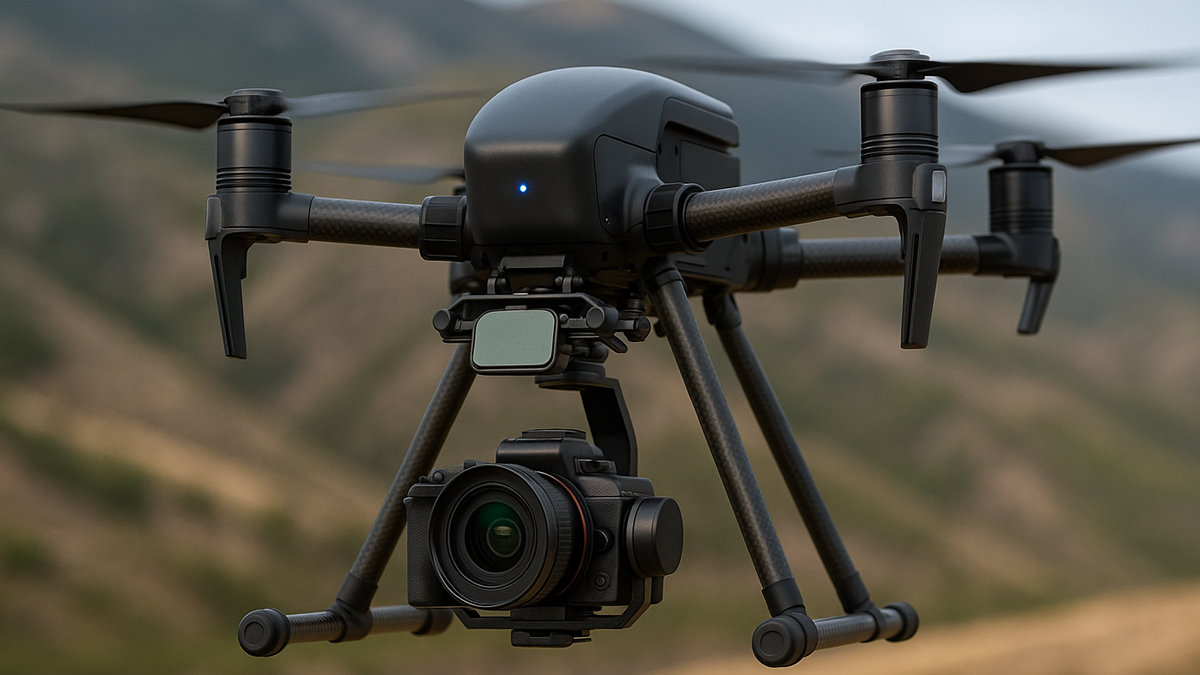
What is Terrain Following Radar?
Terrain Following Radar is a radar based guidance and sensing technology designed to help an aircraft or unmanned aerial system maintain a safe, low altitude flight path that closely follows the contours of the ground. The core idea is simple. The system measures the distance to terrain ahead of the vehicle and supports automatic or assisted altitude adjustments to avoid collisions while keeping the craft as low and stable as required for the mission.
In traditional aviation, Terrain Following Radar is strongly associated with military aircraft that fly fast and low to reduce detection and to navigate valleys, hills, and uneven landscapes. In the broader context of modern unmanned systems, the same concept can be applied to drones that require precise altitude control over complex terrain. For drone cinematography, the idea of terrain following is valuable even if the specific hardware is not always a classic high power radar. Many cinematic drones use a combination of sensors that deliver a similar result. The goal is consistent height and smooth motion over changing ground elevations.
When you think about cinematic storytelling, low and sweeping shots over dunes, forests, cliffs, or urban terrain can create a sense of scale and emotion. Terrain following capability helps such shots look controlled and safe. It reduces sudden altitude changes that can ruin a take and it supports repeatable camera paths that are essential for professional production.
How does Terrain Following Radar Work?
Terrain Following Radar works by sending radio waves toward the ground ahead of the moving platform and analyzing the returned signals. The system calculates the distance to terrain and builds a real time understanding of the terrain profile in the direction of travel. Based on this profile, the system can generate guidance commands.
A typical operational flow looks like this:
First, the radar scans forward and downward to detect the slope, elevation changes, and obstacles. Second, onboard processing interprets these returns and estimates how the terrain will rise or fall relative to the current flight path. Third, an autopilot or flight control system uses this information to adjust pitch, thrust, and altitude to maintain a target clearance above ground.
In manned aircraft, this process can be fully automatic or can provide cues to the pilot. In drones, especially advanced platforms, the terrain following function is often integrated into autonomous flight modes. The system tries to maintain a constant height above ground level rather than a constant altitude above sea level. This distinction matters greatly for cinematography. A drone that locks to a set height above the ground can create silky, consistent motion over changing landscape. The camera framing remains stable and the measured distance to the subject is easier to manage.
In cinematic drone systems, terrain following behavior can be achieved with radar, LiDAR, optical flow, stereo vision, ultrasonic sensors, and GPS aided terrain models. Radar has advantages in certain conditions such as haze, dust, or low light, where optical systems can struggle. The best results often come from sensor fusion, where multiple inputs are combined to produce a reliable estimate of terrain and obstacles.
What are the Components of Terrain Following Radar
A Terrain Following Radar system includes several key components working together as a single safety and navigation layer.
Radar antenna and transceiver
The antenna emits radio frequency signals and receives reflections. The transceiver manages the transmission and reception cycles. The antenna design often prioritizes forward looking coverage so that the system can detect rising terrain before the vehicle reaches it.
Signal processing unit
This unit filters noise, interprets returns, and estimates terrain distance and shape. It extracts meaningful data from complex reflections caused by vegetation, rocks, buildings, and varying soil composition.
Terrain profile computation
Algorithms convert raw radar returns into a terrain map or a near term profile. This profile predicts how the ground will change along the current flight path.
Flight control interface
The system must connect to the autopilot or flight controller. This interface transmits recommended pitch or altitude commands or directly drives automatic adjustments if the platform is configured for autonomous terrain following.
Safety logic and thresholds
This includes minimum clearance limits, fail safe behaviors, and warning modes. If sensor confidence drops, the system can command a climb or transition to a safer navigation mode.
Sensor fusion support
Modern implementations often integrate radar with additional sensors. For drones, this might include barometers, inertial measurement units, GNSS receivers, and vision based obstacle detection.
Power and thermal management
Radar modules can draw meaningful power and generate heat. Reliable performance requires stable electrical supply and adequate cooling.
What are the Types of Terrain Following Radar
Terrain Following Radar can be grouped into types based on platform use, control philosophy, and sensing approach.
Manned aircraft Terrain Following Radar
These systems are historically designed for high speed jets. They often provide aggressive low altitude guidance at high velocities. The emphasis is on long detection range and rapid control response.
Unmanned system Terrain Following Radar
These versions are adapted to smaller platforms. They aim for lighter weight, lower power consumption, and tight integration with autopilot software. The flight speeds are lower than those of fighter aircraft, which allows more flexible algorithms and sensor fusion.
Forward looking terrain avoidance radar
Some systems function more as terrain avoidance rather than strict terrain following. They detect hazards and trigger warnings or climbs, but they do not necessarily maintain constant clearance for cinematic smoothness.
Multi mode radar systems
In advanced platforms, terrain following functions may be part of a radar suite that includes ground mapping, obstacle detection, and weather awareness. This is more common in larger aerospace platforms.
Hybrid terrain following systems
For many drones, the practical implementation is hybrid. Radar is either absent or used in limited range, while vision and range finding sensors handle detailed altitude control near the ground.
In the cinema context, the type that matters most is the unmanned or hybrid approach. It balances safety, smoothness, and portability. The concept is the same even when the sensor is not a classic large radar. The system measures terrain and maintains a stable clearance to give filmmakers predictable camera movement.
What are the Applications of Terrain Following Radar
Terrain Following Radar and terrain following concepts have applications that extend beyond military aviation.
Defense and tactical aviation
This is the most established domain. High speed low altitude ingress benefits from precise terrain following capabilities.
Search and rescue
For unmanned platforms operating in mountains or valleys, terrain awareness improves safety and mission success.
Mapping and surveying
Maintaining a consistent height above ground can improve data uniformity for certain sensors, though LiDAR and photogrammetry platforms often rely on specialized range and navigation systems.
Infrastructure inspection
In hilly or complex environments, stable clearance can enable smoother inspection routes.
Disaster response
After landslides, floods, or earthquakes, terrain may change rapidly. Real time terrain sensing can reduce the risk of collisions in low visibility or uncertain environments.
Drone cinematography
This application is growing in relevance. Films, documentaries, sports coverage, and travel content often rely on low altitude tracking shots over natural landscapes. Terrain following behavior makes these visuals safer and more repeatable. It supports dynamic sequences such as following a vehicle along a winding mountain road, flying parallel to a ridge line, or sweeping over dunes with minimal altitude oscillation.
What is the Role of Terrain Following Radar in Cinema Industry
In the cinema industry, technology is valuable when it helps stories look better while reducing risk and increasing efficiency. Terrain Following Radar, or terrain following systems inspired by the same principle, serve this role in several ways.
First, it enables dramatic low altitude shots that feel immersive. Audiences perceive speed and scale more intensely when the camera flies close to the surface. A stable terrain following system helps achieve this style without constant manual corrections.
Second, it improves safety. Drone production teams work with strict risk assessments. A drone that maintains a safe clearance above uneven ground reduces the chance of failure due to sudden hills, hidden rocks, or abrupt elevation changes.
Third, it supports repeatable takes. Modern filmmaking often requires the same flight path across multiple takes for visual effects, continuity, or different lighting conditions. Terrain awareness helps the drone reproduce a consistent height relative to the ground, which improves compositing and matching shots.
Fourth, it expands the creative range of smaller crews. Independent filmmakers may not have large safety teams or specialized pilots. Reliable terrain following features can help them capture complex shots with fewer resources, as long as they still follow local regulations and safety best practices.
In short, terrain following technology is a quiet enabler. It allows the director and cinematographer to focus on the story and composition rather than constant altitude management.
What are the Objectives of Terrain Following Radar
The objectives of Terrain Following Radar can be summarized as practical outcomes that guide design and use.
Maintain safe clearance
The primary objective is to keep the platform a safe distance above the terrain during low altitude flight.
Predict terrain changes
Rather than reacting at the last moment, the system aims to anticipate rising ground and adjust early.
Support stable flight profiles
For drones, smooth altitude behavior helps both safety and image quality.
Reduce pilot workload
By automating or assisting altitude control, the system allows the operator to focus on navigation, framing, and mission tasks.
Enable operations in challenging conditions
Radar based systems can function in scenarios with dust, smoke, haze, or low light where optical sensors may degrade.
Improve mission efficiency
Whether the mission is tactical, scientific, or cinematic, consistent terrain following reduces time wasted on corrections and retakes.
What are the Benefits of Terrain Following Radar
Terrain Following Radar offers several benefits that are valuable to drone operations and especially to cinematic workflows.
Enhanced safety in complex landscapes
Flying near mountains, forests, canyons, or rugged desert becomes more manageable.
Better shot stability
Consistent clearance produces smoother motion and more reliable framing for dynamic shots.
Greater creative confidence
Cinematographers can plan low altitude sequences with less uncertainty about sudden ground changes.
Redundancy and robustness
When combined with other sensors, radar adds a layer of reliability in conditions that challenge cameras or laser based range finding.
Reduced training burden
While professional piloting skills remain essential, terrain following assistance can shorten the learning curve for certain advanced shots.
Higher production efficiency
Fewer aborted takes and fewer emergency corrections can save time on set.
What are the Features of Terrain Following Radar
Key features vary by implementation, but the most relevant features for modern drone and cinema oriented systems include:
Real time forward terrain sensing
The system measures terrain ahead of the drone, not just directly below.
Adjustable clearance settings
Operators can set a desired height above ground based on the shot style and safety constraints.
Integration with autopilot modes
Terrain following can be embedded into autonomous route planning and waypoint missions.
Sensor fusion capability
Combining radar data with vision, barometric altitude, inertial data, and GNSS improves reliability.
Obstacle and terrain differentiation
Advanced processing can separate broad terrain rise from discrete obstacles like trees or towers.
Fail safe climb behavior
If the system detects uncertainty or rapid terrain rise, it can command an automatic climb.
Low latency control loop
Fast data processing and quick control response are essential, even for slower cinematic drone speeds.
Compact and power efficient form factors
For drone use, weight and battery impact are critical design targets.
What are the Examples of Terrain Following Radar
Examples can be viewed in two layers, traditional aerospace use and conceptual drone cinema parallels.
Traditional aerospace examples
Military aircraft have used Terrain Following Radar for decades to support low altitude penetration and safe navigation over variable terrain. These systems are typically high power, long range, and tightly integrated with flight control computers.
Unmanned systems examples
Larger unmanned aerial vehicles used for defense or surveillance may include terrain following or terrain avoidance radar to enhance autonomous low altitude operations.
Cinema oriented conceptual examples
In the cinematic drone world, terrain following is more often implemented through multi sensor systems rather than pure radar. A drone might use downward range sensors and forward obstacle detection to maintain smooth clearance over a hillside. Some production drones also rely on pre mapped elevation data combined with real time sensors. Even if the hardware is not a classic Terrain Following Radar module, the functional outcome is similar. The drone maintains a more stable height above the ground while tracking a planned camera path.
These examples show that the idea of terrain following is migrating from specialized military platforms to civilian and creative applications through lighter, safer, and more affordable sensor systems.
What is the Definition of Terrain Following Radar
Terrain Following Radar is a radar based system that measures terrain ahead of an aircraft or drone and supports automatic or assisted flight control to maintain a chosen clearance above ground during low altitude operations.
This definition highlights three essential elements. It is radar based, it measures terrain in the forward path, and it contributes to guidance or control for safe and consistent low level flight.
What is the Meaning of Terrain Following Radar
The meaning of Terrain Following Radar goes beyond the hardware and points to a flight philosophy. It means using active sensing to understand the ground in real time and to adjust flight in a way that keeps the vehicle aligned with the shape of the earth.
For drone cinematography, this meaning translates into a creative advantage. It allows the camera to move as if it is floating just above the landscape, guided by invisible rails that match the terrain. This produces shots with a natural flow and a powerful sense of immersion.
It also reflects the broader shift in cinematic technologies. Modern cinema increasingly blends autonomous systems with artistic intent. Terrain following is a perfect example of this blend. Engineering enables creative freedom by reducing risk and increasing precision.
What is the Future of Terrain Following Radar
The future of Terrain Following Radar for drones and cinema lies in miniaturization, smarter software, and deeper sensor fusion.
Smaller radar modules
As electronics improve, compact radar units can become more practical for advanced civilian drones. This can open new possibilities for reliable terrain sensing in dust, fog, or low light.
AI enhanced interpretation
Machine learning can improve the classification of terrain versus obstacles and can help predict safe flight envelopes based on real time context. This can reduce false alarms and improve smoothness.
Better integration with cinematic planning tools
Future drone software may allow directors and drone pilots to design terrain aware camera paths in pre production. The system could simulate clearance, speed, and safety margins using digital terrain models and then refine with real time sensing on location.
Multi sensor redundancy as a standard
The most realistic future trend is the widespread use of layered sensing. Radar, LiDAR, vision, GNSS, and inertial systems will work together so that no single sensor failure compromises safety.
Expanded autonomous creative modes
We can expect more intelligent flight modes designed specifically for filmmakers. These modes might include low altitude tracking, ridge line parallel flight, and valley glide sequences that automatically manage altitude to maintain composition and safety.
Regulatory and safety influence
As drone flights near terrain become more common in professional productions, safety standards will likely encourage more advanced terrain awareness features. This can lead to a higher baseline of technology in certified cinematic drone systems.
The future is not only about adding radar to every drone. It is about achieving the terrain following outcome in the most reliable and production friendly way possible.
Summary
- Terrain Following Radar is a radar based system that helps an aircraft or drone maintain safe, low altitude flight by measuring terrain ahead.
- The core function is real time terrain sensing combined with guidance or automatic control to preserve a chosen clearance above ground.
- Traditional use is strongest in military aviation, but the concept is increasingly relevant to unmanned systems.
- In drone cinematography, terrain following behavior supports smoother, safer, and more repeatable low altitude shots.
- Key components include the antenna and transceiver, signal processing, terrain profiling algorithms, and integration with flight control systems.
- Types range from manned aircraft focused systems to unmanned and hybrid implementations that prioritize low weight and sensor fusion.
- Benefits include improved safety, reduced operator workload, and higher quality cinematic motion over uneven landscapes.
- Features that matter for filmmaking include adjustable clearance, low latency control, and robust multi sensor integration.
- The future points toward compact radar options, AI enhanced terrain understanding, and dedicated cinematic flight modes built around terrain awareness.

