
What is Geofence Breach Alert?
Geofence Breach Alert is a safety and control function used in drone operations that notifies the pilot or automatically triggers a protective response when a drone crosses a predefined virtual boundary. These boundaries are called geofences. A geofence is an invisible perimeter created using GPS coordinates, map data, or a combination of positioning technologies. When a drone nears or crosses this perimeter, the system detects the violation and generates an alert. In many modern drones, the alert is not only a warning but also a prompt for automated actions such as slowing down, hovering, returning to home, or blocking further movement in the restricted direction.
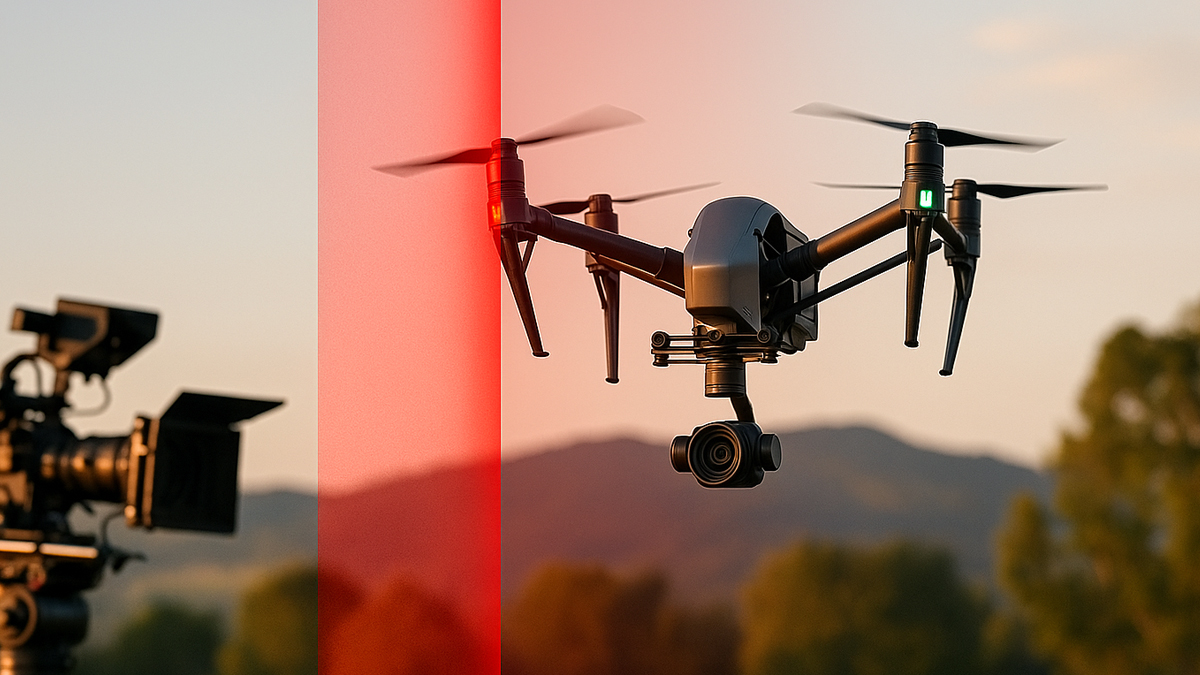
In drone cinematography, geofence breach alerts have special importance. Film sets often require precise flight control in complex environments that could include crowds, outdoor landmarks, private properties, and sensitive infrastructure. Drones used for cinematic shots may fly near safety buffers established by production teams, local authorities, or aviation regulators. A geofence breach alert protects people, equipment, and the production schedule by preventing accidental entry into high risk zones. It also helps cinematographers focus on creative framing and movement while relying on embedded safety logic to reduce operational mistakes.
Geofence breach alerts can be configured for temporary filming zones such as a stadium shoot or a city street sequence, or for permanent restricted areas such as airports and government facilities. The function acts as a digital safety net that supports responsible filmmaking, protects brand reputation, and keeps drone cinematography aligned with legal and ethical flight practices.
How does Geofence Breach Alert Work?
Geofence breach alert works through continuous location tracking and real time comparison between the drone’s current position and the coordinates defining the geofence boundary. The process begins when a pilot or an authorized operator sets a geofence inside a flight control app or a drone management platform. The boundaries can be shaped as circles, polygons, altitude boxes, or layered zones that include both horizontal and vertical limits. Once activated, the drone’s onboard flight controller constantly reads positioning data primarily from GNSS systems such as GPS, along with support from IMU sensors, compass inputs, barometers, and sometimes vision based positioning.
The system calculates the drone’s distance and trajectory relative to the geofence boundary. When the drone approaches a warning threshold, the pilot may receive a caution alert such as a visual indicator on the screen, an audible tone, or haptic feedback on the controller. If the drone crosses the boundary, the breach alert is triggered. Depending on the drone model and the configured settings, the system may then apply a predefined response. This could include automatic braking, a forced hover, a controlled retreat, or a return to home sequence.
In professional drone cinematography, geofence breach alerts are often integrated with mission planning. A crew may define a safe flight corridor that guides the drone along a planned camera path while excluding areas with people, vehicles, cranes, power lines, or set lighting rigs. This reduces the risk of unexpected drift or pilot error during emotionally intense or time sensitive takes. The alert system is effectively a continuous guardian that matches real time location data against planned safety logic.
What are the Components of Geofence Breach Alert
Geofence breach alert relies on both hardware and software components. Each part plays a role in creating, monitoring, and enforcing the virtual boundary. The main components include:
Geofence definition interface
This is usually a mobile or desktop application where operators draw or import the boundary. For film crews, this might be a professional drone flight app or an enterprise fleet management system.
GNSS receiver
The drone needs accurate satellite positioning to know where it is relative to the boundary. Higher end cinematic drones may support multiple satellite constellations for improved reliability.
Flight controller
This is the brain that fuses sensor data and executes flight rules. It interprets geofence data and decides when to issue warnings or apply automated restrictions.
Inertial Measurement Unit
The IMU includes accelerometers and gyroscopes that help stabilize flight and support accurate movement calculations even when GPS signals are briefly degraded.
Barometer and altitude sensors
Many geofences include vertical limits. Altitude monitoring ensures the drone does not exceed a safe height above set structures or enter restricted airspace layers.
Compass and magnetometer
Directional data helps the system predict whether the drone is moving toward the boundary and how quickly a breach might occur.
Communication link
The drone must transmit alerts to the controller or ground station. A stable link ensures the pilot receives timely warnings.
Visual positioning sensors
In GPS challenged areas such as indoor sets or urban canyons, camera based positioning can support geofence accuracy at lower altitudes.
Firmware and safety logic
The drone’s internal software defines the rules that translate a boundary violation into a practical response such as braking or return to home.
Map and airspace databases
Some drones include built in databases of restricted zones. For cinema, these are important when filming near city centers or landmark locations.
Together, these components create a reliable system that can detect risk early and guide safer drone behavior in complex filming environments.
What are the Types of Geofence Breach Alert
Geofence breach alerts vary based on how boundaries are configured and how the drone responds. The main types include:
Soft geofence alerts
These provide warnings only. The drone can still enter the zone if the pilot chooses. This type is used when a production team wants flexibility but still wants strong situational awareness.
Hard geofence alerts
These block the drone physically through software limits. The drone will not cross the boundary even if the pilot commands it. This is ideal for filming near crowds or critical infrastructure.
Altitude based geofences
These restrict vertical movement. They are used to avoid regulated altitude layers, protect aerial lighting gear, or ensure compliance with local drone rules for filming.
Dynamic or moving geofences
These boundaries shift based on live conditions. For example, a moving perimeter may be created around a vehicle convoy scene or a live event crowd that changes position.
Time based geofences
These activate only during specific hours. This can be helpful on multi day shoots where flight permissions are limited to defined windows.
Temporary production geofences
These are created by the film crew for a specific set location. They define safe corridors and exclude sensitive areas like talent zones, animal handling areas, or pyrotechnic staging points.
Regulatory geofence alerts
These are built into the drone by the manufacturer based on known restricted zones such as airports and government sites. They help ensure baseline safety.
Indoor virtual geofences
When filming indoors with drones that support advanced positioning, boundaries can be created using local mapping and vision systems rather than GPS.
Each type meets a different operational need. In drone cinematography, the best choice often combines soft warnings for creative flexibility with hard limits for public safety.
What are the Applications of Geofence Breach Alert
Geofence breach alerts serve many practical roles beyond simple compliance. Their applications in drone cinematography and related fields include:
Film set safety management
Production teams can set safe zones for flight and protect areas where actors, stunt teams, and crew are working.
Crowd protection
When filming public events or outdoor scenes, geofences help prevent the drone from drifting over spectators.
Location permission compliance
Many filming permits require specific flight boundaries. Geofence alerts help demonstrate adherence to agreed limits.
Asset and equipment protection
Drones can be prevented from flying too close to cranes, high value lighting arrays, or fragile stage builds.
Wildlife and environmental protection
Nature documentaries often require minimal disturbance. Geofences can keep drones away from nesting zones.
Urban filming risk reduction
City shoots involve tall buildings, power lines, and unpredictable GPS reflections. Geofence alerts reinforce safe operational buffers.
Training and skill development
New pilots can practice complex camera moves within controlled boundaries, reducing risk while building proficiency.
Fleet management
Larger production houses operating multiple drones can standardize safety boundaries across teams.
Insurance and liability mitigation
Documented geofence use may support risk assessments and reduce the likelihood of costly incidents.
Remote and automated shooting
For certain repeatable shots, geofences help constrain autonomous paths, ensuring consistent and safe execution.
These applications show that geofence breach alerts support both operational safety and production efficiency.
What is the Role of Geofence Breach Alert in Cinema Industry
In the cinema industry, geofence breach alerts sit at the intersection of creativity and responsibility. Drones have expanded the language of visual storytelling by enabling sweeping aerial reveals, fast pursuit sequences, and intimate overhead compositions that once required helicopters or cranes. However, this creative power brings risk. Film sets are busy, dynamic, and often located in real world environments where public safety, private property, and aviation rules must be respected.
Geofence breach alerts help the cinema industry maintain this balance. They allow directors and cinematographers to plan ambitious drone movements with confidence. A well designed geofence can define a cinematic flight corridor that supports dramatic camera arcs while preventing the drone from entering unsafe zones such as areas with extras, traffic, or sensitive structures. When a pilot is focused on matching speed with a moving subject or smoothening a complex parallax shot, the alert system provides a second layer of awareness that reduces human error.
Geofence breach alerts also contribute to professional credibility. As drone cinematography becomes more common, regulators and location owners expect strong risk controls. Production companies that can demonstrate disciplined use of geofencing are more likely to secure permissions for challenging locations. In this way, geofence breach alerts are not just a technical feature. They are part of a broader trust framework that allows the cinema industry to keep expanding what is possible with aerial storytelling.
What are the Objectives of Geofence Breach Alert
The objectives of a geofence breach alert system are practical, safety focused, and aligned with responsible drone usage. Key objectives include:
Prevent accidental entry into restricted airspace
This protects public infrastructure and ensures compliance with aviation rules.
Protect people on and around the film set
The system helps keep drones away from cast, crew, and bystanders.
Reduce operational errors
Even skilled pilots can misjudge distances under pressure. Alerts provide timely correction cues.
Support controlled creative experimentation
Cinematographers can test new angles and movements within safe boundaries.
Enhance mission planning
Geofences can be integrated into pre planned shot routes to improve consistency.
Improve situational awareness
The pilot receives continuous feedback about proximity to safety limits.
Minimize property and equipment damage
Boundaries can protect nearby buildings, vehicles, and expensive production assets.
Facilitate multi drone coordination
When several drones are in use, geofences can help segregate their flight zones.
Build a culture of safety in production teams
Regular use normalizes best practices and professional discipline.
Maintain uninterrupted shooting schedules
Avoiding incidents reduces delays, reshoots, and legal complications.
These objectives make geofence breach alerts an essential part of mature drone cinematography workflows.
What are the Benefits of Geofence Breach Alert
The benefits of geofence breach alerts extend across safety, creativity, efficiency, and compliance. In the context of drone cinematography, major benefits include:
Safer filming environments
Clear boundaries lower the risk of injury and accidents.
Better regulatory alignment
Alerts help ensure that flight activity remains within permitted zones.
Reduced pilot stress
Knowing that an automated warning system is active allows pilots to focus on smooth camera control.
Improved shot reliability
Planned boundaries reduce chaotic last minute corrections that can ruin a take.
Protection of sensitive locations
Geofences can prevent unintended filming over private or culturally sensitive areas.
Higher stakeholder confidence
Location owners, authorities, and insurers are more comfortable approving drone use.
Support for complex sequences
Fast moving chase shots or low altitude tracking scenes benefit from strong digital limits.
Lower risk of equipment loss
Hard geofences can prevent flyaways into unsafe terrain or water.
Enhanced training quality
New pilots can learn in controlled spaces with immediate feedback.
Better reputation for production teams
Safe drone practices reinforce professionalism and protect brand image.
These benefits show why geofence breach alerts are now considered a standard requirement for high quality drone based filmmaking.
What are the Features of Geofence Breach Alert
Modern geofence breach alert systems commonly include a mix of user control, real time feedback, and automated safety behavior. Typical features include:
Custom boundary design
Users can create circles, polygons, and multi zone layouts.
Vertical and horizontal limits
Geofences often support altitude caps alongside area restrictions.
Multi level warning thresholds
Some systems provide early warnings before a full breach occurs.
Audible and visual alerts
The pilot receives clear signals through the controller interface.
Automated braking
The drone can slow or stop when close to the boundary.
Return to home integration
A breach can trigger an automatic safe exit and return sequence.
Mission planning compatibility
Geofences can be layered onto planned cinematic routes.
Manufacturer safety zones
Built in restricted area data provides a baseline safety layer.
Offline boundary storage
Some professional systems allow preloading boundaries for remote locations.
Logging and reporting
Flight logs may record warnings and breaches for review and safety audits.
For cinema teams, these features transform geofencing from a simple warning tool into a structured safety and planning system.
What are the Examples of Geofence Breach Alert
Examples help clarify how the concept works in real film settings:
Stadium filming
A production filming a sports documentary sets a geofence around spectator zones. If the drone approaches the stands, a warning triggers and the drone auto brakes to stay over the field.
City skyline sequence
A crew capturing sunset aerials defines a corridor that avoids nearby government buildings. The geofence breach alert prevents accidental entry into sensitive areas.
Car chase scene
The team sets a dynamic geofence that tracks the main road route. The drone is alerted if it drifts toward sidewalks with extras and crew.
Coastal shoot
A geofence is placed to keep the drone away from cliffs and high wind edges. A breach alert reduces the chance of losing the drone to strong gusts.
Historical site filming
A soft geofence provides warnings near protected monuments. The pilot maintains creative flexibility while staying aware of boundaries.
Indoor studio drone pass
Using vision based positioning, a geofence protects lighting grids and suspended rigs. The drone receives alerts if it approaches these overhead hazards.
Wildlife documentary
Geofences keep the drone at a safe distance from nesting areas, reducing disturbance while still allowing cinematic coverage.
These examples show that geofence breach alerts can be tailored to the unique risks and creative goals of each production.
What is the Definition of Geofence Breach Alert
Geofence Breach Alert is a drone safety and control mechanism that detects when a drone enters or attempts to enter a predefined virtual boundary and then provides a warning or triggers automated corrective action to prevent unsafe or unauthorized flight. The definition includes two essential ideas. First, a geofence is a digitally mapped boundary, often based on GPS or other positioning systems. Second, a breach alert is the system response that communicates or enforces compliance with that boundary.
In drone cinematography, this definition expands to include production specific safety zones established to protect people, property, and story critical environments. The alert is not only about legal compliance but also about disciplined filmmaking practices.
What is the Meaning of Geofence Breach Alert
The meaning of geofence breach alert is practical and human centered. It means that a drone is being guided by an invisible safety perimeter and that the system will not allow silent mistakes when the drone approaches danger or restricted space. In simple terms, it is a warning sign and sometimes a protective barrier that helps the pilot avoid crossing lines that should not be crossed.
For the cinema industry, the meaning goes deeper. It represents a commitment to safe innovation. It tells regulators, clients, and audiences that drone powered storytelling can be pursued without compromising public safety. It also gives film crews a structured method to combine creative freedom with controlled risk.
What is the Future of Geofence Breach Alert
The future of geofence breach alerts will likely be shaped by improvements in positioning accuracy, smarter automation, and tighter integration with industry workflows. Several trends are expected to influence how this technology evolves in drone cinematography:
Higher precision geofencing
As multi frequency GNSS and real time correction technologies become more accessible, geofence boundaries will become more accurate and reliable even in difficult urban environments.
AI assisted risk prediction
Future systems may predict a breach before it occurs by analyzing speed, wind data, pilot input patterns, and scene dynamics. This could create more intelligent warning timing.
Context aware geofences
Instead of static boundaries, geofences may adapt based on crowd movement, vehicle routes, or changing set layouts.
Better indoor geofencing
With improved visual mapping and sensor fusion, indoor studios may use highly reliable virtual boundaries without reliance on GPS.
Standardized production safety templates
Professional platforms may offer ready to use geofence presets for common scenarios such as concerts, street filming, and underwater adjacent coastal shoots.
Integration with air traffic and permission systems
Over time, geofences may update dynamically based on authorized filming permissions and local airspace signals.
Enhanced multi drone choreography
As synchronized drone cinematography grows, geofence layers may manage separation between multiple craft to reduce collision risk.
Stronger compliance auditing
Automated logs and safety reports may become common requirements for insurance and permitting.
More intuitive user experience
Geofence creation may become easier through AR style map overlays and simplified boundary tools for film crews.
Greater focus on ethical operation
Future designs may incorporate privacy and community boundaries, helping ensure drones respect public comfort and cultural sensitivity.
Overall, geofence breach alerts will likely transition from a protective add on to a foundational layer of professional drone cinematography. As filmmakers push for more complex aerial storytelling, the industry will increasingly depend on intelligent, adaptive, and reliable geofencing to protect both creativity and responsibility.
Summary
- Geofence Breach Alert is a drone safety function that detects and responds when a drone crosses a predefined virtual boundary.
- It helps protect people, property, and restricted airspace during drone cinematography operations.
- The system works by comparing real time drone location and altitude data with geofence coordinates and rules.
- Core components include GNSS, flight controller, IMU, altitude sensors, communication links, and supporting software.
- Types include soft alerts, hard enforcement, altitude geofences, dynamic boundaries, and production specific temporary zones.
- Applications range from film set safety and crowd protection to training, fleet management, and compliance support.
- In the cinema industry, it enables ambitious aerial storytelling while reducing operational risks.
- Key objectives include preventing unauthorized entry, improving situational awareness, and supporting controlled creative flight.
- Benefits include fewer accidents, smoother shoots, stronger stakeholder trust, and better regulatory alignment.
- Future developments may bring AI assisted prediction, higher accuracy, adaptive boundaries, and deeper integration with production workflows.

