

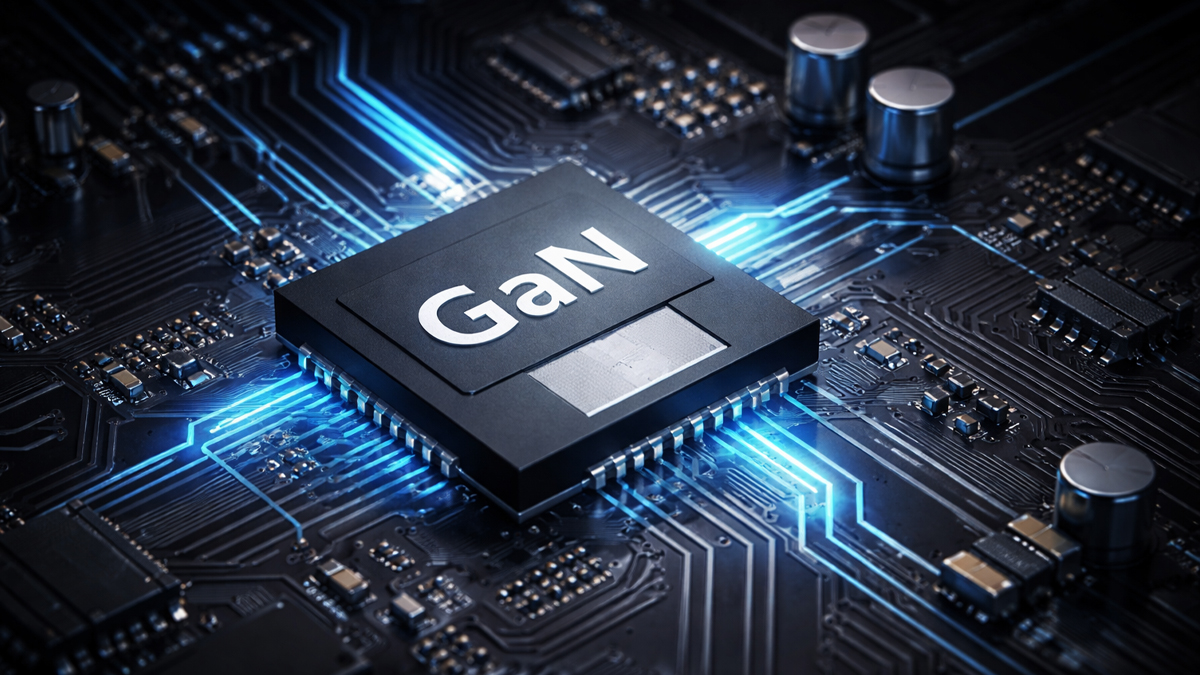
What is Gallium Nitride FET (GaN FET)?
Gallium Nitride FET, also called GaN FET, is a type of field effect transistor made using gallium nitride, which is a wide bandgap semiconductor material. In simple words, it is an electronic switch that can turn power on and off very fast, with less energy wasted as heat compared to many traditional silicon based transistors. Because it can switch quickly and handle high voltages efficiently, it is widely used in modern power electronics, especially where compact size, high efficiency, and high performance matter.
To understand why GaN matters, it helps to think about what a power transistor does. In many electronic systems, electricity must be converted and controlled. For example, a device might need to convert wall power into clean, stable power for sensitive circuits, or it might need to control a motor, a light, or a high power amplifier. A transistor is the main building block that performs this switching and control. The faster and cleaner it can switch, the smaller and cooler the whole system can become.
GaN FETs became popular because gallium nitride allows electrons to move efficiently and supports high electric fields. This combination helps designers create power circuits that run at higher switching frequencies with lower losses. Higher frequency operation often means smaller inductors, transformers, and capacitors, which can greatly reduce size and weight. That is a big advantage in cinematic electronics, where equipment must be reliable, portable, quiet, and sometimes battery powered.
How does Gallium Nitride FET Work?
A GaN FET works like a controllable valve for electricity. It has three main connections: gate, drain, and source. The gate acts like a control input. When the gate is driven with the right voltage, the transistor allows current to flow between drain and source. When the gate voltage is removed or reversed based on the device type, the transistor blocks current flow.
In many GaN power devices, the key idea is that the channel where current flows can be formed and controlled very efficiently. GaN material properties help reduce resistance when the transistor is on, and they also help reduce switching losses when the transistor turns on and off. Switching losses happen because voltage and current overlap for a brief moment during transitions. Faster transitions reduce that overlap time, which reduces wasted energy.
Another important part of how GaN FETs work is gate charge. Gate charge is the amount of charge needed to move the gate voltage and switch the device. Lower gate charge usually means the device can switch faster with less driver power. Many GaN devices have relatively low gate charge, which supports high frequency switching.
GaN devices also have a different behavior compared to silicon MOSFETs in areas like reverse conduction and body diode characteristics. Traditional silicon MOSFETs have a body diode that conducts in reverse direction. GaN devices often rely on channel conduction for reverse current and can show low reverse recovery losses. This is very useful in power converters used for audio amplifiers, projectors, LED walls, and camera power systems, where clean switching reduces noise and improves efficiency.
What are the Components of Gallium Nitride FET
A GaN FET is a semiconductor device, but in real products it is packaged and supported by several physical and electrical elements. The main components and functional parts include:
Gate structure
The gate is the control terminal. It is designed to modulate the channel and control conduction. The gate structure and insulation influence reliability, threshold behavior, and switching speed.
Channel region
This is the region where electrons flow when the device is on. In GaN devices, the channel is engineered to support fast transport and low resistance.
Drain and source terminals
These are the power terminals. Current flows from drain to source when the device is on, depending on circuit direction. Their resistance and layout affect efficiency and heating.
Semiconductor layers and substrate
GaN devices are built using layers of materials. The choice of substrate and buffer layers influences thermal performance, voltage rating, and manufacturability.
Field plates and edge termination structures
High voltage devices need careful electric field management. Field plates and termination structures reduce peak electric fields and improve breakdown strength.
Package and lead frame or pads
The package connects the chip to the circuit board and affects heat removal and parasitic inductance. Low inductance packaging improves switching performance and reduces ringing.
Thermal path
Power devices generate heat. A good thermal path from the chip to the package and to the heat sink or circuit board is essential for reliability. In cinema equipment, thermal stability directly affects uptime and consistent performance.
Gate driver interface requirements
While not part of the transistor die itself, a GaN FET often needs a well designed gate driver circuit. The driver supplies the right voltage, timing, and protection to avoid overshoot, undershoot, or accidental turn on.
What are the Types of Gallium Nitride FET
GaN FETs come in different forms, mainly based on how the gate controls the device and how the device is normally biased.
Enhancement mode GaN FET
This type is normally off. That means when there is no gate signal, the device is off and blocks current. When you apply a proper gate voltage, it turns on. Normally off behavior is preferred in many power systems because it is safer and easier to control.
Depletion mode GaN FET
This type is normally on. That means it conducts when there is no gate signal, and it must be driven to turn off. It can be useful in some specialized designs, but it is less common in mainstream power supplies because normally on behavior can complicate safety.
Cascode GaN device
A cascode configuration combines a GaN device with a silicon MOSFET in a way that makes the overall device behave like a normally off transistor. It can also simplify gate driving for some applications.
Integrated GaN power stages
Some products integrate the GaN FET with its gate driver, level shifting, protection, and sometimes even control functions. Integration can improve reliability, reduce design complexity, and reduce parasitics, which is valuable for compact cinematic power systems.
Lateral GaN devices and related architectures
Many commercial GaN power devices are lateral structures optimized for fast switching. The exact structure varies by manufacturer and voltage class, but the goal is similar: high speed, low loss, and stable high voltage blocking.
What are the Applications of Gallium Nitride FET
GaN FETs are used wherever efficient and fast power switching is needed. Common applications include:
High efficiency power supplies
Switch mode power supplies for servers, control racks, digital cinema projectors, and post production workstations can use GaN to increase efficiency and reduce heat.
Fast chargers and battery systems
Portable cinema cameras, wireless video transmitters, field monitors, and audio recorders rely on batteries. GaN based chargers and DC converters can reduce charging time and shrink adapter size.
DC DC converters
Many cinema devices need multiple voltage rails. For example, a camera rig might need 12 V, 5 V, and 3.3 V. GaN helps deliver these rails with higher power density.
Power factor correction stages
Professional cinema power systems often require clean input current and stable operation under varying loads. GaN can improve efficiency in power factor correction circuits.
Motor drives and robotics power
On set motion control, camera sliders, gimbals, cranes, and robotic arms need compact and efficient motor drives. GaN can help reduce weight and improve battery runtime.
Audio amplification and power conversion for sound systems
Cinema sound systems use high power amplification and precise signal integrity. While GaN is not always used directly in the signal path, it is very relevant in the power supplies feeding amplifiers and audio processors.
LED lighting and LED wall power systems
Modern film production uses high power LED panels and virtual production LED volumes. These require large, efficient power conversion. GaN can reduce cabinet size, improve efficiency, and reduce cooling noise.
Renewable and mobile power systems
Mobile cinema trucks, outdoor screening setups, and temporary production stages need efficient power distribution. GaN based inverters and converters can make these systems lighter and more fuel efficient.
What is the Role of Gallium Nitride FET in Cinema Industry
The cinema industry depends on a large ecosystem of electronics: cameras, lenses with motorized focus, wireless links, audio capture systems, post production servers, color grading suites, digital cinema projectors, LED walls, lighting control networks, and much more. All of these systems rely on power conversion and power management. That is where GaN FETs play a growing role.
Compact and portable equipment
Film crews move equipment constantly. Smaller and lighter power adapters, chargers, and battery converters reduce setup time and fatigue. GaN enables higher switching frequency designs that can shrink bulky magnetic components, leading to compact power bricks and onboard converters.
Lower heat and quieter operation
Heat is a major enemy of reliability and performance. In a cinema hall, less heat means quieter cooling and fewer fan noise issues. On set, lower heat improves comfort and reduces the risk of thermal shutdown for critical devices. GaN improves efficiency so less power turns into heat.
Higher power density for modern loads
LED walls, high brightness projectors, and high performance compute nodes can draw significant power. GaN helps meet these power demands in smaller enclosures, which is useful in crowded racks, projection booths, and compact control rooms.
Cleaner switching for sensitive electronics
Cinema electronics include sensitive audio and video signals. Poorly designed power circuits can add electromagnetic interference that becomes audible hum, visible artifacts, or unstable wireless links. GaN can help reduce losses, but fast edges can also increase interference if not managed carefully. With good layout and filtering, GaN based converters can deliver very clean power with improved overall performance.
Better battery runtime on set
Portable cinema gear often runs from batteries. Even a few percentage points of efficiency improvement can translate to longer shooting time, fewer battery swaps, and fewer interruptions.
GaN FETs help the cinema industry deliver more power, in less space, with less heat, while supporting the reliability that professional production demands.
What are the Objectives of Gallium Nitride FET
When engineers choose GaN FETs, they usually have clear objectives tied to performance and practicality. Key objectives include:
Increase energy efficiency
Reduce conduction and switching losses so that more input energy becomes useful output energy.
Increase switching frequency
Enable higher frequency operation to reduce the size of inductors, transformers, and capacitors, leading to smaller systems.
Reduce heat generation
Lower losses mean lower heat, which improves reliability and allows quieter or smaller cooling solutions.
Improve power density
Deliver more watts per unit volume. This is valuable for compact cinema gear, rack mounted systems, and portable production equipment.
Improve transient response
Fast switching can support power supplies that respond quickly to sudden load changes. This helps in devices like projectors, audio amplifiers, and compute nodes that have dynamic power demands.
Support high voltage and fast switching together
In many applications, designers want both high voltage capability and high speed. GaN is well suited for this combination.
Enable new form factors
Smaller power conversion can unlock new product designs such as slimmer lighting fixtures, lighter battery chargers, and more compact rack modules for cinema infrastructure.
What are the Benefits of Gallium Nitride FET
GaN FETs bring a group of practical benefits that matter in real world systems.
Higher efficiency
GaN FETs can reduce losses in both on state conduction and switching transitions. Higher efficiency means lower operating costs in cinema halls and fewer cooling demands in equipment rooms.
Smaller and lighter power hardware
By switching at higher frequency, designers can use smaller magnetics and smaller capacitors. This can shrink power supplies for projectors, servers, and on set equipment.
Lower thermal stress and improved reliability
Less heat reduces stress on components like capacitors and solder joints. In cinema environments where systems run for long hours, reliability is a major benefit.
Faster switching and improved dynamic performance
Fast switching supports tight voltage regulation and quick response to load changes, which is useful for devices with fluctuating power needs.
Potential for quieter systems
Less heat can reduce fan requirements. Also, higher frequency switching can move some noise outside audible ranges, though filtering and layout still matter.
Better system level performance
GaN can enable higher efficiency and higher power density together, allowing cinema equipment to be more compact without sacrificing output power.
What are the Features of Gallium Nitride FET
Features are the recognizable technical characteristics that make GaN FETs attractive in design.
Wide bandgap material advantages
GaN supports high electric fields, which helps devices block high voltage with compact structures.
High speed switching capability
Low gate charge and fast transition behavior support high frequency operation in converters.
Low switching losses
Reduced overlap of voltage and current during switching can improve efficiency, especially at high frequency.
Low reverse recovery related losses
Many GaN devices avoid the heavy reverse recovery behavior seen in some silicon diodes, which benefits power converter efficiency.
High power density potential
Designs can be smaller because passives and cooling can be reduced.
Suitable for high frequency topologies
Resonant converters and advanced power architectures often benefit from GaN.
Packaging trends toward low inductance
Many GaN products focus on low inductance packages, which helps reduce ringing and improves controllability.
What are the Examples of Gallium Nitride FET
Examples can be understood in two ways: examples of where GaN FETs appear in cinema related systems, and examples of device categories found in the market.
Cinema related equipment examples
Compact high wattage AC to DC adapters for cinema cameras and monitors
Battery chargers for V mount and Gold mount battery ecosystems
DC DC converters in camera rigs that supply multiple rails for wireless video, follow focus, and monitors
Power supplies for LED panels and LED wall cabinets used in virtual production stages
Efficient rack power supplies for video servers, playback systems, and media processing units
Projection booth power conversion modules that support stable operation for digital cinema projectors
Mobile power systems for outdoor screenings, including efficient inverters and distribution modules
Device and product category examples
Discrete enhancement mode GaN power transistors for 100 V class and higher voltage classes
Cascode GaN devices designed to simplify gate drive behavior
Integrated GaN power stages that combine FET and driver for compact converter designs
GaN based half bridge modules used in high frequency power topologies
These examples show how GaN appears both as a component and as a system level enabler in cinema electronics.
What is the Definition of Gallium Nitride FET
Gallium Nitride FET is defined as a field effect transistor that uses gallium nitride semiconductor technology to control current flow between drain and source through a gate controlled channel, primarily optimized for high speed and high efficiency power switching.
This definition highlights three important ideas: it is a field effect transistor, it uses gallium nitride as the core semiconductor technology, and it is commonly used for power switching where efficiency and speed are critical.
What is the Meaning of Gallium Nitride FET
The meaning of Gallium Nitride FET can be understood by breaking down the term:
Gallium Nitride refers to the semiconductor material used to build the transistor. This material supports high voltage operation and fast electron movement.
FET stands for field effect transistor, meaning the device uses an electric field created by the gate terminal to control whether current can flow through a channel.
So the meaning of GaN FET is a transistor that uses a gate controlled electric field to switch power efficiently, enabled by the strong electrical properties of gallium nitride. In practical terms, it means a faster and more efficient power switch that helps electronics run cooler and smaller.
What is the Future of Gallium Nitride FET
The future of GaN FET is strongly connected to trends in energy efficiency, compact electronics, and high performance power conversion.
More adoption across professional equipment
As design teams gain experience, GaN will continue moving from premium products into mainstream professional gear. In cinema, this could mean more GaN based power supplies in projectors, audio systems, LED walls, and portable production equipment.
Higher integration and easier design
Integrated GaN power stages can reduce complexity and improve repeatability. This helps manufacturers build reliable products faster and helps reduce issues related to layout and gate driving.
Improved robustness and protection
Future GaN solutions will likely include better protection features, better tolerance to harsh electrical environments, and more predictable behavior across temperatures. Cinema electronics often face rough handling, long duty cycles, and variable power quality, so robustness matters.
Higher efficiency standards and greener operations
Cinemas and studios face growing pressure to reduce energy use. More efficient power conversion reduces electricity consumption and cooling needs. GaN fits well with sustainability goals because it can reduce wasted energy across many devices.
Expansion into higher power systems
GaN is already strong in many power ranges, and development continues for higher power applications. This could support larger LED volumes, higher power projection systems, and more capable mobile power units for outdoor events.
Better electromagnetic compatibility practices
Because GaN switches fast, designers must carefully manage electromagnetic interference. The future will include better packaging, improved layout guidelines, and smarter control techniques that keep the advantages while meeting strict noise requirements in audio and video environments.
Overall, the future of GaN FET in cinematic electronics is about enabling lighter gear, quieter systems, higher reliability, and lower energy costs while keeping performance high.
Summary
- Gallium Nitride FET is a high performance field effect transistor built with gallium nitride, designed for fast and efficient power switching.
- GaN FET works by using a gate signal to control current flow between drain and source, acting like a very fast electronic switch.
- Key parts include the gate structure, channel region, drain and source terminals, semiconductor layers, packaging, and thermal path.
- Common types include enhancement mode devices, depletion mode devices, cascode configurations, and integrated GaN power stages.
- Applications include power supplies, fast chargers, DC DC converters, power factor correction, motor drives, and LED power systems.
- In the cinema industry, GaN helps create smaller, cooler, quieter, and more portable power electronics for cameras, projectors, LED walls, and racks.
- Main objectives include higher efficiency, higher switching frequency, lower heat, improved power density, and better dynamic response.
- Benefits include reduced energy loss, smaller designs, improved reliability, and better system level performance.
- Features include fast switching, low switching losses, strong high voltage capability, and suitability for compact high frequency designs.
- The future points toward wider adoption, higher integration, improved robustness, greener operations, and expanded use in professional cinema technology.

