

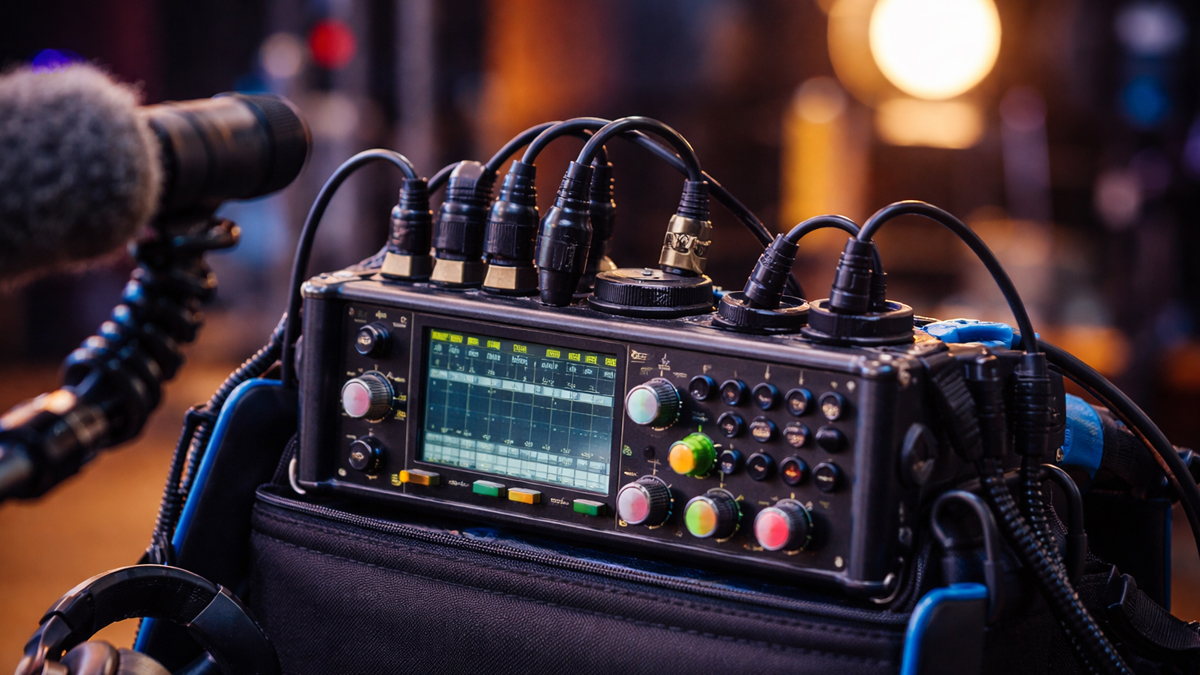
What is Field Recorder?
Overview: A field recorder is a portable audio recording device made to capture high quality sound outside a studio environment. In the cinema industry, it is one of the most important tools for recording dialogue, ambience, and sound effects on real locations.
Core idea: A field recorder takes sound from microphones, amplifies it with clean preamps, converts it into digital audio, and saves it as audio files on memory cards or internal storage. Many modern field recorders can record multiple microphones at the same time, which is critical for film sets where several actors speak in the same scene.
Why it matters for cinema: Film sound must feel natural and emotionally believable. The field recorder helps capture the real texture of a location, like street noise, room tone, wind movement in trees, footsteps on a particular surface, and the unique tone of a voice in a space. These details make scenes feel alive.
How it is different from a phone recorder: A phone is designed mainly for communication and quick notes, not for professional sound. A cinema field recorder focuses on clean mic inputs, strong noise performance, stable levels, accurate metering, professional file formats, timecode support, and dependable operation for long shooting days.
Common cinema terms connected to field recorders: You will often hear words like production sound, location sound, wild track, room tone, ambience, ISO tracks, boom mic, lavalier mic, timecode sync, and broadcast wave files. A field recorder is at the center of many of these workflows.
How does Field Recorder Work?
Sound capture path: A field recorder works by receiving an audio signal from one or more microphones, shaping that signal into a usable level, then turning it into a digital recording that can be edited later.
Microphone input stage: Microphones output very small signals. The field recorder provides mic inputs, usually XLR or sometimes a combination input, and supplies phantom power when using condenser microphones. The recorder also includes gain control so the sound team can set the right level.
Preamplification and level control: The preamp boosts the microphone signal. Good preamps add as little noise as possible while giving enough gain. The recordist sets gain and may use limiters or safety tracks to reduce the risk of clipping when actors suddenly speak louder.
Analog to digital conversion: After preamplification, the recorder converts the analog sound wave into digital data. It does this using an analog to digital converter. The conversion happens at a chosen sample rate and bit depth, such as 48 kHz and 24 bit, which is common for film and television.
Recording and file creation: The recorder writes audio data to storage, often SD cards. Many models save files in WAV or BWF format. BWF can store timecode and metadata, which is very helpful in post production.
Monitoring and feedback: The sound team listens through headphones from the recorder output. The recorder provides meters on screen so the recordist can see levels, peaks, and sometimes phase issues. Monitoring is how problems are caught early, such as cable noise, interference, wind rumble, or clothing rustle on lavalier microphones.
Timecode and sync workflow: In cinema, the recorder often runs timecode so that audio can be aligned with camera footage in editing. Timecode may be generated inside the recorder or received from a timecode box. When audio and video share matching timecode, syncing becomes faster and more accurate.
Metadata workflow: Many recorders let the sound team enter scene, take, location, and microphone information. This metadata travels with the audio files and helps editors and dialogue teams work more efficiently.
What are the Components of Field Recorder
Microphone inputs: Professional field recorders include multiple microphone inputs, typically XLR. Each input often has its own gain control and can provide phantom power for condenser microphones.
Preamplifiers: The preamps are responsible for boosting mic level signals into usable levels. High quality preamps are quiet, have good headroom, and keep voices natural without harshness.
Analog to digital converters: Converters turn analog audio into digital audio. Good converters capture detail and maintain clarity, especially in challenging environments with quiet dialogue and loud background noise.
Recording media and storage system: Many field recorders use SD cards, microSD, or internal SSD storage. Professional workflows often use dual recording to two cards at once for safety.
Power system: Field recorders can run on AA batteries, rechargeable battery packs, or external power distribution systems. On film sets, stable power is essential because a power drop can stop recording at the worst moment.
User interface and controls: Buttons, knobs, touchscreens, and menu systems let the recordist arm tracks, set levels, create folders, label takes, and check settings quickly. Speed and clarity matter because set conditions are fast and sometimes stressful.
Display and metering: A screen shows levels, peaks, track names, battery status, storage remaining, and timecode. Clear metering helps prevent distortion and ensures consistent dialogue levels.
Headphone amplifier and monitoring outputs: A strong headphone amp lets the recordist hear subtle issues. Many recorders also provide line outputs for camera feeds, director monitoring, or wireless transmitter systems.
Mixing section: Many cinema recorders include a small mixer. This lets the recordist create a mix track for quick review while also recording ISO tracks for each microphone for post production flexibility.
Limiters and safety recording features: Limiters can reduce sudden peaks to avoid clipping. Some recorders also support safety tracks, which record an extra copy at a lower level.
Timecode system: A timecode generator or timecode input helps sync audio to camera. Reliable timecode reduces time wasted in post production.
File format and metadata engine: The recorder creates professional files and writes metadata such as scene and take. Some recorders also store notes that help editors.
Chassis and physical design: A field recorder is built to survive travel, heat, dust, and long working days. Good build quality reduces downtime and protects important recordings.
What are the Types of Field Recorder
Handheld stereo field recorders: These are compact units designed for two channel recording, often using built in microphones. They are useful for ambience capture, quick sound effects, and reference audio.
Multi track location recorders: These are common on narrative film sets. They have multiple mic inputs and can record many isolated tracks at once, such as boom and multiple lavalier microphones.
Bag recorders: Many production sound mixers work from a sound bag. Bag recorders are designed to be portable, lightweight, and easy to operate while moving with the crew.
Cart based recorders: For larger productions, a sound cart can hold a larger recorder system, power distribution, wireless receivers, antennas, and accessories. Cart setups are more comfortable for long days and complex scenes.
Camera mounted recorders: Some recorders are designed to attach to a camera rig. These can be useful for documentary work or small crews where the camera operator also records audio.
32 bit float capable recorders: Some modern recorders support 32 bit float recording. This format can reduce the risk of clipped audio because it allows a very wide dynamic range. It can be helpful in unpredictable environments, but it does not replace good microphone placement and monitoring.
Sound effects focused recorders: Some field recorders are designed for capturing detailed sound effects with very low noise and high fidelity. These are used by sound designers building libraries of footsteps, doors, engines, nature sounds, and more.
Network capable or advanced metadata recorders: High end cinema recorders may support advanced metadata, remote control, and integration with wireless systems. These features help manage complex productions.
What are the Applications of Field Recorder
Production dialogue recording: The most common cinema use is capturing actor dialogue on location. The recorder receives audio from a boom microphone and lavalier microphones and records each to separate tracks.
Room tone recording: Room tone is the natural sound of a space with no dialogue. Recording it helps editors fill gaps and create smooth audio transitions.
Ambience and environment capture: A field recorder captures outdoor ambience like traffic, birds, wind, crowd noise, and city textures. These sounds help build believable scenes in post production.
Wild tracks: Wild tracks are recordings made outside the main take, such as actors repeating lines, specific prop sounds, or movements that were not cleanly captured during filming.
Sound effects and library building: Field recorders are used to capture clean sound effects for later use, such as doors, keys, footsteps, water splashes, machinery, and nature textures.
Documentary and interview recording: Many documentaries rely on field recorders for interviews in real locations. The recorder must handle changing noise conditions, different microphone setups, and quick movement.
Behind the scenes and reference audio: Some teams record reference audio to help editors or for documentation. Even when not used in the final mix, it can help with decisions later.
Music and performance capture: In some productions, a field recorder is used to capture live performances, rehearsals, or diegetic music in a scene.
Sync sound for small productions: Independent filmmakers often use field recorders to capture audio separately from the camera. This improves quality compared to relying on camera microphones.
What is the Role of Field Recorder in Cinema Industry
Capturing clean source audio: The field recorder creates the raw sound that post production will shape into the final soundtrack. The cleaner the source, the more natural and powerful the final result can be.
Supporting storytelling: Sound is emotional. A clear voice can make a character feel close. A detailed ambience can make a location feel real. The field recorder is how those building blocks are captured.
Managing multiple microphones: Cinema scenes often use a boom mic plus lavalier microphones on several actors. The recorder must handle many inputs, keep them organized, and record each track reliably.
Providing syncing accuracy: Timecode and professional file formats help editors sync audio to video. This reduces manual syncing work and prevents mistakes.
Creating useful metadata: Scene and take labels, track names, and notes reduce confusion later. Good metadata saves hours in editing and dialogue work.
Delivering camera feeds when needed: Many productions send a guide mix from the recorder to the camera. This helps with dailies and quick reviews, even though the final audio often comes from the isolated tracks.
Ensuring reliability on set: A film set is expensive. When audio fails, reshoots cost time and money. A dependable field recorder, used correctly, reduces risk.
Helping post production succeed: Dialogue editors, sound designers, and re recording mixers depend on well recorded and well organized audio. The field recorder is the first step in that chain.
What are the Objectives of Field Recorder
Record high quality sound in real environments: The main objective is to capture clear, detailed audio outside the controlled conditions of a studio.
Support multi track production needs: Another objective is to record several microphones separately so post production can choose the best track at every moment.
Maintain consistent levels and avoid distortion: A field recorder aims to capture audio without clipping, with enough headroom for sudden loud moments.
Provide professional sync options: Timecode support and stable recording formats are objectives that help audio match camera footage accurately.
Create organized and searchable audio: By storing metadata and clear file naming, the recorder helps the team manage many takes across many shooting days.
Enable monitoring and quality control: The recorder must allow the sound team to hear problems early and fix them before the next take.
Operate reliably for long shooting days: A field recorder is expected to work for hours, handle different power options, and protect recordings with backup features.
What are the Benefits of Field Recorder
Better sound quality than built in camera audio: A dedicated recorder has cleaner preamps and better microphone inputs. This usually results in clearer dialogue and less noise.
More control on set: The sound team can adjust gain, routing, limiters, monitoring, and track arming quickly. This level of control is difficult to achieve with basic recording devices.
Multi microphone flexibility: Field recorders allow multiple microphones to be recorded at once. This is essential when actors overlap lines or when a boom mic cannot get close enough.
Improved post production options: Separate ISO tracks give editors freedom to balance dialogue, reduce noise, and choose the best mic for each line.
Professional file formats and metadata: Film friendly formats and clear labeling reduce mistakes and speed up editing.
Time savings in sync and edit: Timecode and stable sample rates help editors sync audio quickly, reducing manual work.
Backup and safety: Dual card recording, safety tracks, and reliable power options protect against losing important audio.
Portability for real locations: Field recorders are designed for travel, outdoor work, and fast setup. This fits the reality of cinema production.
What are the Features of Field Recorder
Multiple XLR inputs with phantom power: Many cinema recorders provide several mic inputs and phantom power for condenser microphones.
Low noise preamps: Quiet preamps help capture soft dialogue without adding hiss, especially in quiet scenes.
High resolution recording formats: Common film settings include 48 kHz sample rate and 24 bit depth. Some recorders support higher rates for special use cases.
32 bit float recording on some models: This feature can help manage unpredictable volume changes, but it still requires good technique.
Built in limiters and high pass filters: Limiters help reduce peaks. High pass filters reduce low frequency rumble from wind, handling noise, and traffic.
Timecode generator and timecode input: Timecode tools help sync audio with camera footage and other devices.
Dual recording media support: Many professional units can record to two cards at the same time for redundancy.
Metadata entry tools: The recorder may allow scene, take, notes, track naming, and folder management.
Multiple outputs: Common outputs include headphone output, line outputs, and sometimes digital outputs. These support camera feeds, director monitors, and other workflows.
Remote control options: Some recorders support remote control through apps or control surfaces, which can help in cart setups or complex scenes.
Rugged design: Durable construction helps the recorder survive real production conditions, including travel and long days.
Accurate metering: Good meters help the recordist set levels confidently, avoiding distortion and maintaining headroom.
What are the Examples of Field Recorder
Narrative film location recording example: A production sound mixer uses a multi track recorder in a sound bag. The boom mic goes into input one, and two lavalier microphones go into inputs two and three. The recorder captures three isolated tracks plus a mix track for quick review.
Documentary interview example: A small crew records an interview in a busy street. A lavalier microphone is placed on the subject, and a shotgun mic is used as backup. The recorder applies a high pass filter to reduce rumble and records two separate tracks so the editor can choose the cleaner option.
Sound effects capture example: A sound designer goes to a forest at dawn and records birds, distant wind, and leaf movement. The recorder is set for quiet preamp gain and careful monitoring. Later, these recordings become part of a film ambience layer.
Crowd ambience example: A team records crowd reactions for a stadium scene. Multiple microphones capture different areas. The field recorder stores each microphone on its own track, making it easier to build a realistic crowd mix.
Small independent film example: An independent filmmaker uses a field recorder to record dialogue separately from the camera. Audio is synced later in editing using a clap at the start of each take. The result is clearer dialogue than camera audio alone.
Common product examples used in the industry: Some widely used models include Sound Devices 633, Sound Devices 833, Sound Devices MixPre series, Zoom F8n series, Tascam DR series, and similar professional units. The best choice depends on track count needs, timecode requirements, and budget.
What is the Definition of Field Recorder
Practical definition: A field recorder is a portable audio recording device designed to capture high quality sound outside studio conditions, often supporting professional microphone inputs, reliable file formats, monitoring, and features like timecode and metadata that match cinema workflows.
Cinema focused definition: In the cinema industry, a field recorder is a core production sound tool used to record dialogue, ambience, and sound effects on location, often as isolated tracks that can be edited and mixed in post production.
What is the Meaning of Field Recorder
Meaning in simple words: The meaning of field recorder is a recorder that can travel with you into the real world and record sound cleanly, even in challenging environments.
Meaning in cinema context: In cinema, the meaning goes beyond recording sound. It means capturing usable audio that can be synced to picture, organized by scene and take, and shaped into a professional soundtrack.
Meaning for the audience experience: When a field recorder is used well, the audience hears clear dialogue, believable spaces, and natural details. They do not think about the recording device, but they feel the realism.
Meaning for production teams: For film crews, it represents reliability, control, and efficiency. It is the tool that protects sound quality and saves time later.
What is the Future of Field Recorder
Wider use of 32 bit float and smarter gain systems: More recorders are adopting wide dynamic range recording, making it easier to handle unpredictable volume changes. At the same time, professional crews will still rely on good mic placement and monitoring, because recording format alone cannot fix poor capture.
Tighter integration with wireless ecosystems: Many productions use wireless lavalier systems and wireless monitoring. Future recorders are likely to integrate more deeply with receivers, transmitters, and remote control tools, making it easier to manage frequency, battery, and track labeling.
Better noise reduction support on set: Real time tools are improving. Future recorders may include more advanced processing options for monitoring, such as cleaner headphone feeds for noisy environments, while still recording an unprocessed track for post production.
Improved metadata automation: More automatic metadata features can reduce manual typing. For example, recorders may communicate with camera systems, script supervisors, or digital slate tools to share scene and take information.
Smaller, lighter, and more power efficient designs: As components improve, recorders can become more compact while maintaining quality. Longer battery life and more stable power options can reduce stress on set.
Immersive and spatial recording growth: Cinema sound is moving toward immersive formats. Field recording may increasingly include multi mic arrays and spatial capture tools for ambisonics and other surround workflows.
Faster file delivery and backup options: Productions want speed. Future recorders may offer faster offload, stronger dual recording options, and easier backup workflows, including secure transfer tools.
Continued focus on reliability: Even with new features, the most important future goal will remain the same. A field recorder must record without failure, protect files, and operate simply under pressure.
Summary
- A field recorder is a portable device used to capture professional quality sound outside the studio, especially for cinema location work.
- It records audio from microphones, boosts it with preamps, converts it into digital files, and saves it to reliable storage media.
- Key components include mic inputs, preamps, converters, storage, power options, monitoring outputs, metering, and often timecode support.
- Types range from handheld stereo recorders to multi track bag and cart recorders used on professional film sets.
- In cinema, it supports clean dialogue capture, ambience recording, wild tracks, sound effects, and organized delivery to post production.
- Major benefits include better sound quality, multi microphone flexibility, improved syncing, stronger metadata, and safer backup workflows.
- The future points toward smarter workflows, deeper wireless integration, better metadata handling, and more options for immersive location recording.

