

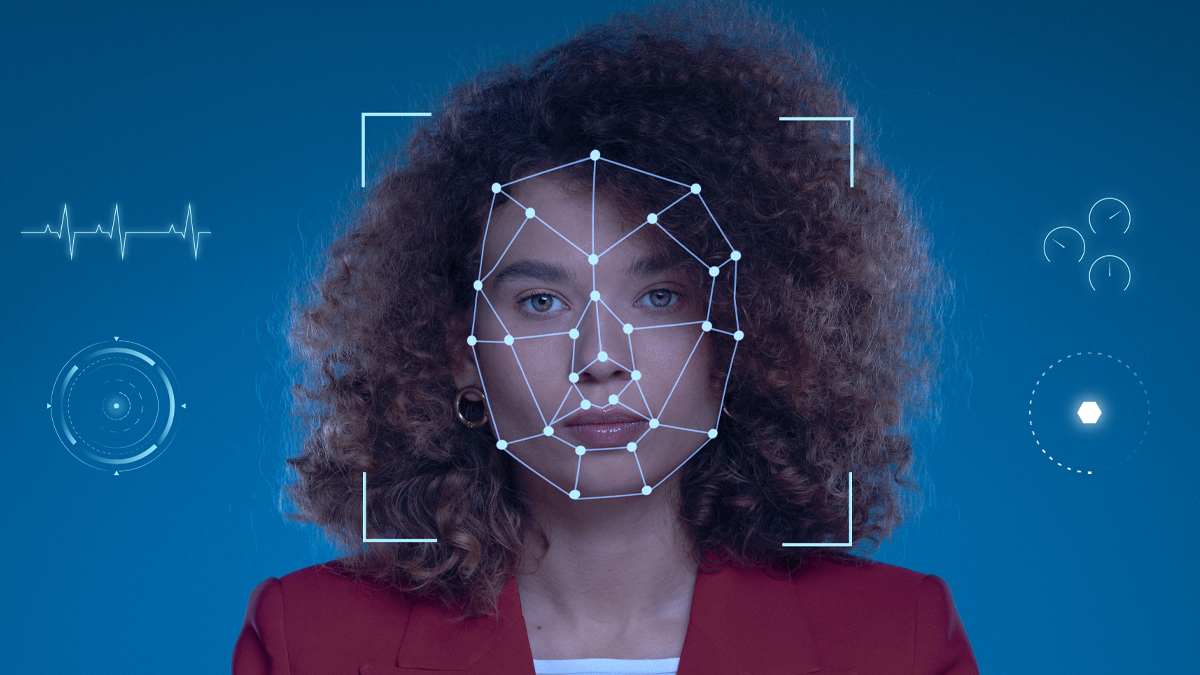
What is Photogrammetric Scanning?
Photogrammetric scanning: Photogrammetric scanning is a technique for creating a detailed 3D digital model of a real object, person, or location by using many overlapping photographs taken from different angles. Instead of measuring with a physical probe, it uses visual information in images to calculate shape, scale, and surface detail.
Core idea: The core idea is simple. If the same point on a surface appears in multiple photos, software can triangulate where that point exists in 3D space. When thousands or millions of points are reconstructed, they form a dense point cloud that can be converted into a mesh and then textured to look realistic.
Why it matters in Extended Reality (XR): In XR workflows, realism depends on believable geometry, correct scale, and convincing materials. Photogrammetric scanning helps creators bring real world detail into virtual scenes, which is especially valuable for cinematic technologies such as virtual production, visual effects, and immersive storytelling.
What it produces: Photogrammetric scanning commonly produces a 3D mesh, high resolution texture maps, and sometimes material inputs suitable for physically based rendering, such as albedo and normal maps. These outputs can be used in real time engines and film pipelines.
Where it fits in cinematic technologies: It sits between the physical and digital worlds. Cinematic teams can scan sets, props, costumes, and environments, then use those assets for previsualization, set extensions, LED volume backgrounds, interactive XR experiences, and post production VFX.
How does Photogrammetric Scanning Work?
Image capture planning: The process begins with planning how to photograph the subject so that the images overlap strongly. Overlap matters because the software needs shared visual features across photos to reconstruct 3D structure accurately.
Photography and overlap: Multiple photos are captured around the subject. For objects, the camera moves around the subject. For environments, the camera moves through the space. In many workflows, images are taken in rings at different heights and angles to reduce blind spots and to capture undercuts or complex geometry.
Feature detection and matching: The software identifies distinct visual features, such as corners, patterns, and high contrast details, and then matches those features across many images. These matches are the backbone of reconstruction.
Camera pose estimation: Once enough features are matched, the software estimates where each camera was positioned and how it was oriented when each photo was taken. This step is commonly associated with structure from motion, where the 3D scene and camera motion are solved together.
Dense reconstruction: After the camera positions are known, the software calculates a dense set of 3D points, creating a point cloud that represents the surface in detail. The density depends on image resolution, overlap, and the quality of the captured detail.
Mesh and texture creation: The point cloud is converted into a polygon mesh. Then textures are built by projecting photographic color information onto the mesh, producing realistic surface appearance.
Cleanup and optimization: For cinema and XR, raw scans usually need cleanup. Artists remove unwanted parts, fix holes, reduce polygon counts, and generate optimized levels of detail so assets can run smoothly in real time engines.
Export and integration: Finally, the asset is exported to formats used in film and XR pipelines and integrated into tools such as real time engines, compositing software, and digital content creation suites.
What are the Components of Photogrammetric Scanning
Capture device: A camera is the primary capture tool. This can be a dedicated DSLR or mirrorless camera, a cinema camera for specific workflows, or even a mobile device for lighter scans. The key is consistent, sharp images with minimal motion blur.
Lens and focus control: Lens choice affects distortion, depth of field, and sharpness. Controlled focus and consistent settings improve reconstruction accuracy and reduce artifacts.
Lighting setup: Even lighting helps produce consistent textures and improves feature matching. Harsh reflections and deep shadows can confuse reconstruction, so many teams use diffused lighting. For high end material capture, cross polarization techniques may be used to reduce specular highlights and to better separate base color from reflections.
Stabilization and rigging: Tripods, monopods, turntables, camera bars, and multi camera rigs can improve repeatability. For large spaces, drones, gimbals, or handheld stabilized rigs can be used.
Reference and scale tools: Scale bars, measuring tapes, coded targets, and calibration charts help ensure the scan matches real world scale. This is important in cinema, where accurate scale supports correct camera matching, physics, and interaction.
Compute hardware: Reconstruction can be computationally heavy. A capable workstation with strong CPU, GPU, memory, and fast storage speeds up alignment, dense reconstruction, and texture baking.
Software pipeline: Photogrammetry software performs alignment, reconstruction, meshing, and texturing. Additional tools are often used for cleanup, retopology, UV work, and texture adjustment before the asset reaches the final XR or film environment.
Data management: A single scanning day can generate thousands of high resolution images. A reliable storage system, good naming conventions, and backups are critical for production reliability.
Color workflow: Consistent color management and white balance help produce predictable textures. For cinema and XR, matching the look across camera units and lighting conditions is important for believable integration.
What are the Types of Photogrammetric Scanning
Object photogrammetry: This type focuses on scanning smaller items such as props, artifacts, and costume pieces. The subject can be placed on a turntable while the camera moves around it, or the camera can stay fixed while the object rotates.
Close range photogrammetry: Close range scanning captures fine details on surfaces such as scratches, engravings, and fabric weave. It is commonly used for hero assets that appear close to camera.
Environment photogrammetry: This type captures rooms, building interiors, streets, and natural spaces. It is often used for location reproduction, virtual set dressing, and background environments for LED volumes.
Aerial photogrammetry: Using drones or elevated camera positions, aerial photogrammetry captures large areas such as landscapes, cliffs, and city blocks. It is useful when an XR experience needs a wide environment that still feels grounded and realistic.
Human and performance related scanning: Photogrammetry can capture actors, stunt performers, and costumes. When combined with proper lighting and controlled posing, it can produce digital doubles, wardrobe assets, and reference models for VFX.
Multi camera photogrammetry rigs: Rigs with many cameras capture a subject quickly, sometimes in a fraction of a second, which is valuable for scanning people who cannot hold perfectly still for long.
Hybrid scanning with depth sensors: Some workflows combine photogrammetry with LiDAR or structured light to improve geometry accuracy, especially for low texture surfaces. Photogrammetry supplies high quality textures while depth sensors reinforce shape.
Emerging view synthesis approaches: Newer approaches like neural radiance fields and 3D Gaussian splatting can complement photogrammetry by producing view dependent realism. In cinema XR pipelines, they may be used alongside traditional photogrammetry for faster scene capture, though classic mesh based outputs still dominate for many real time uses.
What are the Applications of Photogrammetric Scanning
Digital props and hero assets: Photogrammetry is widely used to create highly realistic props. A scanned prop can be used for close up shots, interactive XR scenes, or as a base for digital modifications and variations.
Virtual set building: Production teams can scan real locations or physical sets to create a digital twin. This supports previs, techvis, and virtual scouting, helping directors and cinematographers plan shots before costly physical work begins.
LED volume backgrounds: In virtual production, scanned environments can become background plates or full 3D scenes displayed on LED walls. This can provide natural parallax and realistic lighting cues for actors on stage.
Set extensions and matte environments: Photogrammetry helps extend practical sets into larger digital worlds. A small physical set can be scanned and expanded, preserving the authentic material feel.
Costume and material reference: Scanning wardrobe pieces can help match texture and detail in digital doubles or CG enhancements. Even if the final asset is not used directly, the scan provides accurate reference for shading and modeling.
Location continuity and reshoots: A scanned environment can preserve a location that may change over time. If reshoots occur later, the digital capture can help match angles, lighting, and spatial layout.
Asset libraries for XR: Studios can build reusable libraries of scanned assets, such as rocks, foliage, furniture, and architecture modules. These can be deployed across multiple XR experiences and film projects.
Interactive storytelling and AR overlays: Photogrammetric assets can be used in augmented reality experiences tied to film marketing, museum style experiences, or interactive companion content that shares the same visual language as the movie.
Previsualization and blocking: Directors can use scanned environments to block scenes and test camera moves. This is helpful in XR because it aligns creative decisions with real world scale and constraints.
What is the Role of Photogrammetric Scanning in Cinema Industry
Bridge between physical and digital production: Photogrammetric scanning connects practical filmmaking with digital creation. It captures the richness of real materials and geometry so that digital scenes feel grounded in reality.
Speeding up asset creation: Traditional modeling and texturing can take significant time, especially for complex organic surfaces. Photogrammetry accelerates this by providing a realistic base mesh and textures that artists can refine.
Supporting virtual production workflows: Virtual production relies on accurate digital environments that interact with camera movement and lighting. Photogrammetry provides real world detail that makes LED volume content more convincing and reduces the gap between on set capture and final pixels.
Improving VFX integration: When VFX elements need to match a physical set, photogrammetry can capture the set for camera tracking reference, collision, lighting reference, and set reconstruction. This helps CG objects sit naturally in the scene.
Enhancing XR cinematic experiences: XR content often demands immersion. Photogrammetry helps achieve believable presence by making virtual objects and spaces feel authentic when viewed in headsets or through AR devices.
Enabling remote collaboration: Once a set or location is scanned, teams across the world can access the same environment digitally. This supports distributed production and faster iteration, which is increasingly common in modern cinema pipelines.
Maintaining continuity and accuracy: Detailed scans provide a reliable record. This can support continuity for sequels, reshoots, or franchise content where locations and props must remain consistent over time.
What are the Objectives of Photogrammetric Scanning
Realism in geometry: A key objective is to reproduce the shape of real objects and spaces with high fidelity. This supports believable lighting, shadows, and interactions in XR and film shots.
Realism in surface appearance: Another objective is capturing surface texture and material cues, such as wear, dirt, scratches, and subtle color variation, which are hard to invent convincingly at scale.
Accurate scale and alignment: Cinema and XR rely on correct scale so that actors, props, and environments relate naturally. Photogrammetry helps establish real world measurements, supporting camera tracking and physical simulation.
Efficiency in production: Photogrammetry aims to reduce time spent on manual modeling and texturing, allowing artists to focus on creative changes, optimization, and storytelling needs.
Reusable digital twins: Scans can be reused across departments and projects. A location scan can support previs, final VFX, marketing XR experiences, and archival needs.
Consistency across pipeline stages: Another objective is continuity. By using the same scan data, different teams can maintain consistent geometry and textures from early planning through final delivery.
Flexibility for creative adaptation: While scans capture reality, the objective is not always to replicate reality perfectly. Often the objective is to capture a realistic base that can be stylized, damaged, aged, or transformed to match the story world.
What are the Benefits of Photogrammetric Scanning
High visual fidelity: Photogrammetry captures real world complexity that is difficult to replicate manually, especially in textures and micro detail. This can elevate realism in cinematic XR content.
Cost effectiveness over repeated use: While a high quality scan session can require planning, the resulting assets can be reused many times. Over a production slate, this can reduce total asset creation costs.
Fast turnaround for environments: Scanning can provide a usable environment quickly for previs or early engine tests. Teams can start blocking shots and testing lighting while refinement continues.
Better integration with real footage: In mixed workflows, scanned assets match real world lighting and texture cues, which improves compositing and reduces the artificial look of CG elements.
Natural variation and authenticity: Real surfaces include irregularities that sell realism. Photogrammetry preserves these imperfections, helping digital environments avoid looking too clean or repetitive.
Supports immersive presence in XR: XR viewers notice scale and detail. Photogrammetry helps deliver a sense of presence, making viewers feel the object or location is real and near.
Improved collaboration and decision making: Scans help directors, production designers, and VFX supervisors review real spaces digitally. This supports clearer communication and fewer misunderstandings.
Archival and preservation: Productions can archive sets, props, and locations digitally. This can be valuable for future sequels, promotional experiences, or restoration of assets.
What are the Features of Photogrammetric Scanning
Image driven reconstruction: A defining feature is that it uses photographs as the primary input. This makes it flexible, since cameras are widely available and can scale from small objects to large landscapes.
High resolution textures: Photogrammetry can produce very detailed texture maps. In cinema XR, these textures help materials read correctly under dynamic lighting.
Dense geometric detail: Depending on the capture quality, photogrammetry can reconstruct fine surface shape that supports close ups, realistic shading, and believable contact shadows.
Non contact capture: Many subjects can be captured without physical touch. This is useful for delicate artifacts, fragile props, or situations where physical scanning is not possible.
Scalable workflows: Photogrammetry can be adapted for quick scans on small budgets or high end capture stages with controlled lighting and multi camera arrays.
Integration with physically based rendering: Photogrammetric assets often become inputs to physically based pipelines. With proper cleanup and material work, the results can be production ready for real time engines and offline renderers.
Level of detail creation: A strong feature for XR is the ability to generate multiple levels of detail. High detail meshes can be used for close shots, while simplified versions support real time performance.
Metadata and repeatability: Professional workflows often include consistent camera settings, calibrated color, and scale references, which improves repeatability across scan sessions.
Compatibility with virtual production: Scans can be aligned to real world coordinates, which is valuable for camera tracking, stage layouts, and interactive lighting setups in modern virtual production.
What are the Examples of Photogrammetric Scanning
Scanning a hero prop for close up shots: A production may scan a detailed handheld prop, then clean the mesh, rebuild topology, and create textures that hold up under cinematic lighting. The digital version can be used for VFX augmentation, replacement shots, or XR interactive scenes where viewers inspect the object closely.
Scanning a practical set for previs and final VFX: A partial set build can be scanned and turned into a digital twin. The director can test camera moves in the digital environment, and later the VFX team can use the scan for set extensions, accurate shadow catching, and match moving.
Capturing a real location for an LED volume background: A location such as a canyon, alley, or interior hall can be photographed extensively and reconstructed. The final environment can be optimized for real time playback and used as a background on an LED stage, providing realistic parallax and lighting cues.
Creating a library of natural assets: Teams often scan rocks, ground surfaces, trees, and debris. These assets become modular building blocks that can be reused across many scenes, saving time while maintaining realism.
Scanning an actor for a digital double reference: With careful capture and controlled lighting, an actor can be scanned to create a reference model for costume, proportions, and surface detail. This can support stunt work, complex VFX shots, or XR experiences where the character appears at close range.
Digitizing costumes and fabrics: Costumes can be scanned to preserve details like stitching, wear patterns, and surface texture. Even if artists later recreate the garment for simulation, the scan helps match look and materials.
Scanning miniatures and practical models: Practical miniatures can be scanned and integrated into digital environments, allowing the production to keep the handcrafted feel while gaining flexibility in camera movement and scale.
What is the Definition of Photogrammetric Scanning
Technical definition: Photogrammetric scanning is the process of reconstructing 3D geometry and surface appearance of a subject by analyzing multiple overlapping photographs, estimating camera positions, triangulating shared features, and generating a point cloud, mesh, and texture maps.
Production definition: In cinema and XR production, photogrammetric scanning is a method to capture real world assets and locations as digital 3D assets that can be integrated into virtual production, VFX pipelines, and real time engines for immersive and cinematic experiences.
Practical definition: It is a way to turn a real object or place into a usable digital model by taking many photos and letting specialized software calculate the 3D form and realistic look.
What is the Meaning of Photogrammetric Scanning
Meaning in simple terms: Photogrammetric scanning means using photos to measure and rebuild the shape of something in 3D. It transforms visual information into spatial information.
Meaning for creators: For artists and filmmakers, it means faster access to realistic digital assets. Instead of sculpting every crack and scratch, they can capture reality and then focus on storytelling, style, and performance.
Meaning in XR cinematic technologies: In XR, meaning goes beyond realism. It is about presence. When viewers believe the space and objects exist, they engage emotionally. Photogrammetry supports that belief by preserving the subtle details that the human eye expects.
Meaning for production workflows: It also means shared truth. A scan becomes a reliable reference that departments can build on, from art and previs to lighting, VFX, and interactive development.
What is the Future of Photogrammetric Scanning
Faster capture and processing: The future points toward faster reconstruction through improved GPU acceleration, better algorithms, and cloud processing. This can reduce turnaround time from days to hours, which matters in tight production schedules.
More automation in cleanup: A major bottleneck is preparing raw scans for production. Advances in automated retopology, texture cleanup, and artifact removal can reduce manual labor and make scans usable sooner.
Better material separation: Future workflows are likely to improve how scans capture materials, separating base color from lighting effects more reliably. This will make scanned assets respond better under different lighting in XR and cinema scenes.
Mobile and on set scanning maturity: As camera quality and processing power improve on portable devices, on set scanning may become more common. This can help teams capture unexpected props or locations quickly and incorporate them into the same day workflow.
Hybrid pipelines with new representations: Approaches like neural radiance fields and 3D Gaussian splatting may increasingly complement classic photogrammetry. Productions may choose meshes for interactive needs and newer view based representations for rapid environment capture and realistic playback.
Deeper integration with real time engines: Real time engines continue to expand cinematic toolsets. The future likely includes tighter links between scanning tools and engines, with more direct import, automatic level of detail creation, and optimized streaming for XR devices.
Standardization and asset reuse: Studios may standardize scanning formats, naming, and metadata so that assets can move smoothly across projects, vendors, and long term archives.
Ethics and consent for scanning people: As scanning of faces and bodies becomes easier, productions will need strong consent practices and clear data handling rules. Responsible pipelines will become a competitive advantage.
Summary
- Photogrammetric scanning creates 3D digital models from many overlapping photographs, producing geometry and realistic textures.
- The workflow typically includes planned image capture, feature matching, camera pose estimation, dense reconstruction, meshing, texturing, and optimization.
- Key components include cameras, controlled lighting, stabilization tools, scale references, strong computing hardware, specialized software, and solid data management.
- Common types include object, close range, environment, aerial, human scanning, multi camera rigs, and hybrid approaches that combine photogrammetry with depth sensing.
- In XR and cinema, photogrammetry supports virtual production, LED volume content, previs, VFX integration, asset libraries, and immersive experiences with high realism.
- Benefits include faster asset creation, authentic surface detail, improved continuity, better VFX matching, and stronger viewer presence in XR.
- The future is moving toward faster processing, more automation, improved material capture, tighter engine integration, and responsible handling of scanned human data.

