

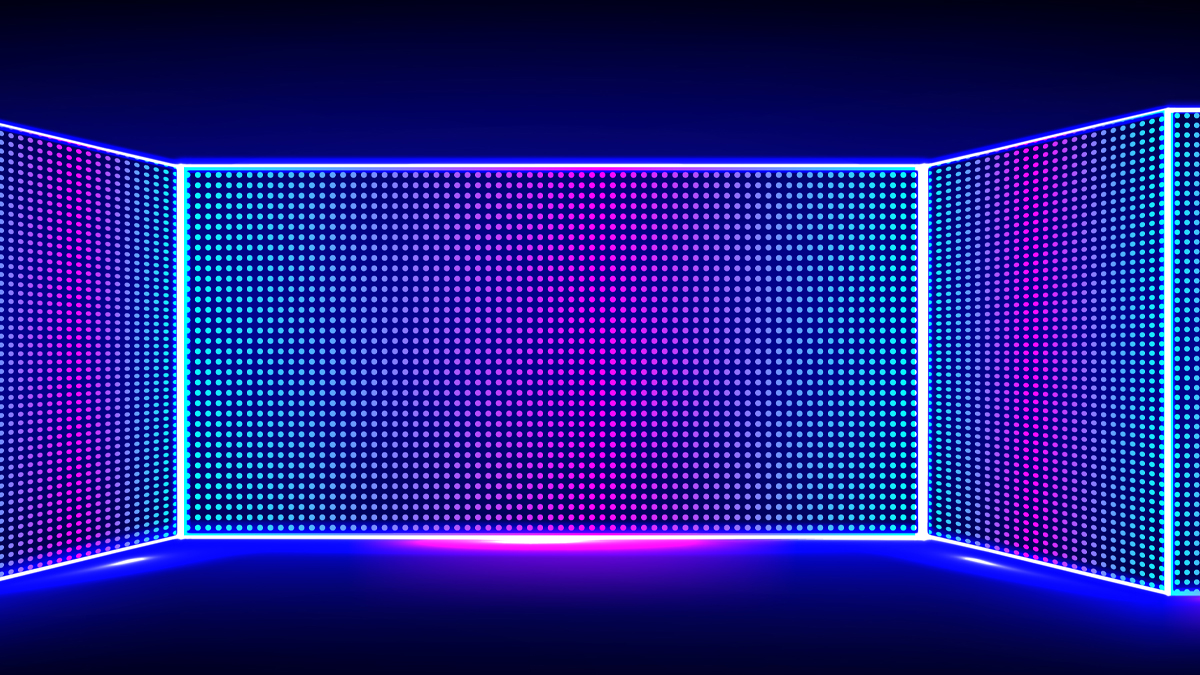
What is LED Cabinet?
An LED cabinet is the main building block of an LED display wall. Think of it as a strong, precisely engineered frame that holds and protects the LED display parts, while also providing the electrical power and data connections needed for the screen to work. When multiple LED cabinets are connected together in rows and columns, they form a large, seamless LED wall. In cinematic technologies, LED cabinets are used to build LED Volume Walls for virtual production, in camera visual effects, and immersive film environments.
In the context of LED Volume Walls, the LED cabinet is not just a box that holds LEDs. It is a precision system that ensures flatness, alignment, brightness consistency, color accuracy, and stable performance. If cabinets do not align perfectly, you will see seams, reflections will look wrong, and camera shots may show moire or other artifacts. That is why cinema grade LED cabinets focus heavily on accuracy and repeatability.
Core purpose: The LED cabinet provides a modular structure that allows a large LED surface to be built, serviced, calibrated, and operated reliably for professional viewing and camera capture.
Why it matters for LED Volume Walls: Virtual production stages need an LED wall that behaves like a believable environment. The cabinet is what keeps the wall stable, uniform, and camera friendly across long shoot days.
How does LED Cabinet Work?
An LED cabinet works by combining display modules, control electronics, and power systems into a single unit that can lock together with other cabinets. Each cabinet receives video data and power, then distributes them internally to the LED modules so the correct pixels light up in the correct colors and brightness at the correct time.
Signal flow: A video source (such as a render engine output from a virtual production system) goes into an LED processor or controller. The controller sends data to each cabinet through data cables. Inside the cabinet, a receiving card or receiver system interprets the data and sends it to the LED modules so each pixel displays the right image.
Power flow: A dedicated power supply inside the cabinet converts incoming electrical power into the correct voltages needed by the LED modules and electronics. The cabinet distributes this power through internal wiring or power distribution boards.
Synchronization for cinema: In film environments, the LED wall must stay stable with the camera. Cinema workflows often use genlock and frame synchronization so the LED refresh timing and the camera shutter timing work together. This reduces flicker and scanning artifacts and helps keep the image clean during movement.
Mechanical alignment: Cabinets connect using locking mechanisms that pull units tightly together. High precision cabinets are designed so the front faces align evenly. This reduces visible seams and helps reflections look continuous, which is important for glossy props, vehicles, and closeups.
Service and maintenance: Cabinets are built so technicians can access modules and electronics quickly. Many cinema stages prefer front service designs, where modules can be removed from the front without needing space behind the wall. This is very useful when the wall is built as a curved volume or when space is limited.
What are the Components of LED Cabinet
An LED cabinet includes multiple physical and electronic components working together to create a stable, modular display surface. The exact design differs by manufacturer and use case, but the core parts are consistent.
Cabinet frame and structure: The outer frame is usually made from aluminum or similar rigid material to stay lightweight and strong. It is designed to maintain flatness, resist bending, and support repeated assembly and disassembly.
LED modules: These are the panels that contain the actual LEDs. Each module is filled with many pixels, and each pixel usually includes red, green, and blue LEDs. Modules mount onto the cabinet frame and create the visible image surface.
Receiving card and control electronics: The receiving card takes the video data sent from the controller and maps it to the correct pixels. It ensures each module displays the right part of the image. Some designs include additional hub boards that distribute data to multiple modules more efficiently.
Power supply unit: The power supply converts incoming electricity into the voltages used by LED modules and electronics. Professional cabinets often include high efficiency power supplies to reduce heat and improve reliability.
Power distribution and cabling: Inside the cabinet, power cables and distribution boards deliver electricity to each module. Good internal wiring design reduces voltage drop and supports stable brightness.
Data connections: Cabinets connect to the rest of the wall using data cables, often with daisy chain routing between cabinets. In cinema setups, cable management is important to reduce downtime and support clean maintenance.
Locking and alignment system: Cabinets include mechanical locks, latches, pins, and alignment features to ensure tight joining and consistent spacing. This system is essential for reducing seams and keeping the surface uniform.
Mounting and rigging features: Cabinets may include mounting points for hanging, stacking, or attaching to a support frame. For LED Volume Walls, cabinets are often attached to a curved truss or a custom structure.
Cooling and thermal management: Heat affects performance and lifespan. Cabinets may include passive airflow paths or active cooling designs depending on brightness and environment. Cinema stages often prefer quieter solutions.
Protection and surface treatment: Some cabinets and modules use protective coatings to reduce damage from handling and to improve durability. This is especially important for rental cabinets, touring, or frequent reconfiguration.
What are the Types of LED Cabinet
LED cabinets come in different types based on where they are used, how they are serviced, how they are assembled, and how camera friendly they are. In cinematic technologies, the most common types are designed for indoor, fine pixel pitch, high refresh performance.
Indoor fixed installation cabinets: These are designed for permanent walls in studios, theaters, lobbies, and control rooms. They focus on stability, low maintenance, and uniform appearance.
Rental and staging cabinets: These are built for frequent setup and teardown. They are often lighter, use fast locks, and are designed to survive transport. Many can be curved or configured in creative shapes.
Front service cabinets: These allow technicians to remove modules from the front. This is very useful when there is little space behind the wall. Many LED Volume Walls benefit from front service because the wall is often built close to support structures.
Rear service cabinets: These require access from behind. They can be simpler in some builds, but they need clearance behind the wall, which can be a challenge in some stages.
Fine pixel pitch cinema cabinets: These are optimized for close camera work. They tend to have smaller pixel pitch, better uniformity, high refresh rate, and advanced calibration features to reduce moire and maintain image detail.
Curved and flexible cabinet systems: Some cabinets are designed to create gentle curves, which is common in LED Volume Walls. Curved volumes help create a more immersive background and reduce edge reflections.
COB, GOB, and protected module cabinet systems: Some modern LED systems use packaging methods that improve durability and reduce glare. These can be useful in studios where the wall may be touched, cleaned, or reconfigured often.
High brightness cabinets: Certain applications need higher brightness, especially for large stages or strong ambient lighting. Higher brightness requires more power and thermal planning, so cabinet design becomes even more important.
What are the Applications of LED Cabinet
LED cabinets are used anywhere large modular LED screens are needed. Their modular nature makes them suitable for both permanent installations and temporary events. Within LED Volume Walls and cinematic technologies, their applications expand into creative production environments.
Virtual production and LED Volume Walls: Cabinets are assembled into large walls, often with a curved wraparound layout. The wall displays real time environments so actors and objects are lit naturally and the camera captures final backgrounds directly.
In camera visual effects: Instead of filming actors in front of a green screen and adding backgrounds later, the LED wall displays the background in real time. This creates realistic lighting, reflections, and better integration.
Film and television studios: Cabinets are used to build background walls, sky panels, ceiling panels, and extended stage surfaces. They allow fast scene changes without rebuilding physical sets.
Commercial shoots and product filming: LED walls can display controlled environments, gradients, or stylized scenes. This is useful for automotive shoots, luxury products, and reflective objects where realistic reflections matter.
Broadcast and live events: Cabinets form large screens behind presenters, on stages, and in event venues. They support dynamic content, branding, and visual storytelling.
Theme parks and immersive experiences: Cabinets build large immersive rooms and tunnel screens. Their modular build supports maintenance and expansion.
Control rooms and visualization: Cabinets are used in monitoring centers, simulation labs, and command rooms where large reliable displays are required.
Retail and architectural displays: Cabinets build attention grabbing walls in malls, airports, and public venues, offering bright visuals and flexible installation.
What is the Role of LED Cabinet in Cinema Industry
In the cinema industry, LED cabinets are essential for building camera ready LED Volume Walls that support modern production methods. Their role is both technical and creative, because they enable environments that look real on camera while giving filmmakers flexible control.
Building the physical canvas for virtual worlds: The LED cabinet is what makes the massive LED surface possible. Without cabinets, you cannot scale from small screens to full walls that surround the set.
Supporting camera friendly image performance: Cinema cameras are sensitive. The cabinet system must support high refresh rates, stable brightness, uniform color, and synchronization. The cabinet electronics and mechanical alignment help reduce artifacts that can show up on camera.
Improving lighting realism: LED walls do more than show images. They also emit light that affects actors, costumes, props, and set pieces. This real light is one of the biggest advantages over green screen. The cabinet is what holds the LED surface in the correct position and keeps it consistent across the shoot.
Enabling reflections and interactive lighting: For reflective surfaces like cars, helmets, windows, and glossy floors, reflections are critical. LED Volume Walls provide reflections that match the background content. Cabinets must align tightly so the reflection does not show broken seams.
Speeding up production workflows: When a wall can show final backgrounds, filmmakers can preview scenes immediately. This can reduce reshoots and shorten post production work. The cabinet system supports quick reconfiguration and reliable operation.
Allowing modular expansion and repair: Cinema productions change fast. One stage may need a wide wall today and a taller wall tomorrow. Cabinets allow the wall to be rebuilt, extended, and repaired module by module.
What are the Objectives of LED Cabinet
The objectives of an LED cabinet are the reasons it is designed the way it is, especially in the demanding environment of LED Volume Walls and cinema.
Create a modular building block: The cabinet must allow a large screen to be assembled from smaller units, making transport, installation, and scaling practical.
Maintain precise alignment: The cabinet must keep the LED surface flat and continuous, reducing seams and visual breaks. Precision alignment supports better realism and better camera capture.
Deliver stable power and data: The cabinet must distribute power safely and deliver video data reliably so every pixel behaves correctly.
Support high image quality: The cabinet design must enable consistent brightness, accurate color, high contrast, and stable refresh behavior across the wall.
Enable fast maintenance: On a film set, downtime is expensive. The cabinet must allow quick access to modules and electronics for repairs and calibration.
Handle long operating hours: Shoots can run many hours per day. The cabinet must manage heat, protect components, and support reliable performance.
Fit different stage designs: Virtual production stages use curves, corners, ceiling panels, and unusual shapes. The cabinet system must support these layouts through rigging and mounting options.
What are the Benefits of LED Cabinet
LED cabinets offer benefits that go beyond simply holding LEDs. In cinema, these benefits directly influence image quality, production efficiency, and creative freedom.
Modular scalability: You can build anything from a small wall to a massive volume by adding more cabinets. This flexibility helps studios scale stages based on project needs.
Faster setup and reconfiguration: Cabinets are designed for quick installation with locking systems and standardized connections. This reduces setup time between scenes and productions.
Improved reliability through serviceability: If a module fails, technicians can replace it without removing the entire wall. Front service designs make this even faster in tight spaces.
Consistent image quality across large surfaces: A well designed cabinet system supports uniformity in brightness and color. This is vital in virtual production where the wall is often visible in camera shots.
Better results for reflections and lighting: The LED wall produces real light, which looks natural on actors and props. Cabinets keep the surface consistent, which improves reflection continuity.
Reduced post production work: When the background is captured in camera, some visual effects work can be reduced. This can help budgets and schedules.
Creative control on set: Directors and cinematographers can adjust environments, time of day, and lighting conditions instantly. The cabinet system supports this by enabling stable operation for real time content.
Long term investment value: Cabinets allow upgrades over time. A studio can replace modules or electronics while keeping the structural framework, depending on the system design.
What are the Features of LED Cabinet
Cinema focused LED cabinets are built with features that support both the human eye and the camera lens. These features aim to deliver stable visuals, accurate color, and reliable operation.
Precision mechanics: Cabinets use strong frames, accurate alignment pins, and locking systems that pull units tightly together. This reduces visible seams and helps keep the wall flat.
High refresh support: Modern cinema LED walls require high refresh performance to reduce flicker and scanning artifacts. The cabinet electronics and receiving systems are designed to support this requirement.
Uniformity and calibration support: Cabinets often work with calibration tools that correct brightness and color differences between modules. Uniformity is essential for smooth skies, gradients, and realistic backgrounds.
Wide color and contrast performance: Good cabinets support high quality modules that can produce rich colors, deep blacks, and bright highlights, which helps create believable environments.
Low latency capability: In virtual production, content is rendered in real time. Low latency helps the wall respond quickly to camera movement and scene updates.
Synchronization compatibility: Cinema environments often need genlock and frame alignment between cameras and LED processors. Cabinet systems are built to integrate with professional control workflows.
Front access and quick swap design: Many cabinets support magnetic or latch based module removal from the front. This speeds up repairs and reduces downtime.
Cable management and safety: Cabinets include organized routing for power and data to reduce clutter and reduce failure risk. Professional builds emphasize secure connectors and reliable grounding.
Durability for repeated handling: Rental style cinema cabinets are built to handle transport and frequent assembly. Strong corners, protective surfaces, and stable locks help maintain performance over time.
What are the Examples of LED Cabinet
Examples help make the idea practical. These are common real world examples of how LED cabinets are used, especially in LED Volume Walls.
Curved LED Volume Wall for a film stage: A studio builds a wide curved wall using many cabinets connected side by side. The curve wraps around the set so the camera can pan across a large field of view while keeping the background continuous.
LED ceiling panel above the set: Cabinets or special lightweight panels are mounted above the stage to create a ceiling screen. This provides top lighting that matches the environment, such as sky light, city glow, or interior reflections.
Compact LED wall for car cockpit scenes: A smaller arrangement of cabinets forms a wall outside a vehicle set. The wall plays a driving plate and surrounding environment. The lighting and reflections inside the car look natural, and the scene can be shot without leaving the studio.
Hybrid stage with movable sections: Some studios build the wall using cabinets that can be rearranged. A production might use a tall wall for one project, then reconfigure the cabinets into a wider wall for another project.
Product tabletop virtual background: A smaller cabinet wall displays a controlled gradient or environment behind a product. This is useful for glossy products where reflections need to match the background perfectly.
Temporary shoot stage for commercials: Rental cabinets are assembled quickly in a warehouse or soundstage for a short project. After the shoot, the wall is dismantled and reused for another production.
What is the Definition of LED Cabinet
The definition of LED cabinet is a modular structural and electronic unit used to assemble an LED display. It houses and supports LED modules, provides internal power conversion and distribution, manages data reception and pixel control through receiving electronics, and includes mechanical alignment and locking systems so multiple cabinets can connect to form a larger seamless LED screen.
In LED Volume Walls, this definition expands in practical meaning because the cabinet must meet camera friendly standards, support precise alignment, and integrate smoothly with real time rendering and synchronization workflows used in cinema production.
What is the Meaning of LED Cabinet
The meaning of LED cabinet goes beyond the physical box. It represents the idea of modular engineering that makes large LED surfaces possible. The cabinet is the part that turns a complex LED wall into something that can be built, maintained, and trusted in professional environments.
Meaning in simple terms: An LED cabinet is like a tile in a digital wall. Each tile is complete enough to carry display modules, power, and data, and smart enough to connect with other tiles to become one big screen.
Meaning in cinema production: In the cinema industry, the LED cabinet is the foundation of LED Volume Walls. It is what allows filmmakers to treat a digital environment like a physical set, because the wall becomes stable, consistent, and usable under demanding camera conditions.
What is the Future of LED Cabinet
The future of LED cabinets will be shaped by the growth of virtual production and the demand for higher realism on camera. As LED Volume Walls become more common, cabinet systems will continue to evolve in performance, usability, and sustainability.
Finer pixel pitch with better camera behavior: Future cabinets will support even smaller pixel pitches and improved optical performance to reduce moire and improve closeup shots. This will make LED stages more flexible for tighter framing.
Improved black levels and contrast: Better module technology and surface treatments will help reduce glare and improve perceived contrast. This supports more cinematic lighting and more convincing night scenes.
Higher brightness with better efficiency: Cabinets will likely use more efficient power systems and better thermal designs so stages can achieve higher brightness without excessive heat or power consumption.
Smarter calibration and monitoring: Cabinet systems will increasingly include advanced monitoring, self diagnostics, and automated calibration workflows. This can reduce setup time and keep the wall consistent across long productions.
More lightweight and modular rigging: As stages expand, weight and rigging complexity become important. Cabinets may become lighter while maintaining rigidity, making it easier to build large volumes and ceiling panels.
Better integration with real time pipelines: Cabinet control systems will improve compatibility with real time engines, color management, and camera tracking workflows, helping teams maintain consistent results from pre production through final capture.
Sustainability and service life improvements: Studios will expect longer lasting systems with easier part replacement. Cabinets may be designed with more repairable components, recyclable materials, and lower power consumption.
Standardization for virtual production stages: As the market grows, more common standards for cabinet sizes, mounting, and servicing may appear, making it easier to build and upgrade stages without starting from scratch.
Summary
- An LED cabinet is a modular building block that holds LED modules, power systems, and control electronics to form a larger LED wall.
- In LED Volume Walls, cabinet precision matters because seams, alignment, and uniformity can affect camera results and realism.
- LED cabinets work by receiving video data and power, then distributing them internally so each pixel displays the correct image.
- Key components include the cabinet frame, LED modules, receiving cards, power supplies, internal cabling, locking systems, and thermal management.
- Types include indoor fixed cabinets, rental cabinets, front service and rear service designs, fine pixel pitch cinema cabinets, and curved systems.
- Applications range from advertising and events to virtual production, in camera visual effects, studio environments, and immersive experiences.
- In the cinema industry, LED cabinets enable faster production, realistic lighting, accurate reflections, and more creative control on set.
- The future points toward finer pixel pitch, better contrast, smarter calibration, lighter structures, improved efficiency, and stronger integration with real time workflows.

