

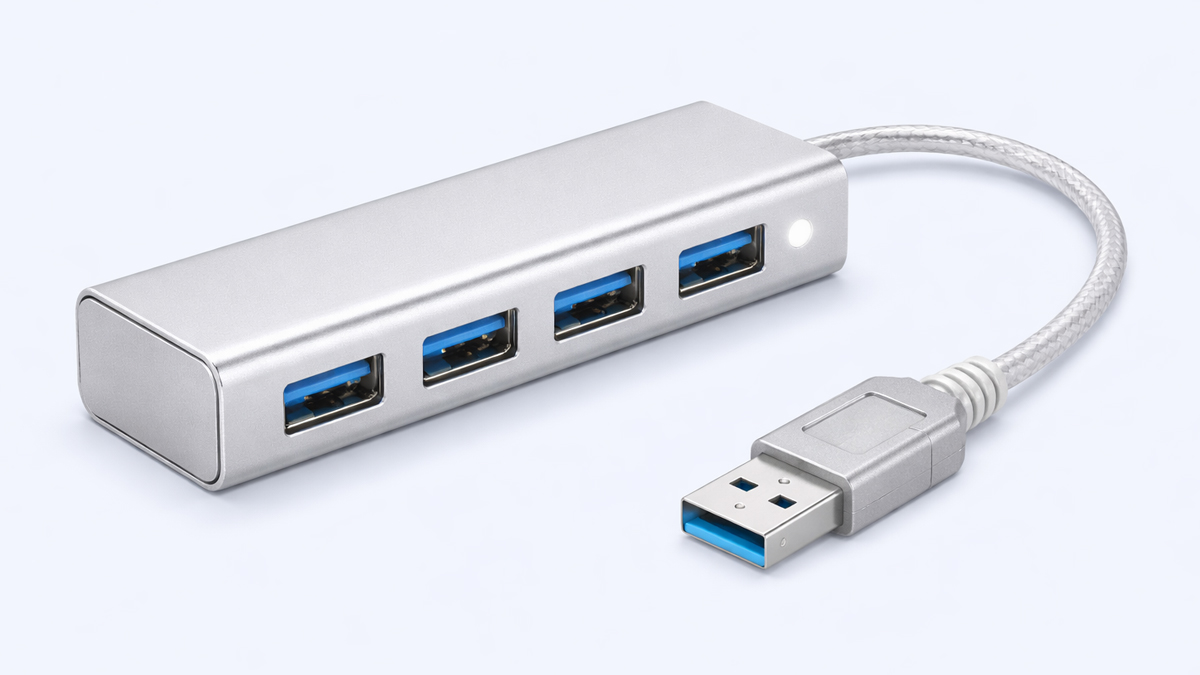
What is USB Hub Integration?
USB Hub Integration is the method of connecting multiple USB based music devices through a single central hub so they can work together as one coordinated system. In smart musical instruments, it usually means the instrument setup can handle several USB connections at the same time, even when the main host device has limited ports. The host can be a computer, tablet, smartphone, or the internal processing unit inside a smart instrument. A USB hub expands connectivity by providing multiple downstream ports while using only one upstream connection to the host.
Smart musical instruments rely heavily on digital connectivity. A modern keyboard, digital drum module, smart guitar processor, or audio workstation often needs to connect with controllers, audio interfaces, storage devices, and software systems. USB Hub Integration solves the common problem of running out of ports, but it also improves the entire workflow by reducing cable clutter and simplifying the way devices are attached and managed.
USB Hub Integration is not only about adding more ports. Good integration considers power delivery, device compatibility, data stability, and physical durability. When done well, it supports reliable performance in studios, classrooms, rehearsal rooms, and live stage environments. It helps musicians focus on creativity and performance rather than constant plugging, unplugging, and troubleshooting.
How does USB Hub Integration Work?
USB Hub Integration works by placing a hub between a USB host and multiple USB devices so the host can communicate with each device through a single connection.
Host and device relationship: USB communication is controlled by the host. Devices respond when the host asks for information or sends data. A hub makes it possible for one host to manage many devices at once without needing separate physical ports for each one.
Device detection and port status: When a device is plugged into the hub, the hub detects a change on that port and reports it to the host. This triggers the host to begin identifying the device.
Enumeration process: The host assigns an address to the new device and reads its descriptors. These descriptors tell the host what the device is and how it should communicate, such as MIDI, audio, storage, or another class.
Bandwidth sharing: All connected devices share the upstream connection bandwidth. The hub coordinates timing so multiple devices can send and receive data without conflicts, based on the USB standard being used.
Power delivery behavior: The hub supplies power to devices. A bus powered hub draws power from the host, while a self powered hub uses an external power supply. In music setups, stable power is essential because unstable power can cause audio dropouts, random disconnects, or controller resets.
Integration inside smart instruments: Some smart instruments include an internal hub to connect internal modules like control surfaces, USB audio engines, wireless adapters, and expansion ports. The instrument can then expose a simple external connection to a computer or tablet.
Reliability considerations: The hub must handle continuous communication without interruptions. Good integration focuses on stable power, strong connectors, proper shielding, and avoiding overload of bandwidth, especially when audio interfaces and storage are used together.
What are the Components of USB Hub Integration?
USB Hub Integration includes multiple hardware and software components that together create a stable multi device USB environment.
USB hub controller chipset: This is the main electronics that controls hub operations, including port switching, speed negotiation, and communication with the host. The chipset quality directly affects stability, especially in live performance.
Upstream port and cable: This is the single connection from the hub to the host. Its USB version and cable quality determine the maximum shared bandwidth and the reliability of the overall connection.
Downstream ports: These are the ports used to connect devices. In music rigs, they may be USB A, USB C, or internal connectors inside an instrument or rack.
Power supply and regulation: Self powered hubs include an external power adapter and internal voltage regulation. Even bus powered hubs require regulation circuits. Clean and stable power reduces the risk of dropouts and device failures.
Overcurrent protection: Protective circuits prevent a single device from drawing too much power and destabilizing the entire system. This is especially useful when connecting devices with unknown power needs.
Data line routing and shielding: Good shielding and careful internal routing help reduce interference and signal issues. In music environments, electrical noise can lead to pops, clicks, or unpredictable device behavior.
Firmware and internal logic: Many hubs rely on firmware to control port behavior, reporting, and power features. In smart instruments, firmware can also coordinate internal USB devices and external connectivity.
Driver and class compliance support: Many music devices use class compliant USB MIDI or USB audio, while others require vendor drivers. Integration should aim for broad compatibility and stable operation across operating systems.
Mechanical design and mounting: This includes enclosure strength, port reinforcement, strain relief, and how cables are routed. Touring and stage use demands durability and reduced cable stress.
What are the Types of USB Hub Integration
USB Hub Integration can be implemented in several ways depending on portability needs, power demands, and system complexity.
Bus powered hub integration: This type draws its power from the host through the USB connection. It is convenient for small setups but may struggle when multiple devices require higher current, such as audio interfaces or devices with bright LED displays.
Self powered hub integration: This type uses an external power adapter to provide stronger and more stable power to connected devices. It is a preferred choice for stage and studio rigs where reliability matters.
Externally mounted rig integration: A hub can be mounted to a keyboard stand, pedalboard, or rack tray. This keeps the hub as a permanent part of the rig while remaining separate from the instrument itself.
Embedded internal hub integration: Some smart instruments include a hub inside the instrument to connect internal modules and offer external expansion ports, while exposing a simpler connection to the host device.
USB C dock style integration: USB C hubs often combine multiple ports with power delivery features. They are useful for modern laptops and tablets that have fewer physical ports.
Industrial grade integration: These hubs are built for demanding environments with strong enclosures, better shielding, and sometimes locking connectors. They suit touring rigs and fixed installations.
Hybrid integration with music focused features: Some systems combine hub functions with audio routing, MIDI interfaces, or dedicated power management, making them optimized for creative workflows.
What are the Applications of USB Hub Integration?
USB Hub Integration supports many real world music scenarios where multiple devices must connect at the same time.
Multi controller performance setups: Musicians often use a keyboard controller, pad controller, and mixer style control surface together. A hub makes it possible to connect them all through one host connection.
Recording workflows with audio and MIDI: Producers commonly use an audio interface plus MIDI controllers plus storage drives for samples. A hub supports these combined connections without constant cable swapping.
Live performance rigs: Stage setups may include foot controllers, lighting interfaces, wireless receivers, and audio interfaces. A well powered hub reduces setup time and improves stability.
Smart instrument expansion and accessories: Smart keyboards and other instruments may support additional USB devices such as storage drives, control surfaces, or external sound modules. Hubs provide the connectivity needed for such expansions.
Mobile music production: Tablets and ultrabooks often have limited ports. A compact hub helps connect an audio interface, MIDI controller, and storage device at the same time.
DJ and event production: DJs connect controllers, audio devices, external drives, and lighting interfaces. A stable hub can be the central point that ties everything together.
Education labs and classrooms: Music labs may have shared systems where students plug in different controllers and accessories. Hubs help standardize stations and reduce setup confusion.
Studio cable management systems: In studio desks and rack installations, hubs reduce clutter, protect computer ports, and make troubleshooting easier by centralizing connections.
What is the Role of USB Hub Integration in Music Industry?
USB Hub Integration plays a key role in enabling modern connected music production and performance across professional and everyday environments.
Supporting smart musical instrument ecosystems: Smart instruments often depend on USB for MIDI control, audio streaming, firmware updates, and app integration. Hubs help these connections scale as setups become more complex.
Improving workflow efficiency: When devices stay wired into a hub, connecting a full rig becomes faster. This saves time during sessions and reduces stress during live setup.
Reducing technical failures during performance: Stable power and consistent connectivity reduce the risk of dropouts, device resets, and unexpected disconnections, which can be critical on stage.
Protecting expensive host devices: Laptops and tablets can suffer from port wear and tear. A hub takes repeated plugging and unplugging instead of the host port.
Enabling hybrid hardware and software approaches: Many professionals use hardware instruments controlled by software instruments and plugins. A hub makes it easier to keep multiple controllers and interfaces connected at the same time.
Standardizing touring and rental rigs: Touring professionals and event companies benefit from repeatable setups. USB Hub Integration helps create consistent wiring and predictable connection behavior across venues.
Making collaboration easier: In shared studios and classrooms, a hub allows different people to connect their devices quickly, reducing downtime and confusion.
What are the Objectives of USB Hub Integration?
USB Hub Integration is built around clear objectives that improve connectivity and reliability in music technology systems.
Port expansion objective: Increase the number of available USB ports so multiple devices can be connected simultaneously.
Simplified connection objective: Reduce the number of direct connections to the host by creating a single upstream link that carries all device communication.
Stable power objective: Provide consistent power to USB devices to avoid dropouts, disconnections, and device resets in performance and recording.
Cable organization objective: Centralize cabling to reduce clutter, support faster troubleshooting, and improve stage safety.
Compatibility objective: Support a broad range of devices, including class compliant MIDI and audio devices as well as devices requiring drivers.
Rig scalability objective: Allow musicians to expand their setup over time by adding controllers, storage, or additional devices without redesigning the entire connection layout.
Instrument design objective: Support smart instrument manufacturers in creating cleaner, more capable products that can connect internal modules and external accessories efficiently.
What are the Benefits of USB Hub Integration?
USB Hub Integration provides strong benefits for musicians, producers, engineers, educators, and manufacturers.
More device connectivity: It allows many USB devices to operate together even when the host has only one or two ports.
Faster setup and teardown: With a hub as a central connection point, a complete rig can be connected to the host quickly, often with a single cable.
More stable performance with proper power: Self powered hubs reduce power related problems that can cause audio interfaces to disconnect or controllers to freeze.
Better organization and troubleshooting: When all devices connect at one point, identifying a faulty cable or device becomes easier.
Reduced wear on host ports: The hub receives repeated connections instead of the host, protecting expensive computers and tablets.
Supports modular and flexible rigs: Devices can be added or removed as needed without changing the overall system design.
Improves portability for mobile producers: A small hub can turn a lightweight laptop or tablet into a workable production system.
Supports smart instrument expansion: Integrated hubs inside instruments can support internal USB modules while providing external ports for expansions and accessories.
What are the Features of USB Hub Integration?
USB Hub Integration includes features that improve performance, reliability, and usability in music workflows.
Multiple downstream ports feature: Provides the physical connections needed for controllers, interfaces, drives, and other accessories.
USB speed support feature: Supports USB 2.0, USB 3.x, or newer standards depending on the hub. Higher speed support helps with external storage and high bandwidth devices.
Backward compatibility feature: Allows older USB devices to work with newer hosts and hubs, which is important in music where older gear is still widely used.
Per port power control feature: Some hubs allow individual port power cycling, making it easier to reset one device without disrupting the rest of the rig.
Overcurrent protection feature: Prevents a single device from drawing too much power and causing system wide failures.
Improved shielding feature: Better shielding helps reduce interference and supports stable connections in electrically noisy environments.
Durability feature: Strong housings and reinforced ports improve long term reliability, especially for touring and stage use.
Compact integration feature: Smart instruments often integrate hubs in a way that keeps cables tidy and ports accessible while maintaining clean product design.
Firmware support feature: Some hubs include firmware features that improve stability, compatibility, and power handling.
USB C and power delivery feature: Modern hub integration may include USB C connectivity with charging support for mobile devices and compact setups.
What are the Examples of USB Hub Integration?
USB Hub Integration can be seen in many practical smart musical instrument setups.
Keyboard stand integrated hub setup: A hub mounted on the stand connects a MIDI keyboard, pad controller, foot controller, and USB drive, then connects to the laptop with a single upstream cable.
Digital drum studio setup: A hub connects the drum module, an audio interface, and a MIDI foot controller to a computer for recording and live monitoring.
Guitar processor rack setup: A touring rack includes a powered hub that connects a foot controller, audio interface, wireless receiver charging dock, and a USB drive containing presets and impulse responses.
DJ booth connectivity setup: A powered hub connects a DJ controller, external SSD, and lighting interface, reducing the number of direct laptop connections and improving setup speed.
Classroom workstation setup: Each workstation includes a hub for connecting headphones interface, MIDI keyboard, and student storage devices, making lessons smoother and reducing technical issues.
Smart instrument internal integration example: A smart instrument includes an internal hub connecting internal control modules and an audio engine, while also offering external USB ports for expansions.
What is the Definition of USB Hub Integration?
USB Hub Integration is the structured implementation of a USB hub within a smart musical instrument environment so multiple USB devices can be connected, powered, and managed through a single upstream connection to a host system, while maintaining stable performance and user friendly connectivity.
What is the Meaning of USB Hub Integration?
USB Hub Integration means building a complete connection system rather than treating each USB device as a separate wiring task. It is the approach of centralizing USB connectivity so that smart musical instruments, controllers, audio devices, and storage tools can work together smoothly. The meaning is practical. It reduces complexity, supports reliable power delivery, and makes setups faster and cleaner.
In smart musical instruments, the meaning also includes internal connectivity. Many smart instruments include multiple digital subsystems. When an internal hub is integrated correctly, the instrument can connect these subsystems internally and still present a simple external connection for users. This supports the idea of smart instruments as connected platforms that can grow with modern music workflows.
What is the Future of USB Hub Integration?
The future of USB Hub Integration in the music industry will likely focus on smarter connectivity, improved stability, and more unified standards across devices.
More USB C based integration: USB C will continue expanding because it supports high speed data, modern connector design, and better power options. Many future smart instruments and music devices will likely use USB C as the primary connection.
Improved power delivery and management: Power delivery features will become more common, supporting stable powering of multiple devices and safer charging of mobile devices used in music production.
Deeper internal hub integration in smart instruments: As instruments become more computer like, internal hubs will connect touchscreens, wireless modules, audio engines, and expansion ports in a cleaner design.
Higher stability for live performance: Future hubs will likely include better protection, improved shielding, stronger connectors, and smarter recovery behavior to reduce dropouts during shows.
Smarter monitoring and diagnostics: Hubs may include status monitoring for power draw and device connectivity so musicians and technicians can detect problems quickly.
Better bandwidth handling for advanced audio workflows: As studios use higher channel counts and larger sample libraries, hubs and host connections will need to support higher throughput more reliably, especially for external SSD use.
More class compliant behavior across platforms: Compatibility across operating systems will continue improving, making plug and play setups more common for music devices.
Integrated multi connection systems: Some future solutions may combine USB hub functions with other connectivity like audio routing and network features within a single stage or studio integration unit.
Summary
- USB Hub Integration connects multiple USB music devices through one central hub to simplify smart instrument setups.
- It works by letting a host manage many devices through one upstream connection while the hub handles port detection and data routing.
- Core components include a hub controller chipset, upstream link, downstream ports, power regulation, protection circuits, shielding, firmware, and driver support.
- Common types include bus powered hubs, self powered hubs, externally mounted rig hubs, embedded internal hubs, USB C dock style hubs, industrial grade hubs, and hybrid music focused designs.
- Applications include recording setups, live performance rigs, mobile music production, DJ booths, education labs, and studio cable management.
- In the music industry, it supports smart instrument ecosystems, faster setup, reduced failures, protection of host ports, and better collaboration.
- Objectives focus on port expansion, simplified connectivity, stable power, better organization, compatibility, scalability, and smart instrument design improvements.
- Benefits include improved workflow, cleaner rigs, reduced disconnects, safer setups, and easier expansion.
- Features include multi port support, USB speed compatibility, per port power control, overcurrent protection, shielding, durability, firmware improvements, and USB C power delivery options.
- The future will likely bring more USB C adoption, smarter power delivery, deeper internal integration, stronger live stability, and improved diagnostics.

