

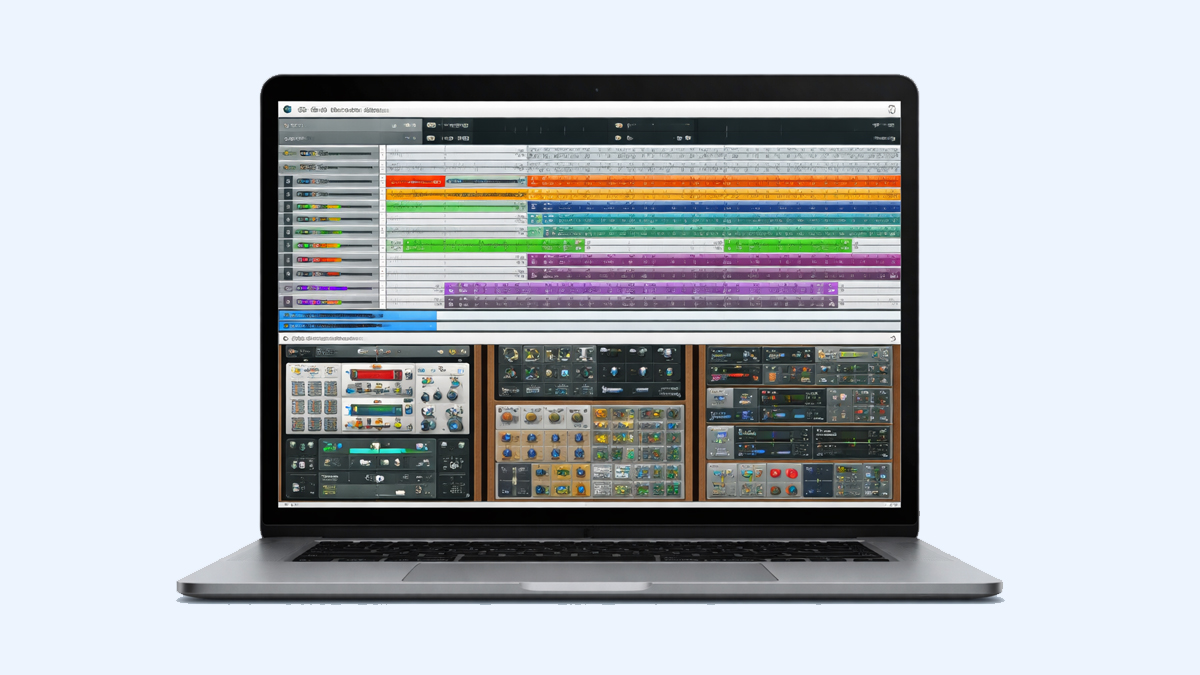
What is Reason?
Overview: Reason is a digital audio workstation, also called a DAW, built for creating, recording, editing, and mixing music inside a computer. It is known for its rack based workflow that looks and behaves like a studio rack filled with instruments, effects, and utilities. Instead of only working with separate plugin windows, you build a signal chain by adding devices to the rack and routing audio and control signals between them.
Identity: Reason is both a full music production environment and a creative sound design tool. Many people use it to sketch ideas fast, design unique tones with modular style routing, and finish complete songs with recording, arrangement, and mixing. Reason is made to feel hands on and experimental, while still providing the core DAW tools needed for professional music production.
Why people choose it: Reason stands out because it encourages building a sound from the ground up. You can start with an instrument, shape it with effects, add modulation, split signals, merge signals, and control everything with automation. The rack metaphor makes complex routing feel more visual and intuitive compared to many traditional DAWs.
How does Reason Work? Step by Step Guide
Getting started: You begin by creating a new project, selecting a tempo, time signature, and audio settings. Reason then opens its main areas, typically the rack, the sequencer for arranging, and the mixer for mixing.
Sound creation: You add an instrument device to the rack. That device can be a synthesizer, sampler, drum machine, or a player device that generates notes and patterns. When you add an instrument, Reason automatically connects it to the mixer so you can hear it right away.
Recording and input: If you want to record vocals, guitars, or any external audio, you create an audio track and select the correct input from your audio interface. Reason routes the input to the track, lets you set monitoring, and records the waveform into the sequencer timeline.
Programming and sequencing: You create musical parts using MIDI notes. You can draw notes in the piano roll, record them using a MIDI keyboard, or use pattern tools and players to generate ideas. These parts appear as clips in the sequencer where you can move, duplicate, and arrange them.
Editing: You edit timing, pitch, velocity, and expression for MIDI. For audio, you can trim, fade, time stretch, comp, and correct timing. Reason provides tools to keep edits musical so you can tighten performances while keeping a natural feel.
Routing and sound shaping: You add effects under your instrument in the rack, such as equalizers, compression, reverb, delay, distortion, or creative modulation. You can flip the rack around to access the back panel, then patch cables to route audio, sidechain signals, or control voltage style modulation between devices.
Mixing: You open the mixer, balance track volumes, pan elements, and apply channel processing. You can group tracks, send multiple tracks to shared reverbs and delays, and create parallel processing chains.
Automation: You automate parameters across the song. For example, you can gradually open a filter in a synth, increase reverb in a chorus, or change delay feedback for transitions. Automation is recorded or drawn in lanes, giving you detailed control over movement and dynamics.
Exporting: When the track is finished, you export a stereo mixdown or stems. Stems allow you to deliver separate groups, such as drums, bass, vocals, and effects, which is common in professional collaboration and mastering workflows.
What are the Components of Reason?
Rack: The rack is the heart of Reason. It holds instruments, effects, utilities, and routing tools. Devices stack vertically, making it easy to see your signal chain from top to bottom.
Back panel routing: A unique component is the ability to flip the rack and patch cables on the back. This allows advanced routing, including splitting signals, creating parallel chains, and sending modulation between devices. It encourages a modular mindset without needing external modular hardware.
Sequencer: The sequencer is where arrangement happens. It contains the timeline, tracks, clips, automation lanes, markers, and editing tools. You can build a full song structure with intros, verses, choruses, drops, and bridges.
Mixer: Reason includes a full mixer designed to mimic a large format studio console. It supports channel processing, inserts, sends, groups, and master bus processing. The mixer is designed for clear workflow so you can move from creative building to technical balancing.
Browser and sound library: The browser lets you search instruments, patches, samples, loops, and presets. A strong browser matters because music production often moves quickly, and finding the right sound at the right moment can keep creativity flowing.
Instruments: Reason includes a range of instruments such as synthesizers, samplers, drum machines, and sample players. Instruments are the sound sources, and they form the starting point for most tracks.
Effects: Effects shape sound through equalization, dynamics, spatial processing, saturation, modulation, and creative transformations. In Reason, effects are often placed directly below instruments in the rack, which helps you see how a sound is built.
Players and utilities: Players can generate chords, arpeggios, rhythmic patterns, and other musical ideas. Utilities handle tasks like splitting audio, merging signals, routing, and controlling modulation. These devices are important because they turn basic sounds into expressive performances.
Audio engine and preferences: Under the hood, Reason relies on its audio engine, driver configuration, latency settings, and sample rate choices. These determine performance, recording stability, and overall workflow comfort.
What are the Types of Reason?
Full DAW version: This is the complete Reason application, used as a standalone DAW. It includes the rack, sequencer, mixer, recording tools, editing, and export features. This is the type used to produce complete tracks from start to finish inside Reason.
Reason Rack Plugin: This type lets you use the Reason rack inside another DAW as a plugin. Instead of switching workflows entirely, you can load the rack in the DAW you already use and access Reason instruments, effects, and modular routing as part of that environment.
Subscription access model: Some users access Reason through a subscription plan that provides ongoing updates and additional content. This type is useful for people who prefer paying over time and want frequent additions to their toolkit.
Perpetual license model: Another type is the traditional purchase model where you buy a license for a specific version and optionally upgrade later. This type suits users who want predictable ownership and long term access without ongoing payments.
Workflow type focus: You can also think of types in terms of how people use it. Some treat Reason as a composition and sound design playground. Others treat it as a full production and mixing platform. Others use it mainly as a rack of instruments and effects inside a different DAW. All are valid types of usage patterns, and Reason supports them well.
What are the Applications of Reason?
Music production: Reason is used to create full songs, from beat making and chord progressions to final mixing. Producers use it for genres like electronic music, hip hop, pop, rock, and cinematic styles.
Sound design: The rack routing and modular style modulation make Reason strong for designing unique synth patches, evolving textures, and experimental effects chains. Sound designers can build complex devices combinations to create signature sounds.
Recording and editing: Reason supports recording vocals, guitars, bass, and other instruments. It can be used for demo production, full tracking sessions, and editing performances into polished takes.
Beat making and rhythm programming: With drum devices, step style programming options, sample slicing, and groove control, Reason is popular for building rhythms quickly. You can create tight modern drums or loose human grooves depending on your style.
Arrangement and songwriting: Reason can act as a songwriting notebook where ideas become structured songs. It supports fast duplication of sections, easy scene building, and experimenting with transitions through automation and effects.
Live performance preparation: Many performers prepare stems, backing tracks, and performance oriented rack setups in Reason. The rack design can be mapped to controllers, making it useful for live sound shaping and performance workflows.
Education and learning: Reason is used in music education because it visually teaches signal flow. Students can learn concepts like routing, sidechaining, parallel processing, and synthesis by seeing connections and hearing results.
What is the Role of Reason in Music Industry?
Creative production tool: Reason plays the role of a complete studio in software. It helps producers move from idea to finished record without needing a large physical setup. This is especially valuable for independent artists who produce from home.
Bridge between creativity and engineering: Many tools are either highly creative or highly technical. Reason aims to be both. Its rack encourages playful experimentation, while the mixer and sequencing tools support professional level arrangement and mixing.
Collaboration support: In modern music, collaboration often happens through sharing stems, project files, and exported versions. Reason supports industry standard outputs so producers can work with vocalists, instrumentalists, mix engineers, and mastering engineers across different locations.
Genre shaping influence: Tools influence music styles. Reason has historically been linked with electronic and beat driven genres because of its devices, routing flexibility, and fast pattern based workflows. Even when used inside another DAW, the rack can shape the sonic identity of a track.
Workflow diversity in studios: In professional environments, different creators prefer different DAWs. Reason is often present as either a main DAW for certain producers or as a plugin rack that adds unique sound design options to a studio setup. This role makes it a flexible addition rather than a strict replacement for other tools.
Support for smaller teams: Not every project has a full band, a studio room, and a hardware rack. Reason allows a single creator to do the work of many roles, composer, performer, sound designer, and mixer, which matches how much of today’s music is made.
What are the Objectives of Reason?
Make music creation faster: A core objective is to reduce friction between an idea and a playable sound. When you can add a device, load a patch, and route effects quickly, you spend more time creating and less time configuring.
Encourage experimentation: Reason aims to make experimentation feel safe and fun. You can try unusual routings, stack devices, and modulate parameters without worrying that you are breaking something. If an idea does not work, you can undo and try another.
Teach signal flow naturally: The rack and back panel objective is educational as well as practical. It helps users understand audio signal paths, effect chains, sends, returns, and modulation routes. This knowledge transfers to other DAWs and even hardware studios.
Offer a complete environment: Another objective is completeness. Reason is designed to provide instruments, effects, mixing tools, and recording features so you can finish a project without needing many extra purchases.
Support different production styles: Some people write with MIDI, others record live audio, others start with loops and samples. Reason aims to serve all these approaches by providing multiple ways to create and manipulate sound.
Integrate into broader workflows: With the rack plugin, Reason also aims to fit into existing studio workflows. This objective recognizes that many professionals have a preferred DAW but still want Reason devices and routing.
What are the Benefits of Reason?
Visual workflow clarity: The rack helps you see what is happening in your sound chain. You can understand where a sound starts, which effects shape it, and where it goes in the mix.
Creative routing flexibility: The ability to patch and reroute signals makes it easy to build advanced setups such as parallel compression, multiband effects, layered instruments, and sidechain driven movement. This can add depth and uniqueness to productions.
Fast idea generation: Players, pattern tools, and the device browser can speed up songwriting. When inspiration is fragile, speed matters. Reason supports quick sketches that can later become full productions.
Strong sound design potential: By stacking instruments, using modulation tools, and exploring creative effects chains, you can build signature sounds that stand out in a crowded music market.
All in one convenience: Many users benefit from having instruments, effects, and a mixer in a single package. This reduces setup time and simplifies decision making.
Learning benefit: Users often improve their audio knowledge through Reason. Understanding routing and modulation can help you become better at mixing and production even outside of Reason.
Flexible usage options: You can use Reason as a standalone DAW or use the rack inside another DAW. This benefit is practical for producers who want to keep their existing workflow while adding new sound possibilities.
What are the Features of Reason?
Rack based device environment: The rack is the signature feature. It organizes instruments and effects in a way that feels like building a real studio chain.
Back panel patching: Flipping the rack and connecting cables is a feature that supports complex routing. It makes advanced setups easier to conceptualize because you can see the path of audio and modulation.
Integrated mixer: A full mixer with channel processing, sends, inserts, and routing options supports professional mixing. This helps you move from creative sound building to polished balance and clarity.
Sequencer editing: The sequencer supports MIDI programming, audio editing, automation, and arrangement tools. You can refine performances and build full song structures with detailed control.
Automation and modulation: Reason allows deep parameter control. Automation can be drawn and edited precisely, while modulation can be routed through devices to create movement and life in static sounds.
Players for musical assistance: Players can add chords, rhythms, arpeggios, and variations. This feature helps beginners start faster and helps advanced producers explore new patterns.
Sampling and loop handling: Reason supports working with samples, loops, slicing, and pitch and time control. This is essential for modern production where sampling and audio manipulation are common.
Compatibility through rack plugin: The rack plugin feature allows Reason devices to run inside other DAWs, which expands its usefulness in professional environments.
Preset management and browsing: Efficient browsing helps you locate sounds quickly, compare options, and keep creative momentum.
Stability and performance options: Audio settings, latency control, and device management features help projects run smoothly, especially on complex sessions with many tracks.
What are the Examples of Reason?
Electronic track production: Example: A producer builds a drum groove using a drum device, layers a bass synth, adds chord stabs with a poly synth, and uses delay and reverb sends for space. They automate filters and effects for transitions, then export a mastered mixdown.
Hip hop beat creation: Example: A beat maker chops a sample, programs drums, and uses compression and saturation for punch. They create variations by muting elements, adding fills, and automating a low pass filter for the intro and breakdown.
Pop songwriting demo: Example: A songwriter records a vocal, adds a simple piano part, layers pads, and creates a structured verse and chorus arrangement. They use basic mixing tools to balance the track and deliver a clean demo to collaborators.
Cinematic sound design: Example: A composer uses evolving pads, texture layers, and rhythmic pulses created through modulation and routing. They build a rack that morphs over time and automate intensity to match scene changes.
Guitar based production: Example: A guitarist records multiple takes, compiles the best parts, and processes the sound with amp style effects, EQ, and room reverb. They add programmed drums and bass, then mix and export stems for a mix engineer.
Using the rack inside another DAW: Example: A producer works in another DAW for editing and arrangement but loads Reason Rack Plugin for its instruments and creative effects routing. They create a complex parallel processing chain inside the rack, then return the sound to the main DAW mix.
What is the Definition of Reason?
Core definition: Reason is a digital audio workstation used for music creation, recording, editing, sound design, and mixing. It provides a rack based environment where instruments, effects, and routing tools can be combined to produce complete musical projects.
Functional definition: Reason is also a modular style virtual studio where devices can be connected through audio and control routing to shape sound in detailed and creative ways. It can function as a standalone production platform or as a rack plugin inside other DAWs.
What is the Meaning of Reason?
Meaning in simple terms: Reason means a complete music making system on your computer where you can build sounds like you would in a studio, connect devices, record parts, arrange sections, and mix everything into a finished track.
Meaning for beginners: For someone new to music production, Reason can mean a guided creative space. The rack layout shows how music tools connect, which helps you learn the basics of production while you create.
Meaning for professionals: For experienced producers and engineers, Reason can mean a fast sound design rack and routing playground. It offers a way to create unique chains and textures that can be hard to replicate in more conventional workflows.
Meaning in the industry: In the broader music industry, Reason represents a style of production that values experimentation, modular thinking, and integrated tools. It supports modern workflows where one person can produce professional results using software.
What is the Future of Reason?
Evolving production expectations: Music production keeps changing. People expect faster workflows, better integration, and more flexible collaboration. The future of Reason is likely to focus on improving speed, stability, and integration across different studio setups, including hybrid workflows with other DAWs.
Rack expansion and device innovation: The rack concept allows endless growth. Future development may continue to add new instruments, effects, and player devices that match modern genre needs. Producers always want fresh sounds, better modulation, and more intelligent tools for shaping tone.
Deeper integration as a plugin: As more producers combine multiple tools, the rack plugin pathway becomes increasingly important. The future may involve smoother automation handling, expanded routing options, and improved interoperability so Reason devices feel native in more environments.
Collaboration and sharing: Modern production often involves remote work. The future may include better ways to share projects, presets, racks, and stems with consistent results across systems. This could help teams move quicker from idea to release.
Smart assistance features: Many music tools are adding smarter features such as improved browsing, suggestion systems, and workflow helpers. Reason may continue moving toward intelligent organization of sounds, easier sound discovery, and improved editing tools that keep creativity first.
User experience refinement: The future is not only about new features. It is also about making existing features easier to access. Streamlined navigation, better device management in large sessions, and clearer control mapping can make Reason feel even more modern while keeping the rack identity.
Long term role: Reason is likely to remain a creative toolkit recognized for its modular rack workflow. Even if production trends shift, a tool that encourages experimentation and clear signal flow can stay relevant because those fundamentals do not go out of style.
Summary
- Reason is a digital audio workstation built around a rack based workflow for music creation, recording, editing, and mixing.
- It works by combining instruments, effects, and utilities in a rack, arranging music in the sequencer, and mixing in a full console style mixer.
- Key components include the rack, back panel routing, sequencer, mixer, instruments, effects, players, utilities, and a strong browser for sounds.
- Types of Reason include the full standalone DAW, the Reason Rack Plugin for other DAWs, and different access models such as subscription and perpetual license.
- Applications range from songwriting and beat making to sound design, recording live audio, education, and live performance preparation.
- In the music industry, Reason helps creators produce professional music efficiently and supports both independent and studio based workflows.
- Objectives include speeding up creation, encouraging experimentation, teaching signal flow, offering a complete toolset, and integrating into wider workflows.
- Benefits include visual clarity, flexible routing, fast idea generation, strong sound design capabilities, and the option to use it standalone or as a plugin.
- Features such as rack routing, back panel cabling, automation, players, sampling tools, and an integrated mixer make Reason distinct among DAWs.
- The future of Reason likely focuses on better integration, continued device innovation, smarter workflow support, improved collaboration options, and refined user experience.

