

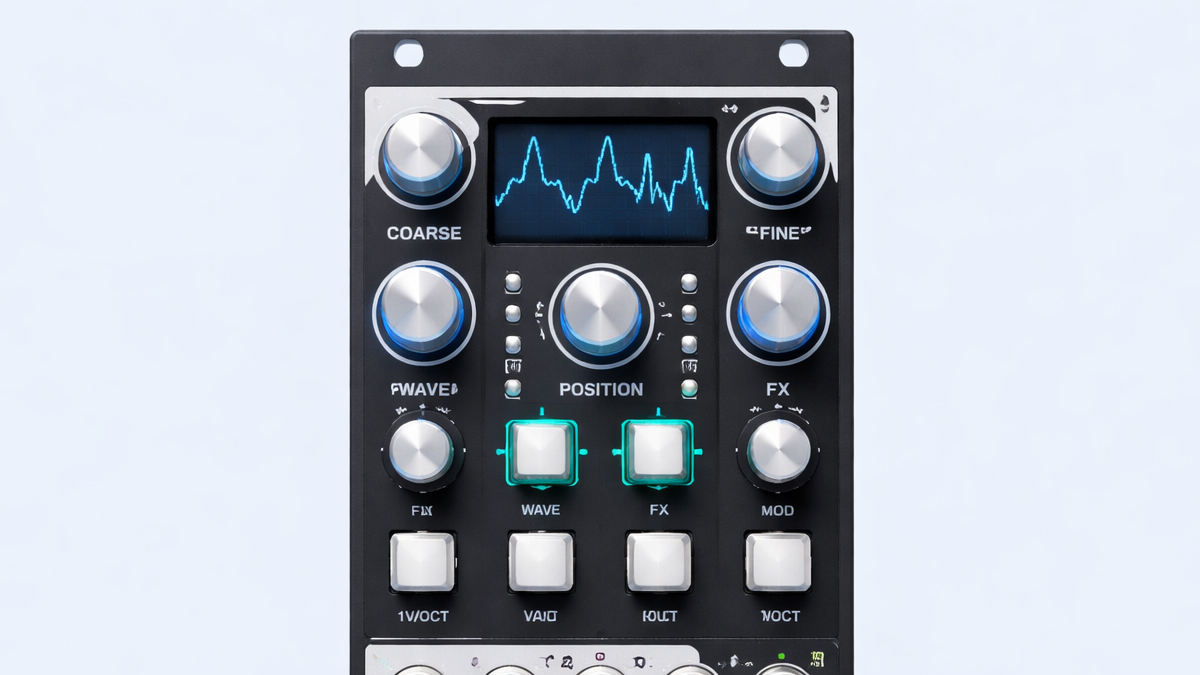
What is Wavetable Oscillator?
A wavetable oscillator is a sound source used in synthesizers that creates tones by reading through a collection of short digital waveforms called wavetables. Instead of producing a single fixed shape like a classic analog oscillator, it can smoothly shift between many waveform shapes. This shifting makes the sound feel alive because the harmonic content changes over time.
In simple terms, imagine a library of tiny wave snapshots. Each snapshot is one cycle of a sound wave. A wavetable oscillator plays one snapshot repeatedly to form a steady pitch, and it can move to the next snapshot to change the tone. The result is a wide range of textures, from clean and glassy to gritty and complex.
Wavetable oscillators are popular in modern music electronics because they combine the precision of digital sound with the expressiveness of continuous timbral movement. They are used in both hardware synthesizers and software instruments, and they are a major reason why many modern synth sounds feel animated, evolving, and detailed.
How does Wavetable Oscillator Work?
A wavetable oscillator works by scanning through a wavetable while maintaining a steady pitch. The pitch comes from how fast the oscillator completes a waveform cycle, while the tone comes from which waveform is selected and how it changes during playback.
Wavetable playback: The oscillator stores a wavetable that contains multiple single cycle waveforms. Each waveform is typically represented as a set of samples. To produce sound, the oscillator reads the samples in order and repeats the cycle. The speed of reading determines the fundamental frequency you hear as pitch.
Table scanning: The unique strength of wavetable synthesis is scanning. The oscillator can move from one waveform to another, either abruptly or smoothly. Smooth scanning usually uses interpolation, which blends adjacent waveforms so the transition sounds continuous rather than stepped.
Interpolation and smoothing: Many wavetable oscillators use interpolation between sample points inside a waveform and between waveforms in the table. This reduces harsh digital stepping and helps create fluid tonal motion. Higher quality interpolation often sounds cleaner, especially at high frequencies.
Anti aliasing control: Digital oscillators can create aliasing, which is unwanted mirror frequencies that appear when harmonics exceed the system sample rate. Wavetable oscillators often reduce aliasing by using band limited tables, oversampling, filtering, or carefully designed wavetable content.
Modulation and animation: The wavetable position is often modulated by envelopes, LFOs, velocity, aftertouch, or macros. This allows the sound to evolve in time, react to performance, and move from soft to bright or from simple to complex with musical intention.
What are the Components of Wavetable Oscillator?
A wavetable oscillator is built from several functional blocks that work together to create stable pitch, controllable timbre, and musical flexibility.
Wavetable memory: This is where the waveforms are stored. A wavetable can be factory content, user loaded content, or generated content. It may contain a small set of waveforms or a large bank, depending on the instrument.
Waveform frames: Each frame is a single cycle waveform. Frames are arranged in an order that makes scanning musically useful, such as moving from a sine like shape toward sharper or more complex shapes.
Phase accumulator: This is the engine that keeps pitch stable. It advances through the waveform at a rate determined by the note frequency. Each time it completes a cycle, the oscillator has produced one period of the wave.
Sample reader: The reader fetches sample values from the current frame based on the phase position. If the phase points between sample indices, interpolation can be used to calculate a smooth value.
Frame selector: This chooses which waveform frame is active. The selector can be controlled by a wavetable position parameter that ranges across the table.
Frame interpolation: To avoid stepping between frames, many oscillators blend frames. This is critical for smooth evolving timbres and for expressive modulation.
Anti aliasing method: This component reduces aliasing using strategies like band limiting, multitable designs, oversampling, or post filtering. High quality anti aliasing is one reason some wavetable synths sound more polished than others.
Modulation matrix hooks: Wavetable position, phase, unison spread, and other parameters are commonly exposed to modulation. These connections transform a static oscillator into a performance instrument.
Output shaping and gain staging: Many designs include level control, saturation, drive, or waveshaping right after the oscillator. This can add density and character before the sound reaches filters and effects.
What are the Types of Wavetable Oscillator?
Wavetable oscillators come in several types, mostly defined by how the wavetables are created, how scanning works, and how the oscillator behaves in a synthesizer.
Classic digital wavetable oscillator: This type uses a fixed set of wavetables designed by the manufacturer. The tables are tuned for musical scanning and are often band limited for clean sound.
User wavetable oscillator: This allows the user to load custom wavetables. Some instruments accept single cycle files, and others accept multi frame tables. This type supports deep sound design and personal sonic identity.
Spectral morph wavetable oscillator: Instead of blending time domain waveforms directly, this type may morph harmonics or spectral components. The movement can feel smoother and more consistent across the table, especially when the source waveforms are very different.
Vector wavetable oscillator: This blends multiple oscillator sources, often two to four, using a control pad or modulation. The sources can be wavetables, and the oscillator output becomes a mix that moves through a multi dimensional timbre space.
Granular wavetable hybrid oscillator: Some modern synths blend wavetable and granular ideas, using wavetable frames with grain based playback or micro scanning. This can create shimmering, cloud like textures while retaining pitch control.
Formant oriented wavetable oscillator: These tables are designed to mimic vocal resonances and speech like tones. Scanning changes vowel like character. This type is common in modern electronic music sound design.
Unison wavetable oscillator: This focuses on multiple detuned voices from the same wavetable, with stereo spread and phase control. It creates thick leads and wide pads, and it is strongly associated with modern synth timbres.
What are the Applications of Wavetable Oscillator?
Wavetable oscillators are used across many sound creation tasks because they can produce both precise tones and complex evolving textures.
Evolving pads and atmospheres: Smooth scanning creates slow harmonic movement. Combined with filters and reverbs, this produces spacious pads used in ambient, cinematic, and melodic electronic music.
Modern leads and hooks: Wavetable unison, brightness control, and animated modulation make leads feel energetic and expressive. Many signature modern synth leads rely on wavetable motion for character.
Bass design: Wavetables can contain rich harmonic content that stays controlled in the low end. By modulating wavetable position with an envelope, you can create punchy bass attacks and growl style bass tones.
Plucks and keys: Short envelopes on wavetable position and filter cutoff create bright transient detail. This supports plucks, digital keys, and bell like tones.
Sound effects and transitions: Rapid scanning, random modulation, and extreme tables make risers, drops, sweeps, and glitchy impacts. Wavetables provide dramatic changes without needing many separate layers.
Percussive synthesis: Some wavetables contain noise or sharp transient shapes. With fast amplitude envelopes and pitch modulation, these can produce kicks, snares, clicks, and synthetic percussion elements.
Hybrid acoustic like textures: By using tables derived from real instruments, you can create tones that hint at strings, winds, or vocal character while still behaving like a synth oscillator.
What is the Role of Wavetable Oscillator in Music Industry?
Wavetable oscillators play a major role in the music industry because they help producers and composers create distinctive sounds efficiently, reliably, and with strong performance control.
Sound identity and branding: Many artists develop recognizable tones through specific wavetables, scanning patterns, and modulation macros. This helps establish a sonic signature, especially in electronic genres.
Production speed: Wavetable synths can create a wide range of sounds quickly. A single oscillator plus a few modulations can cover pads, leads, basses, and effects, reducing the need for multiple instruments.
Live performance expression: Wavetable position is easy to map to a knob, wheel, or aftertouch. Performers can shape brightness and aggression in real time, making digital synths feel playable and dynamic.
Genre shaping influence: Modern dance music, pop, film trailers, game soundtracks, and experimental music commonly use wavetable synthesis. The ability to create moving timbres supports contemporary expectations for energetic and polished sound design.
Consistency and recall: Digital wavetable systems provide stable tuning and repeatable results. In professional production, being able to reopen a session and get the same sound matters for collaboration and release workflows.
Integration with modern workflows: Software wavetable synths integrate with automation, MIDI editing, and preset management. This makes wavetable oscillators central to modern music electronics and studio practice.
What are the Objectives of Wavetable Oscillator?
The objectives of a wavetable oscillator are the design goals that explain why it exists and how it serves musicians and engineers.
Provide rich timbral variety: One oscillator should offer many tonal colors by switching or scanning through waveforms, rather than being limited to a few shapes.
Enable smooth harmonic movement: The oscillator should support continuous morphing between waveforms so the sound can evolve without abrupt jumps unless intentionally desired.
Maintain stable pitch and tuning: Even while the tone changes, the fundamental frequency should remain consistent and musical across the keyboard.
Support expressive modulation: The wavetable position and related parameters should respond well to envelopes, LFOs, and performance controls so the sound can feel alive and reactive.
Reduce digital artifacts: The oscillator should minimize aliasing and stepping so the result is clean when needed and intentionally gritty when desired.
Offer efficient sound creation: The oscillator should generate complex sounds without requiring heavy layering. This helps with workflow speed and can reduce CPU load in software contexts.
Encourage creative sound design: By allowing custom wavetables, unique scanning modes, and flexible modulation, the oscillator should invite experimentation and new sonic results.
What are the Benefits of Wavetable Oscillator?
Wavetable oscillators bring several strong benefits that make them a favorite choice in modern synthesizers.
Wide sound palette: A wavetable oscillator can cover gentle sine like tones, bright saw like tones, metallic textures, vocal like formants, and evolving digital landscapes, all from a single core engine.
Animated timbre with simple control: Moving one parameter, the wavetable position, can create large changes in character. This makes it easy to build movement into a sound.
Strong compatibility with modulation: Because the wavetable position is a continuous dimension, it responds beautifully to LFOs and envelopes, producing musical motion without complex routing.
Precision and repeatability: Digital oscillators stay in tune and behave consistently. This supports professional production where reliability and recall are essential.
Layering efficiency: Many wavetable synths include unison and multiple oscillator slots. A single patch can sound like a layered stack because each voice can be detuned and spread.
Creative customization: User wavetable support allows original content. You can turn samples or drawn waveforms into tables, creating a personal library of sounds.
Modern mix ready character: Many wavetable synths are designed to sound polished and present. They can cut through a mix while still offering smooth pads and detailed textures.
What are the Features of Wavetable Oscillator?
Wavetable oscillators often include features that extend far beyond simple waveform playback, especially in modern synthesizers.
Wavetable position control: This is the core feature that selects the current frame in the table. It can be static or modulated to create motion.
Morphing and interpolation quality: Many oscillators provide smooth morphing between frames. Better interpolation usually yields smoother tone changes and fewer artifacts.
Multiple scanning modes: Some instruments offer different ways to move through a table, such as linear scanning, stepped scanning, random scanning, or envelope driven scanning.
Phase control and retrigger options: Phase settings can affect punch and consistency. Retrigger can make each note start at the same phase for predictable attacks, while free running phase can create organic variation.
Unison and voice stacking: Multiple copies of the oscillator can play together with detune, stereo spread, and drift. This adds thickness and width.
Warping and shaping: Many wavetable engines include warp functions like bending, syncing, folding, or phase distortion. These create new harmonic content on top of the wavetable movement.
Sub oscillator and noise integration: Some designs add a sub source or noise source to reinforce low end or add texture. This helps balance digital brightness with body.
Anti aliasing and quality modes: High quality modes reduce aliasing at the cost of higher computation. Some synths offer selectable quality settings.
User wavetable import and editing: Advanced systems allow drawing, resynthesis, spectral analysis, and frame editing. This turns the oscillator into a sound design workstation.
Macro controls and performance mapping: Wavetable synths often include macros that control several parameters at once. This makes complex motion easy to perform and automate.
What are the Examples of Wavetable Oscillator?
Examples of wavetable oscillators can be described both as instrument categories and as common wavetable use cases that appear across many synthesizers.
Hardware wavetable synthesizers: Many modern hardware synths include wavetable engines, offering knobs for wavetable position, unison, and modulation. These are used in studios and on stage for dependable performance.
Software wavetable synthesizers: Many popular plugin instruments are based on wavetable oscillators. They often include advanced editing, spectral morphing, and large wavetable libraries suited for modern production.
Hybrid wavetable workstations: Some synths blend wavetable oscillators with subtractive filters, FM options, and effects. These hybrids are common because they cover many musical roles in one instrument.
Formant wavetable patches: These are classic examples where scanning changes vowel like tone, producing talky leads and vocal pads.
Evolving pad patches: Another common example is a pad that slowly scans through a table using an LFO while a filter and reverb add space.
Aggressive bass patches: Many modern bass sounds use an envelope to sweep wavetable position quickly at note start, creating a sharp bite that settles into a sustained growl.
Cinematic texture patches: Slow scanning combined with stereo unison and long effects creates atmospheric beds used in film and game scoring.
What is the Definition of Wavetable Oscillator?
A wavetable oscillator is a digital oscillator that generates sound by repeatedly playing a single cycle waveform from a table of multiple waveforms and optionally moving between those waveforms to change timbre over time.
What is the Meaning of Wavetable Oscillator?
The meaning of wavetable oscillator is the idea of an oscillator that is not limited to one waveform shape. It is an oscillator whose tone can change by selecting different waveform frames stored in a wavetable. This meaning highlights two key ideas: a stored collection of waveforms and a controllable method for scanning or morphing between them to create evolving sound.
What is the Future of Wavetable Oscillator?
The future of wavetable oscillators is likely to expand in three major directions: higher realism, deeper customization, and more intelligent control, while staying musically accessible.
Higher fidelity and lower artifacts: As processing power grows, wavetable engines can use improved anti aliasing, higher resolution tables, and smarter interpolation. This will make high frequency content cleaner and reduce unwanted digital artifacts.
Richer wavetable creation tools: More synths will likely include built in wavetable generation from audio samples, resynthesis from recordings, and drawing tools that are easy for beginners. This will help musicians build personal wavetable libraries without complex external software.
Smarter modulation and performance mapping: Future instruments may offer guided modulation suggestions, adaptive macros, and performance friendly controls that make complex movement easier to play. This can help wavetable synthesis remain approachable while increasing depth.
Hybrid engines as the norm: Wavetable oscillators will likely continue merging with FM, physical modeling, granular, and subtractive processes. Hybrid designs provide both the animated tone of wavetables and the organic complexity of other synthesis methods.
Better integration with production workflows: Expect deeper DAW automation integration, more expressive MIDI support, and easier preset sharing. Wavetable oscillators thrive when they respond well to expressive performance data and modern production needs.
Community driven libraries: The future also includes larger ecosystems of wavetable packs, shared patches, and artist curated libraries. This will keep wavetable synthesis evolving as a creative culture, not only as a technology.
Summary
- A wavetable oscillator generates sound by playing single cycle waveforms stored in a wavetable and can scan between them to change timbre.
- Pitch is controlled by playback speed, while tone is shaped by wavetable position, interpolation, and modulation.
- Key components include wavetable memory, waveform frames, phase accumulator, sample reader, frame selector, and anti aliasing methods.
- Types include classic factory tables, user loaded tables, spectral morphing designs, vector style blends, and hybrid approaches.
- Applications include pads, leads, basses, plucks, sound effects, and cinematic textures across hardware and software synthesizers.
- In the music industry, wavetable oscillators support fast production, strong sound identity, expressive performance control, and reliable recall.
- Benefits include wide timbral variety, easy animation, strong modulation response, precision, and creative customization.
- Common features include smooth morphing, scanning modes, phase control, unison, warping, anti aliasing options, and wavetable editing tools.
- The future points toward cleaner sound, more accessible wavetable creation, smarter performance control, and deeper hybrid synthesis engines.

