

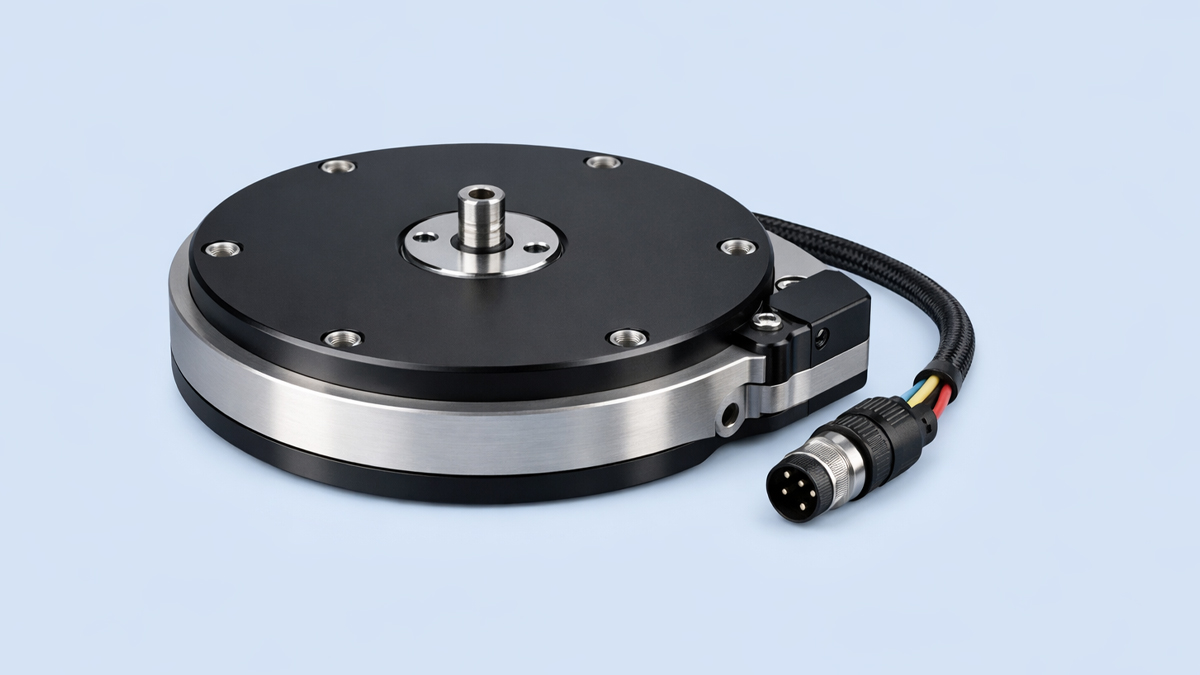
What is Pancake Motor?
A pancake motor, also called a flat motor or axial flux motor, is an electric motor designed with a very short length and a wide diameter. Instead of looking like a long cylinder, it looks more like a flat disc. This special shape is the reason people call it a pancake motor. The key idea behind this motor is to save space in the length direction while still producing useful torque.
Pancake motors are chosen when designers want a motor that fits into tight spaces, needs a low profile, or must be integrated into a thin mechanical assembly. Because many pancake motor designs use an axial flux layout, the magnetic field and the main force direction are arranged differently compared to a traditional radial flux motor. In simple words, many normal motors push magnetic forces around the radius of the motor, while many pancake motors push magnetic forces across the flat faces of the motor.
In cinematic electronics and cinema industry equipment, this flat profile is often valuable. Film gear can be compact, portable, balanced, and highly optimized for smooth motion. Pancake motors can help achieve those design goals because they can sit inside gimbals, sliders, pan tilt heads, lens control modules, compact winches, and robotics used on set. The motor becomes easier to hide inside a mechanism without making the device bulky.
Another important point is that pancake motors are often used in applications where torque at low speed matters. Many pancake motors can provide strong torque in a small axial length, which is useful for controlled movement and stable positioning. In cinema equipment, stable positioning can directly improve shot quality because it reduces jitter and helps motion remain consistent.
How does Pancake Motor Work?
A pancake motor works by converting electrical energy into mechanical rotation using magnetic forces. The motor has two main magnetic parts: a rotating part and a stationary part. The stationary part usually contains coils of wire that become electromagnets when current flows through them. The rotating part may carry permanent magnets or may also include wound coils depending on the design.
In many pancake motor designs, especially axial flux types, the rotor and stator face each other like two flat plates. When current passes through the stator windings, it creates a magnetic field. This field interacts with the magnetic field from the rotor magnets. The interaction produces a force that creates torque, causing the rotor to spin.
Commutation: In a brushed pancake motor, commutation is done using brushes and a commutator. The commutator switches current direction through rotor windings as the rotor turns. This keeps the torque direction consistent. In a brushless pancake motor, commutation is electronic. A controller switches the current in the stator windings in a timed pattern based on rotor position feedback from sensors or from sensorless estimation.
Axial flux interaction: In many pancake motors, the magnetic flux travels along the axis of rotation. This means the flux goes from one face of the motor to the other, passing through the air gap between rotor and stator. Because the radius can be larger than in af many cylindrical motors, torque can be high since torque is related to force times radius. So even if the motor is thin, it can still develop strong torque due to its larger effective radius.
Speed control: Pancake motors can be driven in different ways depending on the application. For cinematic motion control, the motor is often controlled with precise speed and position commands. A controller may use feedback from an encoder to ensure the motor moves exactly as required. This is how a camera head can pan at a perfectly constant speed or stop at an exact angle.
Heat and efficiency: Like all motors, pancake motors generate heat in the windings and other losses. The flat structure can help spread heat over a wide surface area. Designers often use the motor housing as a heat path so the system remains stable and reliable during long shoots.
What are the Components of Pancake Motor?
A pancake motor includes several core components, and the exact set depends on whether it is brushed or brushless, and whether it is coreless, iron core, or a specialized axial flux type.
Stator: The stator is the stationary part of the motor. It typically holds the windings. In many pancake motors, the stator is a flat ring structure with slots that carry copper windings. In some designs, the stator may be ironless to reduce cogging and improve smoothness.
Rotor: The rotor is the rotating part. In many pancake motors, the rotor carries permanent magnets arranged around a flat disc. The magnets can be mounted on one face or in a dual rotor arrangement, where magnets exist on both sides of the stator.
Windings: The windings are copper coils that generate magnetic fields when current flows. Their shape, thickness, and placement affect torque, efficiency, heating, and smoothness. For cinema equipment, windings are often optimized for low vibration and stable torque.
Permanent magnets: Many pancake motors use strong permanent magnets such as neodymium magnets. These magnets provide a constant magnetic field, allowing high torque density and efficient operation.
Shaft and bearings: The shaft transmits rotation to the load. Bearings support the shaft and ensure smooth rotation. High quality bearings reduce noise, reduce vibration, and improve the consistency of motion, which is critical for cinematic movement.
Commutator and brushes: This applies to brushed designs. Brushes transfer current to the rotor windings through the commutator. This is a simpler method but can create wear, noise, and electrical arcing, which can be undesirable in professional film equipment.
Electronic controller: For brushless pancake motors, an electronic speed controller drives the windings in the correct sequence. This controller can be tuned for smooth starts, stable low speed rotation, and accurate positioning.
Position sensors: Many brushless pancake motors use Hall sensors, encoders, or resolvers. For cinema use cases like motion control and lens systems, encoders are common because they provide high resolution feedback for precise control.
Motor housing and frame: The housing supports the mechanical structure and often provides heat dissipation. In cinema gear, the housing design also affects how easily the motor integrates into compact rigs.
Air gap and mechanical alignment: The air gap between rotor and stator is important for performance. A small and consistent air gap improves torque and efficiency. Precise alignment reduces vibration and uneven torque.
What are the Types of Pancake Motor?
Pancake motors come in several types based on construction, commutation method, and magnetic circuit design. Each type has strengths that match different cinema industry needs.
Brushed pancake motor: This type uses brushes and a commutator. It is easy to drive with simple electronics, but brushes wear over time and can create noise. It can still be used in lower cost equipment or in systems where replacement is acceptable.
Brushless pancake motor: This type uses electronic commutation. It is efficient, has long life, and produces less electrical noise compared to brushed motors. It is common in professional cinematic electronics where reliability is important.
Axial flux pancake motor: This is a very common pancake motor layout. The rotor and stator are arranged face to face. Axial flux motors can provide high torque density and a compact axial profile.
Radial flux flat motor: Some motors have a flatter geometry but still use a radial flux magnetic path. These can be considered pancake style in terms of shape, though the magnetic flux pattern differs.
Iron core pancake motor: This type uses iron in the stator to concentrate magnetic flux and increase torque. It may have cogging torque because of magnetic attraction between magnets and stator teeth. Cogging can create micro vibrations, which must be managed for cinema movement.
Ironless pancake motor: This type reduces or eliminates iron in the stator. It often has very low cogging torque and can be extremely smooth. It can be excellent for gimbals and motion control where smoothness is critical. The tradeoff can be lower torque density or higher cost depending on design.
Coreless pancake motor: Coreless designs reduce rotating mass and improve responsiveness. In some pancake motor implementations, coreless winding structures are used to improve dynamic performance and reduce inertia. Lower inertia can help when you want rapid, precise movement without overshoot.
Single rotor single stator: This is a simpler construction with one rotor and one stator.
Dual rotor single stator: This uses rotors on both sides of the stator, effectively sandwiching it. This can improve torque output and reduce magnetic forces that can bend the structure, but it increases complexity.
Direct drive pancake motor: These are designed to directly drive the load without a gearbox. Direct drive can reduce backlash and noise, improving precision for camera movement.
Servo pancake motor: This is a pancake motor integrated into a servo system with encoder feedback and a tuned controller. It is very common in professional motion control rigs.
What are the Applications of Pancake Motor?
Pancake motors are used in many areas where thin form factor, high torque, and smooth performance are valued. Their applications span industrial, consumer, medical, robotics, and entertainment technology.
Robotics and automation: Pancake motors fit well in robotic joints where space is limited. Their flat profile can be integrated into arms, wheels, and actuators.
Gimbals and stabilizers: Many camera gimbals benefit from flat motors because they can be mounted in the axis joints without increasing thickness. Smooth torque and low cogging help stabilize footage.
Motion control systems: Sliders, dollies, pan tilt heads, and programmable camera rigs often need motors that can move smoothly at very low speeds and also repeat the same move many times. Pancake motors can be used as direct drive motors or as part of a drivetrain.
Turntables and rotary platforms: Product shooting and VFX plates often use turntables. Pancake motors can drive a turntable quietly and steadily, which helps capture clean footage.
Drones and aerial camera systems: Some drone mechanisms, such as gimbal axes or compact actuators, can use flat motors when designers want to reduce profile and improve balance.
Medical devices: Some medical pumps, imaging devices, and lab automation systems use pancake motors due to compactness and precision.
Printers and scanners: Flat motors can be used in compact office equipment where thin drive mechanisms are needed.
Electric vehicles and mobility: Some axial flux pancake motor concepts are used in high torque, compact motor designs, though these are different scale compared to cinema devices. The underlying idea of axial flux and thin form factor remains similar.
Audio and stage equipment: Mechanisms for rotating stages, lighting fixtures, and precision positioning in live production can use pancake motors for smooth movement.
Wearables and compact consumer products: Thin motors are helpful in compact devices, although the exact motor type may vary.
What is the Role of Pancake Motor in Cinema Industry?
In the cinema industry, motion quality is not a nice to have feature, it is a core requirement. Pancake motors contribute to motion quality because they can be designed for smooth torque, compact integration, and precise control. Cinematic electronics includes the systems that move cameras, lenses, rigs, props, and automated equipment. Pancake motors can be a quiet and space saving solution within these systems.
Camera gimbals and stabilizers: Stabilization depends on a motor that can apply small corrective torques continuously. A pancake motor can sit inside the gimbal joint without making the arm bulky. When properly controlled, it can reduce micro shakes and keep the horizon stable. Low cogging designs are particularly useful because they reduce the tiny jerks that can appear in footage.
Pan tilt heads and remote heads: Professional heads used on cranes, tripods, or vehicles require precise pan and tilt movement. Pancake motors, often in brushless servo form, can drive these axes with smooth acceleration and deceleration. This improves cinematic moves like slow pans, reveal shots, and precise framing adjustments.
Motion control rigs: In VFX and repeatable shooting, motion control rigs must reproduce the same camera movement again and again. Pancake motors with encoders and closed loop control help achieve repeatability. This matters when you shoot multiple passes for compositing, such as clean plates, background plates, and actor passes.
Focus, iris, and zoom systems: Lens control in cinema often uses follow focus systems and motorized lens controllers. Pancake motors can be used in compact lens motor modules because they fit in small spaces and can deliver smooth torque. Accurate control helps maintain focus pulls that look natural and consistent.
Sliders, dollies, and compact winches: Motorized sliders and dollies require stable linear motion. A pancake motor can drive a belt, lead screw, or wheel system. Because the motor can be thin, the slider can remain compact and portable for on location work.
Virtual production and camera tracking: In virtual production, controlled camera motion and precise tracking are essential. Pancake motors can support robotic camera systems or positioning modules that integrate with tracking sensors, ensuring consistent movement for real time compositing.
Quiet operation for sound sensitive sets: Film sets often require low noise equipment, especially during dialogue scenes. Brushless pancake motors, when properly driven, can be quiet. Low vibration and careful control reduce mechanical noise that microphones might capture.
Balanced rig design: A flat motor can help keep weight closer to the axis of rotation. This improves balance and reduces inertia. Lower inertia can lead to better stabilization and easier control, which directly supports smooth footage.
Reliability and long shoot durations: Cinema shoots can be long. Equipment must run for many hours without failing. Brushless pancake motors have fewer wear parts than brushed motors, improving reliability and reducing downtime.
What are the Objectives of Pancake Motor?
The objectives of a pancake motor are tied to why engineers choose this motor shape and magnetic design. In cinema focused applications, those objectives align closely with smooth movement, compact gear, and reliability.
Compact form factor: The primary objective is to provide motor function in a low profile package. This helps equipment remain slim and portable.
High torque in limited length: Many pancake motors aim to provide strong torque even though their axial length is small. This supports direct drive or reduced gear ratios.
Smooth rotation and controllability: Another objective is to deliver smooth torque output that can be controlled precisely. Smoothness helps avoid visible vibration in footage.
Low inertia for fast response: Some pancake motors are designed with low rotating mass. This improves dynamic response, which helps stabilization systems correct motion quickly.
Efficient energy usage: Many pancake motors aim for good efficiency, reducing battery drain in portable cinema rigs.
Low noise and low vibration: Professional cinema equipment prioritizes quiet operation. Pancake motors, especially brushless and ironless designs, can support low noise objectives when paired with good mechanical design and motor control tuning.
Integration friendly design: Pancake motors are often built to integrate easily into assemblies, such as mounting in a disc shaped cavity or inside a rotating joint.
Long operational life: Brushless pancake motors aim for long life by avoiding brush wear. This objective matters in high usage professional gear.
Precision and repeatability: For motion control and robotics, the objective includes repeatable positioning and stable speed regulation, often supported by encoder feedback.
What are the Benefits of Pancake Motor?
Pancake motors offer several advantages that make them attractive in cinematic electronics and general engineering applications.
Space saving design: Their flat profile allows designers to fit motors where a long motor would not fit. This can reduce the overall size of the equipment.
High torque density in axial direction: Many pancake motors produce strong torque while staying thin. This is useful for joints and direct drive systems.
Improved balance and packaging: A flat motor can sit close to the axis and reduce bulky extensions. This improves balance in gimbals and heads.
Potential for direct drive: With sufficient torque, pancake motors can drive loads without a gearbox. This reduces backlash and improves smoothness.
Smooth motion potential: Ironless and well designed pancake motors can have low cogging torque, which supports smooth movement critical for film gear.
Better heat spreading: The wide surface area of a flat motor can help spread heat. With proper housing design, this can support stable operation.
Long life in brushless designs: Brushless pancake motors avoid brush wear, reducing maintenance needs.
Good control performance: When paired with encoders and quality controllers, pancake motors can achieve excellent speed and position control.
Lower mechanical noise: With good bearings and proper drive electronics, pancake motors can operate quietly, supporting sound sensitive shoots.
Flexible integration: Pancake motors can be integrated into rotating joints, ring shaped assemblies, and compact housings, supporting creative industrial design.
What are the Features of Pancake Motor?
Pancake motors have distinctive features that relate to their geometry, magnetic design, and control behavior. These features explain why they show up in cinema industry equipment.
Flat disc geometry: The defining feature is a short axial length compared to the diameter. This helps in low profile assemblies.
Axial flux topology commonness: Many pancake motors use axial flux, with rotor and stator facing each other. This layout can improve torque density for certain sizes.
Wide effective radius: Because the rotor can have a larger radius, the motor can generate torque effectively, even when thin.
Multiple rotor configurations: Some pancake motors use dual rotors around a single stator for higher torque and better magnetic utilization.
Low cogging options: Ironless stators or special slot and magnet shaping can reduce cogging torque. This supports smooth cinematic motion.
Compatibility with direct drive: Pancake motors can be designed for direct drive, which helps minimize mechanical artifacts like backlash.
High precision feedback integration: Many systems include encoders or sensors to support accurate servo control, which is crucial for motion control filming.
Scalable design: Pancake motors can be small for lens motors or larger for camera heads. The same basic concept can scale across multiple levels of cinema equipment.
Controller dependent performance: The motor performance depends strongly on the controller tuning. Features like smooth start, controlled acceleration, and anti vibration algorithms often come from the drive electronics.
Lightweight rotor possibility: Some designs use lightweight rotors and high energy magnets, which can reduce inertia and improve response.
What are the Examples of Pancake Motor?
Pancake motors appear in many real world products and systems, especially where compact and precise rotation is needed. In cinema related contexts, examples often show up as subsystems inside larger equipment rather than as a visible standalone motor.
Gimbal axis motors: A compact flat brushless motor inside the roll, pitch, or yaw axis of a camera gimbal is a common example. The motor is integrated into the joint to keep the profile small.
Remote head pan motor: Some professional pan tilt heads use flat motors to keep the head slim and balanced while delivering smooth pan motion.
Motion control turntable motor: A flat motor can drive a rotary turntable used for product cinematography or VFX plate capture, enabling precise and repeatable rotation.
Lens control module motor: Some follow focus and zoom control modules use flat motors to reduce thickness and fit close to lens gears.
Robotic camera rig joints: In automated camera robots used for repeatable moves, pancake motors can appear in joint actuators where a thin motor helps compact joint design.
Slider carriage drive: A pancake motor can be used in the carriage drive assembly of a compact slider, especially where the motor must fit within the slider body.
Stage and prop rotation: Rotating platforms for practical effects, rotating signage, or prop motion systems can use pancake motors for controlled rotation.
Compact winch or cable cam module: Some cable driven camera systems need compact motors for spooling or tension control. A flat motor can help keep the module thin and easier to mount.
What is the Definition of Pancake Motor?
The definition of a pancake motor is an electric motor designed with a low axial length and relatively large diameter, often using an axial flux magnetic layout, to achieve compact packaging and useful torque in thin mechanical spaces. In practical terms, it is a motor built to be flat so it can fit into applications where a conventional cylindrical motor would be too long.
A good definition also includes the idea that the flat geometry is not only cosmetic. It changes how designers arrange the magnetic circuit, how torque is produced, and how the motor integrates into machines. Because of that, pancake motors are considered a meaningful motor category rather than just a motor with a different shape.
What is the Meaning of Pancake Motor?
The meaning of pancake motor is simple: it describes a motor that looks like a pancake. This name communicates the key design intention, which is flatness. The term is used by engineers, product designers, and technicians to quickly indicate a motor with disc like proportions.
In engineering discussions, the meaning usually implies more than appearance. It often suggests an axial flux design, high torque capability for the given thickness, and integration into low profile assemblies. In cinema applications, the meaning also connects to compact rigs, balanced moving parts, and smooth controllable motion.
What is the Future of Pancake Motor?
The future of pancake motor technology looks promising because the demand for compact, efficient, and precise motion systems continues to grow. In cinema industry tools, filmmakers want lighter rigs, longer battery life, quieter operation, and more intelligent motion control. Pancake motors align well with those needs.
Higher torque density materials: Improvements in magnetic materials and motor design methods can increase torque density. Stronger magnets and better thermal design can help pancake motors deliver more torque without overheating.
Better control electronics: Motor controllers continue to improve. Smoother commutation algorithms, higher switching frequencies, and better feedback processing can reduce vibration and noise. In cinema, this can mean cleaner footage and quieter gear.
Integration with advanced sensors: Encoders are becoming smaller and more accurate. Better sensing supports more precise closed loop control. This can improve repeatability in motion control and improve stabilization response in gimbals.
Direct drive adoption: As pancake motors become stronger and more efficient, more equipment can shift toward direct drive systems. Direct drive reduces gearbox backlash and maintenance, which benefits professional rigs.
Lightweight and modular designs: Future pancake motors may be designed as modular units that integrate motor, driver, encoder, and thermal management into one compact package. This can simplify cinema equipment design and reduce setup time on set.
Customization for cinematic motion: As film gear manufacturers compete on smoothness and noise, pancake motor designs may be increasingly tailored for ultra low speed smoothness, reduced cogging, and controlled torque ripple. These details matter for slow cinematic pans and subtle movement.
Energy efficiency for portable production: Film crews increasingly rely on battery powered workflows, especially for location shooting and compact crews. Efficient pancake motors can help extend runtime.
Use in robotics and virtual production: Virtual production and robotic camera moves are expanding. Pancake motors are likely to appear more in robotic camera arms, tracking platforms, and compact actuators that need precision and a thin profile.
Sustainable manufacturing and reliability: The industry trend toward longer lasting equipment and lower maintenance favors brushless pancake motors. Better bearing designs, improved thermal handling, and robust controllers can further enhance reliability.
Summary
- Pancake motor is a flat, disc shaped electric motor designed to fit into low profile spaces while producing useful torque.
- Many pancake motors use axial flux design where rotor and stator face each other, enabling compact packaging.
- Key components include stator, rotor, windings, magnets, shaft, bearings, and in brushless versions a controller and feedback sensors.
- Common types include brushed, brushless, iron core, ironless, coreless, axial flux, dual rotor, direct drive, and servo pancake motors.
- Applications include robotics, gimbals, pan tilt heads, motion control rigs, turntables, sliders, drones, and compact positioning systems.
- In cinema industry equipment, pancake motors support smooth stabilization, precise camera motion, repeatable VFX moves, and compact rig design.
- Objectives include low profile integration, high torque in limited length, smooth controllable motion, low noise, efficiency, and long life.
- Benefits include space saving design, strong torque capability, potential direct drive operation, improved balance, and quieter performance.
- Features often include wide effective radius, axial flux layout, low cogging options, encoder integration, and controller tuned smoothness.
- Future improvements will likely come from better magnets, better controllers, higher precision sensors, more direct drive designs, and deeper use in robotics and virtual production.

