

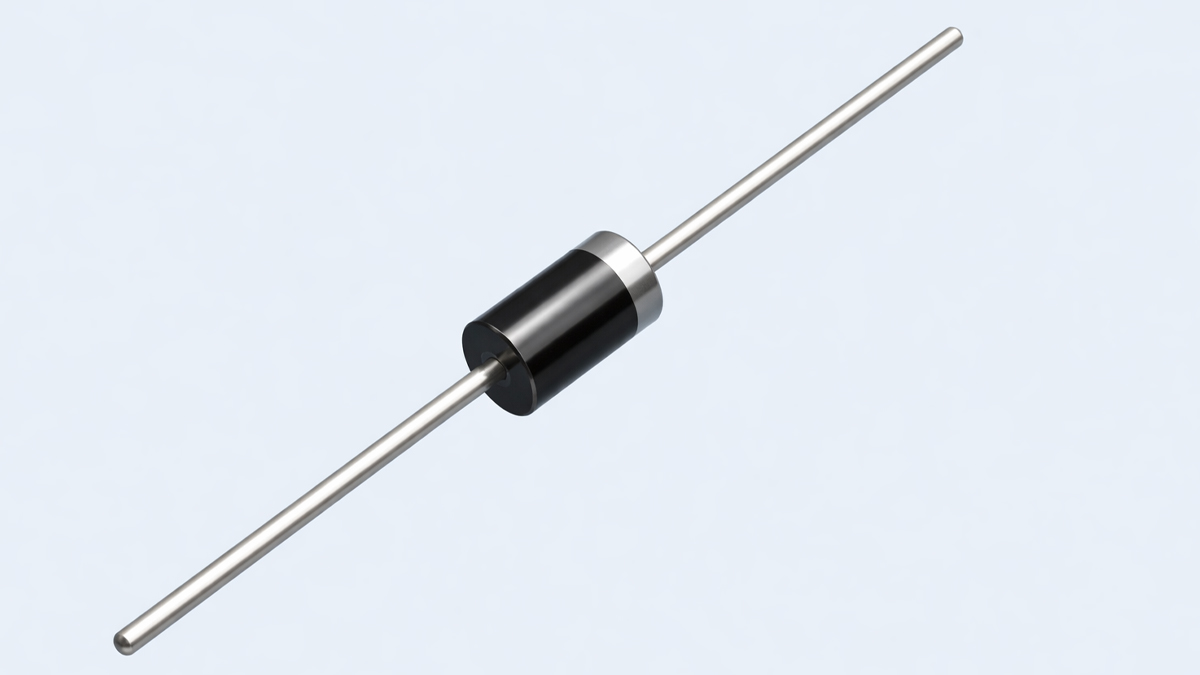
What is Schottky Barrier Diode?
A Schottky Barrier Diode is a special type of diode made using a metal to semiconductor junction instead of the usual semiconductor to semiconductor junction found in a standard PN diode. This small construction change creates a big performance difference. Schottky diodes are known for very low forward voltage drop and very fast switching. In simple words, they allow current to pass with less energy loss and they can turn on and off quickly.
In Cinematic Electronics under the Cinema Industry, speed and efficiency matter because modern cinema equipment relies heavily on stable power delivery and high frequency signal handling. Inside projectors, LED drivers, laser modules, camera power systems, wireless transmitters, audio amplifiers, media servers, and control boards, engineers constantly try to reduce heat, reduce losses, and keep circuits responsive. A Schottky Barrier Diode helps achieve these goals by reducing the voltage wasted across the diode during conduction and by avoiding slow recovery behavior.
Another important point is that Schottky diodes typically have lower stored charge compared to PN diodes. That means they have little to no reverse recovery time. When a circuit rapidly switches, a normal diode can briefly behave like it is still conducting because it needs time to clear stored charge. This delay can create noise, extra heating, voltage spikes, and efficiency loss. Schottky diodes reduce those problems, which is why they are common in switching power supplies used in cinema equipment.
How does Schottky Barrier Diode Work?
A Schottky Barrier Diode works by forming a barrier at the contact between a metal and an N type semiconductor, most commonly silicon. This barrier behaves like a one way gate for electrons. When the diode is forward biased, electrons easily move from the semiconductor into the metal, allowing current to flow. Because this process depends mainly on majority carriers, the diode responds very quickly.
Forward bias behavior: When you apply a forward voltage, the barrier height effectively lowers, and electrons cross the junction. The forward voltage drop is usually lower than a PN diode. In many practical circuits, you may see around 0.2 to 0.4 volts depending on current, temperature, and diode design. This lower drop reduces conduction losses, which reduces heat generation and improves efficiency.
Reverse bias behavior: When reverse voltage is applied, the barrier height increases, blocking electron flow. However, Schottky diodes typically have higher reverse leakage current than PN diodes. Leakage means a small amount of current flows even when the diode is supposed to be off. In cinema electronics, this is usually managed by choosing the correct diode rating and designing the circuit with proper thermal and voltage margins.
Switching behavior: The most valuable working advantage is fast switching. In switching regulators and DC DC converters found in media servers and projectors, the diode must switch thousands or millions of times per second. A Schottky diode handles this without the slow reverse recovery effect that can cause losses and electromagnetic interference.
Temperature behavior: As temperature rises, forward voltage drop usually decreases slightly, but leakage current increases. This is why cinema equipment designers carefully select Schottky diodes and provide heat sinking or airflow when needed, especially in high power projector systems and rack mounted cinema servers.
What are the Components of Schottky Barrier Diode?
A Schottky Barrier Diode may look like a simple two terminal device from the outside, but internally it has several important parts that define its performance and reliability.
Metal semiconductor junction: This is the heart of the diode. A metal layer contacts the semiconductor and creates the Schottky barrier. The choice of metal and processing method affects barrier height, leakage, and forward drop.
N type semiconductor region: Most Schottky diodes use an N type silicon substrate or epitaxial layer. This region supports electron conduction and determines current handling and breakdown voltage.
Schottky barrier region: This is the energy barrier formed at the junction. Its height controls how easily electrons cross under forward bias and how effectively current is blocked under reverse bias.
Ohmic contact: On the other side of the semiconductor, there is a low resistance connection that allows current to enter and exit the device efficiently. A good ohmic contact reduces series resistance and improves diode efficiency.
Guard ring and termination structures: Many Schottky diodes include edge termination designs to manage electric field concentration. This improves reverse voltage capability and reliability. Without these structures, breakdown can happen earlier, especially at the edges.
Package and leads: The external body is not just for protection. The package affects heat dissipation, current handling, and switching performance. In fast circuits, package inductance matters. For cinema electronics, surface mount packages are common on control boards, while larger power packages are used in high current rails.
Passivation layer: The junction surface is often protected with passivation to reduce contamination effects and stabilize leakage performance over time. This is important in cinema environments where equipment may run for long durations and face dust and temperature cycling.
What are the Types of Schottky Barrier Diode?
Schottky Barrier Diodes come in several practical types based on voltage rating, structure, and application focus. In cinema electronics, the choice depends on whether the priority is efficiency, speed, or ruggedness.
Low voltage Schottky diodes: These are designed for low reverse voltage applications such as 5V, 12V, and 24V rails. They are commonly used in power management boards, camera accessories, wireless transmitters, and small DC DC converters. They usually offer very low forward drop and high efficiency.
Medium voltage Schottky diodes: These support higher reverse voltages and are used in larger power supply sections of cinema servers, audio amplifiers, and some projector subsystems. They may have slightly higher forward drop compared to low voltage versions but still provide fast switching.
Power Schottky diodes: These are built to handle higher currents with better thermal performance. They are used in power rectification, OR-ing circuits, and protection circuits where several amps or tens of amps may flow.
Dual and common cathode or common anode Schottky diodes: These packages contain two diodes in one body. They are useful for synchronous rectification support, full wave rectification, or compact layouts. In cinema equipment, dual Schottky devices help reduce board space in power supply stages.
Schottky rectifier diodes: These are optimized for rectification in switching supplies, focusing on low loss and fast response. Many SMPS designs in cinema equipment use Schottky rectifiers for efficiency and reduced heat.
Silicon carbide Schottky diodes: These are a special class that uses silicon carbide. They can handle high voltages and high temperatures with very fast switching. They are common in advanced power conversion. In cinema industry applications like high power laser projector supplies or premium rack power units, silicon carbide Schottky diodes can be used when high voltage and switching performance are both critical.
What are the Applications of Schottky Barrier Diode?
Schottky Barrier Diodes are widely used because they combine speed and efficiency. In cinematic electronics, they appear in many places, from tiny signal circuits to high power rails.
Switching power supplies: The most common use is in SMPS outputs and secondary rectification. Cinema projectors, media servers, and digital cinema processors all rely on switching supplies for efficiency and compact size. Schottky diodes reduce losses at high switching frequencies.
DC DC converters: Many cinema systems have multiple voltage rails such as 1.0V, 1.2V, 3.3V, 5V, 12V, and 24V. Schottky diodes assist in buck converters, boost converters, and flyback designs. Their fast switching reduces ringing and heat.
Reverse polarity protection: Portable cinema gear such as field monitors, wireless follow focus systems, and battery powered transmitters often face the risk of incorrect battery connection. A Schottky diode can protect the circuit with minimal voltage loss compared to a standard diode.
Power OR-ing and redundancy: In professional cinema racks, systems may have redundant power supplies. Schottky diodes are used in OR-ing circuits to allow current from either supply while preventing backfeed. This supports reliability in theaters where downtime is costly.
Clamping and protection: Schottky diodes can be used to clamp voltage spikes and protect sensitive inputs, especially in high speed digital interfaces and control lines. In cinema gear, control boards communicate with sensors, motors, and network modules that benefit from spike protection.
RF and high speed detection: Some Schottky diodes are used in RF detectors and mixers because they respond quickly at high frequencies. Wireless audio, wireless video links, and communication modules used on film sets can include Schottky based RF functions.
Logic level clamping and signal steering: In digital boards found in camera systems and projector controllers, Schottky diodes are used to steer signals and reduce overshoot.
Battery and charging circuits: Portable cinema equipment often includes battery charging and management. Schottky diodes may be used to prevent reverse discharge paths or to isolate sections of the circuit.
What is the Role of Schottky Barrier Diode in Cinema Industry?
In the cinema industry, electronic systems must be quiet, stable, efficient, and reliable. From capture to post production to projection, everything depends on power conversion and signal integrity. A Schottky Barrier Diode plays a practical role in making this possible.
Power efficiency in projectors: Modern digital cinema projectors contain multiple power domains feeding light engines, processing boards, cooling systems, and motorized optics. High current rails demand low losses. A Schottky diode reduces wasted voltage in rectification and protection paths. Lower loss means less heat. Less heat means better reliability and quieter cooling because fans do not need to run as aggressively.
Noise control and clean power rails: Cinematic electronics often includes sensitive audio paths, precision timing circuits, and high speed processing. Switching noise can affect audio hum, video artifacts, and control errors. Because Schottky diodes have minimal reverse recovery, they reduce switching spikes and ringing in power circuits. This supports cleaner rails for audio amplifiers, DACs, ADCs, and clock distribution.
Fast response for motor and actuator control: Cinema equipment includes motorized lens control, iris systems, focus and zoom motors, gimbals, and motion rigs. Many of these systems use PWM drivers. Schottky diodes are used in freewheeling and protection paths to handle fast switching transitions and protect MOSFETs from voltage spikes.
Protection for field equipment: On set devices experience frequent plugging and unplugging, battery swaps, long cable runs, and sometimes unstable power sources. Schottky diodes provide fast protection against reverse polarity and transient spikes with less voltage penalty. That helps devices stay within safe operating limits.
Reliability in always on environments: A cinema theater environment can run long hours daily. Components must survive thermal cycling and continuous operation. By reducing heat in power paths, Schottky diodes indirectly improve lifetime of boards and surrounding components such as capacitors and connectors.
Support for compact modern designs: Designers want smaller, lighter cinema gear without sacrificing performance. Using Schottky diodes can reduce heat sinking requirements and improve efficiency, allowing compact power sections in cameras, recorders, monitors, and transmitter systems.
What are the Objectives of Schottky Barrier Diode?
The objectives of using a Schottky Barrier Diode in electronic design, especially under cinematic electronics, can be summarized as practical engineering goals.
Efficiency objective: Reduce conduction loss by lowering the forward voltage drop so less power is wasted as heat.
High speed switching objective: Support high frequency switching power converters and fast signal applications without slow recovery delays.
Thermal reduction objective: Lower heat generation in power paths, reducing cooling requirements and improving system reliability.
Voltage headroom objective: Preserve more usable voltage for the load. For example, in low voltage systems, saving even 0.3 volts can be meaningful for processors and RF modules.
Protection objective: Provide fast and effective reverse polarity protection and clamping with minimal performance penalty.
Reliability objective: Improve long term stability by reducing stress on power components and limiting transient effects.
Compact design objective: Enable smaller power circuits because improved efficiency reduces the need for large heat sinks and heavy thermal design.
Noise reduction objective: Reduce switching spikes and electromagnetic interference by minimizing reverse recovery and charge storage behavior.
What are the Benefits of Schottky Barrier Diode?
Schottky Barrier Diodes are popular because their benefits align with real world system needs, especially in professional cinema electronics.
Low forward voltage drop: This reduces power loss, increases efficiency, and keeps circuits cooler. It is especially valuable in low voltage rails where every fraction of a volt matters.
Very fast switching: Schottky diodes respond quickly because they mainly use majority carriers. This reduces losses in switching converters and improves waveform quality.
Minimal reverse recovery: Reduced reverse recovery means fewer switching spikes, less ringing, and lower electromagnetic interference. That helps sensitive audio and video systems remain stable.
Higher efficiency in power conversion: In switching supplies, the diode can be a major source of loss. Using Schottky rectifiers improves overall power supply efficiency.
Better performance at high frequency: Many cinema systems run high frequency converters to reduce transformer size and improve power density. Schottky diodes support this trend.
Improved system reliability: Lower heat leads to longer life, especially for nearby capacitors and semiconductors. In cinema racks and projectors, reliability is critical.
Compact and lightweight design support: Because they reduce losses, designers can shrink thermal solutions and board area, helping portable cinema equipment.
Good for protection with less penalty: For reverse polarity protection, a Schottky diode wastes less voltage than a standard diode, so devices can still operate properly even at lower battery levels.
What are the Features of Schottky Barrier Diode?
A Schottky Barrier Diode has distinguishing features that separate it from standard PN diodes, and these features define where it fits best.
Metal semiconductor junction design: The core structure enables fast conduction using majority carriers.
Low forward voltage characteristic: Typically lower than PN diodes, improving efficiency.
Fast switching capability: Suitable for high frequency circuits and switching regulators.
Low reverse recovery time: Often considered nearly zero compared to standard diodes, which reduces switching losses.
Higher reverse leakage current: A known feature that must be managed with correct selection and thermal design.
Lower reverse breakdown voltage in many silicon types: Many Schottky diodes are designed for lower voltage applications compared to high voltage PN rectifiers, although silicon carbide versions address higher voltages.
Temperature sensitivity: Forward drop decreases with temperature while leakage increases. Designers account for this in cinema equipment that may run hot.
Wide package availability: Available in small signal packages for compact boards and in power packages for high current rails.
Good for high speed clamping: Useful for protecting digital lines and sensitive inputs from overshoot.
What are the Examples of Schottky Barrier Diode?
Examples help connect the concept to real components and real cinema electronics scenarios. Below are practical examples described in a clear, application focused way.
Switching power supply output rectifier: A cinema media server power supply may use Schottky rectifiers on its low voltage secondary side to efficiently convert high frequency transformer output into DC rails.
Battery input reverse polarity diode: A wireless video transmitter or on camera monitor can include a Schottky diode in series with the battery input to protect against reversed connection while minimizing voltage drop.
OR-ing diode between two supplies: A projection rack may use two power supplies for redundancy. Schottky diodes can isolate them so a failure in one does not backfeed into the other.
Freewheeling diode in motor drivers: Lens motors or cooling fan drivers can use Schottky diodes to handle inductive kickback quickly, protecting switching transistors.
Clamp diode on logic lines: A projector control board that interfaces with sensors and encoders can use Schottky diodes to clamp voltage spikes and reduce signal overshoot.
RF detector diode: Some Schottky diodes are used in RF front ends for detection due to their fast response, which can appear in wireless audio receiver circuits used in production environments.
Silicon carbide Schottky diode in high power conversion: High performance power units feeding laser projector systems may use silicon carbide Schottky diodes because they handle higher voltages with excellent switching behavior.
What is the Definition of Schottky Barrier Diode?
A Schottky Barrier Diode is defined as a semiconductor diode that uses a metal to semiconductor junction to form a rectifying barrier, enabling low forward voltage drop and fast switching characteristics due to majority carrier conduction.
This definition highlights the key points: the junction type, the barrier behavior, and the resulting performance benefits. It also explains why it is different from a PN junction diode that relies heavily on minority carrier storage effects.
What is the Meaning of Schottky Barrier Diode?
The meaning of Schottky Barrier Diode can be understood by breaking it into two parts.
Schottky: This refers to the Schottky effect and the work of physicist Walter H. Schottky, associated with metal semiconductor barrier behavior.
Barrier: This describes the energy barrier created at the junction, which controls current flow direction.
Diode: This indicates a device that mainly allows current to pass in one direction.
So, the meaning is a diode whose one way behavior comes from a metal semiconductor energy barrier. In practical terms, it means a diode designed for speed and low loss, widely used in power electronics and high frequency circuits found in cinema equipment.
What is the Future of Schottky Barrier Diode?
The future of Schottky Barrier Diodes is closely tied to the future of power electronics and high efficiency systems. Cinema technology continues to move toward higher brightness projection, more processing power, advanced networking, and smaller portable equipment. All of these trends increase the demand for efficient, high density power conversion.
Higher efficiency cinema power systems: As theaters upgrade to more energy conscious systems, power supplies in projectors, servers, and audio amplifiers will continue to improve. Schottky diodes will remain a key part of that efficiency improvement, especially for low voltage high current rails.
Growth of wide bandgap materials: Silicon carbide Schottky diodes are already important in high voltage and high temperature systems. As costs drop and adoption grows, more cinema power systems may use silicon carbide for higher performance and lower losses. This can support smaller and cooler power modules in projection systems and rack mounted equipment.
More compact portable production gear: Cameras, monitors, wireless systems, and set tools are becoming lighter and more power efficient. Schottky diodes support this by reducing wasted power and helping devices run longer on batteries.
Integration with modern converter designs: Many modern converters use synchronous rectification with MOSFETs, but Schottky diodes still play supporting roles such as start up paths, clamp paths, and protection. Future designs may use Schottky diodes strategically alongside synchronous solutions to balance cost, reliability, and performance.
Improved packaging and thermal performance: Packaging innovations will keep reducing parasitic inductance and improving heat flow. This benefits high speed converters used in cinema electronics, reducing noise and improving reliability.
Better leakage control and higher voltage silicon options: Engineers continue to optimize Schottky structures to reduce leakage and improve breakdown ratings. This will expand their usable range in more demanding cinema power systems.
Summary
- A Schottky Barrier Diode is a metal to semiconductor diode known for low forward voltage drop and very fast switching
- It works using a Schottky barrier that allows majority carrier conduction, which reduces reverse recovery delays
- Its internal construction includes a metal semiconductor junction, N type semiconductor region, termination structures, and a thermal package
- Common types include low voltage, medium voltage, power Schottky, dual diode packages, and silicon carbide Schottky diodes
- Key applications include switching power supplies, DC DC converters, reverse polarity protection, OR-ing circuits, and voltage clamping
- In the cinema industry it supports efficient and stable power delivery for projectors, media servers, audio systems, cameras, and control electronics
- Main objectives include efficiency, fast switching, lower heat, better voltage headroom, protection, and compact system design
- Benefits include reduced losses, reduced heat, lower noise from minimal reverse recovery, and improved reliability for long run cinema equipment
- Features include low forward drop, high speed, near zero reverse recovery, and the tradeoff of higher leakage current that must be managed
- The future includes broader use of silicon carbide Schottky diodes and better packaging to support higher power density cinema electronics

