

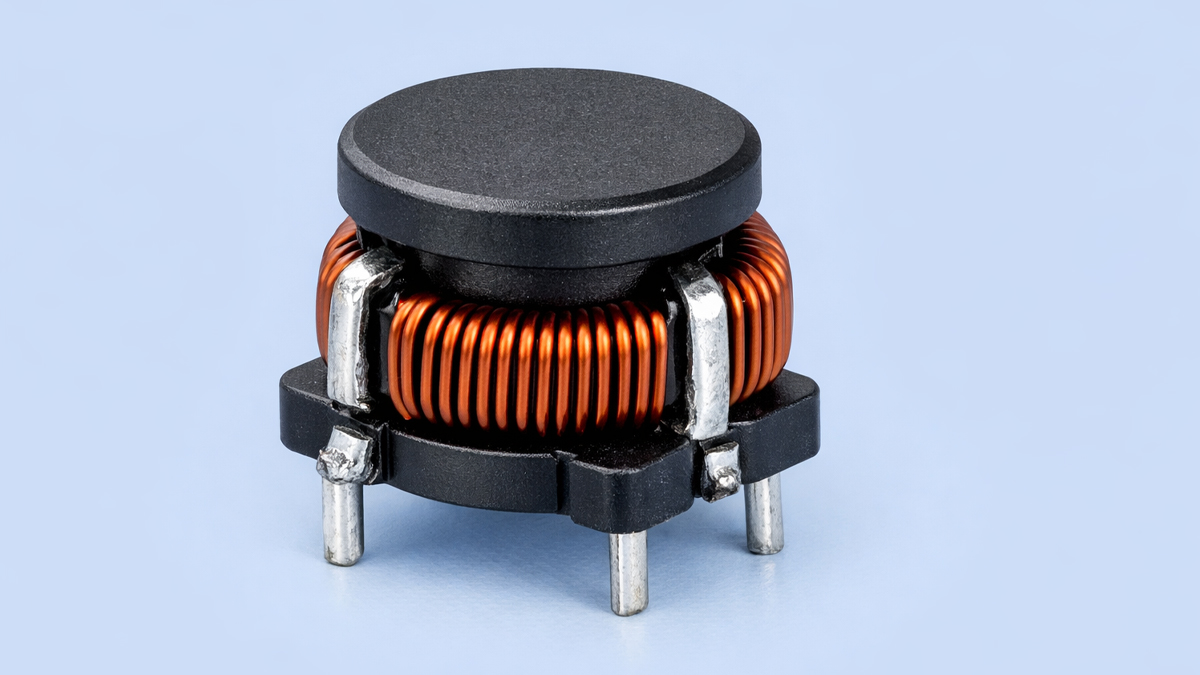
What is Drum Core Inductor?
A drum core inductor is a type of inductor built on a drum shaped magnetic core, typically made from ferrite or iron powder, with a copper wire winding wrapped around it. The drum shape gives it a compact footprint and a stable structure, which is why it is widely used in modern electronic circuits that need efficient energy storage and noise filtering.
In the cinema industry, electronics are everywhere, inside digital projectors, audio amplifiers, LED wall controllers, media servers, camera rigs, wireless systems, control panels, networking hardware, and even motorized seating or lighting automation. Many of these systems rely on switching power supplies and high frequency converters to deliver stable power while staying small, cool, and reliable. Drum core inductors fit perfectly into this world because they are compact, cost effective, and available in many current ratings and inductance values.
Another important point is that a drum core inductor is not only about storing energy. It also helps smooth current flow, reduce ripple, suppress electromagnetic noise, and improve signal quality in power rails that feed sensitive cinema electronics. In cinema workflows, stable power and low noise can directly impact performance, reliability, and the viewing experience.
How does Drum Core Inductor Work?
A drum core inductor works on the principle of electromagnetic induction. When electric current passes through the copper winding, it creates a magnetic field around the coil. Because the winding is wrapped around a magnetic core, the magnetic field becomes stronger and more concentrated than it would be in an air core coil. This makes the component capable of storing more energy in a smaller space.
When the current changes, the magnetic field also changes. The inductor resists this change by producing a voltage that opposes the change in current. This behavior is what makes inductors so valuable in power electronics and filtering circuits.
In switching power supplies used throughout cinema equipment, the drum core inductor typically works with a switching transistor, a diode or synchronous rectifier, and capacitors. The switch rapidly turns on and off. During the on time, energy is stored in the inductor as current rises. During the off time, the inductor releases energy to the load, helping maintain a continuous current. This smooth flow is essential for stable DC outputs that power processors, imaging sensors, audio circuits, and networking modules.
Magnetic core behavior: The core material increases inductance and improves efficiency, but it also has limits. At high current, the core can saturate. Saturation means the core cannot support additional magnetic flux effectively, causing inductance to drop and ripple current to rise. Good design chooses an inductor with enough saturation current rating so it stays stable during peak loads, like projector lamp ignition circuits, amplifier bass transients, or sudden LED brightness changes.
Frequency response behavior: Drum core inductors are commonly designed for switching frequencies from tens of kilohertz up to several megahertz, depending on the application. Their performance depends on core losses, winding resistance, and parasitic capacitance. In cinema electronics, designers pick parts that balance efficiency, temperature rise, and electromagnetic compatibility.
What are the Components of Drum Core Inductor?
A drum core inductor is a simple device, but its internal parts are carefully engineered to meet electrical and mechanical requirements.
Core material: The core is often ferrite for high frequency power conversion, or iron powder for higher current handling with softer saturation characteristics. The core shape looks like a small drum or spool, which helps guide the wire winding and provides structural strength.
Copper winding: The winding is usually enamel coated copper wire. The thickness and number of turns determine current handling and inductance. Thicker wire reduces resistance and heat, which matters in cinema systems running long hours.
Insulation coating: The wire enamel and any additional coating help prevent short circuits and improve reliability. In some designs, the whole component is coated with resin for protection.
Terminations: Surface mount drum inductors have metal terminals designed for soldering onto circuit boards. Through hole versions have leads that pass through the board. In cinema electronics, surface mount versions are common due to compact layouts in power modules and control boards.
Encapsulation or shielding structures: Some drum inductors are molded or partially shielded to reduce magnetic field leakage. While classic drum core inductors can be relatively open, modern versions often include structures that guide flux and reduce noise coupling into nearby circuits.
What are the Types of Drum Core Inductor?
Drum core inductors come in several types, mainly based on construction style, shielding, and core material. Each type is chosen based on performance needs, cost, and space constraints.
Unshielded drum core inductor: This is the classic drum design where magnetic flux can leak into nearby space. It is cost effective and common in many consumer and professional electronics, but it can create electromagnetic interference if placed near sensitive signal paths.
Semi shielded drum core inductor: This type uses a core structure or molding that reduces stray magnetic fields compared to fully open designs. It is a middle ground choice for many power rails in media servers and projector control electronics.
Shielded drum core inductor: Shielded versions are designed to contain more of the magnetic field, improving electromagnetic compatibility. In cinema industry devices, shielded inductors help reduce interference with audio paths, radio frequency receivers, and imaging sensor circuits.
Ferrite drum core inductor: Ferrite cores suit higher frequency converters and are common in compact switching regulators. They tend to have lower core losses at high frequency but may saturate more sharply, so saturation current ratings are important.
Iron powder drum core inductor: Iron powder cores typically have distributed air gaps, allowing them to handle higher currents with a softer saturation curve. They can be useful in high current power stages where ripple current is large, such as LED display power modules.
High current drum core inductor: These are built with thicker windings and robust cores to handle heavy loads. They are used where large currents must be delivered steadily, like amplifier power rails and motor drivers.
Low profile drum core inductor: These are designed for tight spaces, such as compact camera accessories, wireless transmitters, and slim control boards.
What are the Applications of Drum Core Inductor?
Drum core inductors are used in many electronics because they are versatile and available in a wide range of values. In the cinema industry, their applications are especially broad due to the variety of systems working together.
Switching power supplies: Drum core inductors are widely used in buck converters, boost converters, and buck boost converters. These circuits power processors, memory, sensors, and communication modules in cinema projectors, media servers, and control systems.
Audio amplifier power rails: High power cinema audio amplifiers often use switching power supplies. Inductors smooth the current and help reduce ripple that can create audible noise or reduce amplifier performance.
LED cinema lighting and LED walls: LED drivers and power distribution boards often use inductors to regulate current and reduce flicker. Stable regulation is critical for cinematic lighting quality and consistent brightness.
Noise filtering and EMI suppression: Drum core inductors are used in filters to suppress switching noise from power supplies that could interfere with audio, video, or wireless communication systems.
Signal conditioning and chokes: While drum core inductors are more common in power paths, they can also be part of choke circuits that isolate noise between sections of a board.
Motor drives and automation: Some cinema environments include motorized curtains, seating systems, stage lifts, and ventilation control. Motor drivers and control electronics often include inductors for energy storage and noise control.
Battery powered film equipment: Camera rigs, wireless transmitters, monitors, and portable recorders use DC DC converters to step battery voltage up or down. Drum core inductors are common in these converters due to their size and efficiency.
What is the Role of Drum Core Inductor in Cinema Industry?
The role of a drum core inductor in the cinema industry is mainly about power quality, reliability, and electronic stability. Cinema systems are complex ecosystems. A modern theater may run digital projectors, audio processors, amplifiers, network switches, playback servers, lighting control systems, signage displays, ticketing systems, and monitoring sensors, all operating continuously. Each of these depends on stable electrical power.
Power stability for sensitive electronics: Digital cinema projectors and media servers contain high performance processors and precision timing circuits. These systems require clean, stable DC rails. Drum core inductors in voltage regulators reduce ripple and help maintain stable outputs under changing load conditions.
Reducing noise that affects audio and video: Cinema audio systems are highly sensitive to power noise. Switching ripple can leak into analog sections and produce hum, hiss, or artifacts. Drum core inductors, especially shielded types, support filtering that keeps power rails quiet.
Supporting high efficiency designs: The cinema industry values efficiency because equipment runs for many hours. Efficient power conversion means less heat, longer component life, and reduced cooling requirements. Drum core inductors, when properly selected, contribute to high efficiency by lowering losses.
Improving electromagnetic compatibility: Theaters contain wireless microphones, communication radios, remote sensors, and networking equipment. Electromagnetic noise can cause dropouts, interference, or instability. Inductors are part of EMI control strategies that keep systems compliant and dependable.
Enabling compact and modular hardware: Many cinema devices are designed to be compact, rack mountable, or modular. Drum core inductors provide a good balance of size and performance, allowing power regulators to fit into tight layouts.
Handling load transients: Cinema equipment can experience sudden load changes, for example, amplifier dynamics, LED brightness shifts, startup surges, or network processor spikes. Drum core inductors help smooth these transitions so the system does not reset, glitch, or produce visible artifacts.
What are the Objectives of Drum Core Inductor?
The objectives of a drum core inductor can be understood as the practical goals it serves inside electronic systems.
Energy storage objective: Store energy temporarily in a magnetic field so switching converters can regulate voltage efficiently.
Current smoothing objective: Reduce rapid changes in current and create a more continuous current flow to loads.
Ripple reduction objective: Work with capacitors to reduce ripple voltage and ripple current on DC rails.
Noise suppression objective: Reduce high frequency switching noise that could interfere with audio, video, or communication circuits.
Efficiency improvement objective: Provide needed inductance with low resistance and manageable core losses to improve power conversion efficiency.
Thermal management objective: Operate reliably with acceptable temperature rise, supporting long run times typical in cinema environments.
System stability objective: Help regulators remain stable across load changes, preventing resets, flicker, audio artifacts, or digital errors.
Electromagnetic control objective: Contribute to EMI filtering and field management so the system behaves well around other electronics.
What are the Benefits of Drum Core Inductor?
Drum core inductors offer several benefits that make them popular in cinematic electronics.
Compact size benefit: They deliver useful inductance in a small component, which is valuable on dense circuit boards.
Cost effectiveness benefit: Drum core inductors are widely manufactured and often provide a good performance to cost balance.
Wide availability benefit: They come in many values, sizes, and current ratings, making sourcing easier for different cinema devices.
Good efficiency benefit: With proper selection, they support efficient switching regulators that reduce power waste.
Improved reliability benefit: Quality drum inductors can run for long periods, which matches cinema operational needs.
Flexible design benefit: Designers can choose between shielded and unshielded options, and between ferrite and iron powder, depending on the application.
Noise control benefit: In filtering circuits, they help reduce electrical noise that can affect sound clarity and video stability.
Load handling benefit: High current versions support demanding loads like LED drivers and amplifier rails.
What are the Features of Drum Core Inductor?
Drum core inductors can be described by a set of features engineers use to select the correct part. Understanding these features also helps cinema technicians and system integrators appreciate why certain components are used.
Inductance value feature: Measured in microhenry or millihenry, inductance determines how strongly the inductor resists changes in current. Different power rails require different inductance values.
Rated current feature: This indicates how much current the inductor can carry without excessive heating. For cinema gear with long duty cycles, thermal performance is crucial.
Saturation current feature: This indicates the current level where inductance drops significantly due to core saturation. In cinema electronics, peak currents can occur during startup or dynamic loads, so saturation margin matters.
DC resistance feature: This is the resistance of the winding. Lower resistance reduces power loss and heat generation, improving efficiency.
Core material feature: Ferrite is good for high frequency, iron powder handles higher current with softer saturation, and different mixes optimize losses.
Shielding feature: Some drum inductors have shielding that reduces magnetic field leakage, improving EMI behavior near audio or RF circuits.
Size and profile feature: Physical dimensions matter for compact projector boards, slim wireless devices, and dense LED controllers.
Temperature rating feature: Inductors are rated for certain operating temperatures. Cinema environments may have warm racks, projector housings, or enclosed signage displays, so temperature headroom supports reliability.
Mounting style feature: Surface mount versions support automated manufacturing and compact layouts. Through hole versions can provide mechanical strength for higher stress environments.
Mechanical robustness feature: Drum inductors can be molded or reinforced to resist vibration, which helps in mobile cinema setups, touring rigs, or film production equipment.
What are the Examples of Drum Core Inductor?
Examples of drum core inductors can be described in terms of where they appear and how they are specified, rather than naming specific product lines.
Example in projector power regulation: A buck converter on a projector control board may use a shielded drum core inductor with a few microhenry of inductance, low DC resistance, and a saturation current high enough to handle processor peaks.
Example in cinema audio amplifier SMPS: A high current drum core inductor may be used in the output stage of a switching power supply feeding amplifier rails, chosen for low losses and stable performance at elevated temperatures.
Example in LED driver module: A drum core inductor may be used in a constant current driver to stabilize LED current and reduce ripple that could cause flicker or brightness instability.
Example in media server motherboard regulators: Multiple small drum core inductors may be used in point of load regulators that feed CPU cores, memory rails, and chipset voltages.
Example in wireless microphone receiver power filtering: A small shielded drum core inductor can be used as part of a filter stage to reduce switching noise that might interfere with RF front end sensitivity.
Example in camera monitor DC DC converter: Portable film monitors that run from batteries often use compact drum inductors in step down converters to generate stable voltages for the display driver and processing circuits.
Example in cinema automation controller: Control boards for curtains, lighting, or motorized elements may use drum inductors in their power rails and motor driver filtering networks.
What is the Definition of Drum Core Inductor?
A drum core inductor is defined as an inductor that uses a drum shaped magnetic core with a conductive winding to store energy in a magnetic field and resist changes in current, commonly used in power conversion and filtering applications.
What is the Meaning of Drum Core Inductor?
The meaning of drum core inductor can be understood by breaking down the term.
Drum meaning: The magnetic core is shaped like a small drum or spool, guiding the winding and providing structural form.
Core meaning: The core is a magnetic material that concentrates magnetic flux, increasing inductance compared to an air core coil.
Inductor meaning: The component stores energy in a magnetic field and opposes changes in current flow, supporting regulation, filtering, and noise control.
So, drum core inductor means an inductor constructed on a drum shaped magnetic core, optimized for compact, practical use in many electronic systems.
What is the Future of Drum Core Inductor?
The future of drum core inductors is strongly connected to trends in power electronics, cinema technology, and electronic system integration. Cinema equipment continues to evolve toward higher efficiency, higher power density, and lower noise. This pushes inductor design to improve in several ways.
Smaller and higher power density designs: As switching frequencies rise and converter designs improve, inductors must deliver the same or higher current in smaller packages. This supports compact cinema equipment, slimmer LED controllers, and more integrated projector power modules.
Improved shielding for cleaner systems: Future drum core inductors are likely to use better shielding and flux control to reduce interference. This matters as cinema environments use more wireless devices and higher bandwidth data systems.
Lower loss materials: New ferrite mixes and improved powder cores can reduce core losses at higher frequencies. Lower losses mean less heat, higher efficiency, and longer life in always on cinema operations.
Higher temperature tolerance: Cinema racks and projector housings can be thermally demanding. Inductors with better thermal materials, improved winding techniques, and higher temperature ratings support reliability.
Better consistency for automated manufacturing: As cinema electronics become more modular and mass produced, manufacturers want tight tolerance inductors with consistent inductance, stable performance, and predictable behavior under load.
Integration into modules: Inductors may increasingly be integrated into power modules or system in package solutions. This simplifies design and improves electrical performance, especially for compact power supplies in cinema projectors and media servers.
Sustainability and efficiency focus: Energy efficient theaters and greener production workflows encourage efficient power conversion. Inductors that support high efficiency regulators, low standby power, and long lifetime operation will remain important.
Continued importance despite new technologies: Even as power architectures change, inductors remain fundamental to switching converters. Drum core inductors will continue to be widely used because they offer a practical balance of size, performance, and cost.
Summary
- Drum core inductors are compact inductors built on drum shaped magnetic cores, commonly ferrite or iron powder.
- They store energy in a magnetic field and resist changes in current, supporting regulation and filtering.
- In switching power supplies, they smooth current flow, reduce ripple, and help maintain stable DC outputs.
- Key components include the magnetic core, copper winding, insulation, terminations, and optional shielding structures.
- Common types include unshielded, semi shielded, shielded, ferrite based, iron powder based, high current, and low profile variants.
- Applications include DC DC converters, audio amplifier power rails, LED drivers, EMI filtering, automation control, and battery powered film gear.
- In the cinema industry, they help improve power stability, reduce noise, increase efficiency, and support electromagnetic compatibility.
- Important selection features include inductance value, rated current, saturation current, DC resistance, core material, shielding, size, and temperature rating.
- The future points toward smaller, cooler, more shielded, and lower loss drum inductors to support advanced cinema electronics.

