

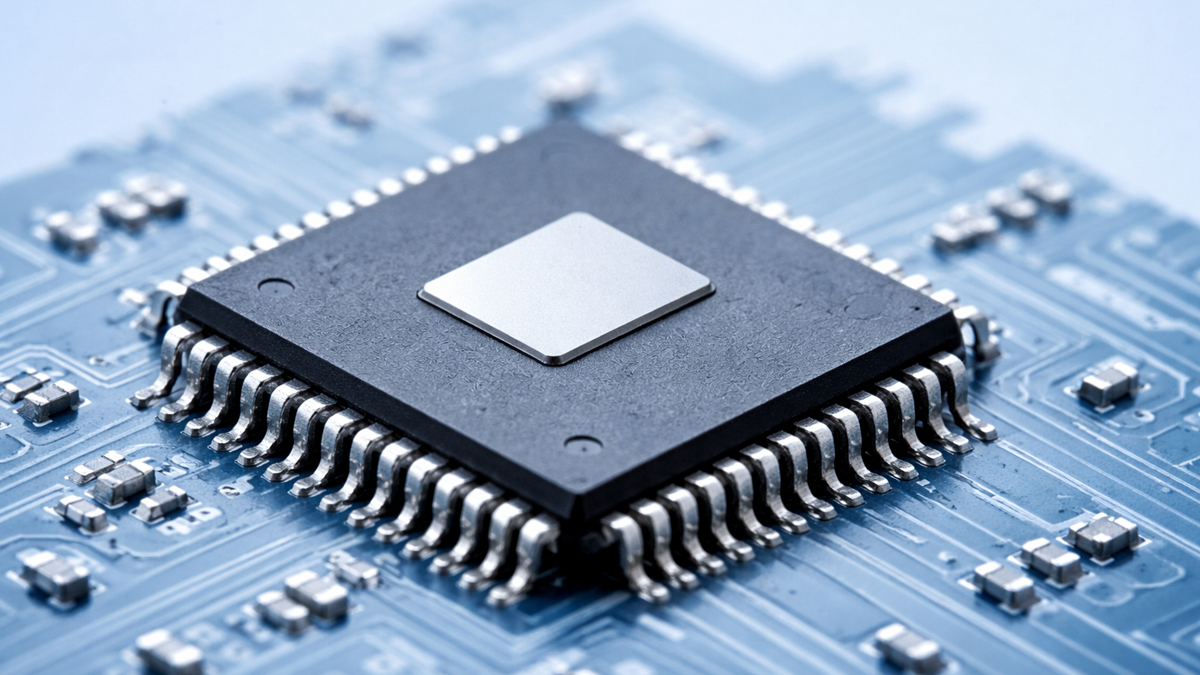
What is Video Encoder IC?
A Video Encoder IC is a specialized integrated circuit designed to convert raw video signals into a compressed digital format that can be efficiently stored, transmitted, or processed further. In simple terms, it takes uncompressed video data generated by cameras, image sensors, or video processing systems and encodes that data into standardized video formats. These formats reduce the size of the video while maintaining acceptable visual quality.
Within the broader category of integrated circuits, a Video Encoder IC plays a crucial role in cinematic electronics under the cinema industry. Modern cinema workflows rely heavily on digital video rather than analog film. From capturing scenes on digital cameras to post production, distribution, and projection, video data must be encoded in a precise, reliable, and efficient way. A Video Encoder IC ensures that high resolution, high frame rate video can be handled without overwhelming storage systems or transmission networks.
Video Encoder ICs are designed to operate in real time, meaning they can process video frames as they are captured. This capability is essential in cinema applications where live previews, monitoring, and immediate playback are required. By embedding complex encoding algorithms directly into hardware, these integrated circuits deliver speed, consistency, and energy efficiency that software based encoding alone cannot always achieve.
How does Video Encoder IC Work?
A Video Encoder IC works by applying a sequence of well defined steps to raw video data, transforming it into a compressed digital stream. The process begins when uncompressed video frames enter the encoder from an image sensor, video processor, or frame buffer. These frames typically contain a large amount of data because every pixel is represented with full color and brightness information.
Signal input handling: The Video Encoder IC first receives the video signal in a specific format such as RGB or YCbCr. It synchronizes the incoming data with internal clocks to ensure stable and accurate processing. This step is critical because cinema grade video requires precise timing to avoid artifacts or frame drops.
Pre processing and color space handling: Before compression, the encoder may perform operations such as color space conversion, scaling, or noise reduction. These steps optimize the video signal so that it can be compressed more efficiently without visible loss of quality.
Compression and encoding logic: The core of the Video Encoder IC is its compression engine. This engine analyzes similarities within a single frame and across multiple frames. By identifying redundant information, the encoder removes unnecessary data. Techniques such as motion estimation, transform coding, quantization, and entropy coding are applied at the hardware level.
Output formatting: After compression, the Video Encoder IC packages the encoded data into a standardized video format. This output can then be stored on media, transmitted over networks, or passed to other cinematic systems such as editing workstations or digital projectors.
Throughout this process, the Video Encoder IC operates continuously and deterministically. This hardware based approach ensures consistent output quality and low latency, which are essential in professional cinema environments.
What are the Components of Video Encoder IC?
A Video Encoder IC is composed of several internal components that work together to achieve efficient and reliable video encoding. Each component has a specific function, and their integration on a single chip allows for high performance and compact design.
Input interface: This component receives raw video data from external sources. It supports various input standards and resolutions commonly used in cinematic electronics. The input interface ensures that video data is correctly aligned and synchronized before further processing.
Pre processing unit: The pre processing unit handles tasks such as color space conversion, filtering, and scaling. These operations prepare the video data for compression by optimizing it for the encoding algorithms.
Motion estimation engine: This component analyzes changes between consecutive frames. In cinematic video, many elements remain static while only certain objects move. The motion estimation engine identifies these movements so that only changes need to be encoded, significantly reducing data size.
Transform and quantization block: This block converts spatial pixel data into frequency domain data and then reduces precision in a controlled manner. The goal is to remove information that is less noticeable to human vision while preserving visual clarity.
Entropy coding unit: The entropy coding unit applies advanced coding techniques to represent the compressed data in the most efficient binary form possible. This step finalizes the reduction in data size.
Control and memory management: A Video Encoder IC also includes control logic and internal memory buffers. These elements manage data flow, coordinate processing stages, and ensure stable operation under different workloads.
Together, these components form a complete hardware solution that enables high quality video encoding suitable for cinema industry requirements.
What are the Types of Video Encoder IC?
Video Encoder ICs can be classified into different types based on their functionality, supported formats, and application focus. Each type is designed to meet specific needs within cinematic electronics and the cinema industry.
Standard definition encoder ICs: These encoders are designed for lower resolution video formats. While less common in modern cinema, they are still used in legacy systems, archival workflows, and certain monitoring applications.
High definition encoder ICs: High definition Video Encoder ICs support resolutions such as 1080p and beyond. They are widely used in digital cinema cameras, production monitors, and broadcast quality recording equipment.
Ultra high definition encoder ICs: These encoders handle very high resolutions such as 4K and 8K. In the cinema industry, ultra high definition encoding is essential for capturing fine detail, enabling immersive viewing experiences, and supporting future proof content creation.
Real time encoder ICs: Real time Video Encoder ICs are optimized for low latency processing. They are used in live cinema events, on set monitoring, and real time video transmission where immediate feedback is required.
Low power encoder ICs: Some Video Encoder ICs are designed with power efficiency as a priority. These are used in portable cinematic equipment such as handheld cameras, drones, and mobile production tools.
Each type of Video Encoder IC addresses a different balance of performance, quality, power consumption, and complexity, allowing system designers to choose the most suitable solution.
What are the Applications of Video Encoder IC?
Video Encoder ICs are used in a wide range of applications across the cinema industry and related fields. Their ability to efficiently compress high quality video makes them indispensable in modern visual systems.
Digital cinema cameras: In professional cinema cameras, Video Encoder ICs encode raw video into manageable formats for storage and playback. This enables filmmakers to capture high resolution footage without excessive storage requirements.
Post production systems: Editing, color grading, and visual effects workflows rely on encoded video streams. Video Encoder ICs ensure that video data can be transferred smoothly between different stages of post production.
Cinema projection systems: Digital projectors use encoded video content for playback. Video Encoder ICs help prepare content in formats optimized for reliable projection and consistent image quality.
Live event broadcasting: Cinematic events such as film festivals, premieres, and live screenings often involve real time video transmission. Video Encoder ICs enable efficient streaming to multiple locations.
Archival and storage solutions: Long term storage of cinematic content requires efficient encoding to reduce space while preserving quality. Video Encoder ICs support this by producing stable and standardized video formats.
These applications demonstrate how deeply integrated Video Encoder ICs are within the cinema industry ecosystem.
What is the Role of Video Encoder IC in Cinema Industry?
The role of the Video Encoder IC in the cinema industry is foundational. It acts as the bridge between raw visual capture and usable digital content. Without reliable video encoding, modern cinema workflows would be inefficient, costly, and technically impractical.
Quality preservation: Cinema demands exceptional visual quality. Video Encoder ICs are designed to maintain color accuracy, detail, and motion integrity while compressing data. This balance is critical for cinematic storytelling.
Workflow efficiency: By reducing video data size, Video Encoder ICs make it easier to store, transfer, and process footage. This efficiency accelerates production schedules and reduces infrastructure costs.
Standardization: The cinema industry relies on standardized formats for compatibility across equipment and platforms. Video Encoder ICs ensure that video output conforms to these standards, enabling seamless collaboration.
Real time capability: On film sets and during live events, immediate feedback is essential. Video Encoder ICs provide real time encoding, allowing directors and technicians to review footage instantly.
In essence, the Video Encoder IC supports every stage of the cinematic lifecycle, from capture to audience presentation.
What are the Objectives of Video Encoder IC?
The objectives of a Video Encoder IC are defined by the technical and creative demands of cinematic electronics. These objectives guide the design and implementation of the integrated circuit.
Efficient data compression: One primary objective is to reduce video data size without compromising perceptual quality. This enables practical storage and transmission of high resolution content.
High quality output: Video Encoder ICs aim to preserve visual fidelity, including sharpness, color depth, and smooth motion. This is essential for cinema grade visuals.
Real time performance: Another key objective is the ability to encode video in real time. This ensures immediate availability of encoded footage for monitoring and playback.
System reliability: In professional cinema environments, equipment must operate consistently. Video Encoder ICs are designed for stable and predictable performance under demanding conditions.
Power and space optimization: Especially in portable or embedded cinematic systems, Video Encoder ICs aim to deliver high performance while minimizing power consumption and physical footprint.
These objectives ensure that Video Encoder ICs meet the practical and artistic needs of the cinema industry.
What are the Benefits of Video Encoder IC?
Video Encoder ICs provide numerous benefits that make them essential components in cinematic electronics.
Reduced storage requirements: By compressing video data, these ICs significantly lower the amount of storage needed for cinematic content. This reduces costs and simplifies data management.
Faster data transfer: Encoded video streams are easier to transmit across networks and interfaces. This benefit is critical in collaborative production environments.
Consistent encoding quality: Hardware based encoding delivers uniform results. This consistency is important for maintaining visual standards across different scenes and projects.
Lower system load: By handling encoding in dedicated hardware, Video Encoder ICs free up general purpose processors. This allows other system components to focus on additional tasks.
Enhanced reliability: Dedicated encoding hardware reduces the risk of software related errors, contributing to overall system stability.
These benefits collectively improve efficiency, quality, and reliability in cinema industry workflows.
What are the Features of Video Encoder IC?
A Video Encoder IC includes a range of features designed to support advanced cinematic applications.
Multi format support: Many Video Encoder ICs can encode video into multiple standard formats. This flexibility allows compatibility with various cinema systems.
High resolution capability: Support for high and ultra high resolutions ensures that the IC can handle modern cinematic requirements.
Low latency operation: Features that minimize processing delay are crucial for live monitoring and real time applications.
Configurable parameters: Video Encoder ICs often allow adjustment of encoding parameters such as bit rate and quality level. This enables fine tuning for specific projects.
Robust error handling: Built in mechanisms detect and manage errors, ensuring stable operation even in challenging conditions.
These features make Video Encoder ICs adaptable and dependable for a wide range of cinematic uses.
What are the Examples of Video Encoder IC?
Examples of Video Encoder ICs can be found across many professional and industrial cinematic systems. These examples illustrate how the technology is implemented in real world products.
Cinema camera encoder chips: High end digital cinema cameras integrate dedicated Video Encoder ICs to manage on board recording and output.
Broadcast and production encoders: Professional video encoding hardware used in studios often relies on specialized Video Encoder ICs for real time processing.
Embedded cinematic systems: Projection systems, video servers, and monitoring devices include Video Encoder ICs tailored to their specific requirements.
Research and development platforms: Engineering and research environments use Video Encoder ICs to test new cinematic technologies and workflows.
These examples highlight the versatility and widespread adoption of Video Encoder ICs within the cinema industry.
What is the Definition of Video Encoder IC?
Definition: A Video Encoder IC is a specialized integrated circuit that converts raw or uncompressed video signals into compressed digital video formats suitable for storage, transmission, and playback in electronic systems.
This definition emphasizes the core function of the Video Encoder IC and its role within integrated circuits used in cinematic electronics.
What is the Meaning of Video Encoder IC?
Meaning: The meaning of Video Encoder IC lies in its ability to make digital video practical and usable. It represents the transformation of complex visual information into an efficient digital form.
In the context of the cinema industry, the Video Encoder IC symbolizes the technological foundation that enables high quality digital filmmaking, distribution, and exhibition.
What is the Future of Video Encoder IC?
The future of Video Encoder IC technology is closely linked to the evolution of the cinema industry and digital media as a whole. As visual standards continue to rise, Video Encoder ICs will adapt to meet new challenges.
Support for higher resolutions and frame rates: Future cinema experiences will demand even greater detail and realism. Video Encoder ICs will evolve to handle these requirements efficiently.
Improved compression efficiency: Advances in encoding algorithms will be integrated into hardware, allowing better quality at lower data rates.
Integration with intelligent processing: Future Video Encoder ICs may incorporate intelligent features that adapt encoding parameters dynamically based on content characteristics.
Greater energy efficiency: As sustainability becomes more important, Video Encoder ICs will focus on delivering higher performance with lower power consumption.
These developments will ensure that Video Encoder ICs remain a vital component of cinematic electronics in the years ahead.
Summary
- A Video Encoder IC is a hardware based solution for compressing raw video into efficient digital formats.
- It plays a critical role in integrated circuits used under cinematic electronics within the cinema industry.
- The working process involves input handling, pre processing, compression, and output formatting.
- Key components include motion estimation, transform blocks, and control logic.
- Different types of Video Encoder ICs support various resolutions, power levels, and real time requirements.
- Applications range from digital cinema cameras to projection and archival systems.
- Benefits include reduced storage needs, consistent quality, and improved workflow efficiency.
- The future of Video Encoder ICs focuses on higher performance, better efficiency, and advanced cinematic support.

