

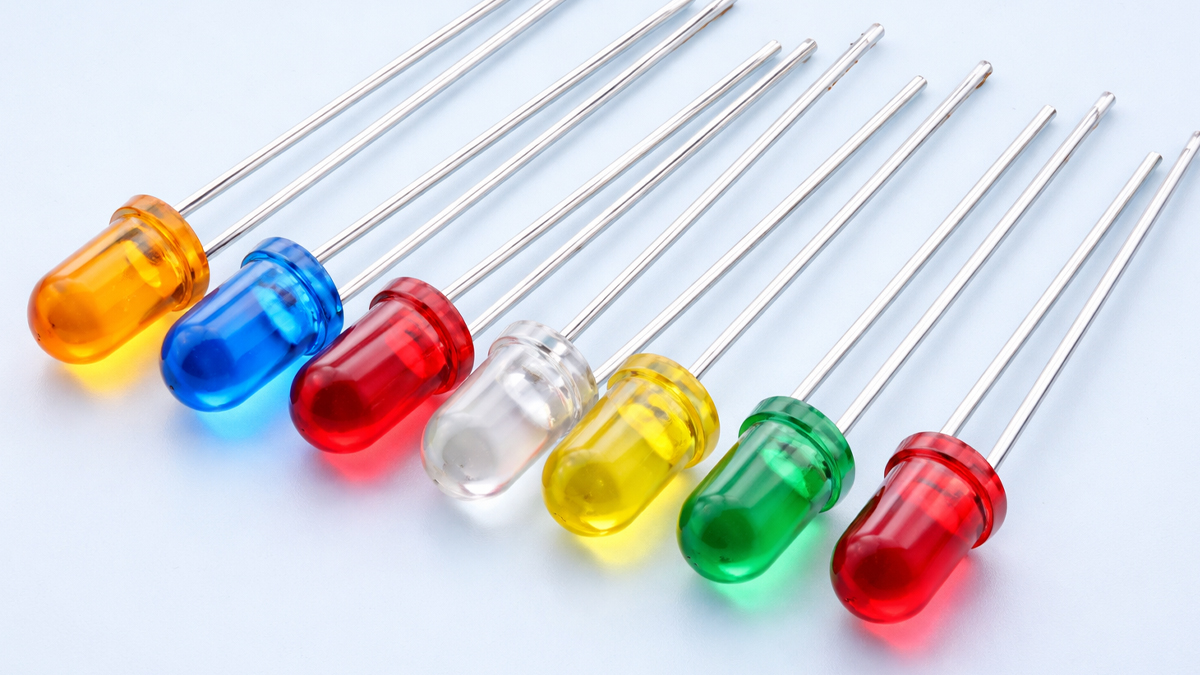
What is DIP LED?
DIP LED stands for Dual In line Package Light Emitting Diode. It is one of the earliest and most widely recognized forms of LED technology. A DIP LED is typically identified by its small, rounded plastic body and two long metal leads that extend from the bottom. These leads allow the LED to be mounted through holes on a printed circuit board.
In the field of Cinematic Electronics under the Cinema Industry, DIP LEDs have played an essential role in visual signaling, panel lighting, equipment indicators, decorative displays, and even stage illumination. While newer technologies such as SMD LEDs are widely used today, DIP LEDs remain relevant due to their durability, simplicity, and cost effectiveness.
A DIP LED usually emits light in a focused direction. This focused beam makes it useful for applications where directional lighting is required. In cinema equipment, precision and clarity are extremely important. DIP LEDs provide clear and sharp visual signals for technicians and operators working behind the scenes.
DIP LEDs are available in various colors including red, green, blue, yellow, and white. They can also be designed as multi color LEDs. Because of their simple structure and reliability, they are still widely used in electronic control panels, cinema consoles, projector systems, and digital display boards.
How does DIP LED Work?
DIP LED works based on the principle of electroluminescence. When electric current flows through a semiconductor material inside the LED, it produces light. This light emission occurs due to the movement of electrons across a junction formed by two different types of semiconductor materials known as P type and N type materials.
Inside a DIP LED, there is a tiny semiconductor chip. When voltage is applied across the two metal leads, electrons move from the N region to the P region. As they recombine, energy is released in the form of photons. These photons create visible light.
In cinematic electronics, stable and consistent illumination is necessary for monitoring systems, projection units, and sound consoles. DIP LEDs provide consistent brightness because they operate efficiently at low voltage and low current.
The plastic lens of a DIP LED is designed to focus or diffuse the light. Some DIP LEDs have clear lenses for sharp beams, while others have diffused lenses for softer light distribution. This optical control makes them useful in cinema halls where subtle indicator lighting is required without distracting the audience.
What are the Components of DIP LED?
Semiconductor chip: The semiconductor chip is the heart of the DIP LED. It determines the color and brightness of the emitted light. Different materials produce different colors.
Anode and cathode leads: These are the two metal pins that extend from the bottom of the LED. The longer lead usually represents the anode, and the shorter lead represents the cathode. These leads allow electrical connection to the circuit board.
Reflective cavity: The semiconductor chip is mounted in a small reflective cup. This cup helps direct light outward, increasing brightness and efficiency.
Epoxy resin lens: The transparent or colored plastic casing surrounds the internal components. It protects the chip and shapes the light beam.
Bond wires: Very fine wires connect the semiconductor chip to the metal leads. These wires ensure the flow of electricity inside the LED.
Each of these components works together to ensure reliable performance. In cinema equipment, reliability is critical because even small signal failures can affect projection and audio systems.
What are the Types of DIP LED?
Single color DIP LED: These LEDs emit one fixed color such as red, green, blue, or white. They are widely used for status indicators in cinema equipment.
Bi color DIP LED: These contain two semiconductor chips inside one package. They can produce two different colors depending on the polarity of the current.
Tri color DIP LED: These LEDs can emit three colors, often red, green, and blue. By combining these colors, additional shades can be created.
Flashing DIP LED: These LEDs have an internal integrated circuit that allows them to blink automatically without an external controller.
High brightness DIP LED: These provide stronger illumination and are often used in display boards and decorative cinema signage.
Infrared DIP LED: These emit infrared light instead of visible light. They are used in remote control systems, including cinema projector remote operations.
Each type serves different purposes in cinematic electronics depending on brightness requirements, signaling needs, and aesthetic preferences.
What are the Applications of DIP LED?
DIP LEDs are used in a wide range of applications within and beyond the cinema industry. In cinema halls, they are commonly used in aisle lighting indicators, control panels, projector system indicators, and sound equipment status displays.
They are also used in outdoor cinema signage and digital boards. High brightness DIP LEDs can form part of large LED display screens for movie promotions.
Inside projection rooms, DIP LEDs indicate power status, temperature warnings, and operational signals. These small lights help technicians quickly identify system conditions.
In stage environments within cinemas that host events or premieres, DIP LEDs can be integrated into decorative lighting panels. Their focused beam makes them suitable for precise highlighting.
Outside the cinema industry, DIP LEDs are widely used in toys, automotive dashboards, home electronics, and traffic signals. Their versatility and reliability make them a fundamental component in electronic design.
What is the Role of DIP LED in Cinema Industry?
In the Cinema Industry, lighting is not limited to large spotlights or projection lamps. Small electronic components play a significant role in maintaining operations. DIP LEDs are part of the invisible support system that ensures smooth functioning.
They provide visual communication in control panels. For example, a green DIP LED may indicate that a projector is ready, while a red LED may signal an error condition. These simple signals improve operational efficiency.
In digital cinema environments, equipment such as servers, amplifiers, and automation systems rely on indicator LEDs. DIP LEDs offer durability and long operational life, reducing maintenance requirements.
They also contribute to audience experience indirectly. Properly functioning equipment ensures uninterrupted movie playback. In decorative and architectural lighting, DIP LEDs can enhance ambience in lobbies and ticket counters.
Thus, even though DIP LEDs are small components, their contribution to cinematic electronics is substantial.
What are the Objectives of DIP LED?
The primary objective of DIP LED technology is to provide efficient and reliable light emission using minimal electrical power.
Another objective is long operational lifespan. Compared to traditional incandescent indicators, DIP LEDs last significantly longer.
Energy efficiency is also a key objective. In cinema facilities where multiple electronic systems operate continuously, energy saving components help reduce overall electricity consumption.
DIP LEDs are designed to ensure safety and low heat generation. Low heat output protects sensitive electronic circuits in projection and sound systems.
Cost effectiveness is another objective. DIP LEDs are affordable and easy to integrate into electronic circuits, making them suitable for both small and large scale cinema installations.
What are the Benefits of DIP LED?
One major benefit of DIP LED is durability. The epoxy casing protects internal components from mechanical damage.
Another benefit is low power consumption. This helps cinema operators manage energy usage efficiently.
DIP LEDs provide instant illumination without warm up time. This ensures immediate status indication.
They offer long service life, often lasting tens of thousands of hours. This reduces maintenance frequency in cinema equipment rooms.
DIP LEDs also produce minimal heat compared to older lighting technologies. This enhances safety and protects electronic boards.
Their compact size allows easy installation in tight spaces within control panels and projector housings.
What are the Features of DIP LED?
DIP LEDs have a simple through hole mounting design. This makes them easy to solder onto circuit boards.
They typically operate at low voltage, usually between 1.8 volts to 3.3 volts depending on color.
They provide directional light with specific viewing angles. Some models offer narrow beams while others offer wider dispersion.
DIP LEDs are available in various sizes such as 3 mm and 5 mm diameters.
They are resistant to vibration and moderate environmental stress.
Color consistency and brightness stability are also key features, especially important in professional cinema systems.
What are the Examples of DIP LED?
Common examples include 5 mm red DIP LED used in projector power indicators.
3 mm green DIP LED used in audio console status panels.
Bi color DIP LED used in automation control systems where two conditions must be displayed.
High brightness white DIP LED used in signage and decorative displays in cinema lobbies.
Infrared DIP LED used in remote control systems for projection equipment.
These examples demonstrate the versatility of DIP LED technology across different cinema applications.
What is the Definition of DIP LED?
DIP LED is defined as a through hole mounted light emitting diode packaged in a dual in line format, consisting of a semiconductor light source enclosed in an epoxy lens with two metal leads for electrical connection.
It is a discrete electronic component used for illumination, indication, and signaling in various electronic systems including cinematic electronics.
What is the Meaning of DIP LED?
The meaning of DIP LED refers to a Light Emitting Diode designed in a Dual In line Package structure. Dual In line Package describes the arrangement of the two metal leads that allow insertion into a circuit board.
In simple terms, it is a small electronic light component with two pins that glows when electricity passes through it.
What is the Future of DIP LED?
The future of DIP LED technology in the cinema industry is evolving alongside advancements in LED manufacturing. Although Surface Mount Devices are increasingly popular, DIP LEDs continue to hold value in specific applications.
Manufacturers are developing higher brightness and improved efficiency DIP LEDs. Enhanced lens materials and better semiconductor structures are improving performance.
In cinema installations, DIP LEDs may continue to be used for signaling and niche decorative applications. Their simplicity and reliability make them suitable for retro systems and maintenance friendly designs.
As sustainability becomes a priority in the cinema industry, energy efficient components like DIP LEDs will remain relevant. They contribute to reduced energy consumption and lower environmental impact.
Summary
- DIP LED stands for Dual In line Package Light Emitting Diode
- It works through electroluminescence in a semiconductor junction
- It consists of a chip, leads, reflective cup, bond wires, and epoxy lens
- It is available in single color, bi color, tri color, flashing, high brightness, and infrared types
- It is widely used in cinema control panels, projectors, signage, and sound systems
- It provides reliable visual indication and operational support in cinematic electronics
- It offers benefits such as low power consumption, durability, and long lifespan
- It plays a supportive but essential role in the Cinema Industry
- It continues to evolve with improved brightness and efficiency
- It remains an important component in electronic systems despite newer technologies

