

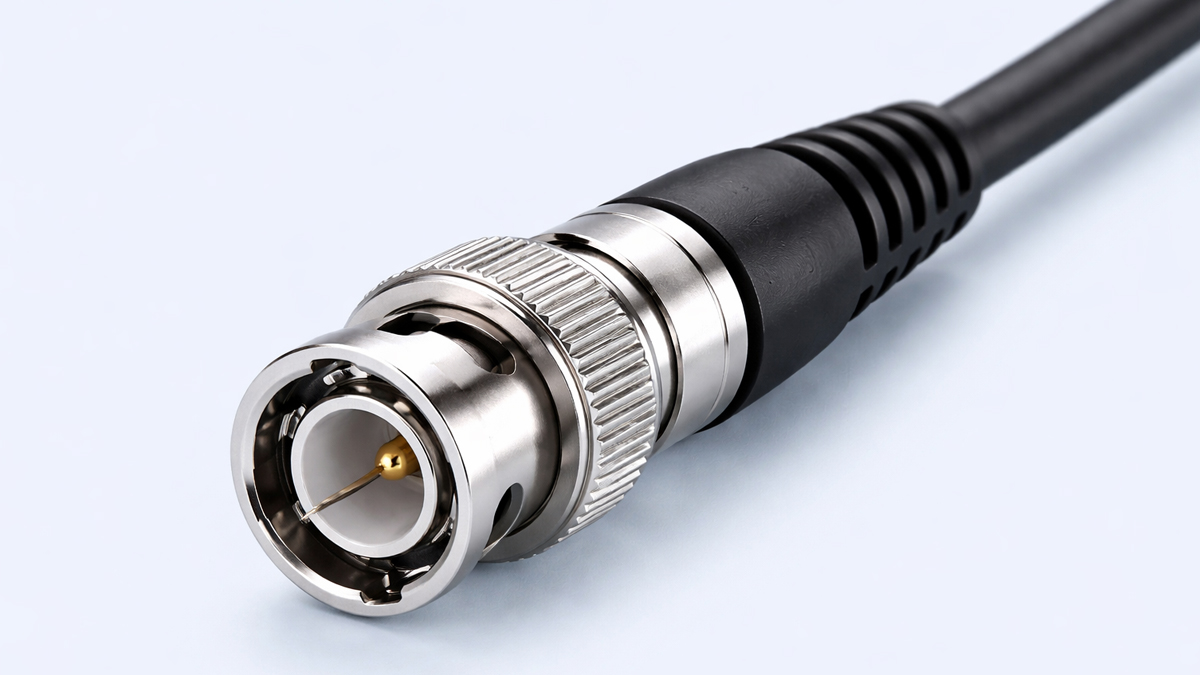
What is 3G SDI Connector?
A 3G SDI connector is a professional video connector used to carry 3G SDI signals, which are high bandwidth digital video signals commonly used in broadcast, live production, and cinema workflows. In practice, the connector is most often a 75 ohm coaxial connector interface that mates with a coax cable designed for serial digital video transport.
Purpose: The main purpose of a 3G SDI connector is to provide a secure, low loss, impedance controlled connection between devices so that uncompressed digital video can travel reliably over coaxial cable.
Why it matters in cinematic electronics: Cinema cameras, on set monitors, video village routers, recorders, switchers, and converters frequently rely on SDI links because SDI is stable, predictable, and designed for professional environments where long cable runs and quick rig changes are normal.
Signal context: 3G SDI typically refers to an SDI rate around 3 gigabits per second, commonly used for 1080p video at higher frame rates and professional sampling formats, depending on the specific standard and equipment configuration.
Connector reality: Many people say 3G SDI connector when they mean the physical connector used for SDI at the 3G data rate. The cable and connector quality, the 75 ohm impedance match, termination, and shielding are what make the physical link capable of carrying a clean 3G SDI signal.
How does 3G SDI Connector Work?
A 3G SDI connector works by mechanically coupling a coaxial cable to the input or output of a device while maintaining the electrical characteristics required for high frequency digital transmission.
Coaxial coupling: The connector joins the center conductor of the coax cable to the signal pin of the device and connects the cable shield to the connector body and chassis ground. This creates a controlled path for the SDI signal and provides shielding against interference.
Impedance continuity: The connector is designed to maintain a consistent 75 ohm characteristic impedance from the cable into the device. Impedance discontinuities can cause reflections, which can degrade the signal and create dropouts or link instability.
Locking mechanism: Many SDI connectors use a secure locking action so the cable does not pull out during movement. This is essential on set where cables are routed around rigs, carts, cranes, and handheld setups.
Signal integrity behavior: At 3G data rates, the connection behaves like a high frequency transmission line. Small mechanical issues such as poor seating, worn contacts, loose barrels, or low quality adapters can increase return loss and insertion loss, reducing the margin for error.
Termination requirement: SDI systems require proper 75 ohm termination at the receiving end. If the signal is left unterminated or incorrectly terminated, reflections can worsen and the link may fail, especially at longer distances.
What are the Components of 3G SDI Connector?
A 3G SDI connector includes mechanical and electrical elements that work together to carry the signal reliably.
Center contact: The center contact connects to the coax cable center conductor and carries the SDI signal.
Dielectric insulator: The dielectric keeps the center contact separated from the outer body while helping preserve the impedance geometry.
Outer body and shield contact: The outer body connects to the coax shield and provides a continuous ground reference and shielding.
Locking interface: Many SDI connectors include a bayonet or push pull lock that resists accidental disconnects.
Strain relief: Cable mounted connectors often include a clamp or crimp structure that reduces stress on the electrical joint when the cable is pulled or flexed.
Connector plating and contact materials: Quality connectors use suitable metals and plating to reduce corrosion and maintain stable contact resistance across repeated connects and disconnects.
Interface geometry: The dimensions and tolerances of the connector are crucial because 3G SDI performance depends on controlled impedance at high frequencies.
What are the Types of 3G SDI Connector?
Different connector types can be used for 3G SDI links, depending on device size, density requirements, and ruggedness needs.
Standard size 75 ohm BNC: This is the most common connector style for SDI in professional video. It is widely used on cameras, monitors, routers, and patch panels.
HD optimized BNC variants: Some connectors keep the familiar BNC form factor but are built with tighter tolerances and improved high frequency performance to better support 3G SDI and beyond.
Miniature coax connectors: Compact connectors are used when device panels are small or when high connector density is needed. These connectors can be found on compact cinema cameras, mini converters, and high density routing gear.
Micro coax connectors: Very small connectors may be used on specialized equipment where space is extremely limited. These can support high data rates but often require careful handling and specific cable assemblies.
DIN style miniature connectors: Some broadcast and cinema devices use compact push pull coax connectors designed for dense panels and secure locking, especially in rack equipment where many SDI lines are terminated in limited space.
Cable and connector matching: The connector type must be matched to the correct coax cable type and tooling. A high quality connector installed incorrectly can perform worse than a basic connector installed properly.
What are the Applications of 3G SDI Connector?
3G SDI connectors are used in many parts of professional video production, including cinema pipelines.
Camera to monitor links: On set monitoring often uses SDI because it is robust over longer cable runs and less sensitive to connector wiggle than many consumer interfaces.
Camera to recorder links: External recorders and capture devices may accept 3G SDI for uncompressed or lightly processed feeds, depending on workflow.
Video village distribution: SDI routers, distribution amplifiers, and patch panels use SDI connectors to split and route signals to multiple destinations.
Live switching and IMAG: Live production switchers and routing systems often rely on 3G SDI for stable signal transport and predictable latency.
Studio and stage infrastructure: Cable runs embedded in stages, wall panels, floor boxes, and rack bays frequently terminate in SDI connectors for quick connectivity.
Test and measurement: Waveform monitors, vectorscopes, and signal analyzers often use SDI connectors to accept and output reference signals.
Conversion and bridging: Many converters bridge between SDI and HDMI, SDI and fiber, or SDI and IP workflows, and the SDI side commonly uses 3G capable connectors.
What is the Role of 3G SDI Connector in Cinema Industry?
The role of the 3G SDI connector in the cinema industry is to provide a dependable physical link for professional video signals across production, post, and distribution environments where reliability is a priority.
On set reliability: Film sets involve constant movement, quick resets, and frequent cable re routing. A locking SDI connection reduces accidental disconnects and keeps monitoring stable during takes.
Long run capability: Cinema productions often place monitors and video village far from camera position. SDI over coax can cover longer distances than many consumer alternatives when the cable and connectors are properly selected.
Signal consistency: SDI is designed for professional timing and consistent digital transport. The connector helps maintain a controlled impedance path that supports clean eye patterns and low error rates at 3G speeds.
Interoperability: Many professional devices share SDI connectivity. A common connector ecosystem makes it easier to mix cameras, monitors, routers, recorders, and measurement tools.
Rigging flexibility: SDI connectors work well with a wide range of cable lengths, right angle adapters, pass through panels, and ruggedized assemblies that are common in cinema rig builds.
Infrastructure standardization: Rental houses, studios, and stages often standardize on SDI infrastructure because it can be patched, routed, and maintained easily. The connector is the physical handshake that makes this infrastructure practical.
What are the Objectives of 3G SDI Connector?
A well designed 3G SDI connector serves several key objectives in professional cinematic electronics.
Maintain signal integrity: The connector should preserve 75 ohm impedance and minimize reflections and loss so the SDI signal remains decodable at the receiver.
Provide mechanical security: The connector should stay connected during motion, vibration, and handling common in production environments.
Support rapid workflow: Crews need quick plug in and swap capability. SDI connectors are designed for fast connect and disconnect while remaining secure.
Enable long distance transport: The connector must work as part of a system that supports longer coax runs without excessive degradation.
Reduce noise susceptibility: Shield continuity and good grounding help reduce interference from lighting, motors, wireless systems, and power distribution on set.
Ensure durability: The connector should survive repeated mating cycles, environmental exposure, and physical stress without loosening or developing intermittent contact.
Compatibility across equipment: The connector system should allow devices from different manufacturers and different generations to interconnect reliably.
What are the Benefits of 3G SDI Connector?
A 3G SDI connector brings practical benefits that align well with cinema workflows.
Robust connection: Locking behavior reduces accidental pullouts compared to friction fit connectors.
Professional grade signal transport: SDI is built for uncompressed video transport and stable timing, which supports monitoring and routing with predictable behavior.
Longer reach on coax: With the right cable, 3G SDI can travel meaningful distances while remaining reliable, especially compared to many short range consumer interfaces.
Lower troubleshooting overhead: A standardized connector and cabling approach makes it easier to isolate issues by swapping a known good cable or testing termination.
Better suitability for infrastructure: Patch panels, wall plates, and rack systems commonly support SDI connectors, which helps studios and rental facilities build repeatable setups.
Improved shielding: Coax connectors maintain shield continuity, helping reduce interference pickup in noisy environments.
Broad ecosystem support: Cameras, monitors, routers, converters, and scopes commonly support SDI connections, making system integration simpler.
What are the Features of 3G SDI Connector?
The features that matter most are a mix of electrical performance and mechanical design.
75 ohm characteristic impedance: The connector geometry is intended to match the coax cable impedance to reduce reflections.
Low insertion loss: Good connectors minimize attenuation so the receiver sees a cleaner signal with better margin.
High return loss performance: Reduced reflections help maintain a clean digital eye, which is crucial at 3G speeds.
Secure locking: Many SDI connectors are designed to lock in place to prevent accidental removal.
Rugged construction: Strong shells, durable plating, and reliable strain relief help connectors survive production conditions.
Repeatable mating: Precision tolerances help ensure consistent performance across repeated connects and disconnects.
Compatibility with standard coax cables: Many SDI connectors are built to work with common 75 ohm coax cable families used in the industry.
Field serviceability options: Some connector designs are easier to terminate and repair in the field, while others prioritize density and performance over quick repair.
What are the Examples of 3G SDI Connector?
In real world cinematic electronics, 3G SDI connectors appear in many familiar places.
Cinema camera SDI output port: Many cameras provide one or more SDI outputs that use a coax connector to feed monitors or wireless transmitters.
On camera monitor SDI input: Professional monitors often accept SDI for a stable feed, especially for long cable runs.
Wireless video transmitter SDI input: Transmitters commonly accept SDI from the camera so they can send a high quality feed to receivers at video village.
Video router and patch panel ports: Routing systems often present rows of SDI connectors to patch sources and destinations quickly.
Distribution amplifier inputs and outputs: Distribution devices take one SDI input and provide multiple SDI outputs, each on a coax connector.
Converter boxes: Small converters and cross converters often use SDI connectors to bridge between formats and to integrate older and newer gear.
Test equipment ports: Signal analyzers and waveform monitors often have SDI input and output connectors used for calibration and verification.
What is the Definition of 3G SDI Connector?
A 3G SDI connector is a 75 ohm coaxial connector interface intended to terminate and connect coaxial cable for the transport of 3G SDI serial digital video signals between professional video devices, preserving electrical performance at high data rates while providing mechanical security suitable for production environments.
Scope of the definition: The term includes the connector on the device panel, the cable end connector, and the mated connection that forms the physical link in a 3G SDI system.
What is the Meaning of 3G SDI Connector?
The meaning of 3G SDI connector can be understood by breaking the phrase into its practical implications.
3G: This points to the 3 gigabit class SDI data rate, which raises the performance demands on cabling and connectors.
SDI: Serial digital interface indicates a standardized digital video transport method used in professional environments.
Connector: The physical interface that makes the electrical connection, maintains shielding, and preserves impedance continuity.
Practical meaning in cinema: It means a dependable, professional grade plug and socket system that helps uncompressed video move around a set, studio, or post facility with fewer surprises.
What is the Future of 3G SDI Connector?
The future of 3G SDI connector use in cinema will be shaped by both continuity and transition in professional video.
Coexistence with higher rate SDI: Many facilities and productions already use higher data rate SDI formats for 4K and higher frame rates, but 3G SDI remains widely used for 1080p pipelines, monitoring, and many broadcast style workflows.
Growth of dense connector panels: As racks and routers increase port counts, smaller coax connector formats may become more common where density and airflow matter.
Continued focus on signal integrity: As production environments become more complex, the tolerance for intermittent connections decreases. This keeps demand high for well made connectors, proper termination practices, and high quality cable assemblies.
Hybrid infrastructures: Many modern pipelines mix SDI with IP video, fiber, and HDMI. Even in hybrid systems, 3G SDI connectors remain valuable at the edges, for camera outputs, on set monitoring, and legacy integration.
Better tooling and pre made assemblies: More productions rely on pre terminated, tested cables to reduce faults. This trend supports consistent connector performance and reduces on set troubleshooting.
Sustained relevance in rentals and studios: Rental inventories and studio wiring do not change overnight. Because SDI infrastructure is deeply embedded, 3G SDI connectors are likely to remain common for years as part of a broader ecosystem.
Summary
- A 3G SDI connector is typically a 75 ohm coaxial connector used to carry 3G class SDI digital video signals in professional cinema and broadcast workflows.
- It works by joining the coax center conductor and shield while preserving impedance continuity, shielding, and mechanical stability.
- Core components include the center contact, dielectric, outer body, locking interface, and strain relief, all affecting high frequency performance.
- Common types include standard 75 ohm BNC and various high performance or miniature coax connector formats used for density and compact devices.
- Applications include camera to monitor links, camera to recorder feeds, routing, distribution, studio infrastructure, conversion, and test equipment.
- In cinema, its role is reliability, long run capability, interoperability, and fast rigging in demanding production environments.
- Key objectives are signal integrity, secure connection, durability, noise resistance, and compatibility across equipment.
- Benefits include robust locking, professional ecosystem support, longer coax reach, strong shielding, and easier troubleshooting through standardization.
- Features that matter most are controlled 75 ohm impedance, low loss, high return loss performance, rugged build, and repeatable mating.
- The future points to ongoing use alongside higher rate SDI and hybrid IP systems, with continued demand for high quality connectors and tested cable assemblies.

