

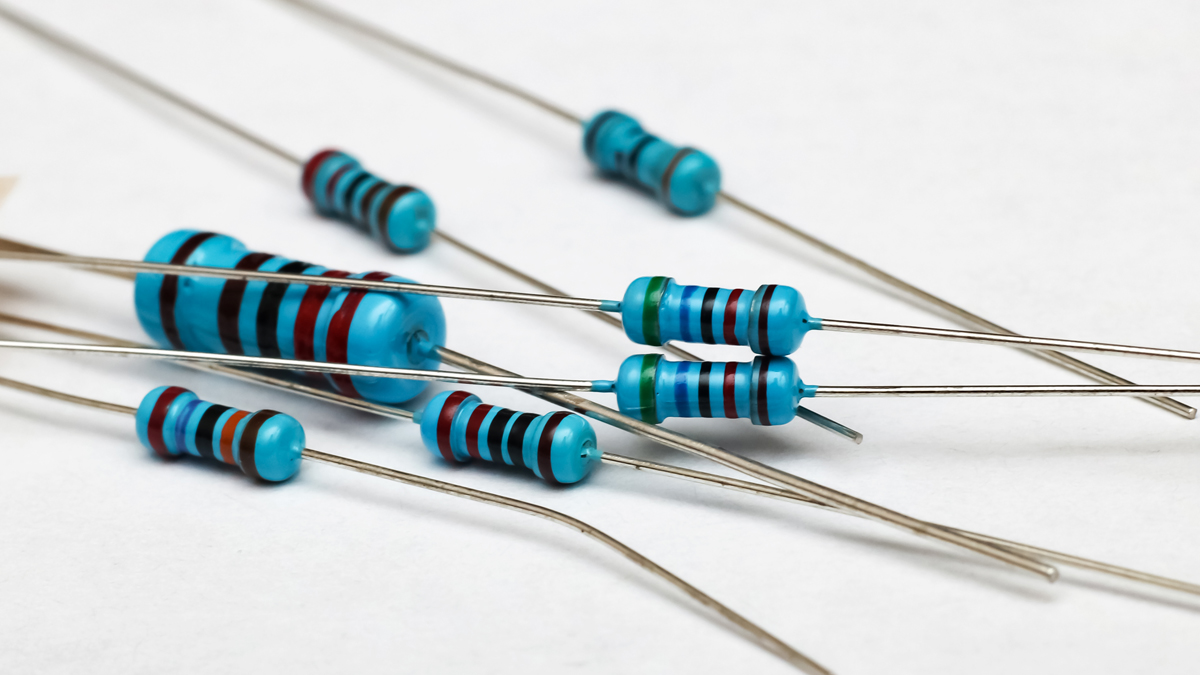
What is Arc Stabilization Resistor?
An Arc Stabilization Resistor is a resistor, or a resistor network, used in an arc lamp circuit to help keep the electrical arc steady, safe, and predictable. In cinematic electronics, it is associated with projection lamp systems that use an electric arc as the light source, especially older carbon arc systems and the broader family of discharge lamp circuits. Its main purpose is to oppose sudden current changes so that the arc does not flare up, collapse, flicker, or damage surrounding components.
An electric arc does not behave like an ordinary heating element or simple bulb filament. Once the arc is established, its effective electrical behavior can encourage rising current if the circuit is not properly controlled. Because of that, arc based lamps need a ballast function, meaning some method of limiting and stabilizing current. In historical and practical terms, a resistor has often been one of the simplest stabilization tools in such systems.
In cinema related equipment, the Arc Stabilization Resistor is best understood as part of the control strategy that keeps a projection arc lamp usable. In older systems, this could be a large series resistor or resistor bank. In more modern xenon projector systems, the stabilization function is usually handled by a regulated power supply, while resistors may still appear as current sensing, damping, equalizing, or protective elements inside the electronic control path. That distinction matters because the word resistor in this topic can refer either to the main current limiting element in older designs or to a supporting stabilization element in newer ones.
How does Arc Stabilization Resistor Work?
The Arc Stabilization Resistor works by adding controlled opposition to current flow. When the arc tries to draw more current than desired, the resistor causes a larger voltage drop across itself. That voltage drop reduces the extra current and pushes the circuit back toward a safer operating point. In simple terms, the resistor acts like a brake on runaway current.
This is important because arc lamps are not naturally self stabilizing in the same way as many ordinary loads. Arc based discharge sources can become unstable if the power source feeds them directly without some form of ballast or regulation. Technical references on arc lamps and discharge lighting consistently describe the need for a current limiting element or regulated supply to avoid flicker, overheating, and destructive operating behavior.
In a basic older cinema lamp circuit, power comes from the supply, passes through the resistor, and then feeds the lamp electrodes where the arc forms. If current rises suddenly, the resistor absorbs part of the voltage. If current falls, the resistor drop falls too, allowing more voltage to remain available to support the arc. This does not create perfect regulation, but it helps smooth operation.
In improved systems, the resistor may also serve as a sensing component. A very low value resistor placed in series with the lamp can create a small voltage proportional to lamp current. That small voltage can be read by a regulator or pulse width modulation circuit, which then adjusts the power supply to maintain a target current or power level.
So the working principle can be summarized in a practical way. The resistor stabilizes the arc either directly by limiting current, or indirectly by helping an electronic controller measure and correct current. In both cases, the goal is the same: a steady arc, stable light output, and longer lamp life.
What are the Components of Arc Stabilization Resistor?
The Arc Stabilization Resistor itself may look simple, but in a cinema lamp circuit it is usually part of a larger electrical arrangement. The first component is the resistive element. This is the material that produces the intended resistance and dissipates heat. In high power applications, wirewound construction is common because it can handle substantial current and thermal stress.
The second component is the insulating body or core. Ceramic materials are often preferred in power resistors because they tolerate high temperatures and provide mechanical strength. The third component is the termination system, such as lugs, leads, studs, or busbar connections, which allow secure installation into a high current circuit.
Another important part is the heat management structure. Because power resistors convert excess electrical energy into heat, they may be mounted on ceramic frames, metal brackets, or ventilated panels. In larger resistor banks, spacing between elements is also part of the design because it helps cooling and reduces hot spots.
In modern arc lamp power assemblies, supporting components may include a current sensing resistor, protective fuses, relays, rectifiers, capacitors, control boards, igniters, and cooling provisions. The resistor may only be one small part of a much larger stabilization system, but it still plays a critical role in feedback, damping, or protection.
From an educational viewpoint, the components can be grouped into four practical categories: the resistive material that creates electrical opposition, the physical structure that survives heat, the terminals that carry current safely, and the integration elements that connect the resistor to the ballast or regulation system.
What are the Types of Arc Stabilization Resistor?
Arc Stabilization Resistors can be classified by construction, function, and system role.
By construction, there are wirewound resistors, ceramic power resistors, metal housed power resistors, and resistor banks. Wirewound designs are widely used where ruggedness and wattage handling are important. Ceramic power resistors are valuable in hot environments and can withstand repeated thermal cycling. Metal housed resistors are often chosen when heat must be transferred to a chassis or heatsink.
By function, there are series stabilization resistors, shunt sensing resistors, damping resistors, and protective discharge resistors. A series stabilization resistor sits directly in the current path and helps limit arc current. A shunt sensing resistor is a low resistance component that allows the control system to measure current. A damping resistor suppresses oscillation or ringing in ignition and supply sections. A protective discharge resistor safely bleeds stored charge from capacitors after shutdown.
By system role, there are primary stabilization resistors and auxiliary stabilization resistors. A primary stabilization resistor is a main operating element, more common in older or simpler arc circuits. An auxiliary stabilization resistor supports a regulated supply by helping with measurement, sharing, transient control, or fault protection.
In cinema history, older carbon arc projection arrangements relied much more heavily on direct ballast action because the light source itself demanded current control and frequent operator attention. Later xenon projection systems continued to require stable current and proper ignition, but this was increasingly achieved through dedicated lamp power supplies and electronic ballast strategies rather than through one large standalone resistor.
What are the Applications of Arc Stabilization Resistor?
The first application is film projection lamp circuits. Arc light sources used in projectors require stable electrical conditions so that screen brightness remains usable and the lamp is not overstressed. Historically this made stabilization essential in projection booths, where inconsistent arc behavior could affect presentation quality and maintenance workload. Carbon arc lamps were used for projection for many years before newer xenon systems became dominant.
The second application is xenon short arc lamp power systems. In these systems the resistor may not be the only control element, but resistive parts are still used in sensing and regulation loops. Manufacturer literature recommends current or power regulated supplies and operation within specified ranges because overdriving can cause arc instability, hard starting, and shortened life.
The third application is igniter and starter circuits. Arc lamps often need a high voltage pulse to start, and resistors are commonly included to shape pulses, limit stress, and protect related components. The fourth application is safety and discharge paths in power supplies. Large capacitors used around lamp supplies need controlled discharge after power down, and resistors make that possible.
The fifth application is laboratory, optical, and specialty high intensity arc systems that share similar operating principles with projection lamps. Even outside cinema, the same concept appears whenever a discharge arc must be held within safe current limits or measured precisely for stable output.
What is the Role of Arc Stabilization Resistor in Cinema Industry?
In the cinema industry, the Arc Stabilization Resistor supports the most important requirement of projection lighting, which is consistent illumination. A movie screen depends on stable brightness, good color appearance, and minimal flicker. If the arc in the lamp wanders electrically, the picture can look unstable and the lamp system can wear out faster.
Its role is therefore both visual and technical. Visually, it contributes to steadier light output. Technically, it helps keep current inside the intended operating range. In older carbon arc systems, this role was very direct because a ballast resistor or similar current limiting method was an obvious part of making the arc usable. In modern xenon cinema projection, the role continues in a more integrated way through regulated power supplies, current feedback, and resistive sensing elements.
Another role in cinema is protecting expensive equipment. Projection lamps, lamphouses, igniters, rectifiers, cables, and control boards all depend on predictable electrical behavior. A stabilization resistor helps reduce sudden surges, suppresses unstable operation, and supports reliable startup and running conditions. This lowers the chance of lamp abuse and maintenance interruptions.
There is also a historical role. Arc based light sources were central to cinema projection development, and current stabilization was one of the enabling electrical disciplines that made those light sources practical for repeated theatrical use. Without stabilization, brightness would have been harder to manage, component stress would have increased, and projection reliability would have suffered.
What are the Objectives of Arc Stabilization Resistor?
The first objective is current control. The resistor exists to keep lamp current from rising beyond safe or useful limits.
The second objective is arc stability. A stable arc produces more dependable light and reduces visible fluctuation.
The third objective is equipment protection. By limiting or measuring current, the resistor helps protect electrodes, cables, supply components, and related control electronics.
The fourth objective is lamp life improvement. Lamps that run within their intended electrical range usually last longer and age more predictably than lamps exposed to overcurrent, excessive ripple, or unstable power conditions.
The fifth objective is control accuracy. In modern systems, the resistor helps create a measurable signal so the power supply can correct itself in real time.
The sixth objective is presentation consistency. In cinema, the electrical goal ultimately serves a viewing goal, namely a steady and professional picture on screen.
What are the Benefits of Arc Stabilization Resistor?
A major benefit is improved operational stability. When the arc is electrically calmer, the light source behaves more predictably.
Another benefit is reduced flicker and brightness variation. Even when the resistor is only one part of a regulated circuit, it contributes to the control path that helps maintain a smooth output.
A further benefit is longer component service life. Stable operation reduces unnecessary stress on lamp electrodes and supply hardware. Excessive ripple and poor current control are associated with unstable arcs and electrode damage, so good stabilization directly supports durability.
Safety is another benefit. High intensity arc lamp systems can involve high current, high temperature, and in some cases high pressure lamps. Better stabilization means fewer abnormal operating conditions. Better control also makes troubleshooting easier because the electrical system behaves within known limits.
The final benefit is better maintenance planning. A stabilized lamp system tends to show more repeatable performance, which helps technicians schedule replacements, diagnostics, and inspections with greater confidence.
What are the Features of Arc Stabilization Resistor?
An Arc Stabilization Resistor is usually designed for high power dissipation. That is one of its most obvious features because unwanted electrical energy must be converted into heat safely.
It also has thermal durability. The resistor must survive long operating periods and repeated heating cycles without drifting excessively out of specification.
Another feature is current handling capacity. Cinema lamp circuits, especially arc based systems, can involve substantial current, so the resistor must be sized accordingly.
Electrical consistency is another important feature. For stabilization work, resistance value should remain as predictable as possible under operating conditions. In sensing applications, accuracy and low temperature drift matter because the control system depends on the voltage produced across the resistor.
Mechanical ruggedness is also important. Projection systems can generate heat, vibration from cooling systems, and service handling. A resistor used in such an environment must be physically secure and electrically reliable.
In modern systems, integration with control electronics is a key feature. A stabilization resistor may be selected not only for wattage but also for how well it supports feedback, measurement, and protective shutdown logic. This design approach helps modern projector systems remain stable and safe.
What are the Examples of Arc Stabilization Resistor?
One example is a high wattage wirewound series resistor used with an older carbon arc lamphouse. This kind of resistor helps limit current directly and is one of the clearest historical examples of arc stabilization by resistance.
Another example is a ceramic resistor bank mounted in a ventilated metal frame. Instead of using a single resistor body, multiple elements share the load and spread heat more effectively.
A third example is a low value shunt resistor in a xenon projector power supply. Here the resistor is not mainly wasting power as a ballast. Instead, it develops a small proportional voltage that the control circuit reads to regulate lamp current.
A fourth example is a damping resistor in an igniter or filter network. Its purpose is to reduce oscillation, limit transient energy, and protect delicate components during startup or switching events.
A fifth example is a bleeder resistor across capacitors in a lamp power supply, helping stored charge dissipate safely after shutdown.
What is the Definition of Arc Stabilization Resistor?
The definition of an Arc Stabilization Resistor is a resistor used in an arc lamp or arc discharge circuit to limit, sense, or regulate current so that the electrical arc remains stable, safe, and suitable for operation.
In cinematic electronics, the definition can be expanded slightly. It is a resistor that supports steady projection lamp performance by preventing uncontrolled current behavior and by assisting ballast or power regulation functions.
This definition fits both historical and modern contexts. In older systems, the resistor may be a direct ballast element. In newer systems, it may be part of the sensing and control chain inside a regulated power supply.
What is the Meaning of Arc Stabilization Resistor?
The meaning of Arc Stabilization Resistor is simple when broken into its three parts.
Arc refers to the luminous electrical discharge between electrodes.
Stabilization refers to keeping that discharge steady instead of erratic.
Resistor refers to the component that opposes current flow or helps create a measurable electrical drop for control purposes.
So the overall meaning is a resistor that helps an electrical arc remain controlled. In cinema language, it means a component that helps the projector lamp produce stable light instead of unstable light.
What is the Future of Arc Stabilization Resistor?
The future of Arc Stabilization Resistor is tied to the future of arc based light sources in professional imaging and projection. Traditional carbon arc systems are largely historical in mainstream cinema, while xenon projection has faced competition from laser illuminated digital projection. Even so, xenon lamps remain part of the cinema landscape, and regulated power systems continue to support their operation.
In practical terms, the future is less about giant standalone ballast resistors and more about intelligent resistor usage inside electronic power systems. Current sensing, fault monitoring, ripple control, startup management, and feedback regulation will keep resistive elements relevant even as whole projection systems become more automated.
Materials and packaging will also improve. Better ceramics, better thermal design, compact shunt technology, and more precise low resistance elements can improve monitoring accuracy and durability. At the same time, as solid state and laser projection expand, the direct use of arc stabilization resistors in new cinema installations may become more specialized than universal.
So the future is not disappearance, but transformation. The resistor will continue to matter, though often as an integrated control component rather than as the most visible part of the lamp circuit.
Summary
- Arc Stabilization Resistor is a resistor or resistor network that helps keep an arc lamp current stable and controlled.
- It is important because arc lamps do not behave like simple resistive loads and need ballast or regulation.
- In older cinema and carbon arc systems, the resistor could act directly as a current limiting element.
- In modern xenon cinema systems, stabilization is usually achieved through regulated power supplies, with resistors often serving sensing, damping, or protective roles.
- Its main objectives are current control, arc stability, equipment protection, and longer lamp life.
- Common forms include wirewound resistors, ceramic power resistors, resistor banks, and low value shunt resistors.
- Its benefits include steadier light, reduced flicker, safer operation, and more predictable maintenance.
- In the cinema industry, it supports reliable projection quality and protects expensive lamp and power supply components.
- Its future lies in precise electronic control systems, where resistors remain essential as measurement and stabilization elements even as projection technology evolves.

