
What is Capacitance?
Capacitance is the ability of a capacitor to store electrical charge when a voltage is applied across its terminals. In simple terms, it measures how much charge can be held for a given electrical pressure. The standard unit of capacitance is the farad, although in music electronics far smaller units such as microfarads, nanofarads, and picofarads are used much more often.
Electrical meaning: A capacitor has two conductive plates separated by an insulating material called a dielectric. When voltage is applied, one plate gathers more electrons while the other plate has fewer electrons. This separation of charge creates an electric field, and that field stores energy. The greater the stored charge at a given voltage, the greater the capacitance.
Practical view in music electronics: In musical equipment, capacitance is not just a scientific property found in textbooks. It directly affects how audio signals move, how noise is reduced, how filters shape tone, and how power supplies remain stable. Capacitors appear in guitar pedals, mixers, synthesizers, amplifiers, microphones, digital interfaces, studio monitors, and many other devices used throughout the music industry.
Why it matters: Audio equipment handles changing electrical signals that represent sound. These signals must be controlled with care. Too much unwanted noise, unstable power, or poor frequency balance can ruin a recording or a live performance. Capacitance helps designers manage these issues by supporting timing, coupling, filtering, smoothing, and signal shaping.
How musicians experience it: A guitarist may notice capacitance when a cable slightly darkens the tone of passive pickups. A studio engineer may rely on capacitors in equalizers and crossover networks. A synthesizer designer may choose specific capacitance values to determine oscillator timing or filter behavior. A technician repairing vintage gear may replace old capacitors to restore clarity, headroom, and reliability.
How does Capacitance Work?
Charge storage: Capacitance works by storing opposite charges on two separated conductive surfaces. When a voltage source is connected to a capacitor, electrons move in the circuit and collect on one plate. Because the dielectric prevents direct current from flowing through the gap, the charge remains separated rather than passing straight through. This stored separation becomes electrical energy.
Relationship between charge and voltage: The basic relationship is that capacitance equals charge divided by voltage. This means a capacitor with higher capacitance can store more charge at the same voltage. If two capacitors receive the same voltage, the one with higher capacitance stores more energy.
Behavior with direct current: In a direct current circuit, a capacitor charges until its voltage matches the source. At first, current flows while the capacitor is charging. Once it reaches the supply voltage, current flow largely stops. For this reason, capacitors can block steady direct current after charging.
Behavior with alternating current: In an alternating current circuit, the voltage is always changing direction and magnitude. Because of this, the capacitor is constantly charging and discharging. That repeating action allows alternating current to pass in a functional sense, although no electrons cross the dielectric itself. This is why capacitors are extremely useful in audio circuits, since audio signals are alternating electrical waveforms.
Frequency response: The effect of capacitance depends strongly on frequency. Capacitive reactance decreases as frequency rises. That means high frequencies pass through a capacitor more easily than low frequencies in many circuit arrangements. This behavior makes capacitors essential in tone controls, crossover networks, equalizers, and filter circuits.
Timing action: When paired with resistors, capacitors create time dependent behavior. The resistor controls how quickly the capacitor charges or discharges, and the capacitor determines how much charge can be stored. Together they create delay, envelope shaping, oscillator timing, and other functions used widely in synthesizers, effects, and analog control circuits.
Energy smoothing: In power supplies, capacitance works like a reservoir. After current is rectified from alternating current to direct current, the result often contains ripples. Capacitors charge when the voltage rises and discharge when the voltage falls, helping fill in the gaps. This creates a smoother supply voltage, which is critical for quiet and stable audio equipment.
What are the Components of Capacitance?
Conductive plates: The most obvious component is the pair of conductive plates. These plates are usually made from metal foil, metal film, or deposited conductive layers. Their surface area affects capacitance. Larger plate area generally increases capacitance because there is more space for charge to gather.
Dielectric material: Between the plates is the dielectric, an insulating material that prevents direct contact while supporting an electric field. Common dielectric materials include ceramic, polyester, polypropylene, mica, paper, and oxide layers in electrolytic capacitors. The dielectric affects capacitance value, stability, voltage rating, losses, and sound related behavior in some analog designs.
Distance between plates: The separation between the plates is also a key factor. Smaller spacing increases capacitance because the electric field becomes stronger for the same applied voltage. However, the spacing must still be large enough to prevent breakdown at the intended voltage.
Terminals and leads: The stored charge must connect to a circuit, so capacitors have leads, wire terminations, or surface mount terminals. In high quality audio design, lead length and physical layout can matter because they influence parasitic effects and noise sensitivity.
Encapsulation and casing: Many capacitors are enclosed in protective bodies made from epoxy, plastic, aluminum cans, or other materials. This protects the internal structure from moisture, contamination, vibration, and heat. In music electronics, reliable packaging is important because equipment may face transport, stage heat, mechanical shock, and long operating hours.
Internal construction style: Different capacitor families are built in different ways. Some use rolled foil and dielectric layers, some use stacked layers, and some use etched metal with chemical oxide dielectrics. The construction changes electrical characteristics such as equivalent series resistance, leakage current, and tolerance.
Electrical parameters: Capacitance as used in real devices involves more than the nominal capacitance value. Important related characteristics include voltage rating, tolerance, temperature coefficient, equivalent series resistance, equivalent series inductance, leakage current, and dielectric absorption. In audio equipment, these characteristics influence reliability, noise floor, transient response, and long term performance.
Circuit context: Capacitance does not operate alone. Resistors, inductors, transistors, integrated circuits, transformers, and power regulators all interact with capacitors. In music electronics, the actual effect of capacitance depends not only on the capacitor itself but also on where it is placed in the signal path or power system.
What are the Types of Capacitance?
Fixed capacitance: This is the most common type in practical circuits. A fixed capacitor has a capacitance value chosen by the designer and it does not change during normal use. Most coupling capacitors, bypass capacitors, and power supply smoothing capacitors in audio gear are fixed types.
Variable capacitance: Some capacitors are adjustable. Their plate overlap, spacing, or dielectric arrangement can be changed to alter capacitance. These are used in tuning applications, radio circuits, and certain specialized instruments. While less common in mainstream audio processing today, they remain important in some analog and vintage electronic systems.
Stray capacitance: Not all capacitance is intentional. Any two nearby conductors separated by an insulator can form a small capacitor. Circuit traces, cable conductors, switch contacts, and even a human hand near a circuit can introduce stray capacitance. In music electronics, this can affect tone, stability, and high frequency response.
Ceramic capacitance: Ceramic capacitors use ceramic dielectric materials. They are small, inexpensive, and useful for bypassing, decoupling, and certain filtering tasks. Some types are very stable, while others change more with temperature and voltage.
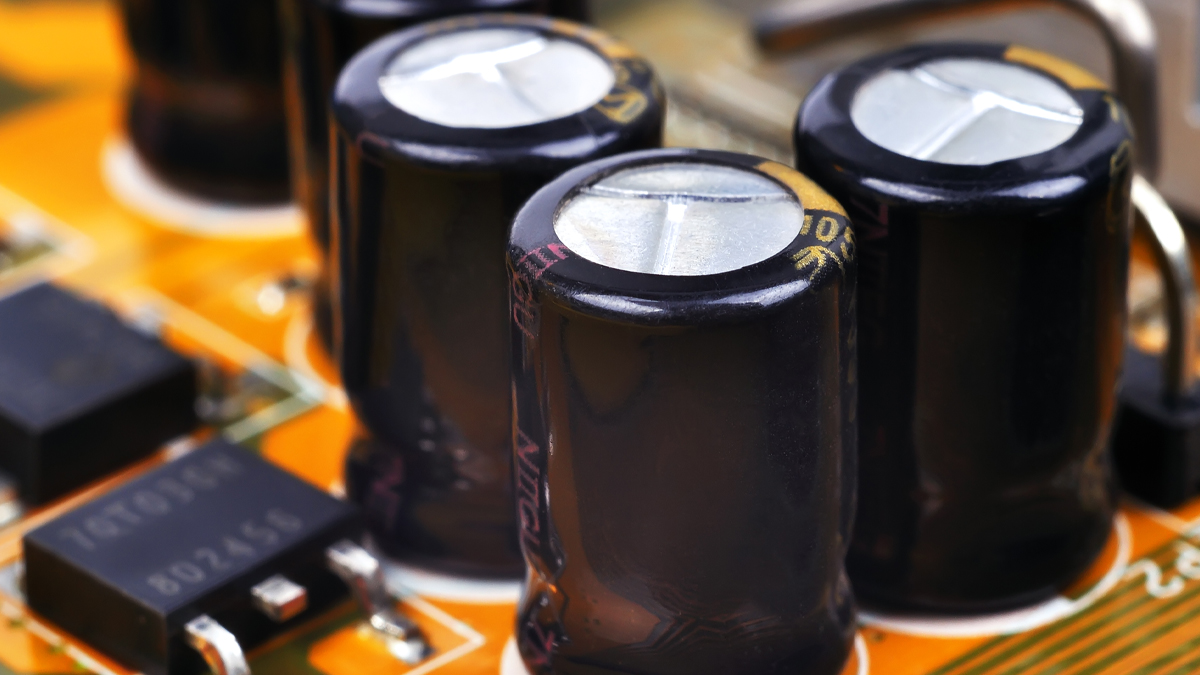
Electrolytic capacitance: Electrolytic capacitors provide high capacitance values in compact sizes. They are commonly used in power supply smoothing and signal coupling where larger values are needed. They are polar devices in many cases, meaning they must be installed with the correct orientation. In aging amplifiers and mixers, dried or failed electrolytics are a common maintenance issue.
Film capacitance: Film capacitors use plastic film dielectrics such as polyester or polypropylene. They are often valued in audio circuits because of their stability, low loss, and good frequency behavior. Tone circuits, equalizers, and coupling stages often use film capacitors when precision or sound quality is a design priority.
Mica and specialty capacitance: Mica capacitors and other specialized types are chosen when very high stability, low loss, or high frequency performance is needed. While they are less common in everyday consumer music products, they can appear in precision and professional designs.
Capacitance by scale: Engineers often talk about capacitance in picofarads for pickup and cable effects, nanofarads for filters and timing, and microfarads for coupling and power supply work. The scale of capacitance usually hints at its function in a music circuit.
What are the Applications of Capacitance?
Signal coupling: One of the most important audio applications is coupling. A capacitor can pass an audio signal from one stage to another while blocking direct current bias. This keeps the operating conditions of amplifier stages separate while allowing sound information to move forward.
Decoupling and bypassing: Capacitors are often placed near active components to stabilize voltage rails and reduce noise. In audio gear, poor decoupling can lead to hum, oscillation, or unwanted interaction between circuit sections. Proper capacitance helps circuits remain quiet and stable.
Tone shaping: Capacitance is central to filters that boost, cut, or direct frequencies. Guitar tone controls, active equalizers, synthesizer filters, loudspeaker crossovers, and microphone preamp shaping networks all rely on capacitor behavior.
Power supply smoothing: After rectification, capacitors store and release charge to reduce ripple. Clean power is essential in studio equipment, stage gear, broadcast systems, and digital audio devices. Without sufficient capacitance, hum and instability can enter the signal.
Timing circuits: In synthesizers, drum machines, tremolo effects, delay controls, and analog modulation systems, capacitance combines with resistance to set charge and discharge times. This determines rates, attack and decay characteristics, pulse widths, and other musical behaviors.
Frequency selection: Capacitors work with inductors or resistors to create tuned and frequency selective circuits. In some analog instrument designs, they help set oscillator pitch ranges, filter cutoff points, and resonance behavior.
Noise suppression: Unwanted electrical interference can enter audio systems from power lines, digital circuits, radio signals, or nearby electronics. Capacitors can help shunt high frequency noise away from sensitive signal paths.
Speaker crossover networks: In passive speaker systems, capacitors route certain frequency ranges to tweeters or midrange drivers. The selected capacitance value directly shapes which frequencies pass and which are blocked.
Pickup and cable interaction: In guitars and other electric instruments, cable capacitance interacts with the source impedance of pickups. This can soften high frequencies and change the perceived brightness or openness of the instrument tone.
What is the Role of Capacitance in Music Industry?
Audio fidelity support: The music industry depends on accurate sound reproduction and controlled sound coloration. Capacitance helps maintain signal integrity from instrument capture to recording, mixing, mastering, playback, and live reinforcement.
Instrument electronics: Electric guitars, basses, keyboard instruments, synthesizers, and electronic drum systems all include capacitors. In a passive guitar tone control, capacitance helps bleed high frequencies to ground as the control is adjusted. In synthesizers, it shapes filters, timing stages, and modulation behavior.
Recording equipment: Microphone preamps, compressors, equalizers, audio interfaces, analog to digital converters, and studio consoles all depend on well chosen capacitors. Some are used for clean signal coupling, some for power stability, and others for precise filter curves.
Live sound systems: Mixers, stage boxes, amplifiers, active loudspeakers, wireless systems, and monitor systems rely on capacitance for stable operation under demanding conditions. During live performance, equipment must resist heat, vibration, and power fluctuations, making capacitor quality especially important.
Vintage sound and restoration: Many classic studio and stage devices are known for their unique sonic character. In vintage amplifiers, tape machines, and analog effects, the choice and aging of capacitors can significantly affect the sound. Technicians in the music industry often replace worn capacitors to restore proper performance or preserve valued tonal character.
Effects processing: Chorus, flanger, phaser, delay, distortion, wah, tremolo, and envelope based effects all use capacitance in different ways. Some use capacitors in filters, others in timing circuits, and still others in power conditioning stages. The feel and response of an effect pedal often depend partly on capacitor values and types.
Digital equipment support: Even highly digital devices such as audio interfaces, samplers, controllers, and digital mixers need capacitors. They stabilize power rails, reduce switching noise, support clock integrity, and help maintain reliable analog front end performance.
Manufacturing and product design: In the wider music industry, product developers choose capacitor values and types based on cost, size, reliability, performance, and desired sound. Capacitance therefore influences not only engineering but also product identity, serviceability, and user experience.
What are the Objectives of Capacitance?
Charge storage objective: The basic objective of capacitance is to store electrical charge and energy in an electric field. This stored energy can then be released when needed in a controlled manner.
Signal control objective: In music electronics, one major objective is to control how audio signals travel through circuits. Capacitors can block direct current, pass alternating signals, and shape the balance between low and high frequencies.
Noise reduction objective: Another objective is to reduce unwanted noise, ripple, and interference. Quiet circuits are essential for professional recording and high quality playback, so capacitance often serves a protective and corrective role.
Timing objective: Many musical functions depend on time constants. Capacitance helps determine how quickly voltages rise and fall, making it essential for envelopes, oscillators, pulse generators, and modulation systems.
Stability objective: Electronic systems must remain stable across varying loads and conditions. Capacitors support stable voltage supply, help prevent oscillation, and reduce sudden spikes or dips that could affect sound quality.
Filtering objective: A central objective is selective frequency control. Capacitance helps form low pass, high pass, band pass, and notch filters, allowing designers to emphasize or suppress certain parts of the audio spectrum.
Protection objective: Capacitors can protect sensitive components by absorbing voltage fluctuations, suppressing transients, and reducing stress in power related sections of equipment.
Design efficiency objective: Capacitance enables compact, efficient circuit solutions. A single well chosen capacitor can perform functions that would otherwise require more complex arrangements. This helps keep music electronics portable, affordable, and practical.
What are the Benefits of Capacitance?
Improved sound quality: Proper use of capacitance helps preserve clarity, reduce hum, and maintain balanced frequency response. This supports better recordings, cleaner live sound, and more pleasing instrument tone.
Reliable power performance: Capacitors in power supplies reduce ripple and improve voltage stability. This leads to quieter operation and fewer performance issues in amplifiers, processors, and digital gear.
Flexible tone shaping: Capacitance makes tone controls, equalizers, and filters possible. Designers can create subtle warmth, bright presence, deep bass control, or highly creative sound sculpting by adjusting capacitor values and circuit relationships.
Efficient signal transfer: Coupling capacitors allow audio to move between stages without carrying unwanted direct current. This improves compatibility between circuit blocks and protects operating points.
Compact implementation: Many important circuit functions can be achieved with relatively small capacitors. This supports lightweight pedals, compact mixers, portable recorders, and densely packed synthesizer modules.
Creative control: Musicians and engineers gain artistic flexibility through capacitive circuits. Filter sweeps, envelope shapes, crossover behavior, and timing based modulation all contribute to expressive music making.
Maintenance and restoration value: Capacitors can often be replaced to restore aging equipment. This means older amplifiers, vintage recording gear, and classic effect units can be serviced rather than discarded.
Cost effectiveness: Capacitors are generally affordable components that deliver major functional benefits. Their usefulness across power, signal, timing, and filtering tasks makes them one of the most valuable building blocks in electronics.
What are the Features of Capacitance?
Measured in farads: Capacitance is quantified in farads, though most audio applications use smaller units. This measurable nature allows engineers to design circuits with predictable performance.
Voltage dependent storage: Capacitance works in relation to applied voltage. The ability to store charge depends on the capacitor construction and its rated operating limits.
Frequency sensitivity: Capacitive behavior changes with signal frequency. This makes capacitance especially important in audio, where circuits must deal with a wide range of frequencies from deep bass to high treble.
Charge and discharge behavior: A key feature is the ability to charge and discharge over time. This time based nature is fundamental to musical timing and shaping circuits.
AC passage and DC blocking: One of the most useful features in audio design is that capacitors can pass alternating signal content while blocking steady direct current under many conditions. This allows clean interstage connection.
Compatibility with filters: Capacitance works naturally with resistors and inductors to create many kinds of filters. This feature makes it a foundation of tone and frequency control.
Energy buffering: Capacitors can briefly hold and release energy, helping smooth supply variations and support transient demands in equipment.
Wide variety of materials: Different dielectric materials create different electrical characteristics. This gives designers many options for balancing size, cost, precision, and reliability.
Sensitivity to environment: Capacitance can vary with temperature, aging, mechanical stress, and voltage. Understanding these features is important for professional grade music electronics.
What are the Examples of Capacitance?
Guitar tone capacitor: In a passive electric guitar, a small capacitor connected to the tone control removes more high frequency content as the knob is turned down. This produces a warmer and darker tone.
Instrument cable capacitance: The cable connecting a guitar to an amplifier has distributed capacitance along its length. With passive pickups, this can reduce high frequency sparkle and alter resonance, which many players notice immediately.
Amplifier power supply capacitor: Large electrolytic capacitors in an amplifier smooth the rectified supply voltage. If these capacitors fail, the amplifier may hum, lose punch, or become unstable.
Crossover capacitor in speakers: In a passive loudspeaker crossover, capacitors help send high frequencies to a tweeter while blocking low frequencies that could damage it or reduce clarity.
Synthesizer timing capacitor: In analog synthesizers and low frequency oscillators, a capacitor charges and discharges repeatedly to create repeating waveforms and modulation cycles.
Equalizer filter capacitor: In a studio equalizer, carefully selected capacitors help set center frequencies, shelf points, and slope behavior for tonal adjustment.
Microphone circuit capacitor: Condenser microphones rely on capacitance in a direct and fundamental way. The diaphragm and backplate form a capacitor whose capacitance changes as sound waves move the diaphragm. This changing capacitance becomes part of the signal generation process.
Delay and modulation effects: Analog pedals often use capacitors in clocking, filtering, and coupling sections. The feel of the effect can depend on how fast a capacitor charges and how it interacts with surrounding components.
Digital interface decoupling capacitor: Even in modern digital audio interfaces, small capacitors placed near integrated circuits keep supply rails steady and reduce high frequency noise that could affect sensitive conversion stages.
What is the Definition of Capacitance?
Formal definition: Capacitance is the measure of a system or component to store electric charge per unit of voltage. It expresses how much charge is stored when a certain potential difference exists between conductors.
Engineering definition: In circuit design, capacitance describes the property that allows a capacitor or conductive arrangement to accumulate separated charges and store energy in an electric field.
Audio related definition: In music electronics, capacitance can be understood as the electrical property that enables capacitors and related structures to manage signal flow, power stability, timing, and frequency response in equipment used to create, process, record, and reproduce sound.
Physical definition: From a physical perspective, capacitance depends on geometry and materials. Larger conductive area, smaller separation, and a dielectric with stronger electric support all increase capacitance.
What is the Meaning of Capacitance?
Conceptual meaning: The meaning of capacitance is capacity for electrical storage and controlled release. It is about how a circuit element responds to changing voltage and how that response can be used for practical purposes.
Meaning in plain language: If voltage is like pressure, capacitance is the ability to hold electrical charge under that pressure. A higher capacitance value means more charge can be stored before the voltage reaches a given level.
Meaning in music technology: In music electronics, capacitance means tone influence, filter action, signal connection, timing control, and power cleanliness. It represents one of the invisible electrical behaviors that strongly shape the audible result.
Meaning for users: For a musician or audio engineer, capacitance often means whether a device sounds bright or smooth, stable or noisy, fast or sluggish, clean or colored. Even if the user never sees the component, its effect may be heard clearly.
What is the Future of Capacitance?
Smaller and more efficient components: As music electronics continue to become more compact, capacitor technology will keep improving in size, reliability, and efficiency. Portable gear, wearable audio devices, and densely integrated production tools will depend on high performance capacitors in smaller footprints.
Better materials: Advances in dielectric materials can improve stability, reduce losses, and increase energy density. This can benefit both analog audio quality and digital system reliability.
Improved reliability for professional use: Touring equipment, studio hardware, and installed sound systems need long service life. Future capacitors are likely to offer better endurance under heat, vibration, and electrical stress, reducing maintenance in demanding music environments.
Hybrid analog and digital design: The future of music technology is not purely digital. Many successful products combine digital control with analog sound shaping. Capacitance will remain central in these hybrid systems for filtering, coupling, timing, and power conditioning.
Cleaner power for sensitive systems: As audio equipment grows more complex and more connected, power noise management becomes more important. Capacitors will continue to play a major role in keeping analog front ends, converters, and digital processors working quietly and accurately.
New sound design possibilities: In synthesizers, effects, and experimental instruments, designers may continue to explore capacitor based circuits for new modulation, filtering, and response characteristics. Traditional principles of capacitance will still support innovative musical expression.
Restoration and sustainability: The future also includes maintaining older equipment. Capacitor replacement will remain important in preserving classic instruments, studio processors, and amplifiers. This supports sustainability by extending the life of valuable gear rather than replacing it unnecessarily.
Continued educational value: As music technology education expands, understanding capacitance will remain essential for engineers, technicians, builders, and curious musicians. It is a foundational concept that connects scientific theory with practical sound making.
Summary
- Capacitance is the ability of a capacitor or conductive system to store electric charge when voltage is applied.
- It works through two conductive plates separated by a dielectric that stores energy in an electric field.
- In music electronics, capacitance affects signal coupling, filtering, timing, power smoothing, and noise control.
- Key factors include plate area, plate spacing, dielectric material, voltage rating, and construction style.
- Common capacitor types in audio equipment include ceramic, electrolytic, film, and variable capacitors.
- Capacitance is essential in guitar tone circuits, synthesizer timing networks, speaker crossovers, amplifiers, microphones, and studio processors.
- The music industry depends on capacitance for audio fidelity, stable equipment operation, and creative sound shaping.
- Major objectives of capacitance include charge storage, signal control, filtering, timing, stability, and protection.
- Important benefits include improved sound quality, reliable power supplies, flexible tone shaping, and efficient circuit design.
- Core features include frequency sensitivity, AC signal handling, DC blocking behavior, and charge and discharge timing.
- Practical examples include guitar cables, passive tone controls, condenser microphones, power supply capacitors, and equalizer filters.
- The meaning of capacitance in music technology goes beyond theory because it directly influences how instruments and audio systems sound and perform.
- The future of capacitance includes better materials, smaller components, stronger reliability, improved hybrid designs, and continued importance in both new and vintage music equipment.

