

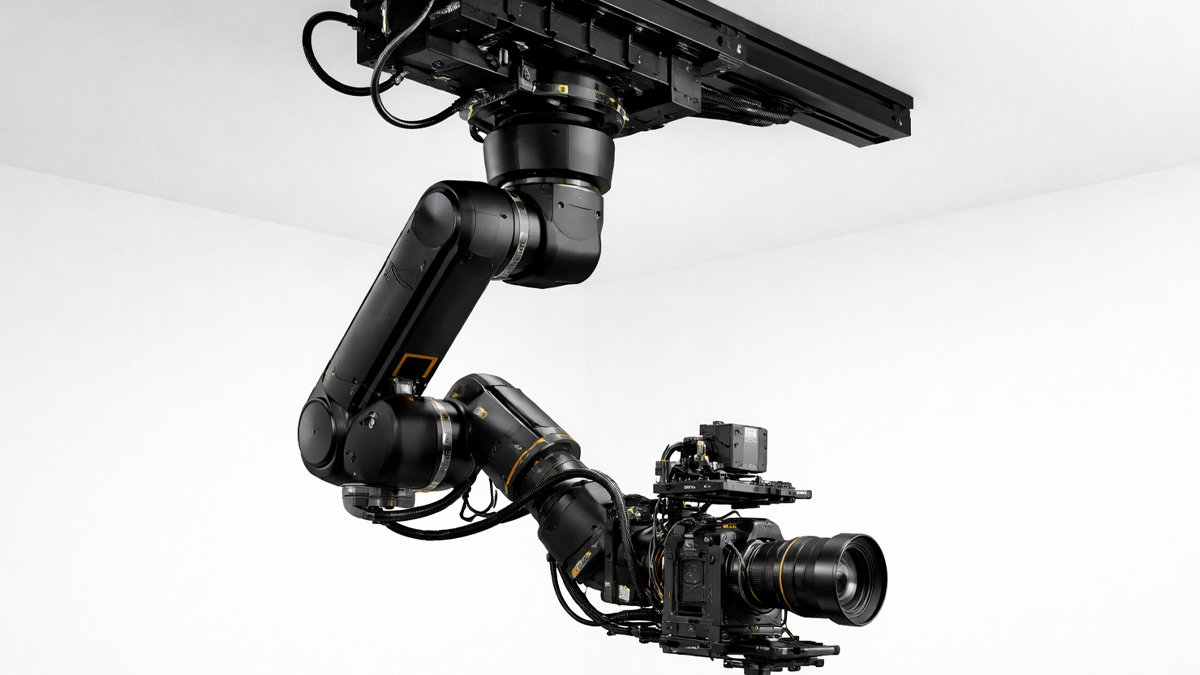
What is Ceiling Mounted Robot?
A ceiling mounted robot is a specialized robotic system that is installed on overhead structures such as ceilings, trusses, or support frames to perform precise and controlled movements. In the context of robotic camera rigs under cinematic technologies in the cinema industry, a ceiling mounted robot is designed to carry and maneuver professional cameras, lighting tools, or other filmmaking equipment from above the shooting area.
Unlike floor based robotic systems, a ceiling mounted robot operates in the upper spatial zone of a studio or shooting environment. This design frees up valuable floor space, reduces obstacles for actors and crew, and enables smooth overhead camera movements. It is widely used in film studios, television production sets, sports arenas, live events, and virtual production environments.
Ceiling mounted robots are engineered to deliver repeatable, programmable, and high speed camera motions. They can move in multiple axes including horizontal, vertical, rotational, and sometimes diagonal directions. In cinematic production, these robots help capture dynamic shots such as sweeping overhead views, top down sequences, and dramatic tracking shots without the need for cranes or handheld rigs.
The primary concept behind a ceiling mounted robot is to combine mechanical engineering, robotics, motion control systems, and camera stabilization technologies into one integrated overhead solution. It is an advanced tool that supports creative storytelling while ensuring safety and efficiency on set.
How does Ceiling Mounted Robot Work?
A ceiling mounted robot works by using a network of motorized tracks, robotic arms, control systems, and sensors that are fixed to an overhead structure. The robot moves along predefined paths using rails or suspended mechanisms that allow it to glide smoothly above the set.
Motion Control System: The core of the robot is a computerized motion control system that stores programmed camera paths. Filmmakers or technicians input movement instructions such as speed, direction, timing, and camera angle. The system translates these instructions into precise motor commands.
Motorized Tracks and Drives: The robot moves using electric motors that drive wheels or belts along ceiling mounted tracks. These motors are controlled by servo systems that ensure accurate positioning. High precision encoders continuously measure the robot’s position and feed data back to the controller.
Robotic Arm or Gimbal Unit: Attached to the moving base is a robotic arm or stabilized gimbal that holds the camera. This unit allows tilt, pan, and roll movements. It ensures that the camera remains steady even during rapid or complex motion.
Sensors and Safety Systems: The robot uses sensors such as limit switches, proximity sensors, and sometimes vision systems to detect obstacles and prevent collisions. Safety protocols are integrated to immediately stop movement in case of unexpected interference.
Remote Operation Interface: Operators control the ceiling mounted robot through a control console or software interface. Advanced systems allow integration with virtual production software, motion capture platforms, and lighting control systems.
By combining mechanical precision with digital programming, the ceiling mounted robot can repeat the same movement multiple times with exact accuracy. This feature is extremely useful in visual effects, green screen production, and multi take scenes where continuity is essential.
What are the Components of Ceiling Mounted Robot?
A ceiling mounted robot consists of several interconnected components that work together to ensure smooth and reliable operation.
Overhead Track System: This includes steel or aluminum rails mounted to the ceiling. The tracks define the movement path of the robot. They are engineered to handle the weight of the robotic system and camera equipment.
Drive Motors and Servo Units: These motors power the robot’s movement along the tracks. Servo units provide precise control over speed and positioning.
Robotic Arm Assembly: The arm holds and manipulates the camera. It may have multiple joints to allow complex movement patterns. Some systems use articulated arms while others use cable driven mechanisms.
Stabilized Gimbal: The gimbal stabilizes the camera by compensating for vibrations and sudden movements. It ensures cinematic quality footage.
Control Panel and Software: The control interface allows technicians to program motion sequences. Software tools often include 3D visualization and simulation capabilities.
Power Supply System: Ceiling mounted robots require a stable power source. Some systems use cable management solutions that move along the track, while others may use battery assisted systems.
Safety Mechanisms: These include emergency stop buttons, load sensors, and braking systems that prevent accidents and equipment damage.
Camera Mount and Accessories: The mounting platform secures different types of cameras, lenses, and accessories such as follow focus units or wireless transmitters.
Each component plays a critical role in ensuring that the ceiling mounted robot performs efficiently and safely within a cinematic environment.
What are the Types of Ceiling Mounted Robot?
There are several types of ceiling mounted robots used in cinematic technologies, depending on the production requirements.
Track Based Ceiling Robots: These systems move along fixed linear or grid tracks. They are common in television studios and sports arenas where predictable camera paths are needed.
Cable Suspended Robots: Instead of rigid tracks, these robots use tensioned cables attached to ceiling points. They can move freely in three dimensional space and are often used in large venues.
Articulated Arm Ceiling Robots: These robots feature multi jointed arms mounted on overhead rails. They provide extended reach and flexible movement angles.
Hybrid Motion Control Robots: These systems combine track movement with robotic arms and advanced stabilization. They are used in high end film productions that require complex camera choreography.
Compact Studio Ceiling Robots: Designed for smaller studios, these robots focus on space efficiency and ease of installation.
Heavy Payload Industrial Grade Robots: These are capable of carrying large cinema cameras and heavy lenses. They are built for major film productions and advanced virtual sets.
Each type offers unique advantages based on space, budget, and creative needs.
What are the Applications of Ceiling Mounted Robot?
Ceiling mounted robots have a wide range of applications in and beyond the cinema industry.
Film Production: They capture overhead shots, action sequences, and controlled tracking movements.
Television Broadcasting: Used in news studios and game shows to provide dynamic camera angles.
Sports Coverage: Enable sweeping shots over arenas and stadiums.
Live Events and Concerts: Provide dramatic camera movements without interfering with performers.
Virtual Production: Integrate with LED walls and motion tracking systems to synchronize real and virtual elements.
Commercial Advertising: Deliver repeatable and precise movements for product shots.
Educational and Research Studios: Used for recording demonstrations and experiments from above.
Their ability to operate above the action makes them versatile tools in many visual production settings.
What is the Role of Ceiling Mounted Robot in Cinema Industry?
In the cinema industry, the ceiling mounted robot plays a transformative role by enhancing visual storytelling and production efficiency.
Creative Cinematography: It allows directors and cinematographers to design unique camera paths that were previously difficult or expensive to achieve.
Space Optimization: By removing bulky cranes and dollies from the floor, the robot creates a cleaner set environment.
Consistency and Repeatability: Motion control ensures identical camera movements across multiple takes. This is essential for visual effects and compositing.
Safety Enhancement: Overhead operation reduces the risk of collisions with actors or crew.
Integration with Digital Technologies: Modern ceiling mounted robots connect with digital production tools, enabling real time synchronization with lighting, sound, and visual effects.
In essence, the ceiling mounted robot has become an essential component of modern cinematic technologies.
What are the Objectives of Ceiling Mounted Robot?
The objectives of a ceiling mounted robot are centered around precision, creativity, and operational efficiency.
To provide smooth and stable camera movements.
To maximize usable floor space on set.
To enable programmable and repeatable motion sequences.
To improve safety by keeping heavy equipment overhead.
To support advanced cinematic techniques such as motion tracking and visual effects integration.
To reduce setup time and manual labor compared to traditional rigs.
These objectives align with the evolving demands of the cinema industry.
What are the Benefits of Ceiling Mounted Robot?
The benefits of ceiling mounted robots are significant for film and television production.
Enhanced Visual Quality: Smooth and stabilized shots elevate production value.
Operational Efficiency: Faster setup and repeatable movements save time.
Cost Effectiveness: Over time, reduced reliance on large crews and cranes lowers expenses.
Creative Freedom: Complex movements can be achieved with precision.
Improved Safety: Minimizes equipment congestion on set.
Flexibility: Can be adapted for different camera systems and shooting environments.
These benefits make ceiling mounted robots a preferred choice in many professional studios.
What are the Features of Ceiling Mounted Robot?
Ceiling mounted robots offer advanced features tailored for cinematic use.
Multi Axis Movement: Allows horizontal, vertical, and rotational motion.
High Precision Control: Accurate positioning through servo motors and encoders.
Programmable Paths: Predefined camera routes stored in software.
Real Time Monitoring: Live feedback on position and system status.
Modular Design: Components can be upgraded or replaced.
Load Capacity Options: Designed to carry various camera weights.
Noise Reduction Technology: Ensures quiet operation during filming.
These features support the demanding requirements of professional filmmaking.
What are the Examples of Ceiling Mounted Robot?
Several advanced robotic systems in the cinema industry serve as examples of ceiling mounted robots.
Spidercam: A cable suspended camera system widely used in sports and large scale events.
RoboTrack Systems: Overhead track based camera systems used in broadcast studios.
KUKA Robotic Camera Solutions: Adaptations of industrial robots for cinematic camera control.
Technocrane Overhead Variants: Modified overhead motion control rigs for studio use.
Each example demonstrates how robotic engineering can enhance cinematic production.
What is the Definition of Ceiling Mounted Robot?
A ceiling mounted robot is a programmable robotic system installed on overhead structures that is designed to move cameras or related equipment with precision and stability in controlled environments such as film studios and broadcast facilities.
What is the Meaning of Ceiling Mounted Robot?
The meaning of ceiling mounted robot refers to a robotic device that operates from above, mounted to a ceiling or overhead framework, to perform automated and controlled tasks, especially for capturing dynamic visual content in cinematic production.
What is the Future of Ceiling Mounted Robot?
The future of ceiling mounted robots in cinematic technologies is promising and driven by innovation.
Integration with Artificial Intelligence: Robots may automatically adjust camera angles based on subject movement.
Enhanced Virtual Production: Deeper synchronization with real time rendering engines.
Wireless Power and Data Transmission: Reducing cable dependency.
Lighter and Stronger Materials: Improved load capacity with reduced weight.
Advanced Safety Systems: Improved obstacle detection and autonomous shutdown features.
Greater Accessibility: More compact and affordable systems for independent filmmakers.
As cinema continues to evolve with digital transformation, ceiling mounted robots will likely become more intelligent, adaptable, and widely adopted.
Summary
- Ceiling mounted robot is an overhead robotic system used for precise camera movement in cinematic technologies.
- It operates using motorized tracks, robotic arms, and computerized motion control systems.
- Key components include overhead tracks, servo motors, gimbals, and control software.
- Types include track-based systems, cable suspended robots, and articulated arm robots.
- Applications range from film production to sports broadcasting and live events.
- In the cinema industry, it enhances creativity, safety, and production efficiency.
- Objectives focus on precision, repeatability, and space optimization.
- Benefits include improved visual quality, operational efficiency, and flexibility.
- Features include multi axis motion, programmable paths, and real time monitoring.
- The future involves artificial intelligence integration and advanced virtual production support.

