

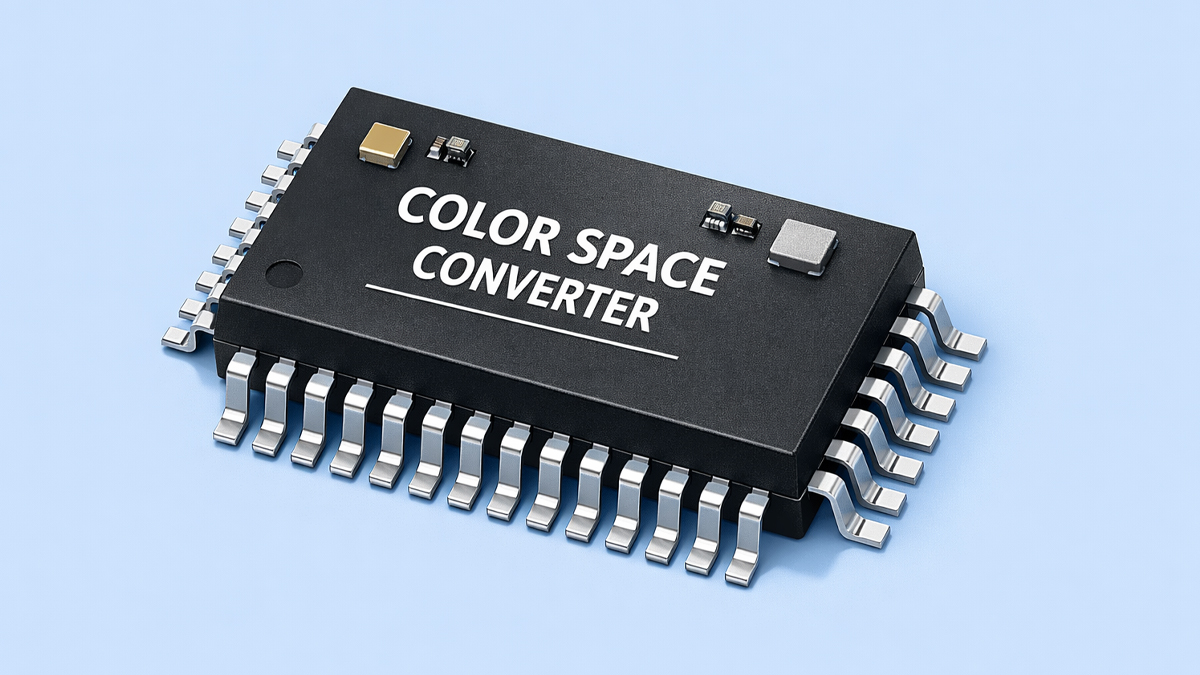
What is Color Space Converter IC?
A Color Space Converter IC is a specialized integrated circuit designed to convert visual data from one color representation format to another. In electronic imaging and video processing systems, different devices interpret and display color information using different color spaces. A Color Space Converter IC acts as the bridge that ensures color data remains accurate, consistent, and visually correct as it moves between cameras, processors, displays, and projection systems.
In the cinema industry, visual content travels through many electronic stages before it reaches the audience. Cameras capture images in one color space, processing systems operate in another, and projection or display systems require yet another. A Color Space Converter IC ensures that these transitions occur without loss of color fidelity, brightness balance, or visual intent.
At its core, this IC performs mathematical transformations that map color values from one defined color space to another. These transformations are precise and fast, allowing real time processing of high resolution cinematic content. Without this conversion, colors would appear distorted, washed out, or inaccurate, which is unacceptable in professional cinema environments.
From digital cinema cameras to post production suites and theater projection systems, Color Space Converter ICs play a silent yet critical role in delivering the visual quality audiences expect from modern cinema.
How does Color Space Converter IC Work?
A Color Space Converter IC operates by applying mathematical models to translate pixel data between different color spaces. Each color space represents color using a unique combination of values, such as luminance and chrominance or red, green, and blue intensities. The IC processes these values using predefined conversion matrices and algorithms.
Input Processing: The IC receives incoming pixel data from a video source such as a camera sensor, media player, or image processor. This data is typically formatted in a specific color space like RGB, YCbCr, or XYZ.
Color Transformation: Inside the IC, conversion logic applies matrix multiplication and offset calculations to every pixel. These calculations re map the original color values into the target color space while preserving visual accuracy.
Precision Handling: High bit depth arithmetic is used to prevent rounding errors and color banding. This is especially important in cinema applications where subtle color gradients and shadow details must be preserved.
Output Formatting: Once conversion is complete, the IC outputs the transformed pixel data in the required format for downstream components such as video scalers, encoders, or display drivers.
Real Time Operation: Modern Color Space Converter ICs are designed to handle ultra high resolution video streams at cinema frame rates without introducing latency. This real time capability is essential for live production, editing, and projection systems.
Through this structured process, the IC ensures seamless color consistency across complex cinematic electronics workflows.
What are the Components of Color Space Converter IC?
A Color Space Converter IC is composed of several internal functional blocks that work together to perform accurate and efficient color conversion.
Input Interface: This block receives digital video data from upstream devices. It supports various data formats and synchronization signals used in cinematic electronics.
Conversion Matrix Engine: This is the core processing unit that performs mathematical transformations. It applies coefficients and offsets specific to the source and target color spaces.
Coefficient Registers: These programmable registers store conversion parameters. They allow the IC to support multiple color space standards and custom cinematic profiles.
Arithmetic Logic Unit: This unit executes high precision calculations required for color transformation. It handles multiplication, addition, and scaling operations.
Clipping and Range Control: This block ensures that output color values remain within valid ranges. It prevents overflow, underflow, and visual artifacts.
Pipeline Control Logic: This component manages data flow through the IC, ensuring timing accuracy and synchronization with other video processing stages.
Output Interface: The final processed pixel data is transmitted through this interface to downstream systems such as video encoders, display processors, or projection controllers.
Each of these components is optimized for speed, accuracy, and reliability to meet the demanding requirements of the cinema industry.
What are the Types of Color Space Converter IC?
Color Space Converter ICs can be categorized based on functionality, integration level, and application focus.
Fixed Function Converter ICs: These ICs support a limited set of predefined color space conversions. They are optimized for specific cinema workflows and offer high efficiency with minimal configuration.
Programmable Converter ICs: These devices allow users to define custom conversion matrices. They are widely used in professional cinema systems where creative color grading and proprietary color spaces are required.
Embedded Converter ICs: These are integrated into larger video processing chips such as image signal processors or video scalers. They provide seamless color conversion within a single processing pipeline.
High Dynamic Range Converter ICs: Designed for modern cinema content, these ICs support wide color gamut and high dynamic range formats. They preserve brightness and color accuracy across extended luminance levels.
Low Power Converter ICs: Used in portable or battery operated cinematic equipment, these ICs balance performance with energy efficiency.
Each type serves a specific role depending on system complexity, performance requirements, and cinematic quality goals.
What are the Applications of Color Space Converter IC?
Color Space Converter ICs are used across a wide range of cinematic and visual electronics applications.
Digital Cinema Cameras: They convert sensor output color spaces into formats suitable for processing, storage, and monitoring.
Post Production Systems: Editing and color grading workstations rely on accurate color conversion to maintain visual consistency across tools and displays.
Cinema Projectors: Projectors require precise color space conversion to match industry standards and creative intent.
Broadcast and Streaming Equipment: Live cinema broadcasts and digital distribution systems use these ICs to ensure consistent color reproduction across platforms.
Video Playback Devices: Media servers and playback systems convert stored content into display compatible color formats.
Visual Effects Pipelines: Complex compositing workflows depend on accurate color conversion between different software and hardware components.
In all these applications, the IC ensures that colors remain true from capture to final presentation.
What is the Role of Color Space Converter IC in Cinema Industry?
In the cinema industry, visual storytelling depends heavily on color accuracy and consistency. A Color Space Converter IC plays a foundational role in achieving this goal.
It ensures that the colors captured by cameras match the creative vision of filmmakers when displayed on cinema screens. Without accurate conversion, skin tones, lighting moods, and artistic color grading would be compromised.
The IC enables interoperability between equipment from different manufacturers. Cameras, processors, and projectors often use different color standards, and the converter ensures seamless integration.
It supports industry standards compliance, allowing cinematic content to meet technical specifications required for theatrical release.
It enables advanced cinematic technologies such as high dynamic range and wide color gamut, enhancing visual depth and realism.
By operating invisibly within complex electronic systems, the Color Space Converter IC safeguards the visual integrity of cinema content.
What are the Objectives of Color Space Converter IC?
The primary objectives of a Color Space Converter IC focus on accuracy, consistency, and efficiency.
To maintain color fidelity during transitions between different electronic systems.
To support multiple color standards used in cinematic production and projection.
To enable real time processing of high resolution video streams.
To minimize color distortion, banding, and visual artifacts.
To provide flexibility for creative color workflows and proprietary formats.
To ensure compatibility across diverse cinematic electronics ecosystems.
These objectives guide the design and implementation of Color Space Converter ICs in professional environments.
What are the Benefits of Color Space Converter IC?
Color Space Converter ICs offer numerous benefits to the cinema industry and cinematic electronics systems.
They ensure consistent color reproduction across devices and workflows.
They reduce the need for manual color correction caused by mismatched color spaces.
They improve visual quality by preserving subtle color details and gradients.
They enable efficient system integration by standardizing color data formats.
They support advanced cinematic features such as high dynamic range and wide color gamut.
They enhance reliability and repeatability in professional production environments.
These benefits contribute directly to higher quality cinematic experiences.
What are the Features of Color Space Converter IC?
Modern Color Space Converter ICs include a wide range of advanced features tailored for cinematic applications.
High Precision Processing: Supports high bit depth color data to maintain visual accuracy.
Multiple Color Space Support: Handles common and specialized cinematic color standards.
Programmable Conversion Matrices: Allows customization for creative workflows.
Low Latency Operation: Enables real time video processing without delays.
Wide Dynamic Range Support: Preserves detail in highlights and shadows.
Robust Error Handling: Prevents visual artifacts caused by signal anomalies.
Compact Integration: Designed to fit into complex cinematic electronics systems.
These features make the IC a critical component in modern cinema technology.
What are the Examples of Color Space Converter IC?
Examples of Color Space Converter ICs can be found in various cinematic electronics systems.
Standalone converter chips used in professional video processors.
Embedded converters within image signal processors used in cinema cameras.
Conversion modules inside digital cinema projectors.
Integrated conversion units in video scaling and distribution hardware.
Custom converter ICs developed for proprietary cinema workflows.
Each example demonstrates how color space conversion is embedded at different stages of the cinematic pipeline.
What is the Definition of Color Space Converter IC?
A Color Space Converter IC is an integrated electronic circuit designed to transform digital image or video data from one color representation system to another while preserving visual accuracy and consistency.
This definition highlights its role as a fundamental processing element in visual electronics and cinematic systems.
What is the Meaning of Color Space Converter IC?
The meaning of a Color Space Converter IC lies in its function as a translator of color information.
It enables different electronic devices to understand and correctly display the same visual content, even when they use different color languages.
In the cinema industry, it represents reliability, consistency, and creative freedom by ensuring that colors appear as intended at every stage of production and exhibition.
What is the Future of Color Space Converter IC?
The future of Color Space Converter ICs is closely tied to the evolution of cinema technology.
As resolutions increase and color standards expand, these ICs will support even higher precision and wider color gamuts.
Artificial intelligence assisted color processing may be integrated to enhance conversion accuracy and adapt to content characteristics.
Energy efficient designs will become more important as cinematic equipment becomes more compact and mobile.
Standardization efforts will drive greater interoperability across global cinema ecosystems.
Overall, Color Space Converter ICs will continue to evolve as essential enablers of next generation cinematic experiences.
Summary
- A Color Space Converter IC converts visual data between different color representation systems.
- It is a critical component in cinematic electronics and the cinema industry.
- The IC works by applying precise mathematical transformations to pixel data.
- It consists of input interfaces, conversion engines, and output control blocks.
- Different types of ICs serve various cinematic performance and flexibility needs.
- Applications span cameras, post production, projection, and distribution systems.
- The IC ensures color accuracy, consistency, and creative intent preservation.
- It supports modern cinematic technologies such as high dynamic range and wide color gamut.
- Future developments will enhance precision, efficiency, and adaptability.
- Color Space Converter ICs are foundational to delivering high quality cinematic visuals.

