

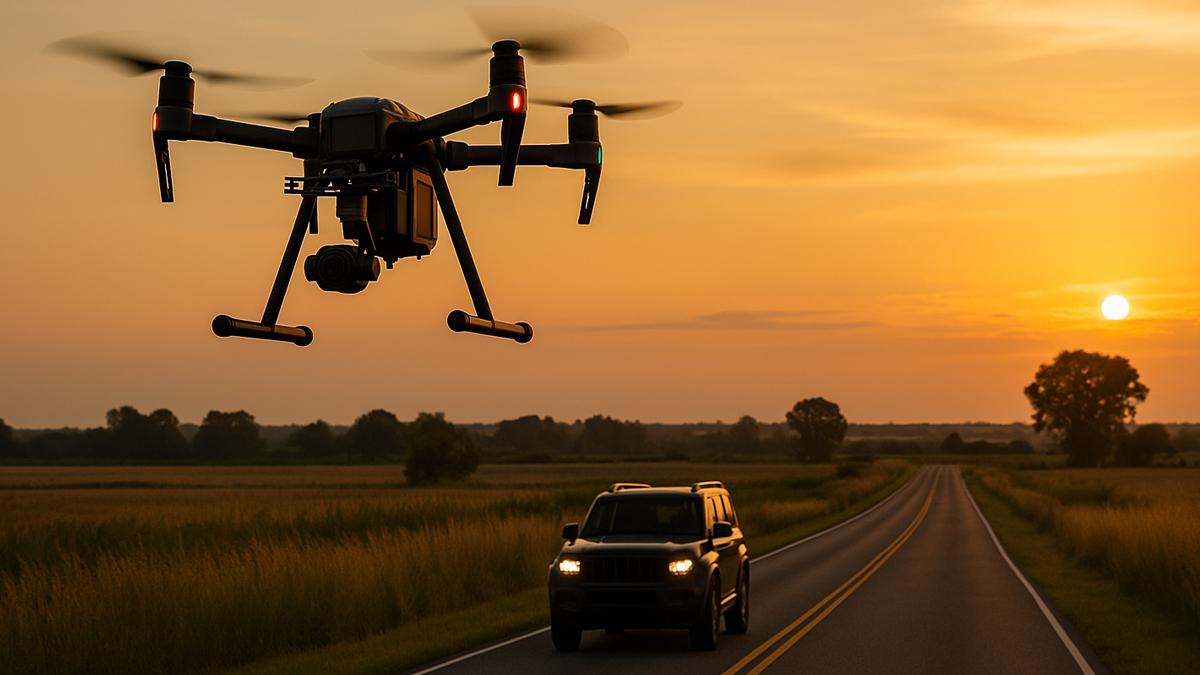
What is Dynamic Home Point?
Dynamic Home Point is a drone safety and navigation feature that lets the home point update while the drone is still flying. The home point is the reference location used for Return to Home actions, including manual return, low battery return, and failsafe return if the signal is lost. In a standard setup, the home point is recorded at takeoff and stays fixed until the drone lands. That approach works well when the pilot remains near the launch spot.
In drone cinematography, the crew often moves. The pilot may walk with actors, ride in a tracking vehicle, or operate from a boat. In these situations, a fixed home point can become impractical or even unsafe. The drone might try to return to a place that is now far away, blocked, crowded, or no longer accessible. Dynamic Home Point addresses this risk by allowing the home point to follow the pilot or a designated moving base location. This supports safer recoveries and more flexible production workflows, especially during long or complex moving shots.
How does Dynamic Home Point Work?
Dynamic Home Point works by sharing changing location data from the control side to the aircraft during flight. The remote controller or the connected mobile device determines its position using GNSS. When the feature is enabled in the flight application, the system sends updated coordinates to the drone through the communication link at set intervals or when the pilot triggers a refresh.
The flight controller receives the new coordinates and checks whether the update meets safety and accuracy requirements. If the system detects poor location quality, it may delay or reject the update. When the update is accepted, the drone replaces the earlier home point with the new one. All Return to Home calculations then use this refreshed location, along with settings such as return altitude, obstacle avoidance, and battery thresholds.
In practical terms, this means the drone can return toward the moving crew rather than to the original takeoff point. For cinematic use, this helps prevent forced landings in unsafe areas and lets the team keep a take running while repositioning on the ground or on water.
What are the Components of Dynamic Home Point
A reliable Dynamic Home Point setup depends on several coordinated hardware and software elements. The aircraft needs a positioning system, typically multi constellation GNSS, to navigate accurately toward an updated coordinate. The flight controller firmware must support home point updates during active flight and integrate them into normal return, low battery, and failsafe logic.
The remote controller or the pilot mobile device needs its own GNSS capability. The flight application must access that location data, evaluate its quality, and package it for transmission to the drone. The communication link between controller and aircraft must be stable enough to pass timely updates, especially when the crew is moving through complex terrain.
User interface elements also play an important role. The app should show which home point mode is active, display distance and direction to the current home point, and provide confirmations when updates occur. Safety constraints such as minimum GNSS accuracy, return altitude settings, and obstacle avoidance work alongside Dynamic Home Point to create a complete return strategy suitable for professional production environments.
What are the Types of Dynamic Home Point
Dynamic Home Point can be classified by the source of the moving reference location. The most common type is controller based dynamic home point, where the home point updates to the current position of the remote controller. A closely related type is mobile device based dynamic home point, where the system uses the GNSS data from a connected phone or tablet.
Another type is beacon assisted dynamic home point. In this setup, a dedicated GNSS beacon or a mission unit mounted on a vehicle or boat provides the moving reference. This can be useful for high value shoots where the crew wants redundancy and consistent accuracy independent of a phone.
There is also a manual update type, where the pilot triggers an update at key moments, such as when the crew reaches a new staging area. Some professional workflows use a hybrid approach, combining automatic updates with manual confirmation depending on scene complexity.
Each type serves the same core purpose: ensuring that the return location stays aligned with the real recovery plan. The best choice depends on the environment, the movement pattern of the crew, and the reliability needs of the production.
What are the Applications of Dynamic Home Point
Dynamic Home Point is useful in any mission where the pilot or recovery area moves during flight. In drone cinematography, this includes car commercials, chase sequences, escort shots, and touring style travel content. The drone may launch from a support vehicle and continue filming while the crew drives along the route. Dynamic Home Point keeps the return target tied to that moving base.
It is also valuable for walk and follow scenes. A crew might film actors moving through a city, a festival, or a natural trail while the pilot walks with the team. The feature can reduce the need to land and reset safety parameters each time the crew advances.
On water, Dynamic Home Point is especially important. A drone launched from a boat can update its home point to the boat position as it continues along a path. This supports safer recovery if wind changes, battery warnings appear, or signal conditions fluctuate.
Beyond cinema, the feature can help in sports coverage, adventure documentation, environmental filming, and any field scenario where the operator is not stationary. In all cases, the central goal is safer automated return to a relevant, reachable location.
What is the Role of Dynamic Home Point in Cinema Industry
In the cinema industry, Dynamic Home Point serves as both a safety layer and a production efficiency tool. Safety is essential when drones fly near vehicles, talent, crew, lighting rigs, and expensive camera systems. A dynamic return reference reduces the chance of a drone returning to a location that has become hazardous or crowded.
From a workflow perspective, the feature supports continuous shooting. Production teams often cannot afford repeated interruptions to reset a launch point during a complex scene. Dynamic Home Point allows the crew to reposition to follow action while maintaining a reliable automated recovery option.
This capability also expands creative planning. Longer tracking shots become more feasible because the pilot can move with the scene confidently. Directors can plan sequences that transition across spaces with fewer pauses for safety resets. The result is smoother coverage, less technical downtime, and lower risk of losing the aircraft in environments that are changing rapidly.
In short, Dynamic Home Point helps align drone automation with real set behavior. That alignment supports safer flight decisions, more consistent schedules, and more ambitious cinematic movement.
What are the Objectives of Dynamic Home Point
The primary objective of Dynamic Home Point is to keep Return to Home behavior aligned with a moving pilot or moving recovery plan. This is especially important during signal loss events or low battery triggers. If the crew has moved far from the takeoff point, a dynamic home point improves the likelihood of a safe and accessible return.
Another objective is reducing pilot workload. Instead of manually recalculating recovery plans each time the crew relocates, the system can update the return reference automatically or with simple confirmation. This supports efficient operations during time sensitive productions.
A further objective is minimizing risk to people and property. A drone returning to an outdated home location may cross unsafe areas or descend into spaces that now contain vehicles or crowds. A moving home point helps reduce that risk.
For cinematography, an additional objective is enabling longer, more fluid takes. The feature supports the practical reality that production teams rarely stay in one place. It allows safety automation to adapt to the movement that storytelling and staging often require.
What are the Benefits of Dynamic Home Point
Dynamic Home Point offers strong safety benefits. It reduces the risk of the drone attempting to return to a location that is no longer safe, visible, or reachable. This is helpful on busy sets where staging changes quickly and where the original takeoff area may become occupied by equipment or traffic.
It also improves recovery success in difficult environments. Urban spaces, mountainous terrain, and coastal locations can create temporary link instability. If a failsafe return activates, the drone has a better chance of heading toward the current crew position rather than traveling to an outdated point.
For production efficiency, the feature supports longer continuous shots. The crew can move along a route while the drone remains deployed, which can reduce the number of takeoffs and landings in a day. Fewer cycles can mean less time spent on battery swaps, pre flight checks, and repeated safety configuration.
Another benefit is creative confidence. When pilots trust that the automated return reference is relevant, they can focus more on framing, timing, and coordination with the director and camera team. This supports a calmer, more controlled aerial workflow.
What are the Features of Dynamic Home Point
A typical Dynamic Home Point system includes automatic or periodic home point updates based on a selected moving source. The flight application usually provides on screen indicators that show the active home point mode and confirm when an update has been applied. Distance and direction readouts help pilots stay aware of return geometry.
Safety checks are a crucial feature. Many systems evaluate GNSS quality before accepting a new home point. If accuracy is insufficient, the app may warn the pilot or prevent an update. This reduces the risk of a misleading return coordinate.
Integration with standard Return to Home settings is also part of the feature set. Return altitude, obstacle avoidance behavior, and low battery thresholds continue to function while the home point changes. Some platforms allow quick switching between aircraft home point, controller home point, and manual update modes to fit different scenes.
User control features may include a one tap update command, selectable update intervals, and clear warning prompts when the controller location cannot be confirmed. Together, these features make Dynamic Home Point a practical, production ready tool rather than a niche option.
What are the Examples of Dynamic Home Point
One common example is a car commercial on an open highway. The drone launches from a support vehicle and tracks the hero car through a long sequence. As the crew drives to maintain line of sight and safe control distance, Dynamic Home Point updates to the moving support vehicle. If a low battery return activates, the drone heads toward the crew rather than to a roadside launch spot that is now far behind.
Another example is a documentary filmed on a hiking trail. The pilot walks with the team as they follow a subject across varied terrain. The dynamic home point tracks the pilot position, improving the chance of a safe return if the signal drops behind trees or ridges.
A third example is a marine shoot. A drone is launched from a boat to capture aerial footage of sailing or coastal exploration. As the boat moves, a fixed home point on the water would quickly become irrelevant. Dynamic Home Point lets the drone treat the boat location as the active return target, helping avoid water landings and supporting safer retrieval.
These examples show how the feature supports real world movement patterns that are common in cinematic storytelling.
What is the Definition of Dynamic Home Point
Dynamic Home Point is a drone navigation and safety function that allows the stored home point used for Return to Home and related failsafe behaviors to be updated during an active flight based on a moving, validated positioning source such as the remote controller, a connected mobile device, or an authorized external GNSS beacon, subject to accuracy checks and system safety constraints.
What is the Meaning of Dynamic Home Point
The meaning of Dynamic Home Point is that the drone can update its safe return location to where the pilot or crew is currently located. It is a way for the drone to adapt to movement instead of assuming that takeoff and recovery must happen at the same spot.
In simple terms, it helps the drone come back to you even if you have moved. This is important when you are filming while walking, driving, or operating from a boat. If something unexpected happens, such as a warning battery level or a brief loss of signal, the drone can automatically target a more sensible return location.
For cinema crews, this meaning translates into smoother operations. The team can follow action, adjust vantage points, and still maintain a reliable safety net. The feature brings automation closer to the reality of how film sets move and evolve during a shoot. It is a small concept with large practical impact because it helps convert a static safety rule into a flexible and scene aware return strategy.
What is the Future of Dynamic Home Point
The future of Dynamic Home Point is likely to focus on higher accuracy and smarter context awareness. As multi band GNSS becomes more common and RTK workflows expand in professional drone systems, dynamic home points may become precise enough to support automated landings on smaller moving targets. This could include docking pads mounted on production vehicles, boats, or mobile base stations.
Sensor fusion will likely play a stronger role. Visual positioning, terrain awareness, and map based logic can improve home point reliability where satellite signals are weak, such as dense urban locations or narrow valleys. Artificial intelligence may also help the drone decide when to accept an update, by analyzing motion patterns, risk zones, and obstacle context.
For cinematic autonomy, dynamic home points may integrate with advanced tracking modes and mission planning. A drone could maintain a safe relationship between the tracked subject, the moving crew, and the best recovery location, updating return logic as the scene progresses.
The feature may evolve from a helpful return setting into a core element of intelligent, mobile, and production grade drone safety systems.
Summary.
- Dynamic Home Point allows a drone to update its home point during flight based on a moving recovery reference.
- It strengthens Return to Home reliability when the crew relocates after takeoff.
- It is highly useful for drone cinematography involving cars, boats, hiking scenes, and moving event coverage.
- The system depends on aircraft positioning, controller or mobile device positioning, flight controller support, stable communication, and clear app indicators.
- Common types include controller based, mobile device based, beacon assisted, manual update, and hybrid approaches.
- Benefits include safer failsafe behavior, reduced risk of returning to an outdated area, and smoother production workflows.
- Future improvements may add higher precision and smarter update decisions that support advanced cinematic operations and safer returns to moving platforms.

