

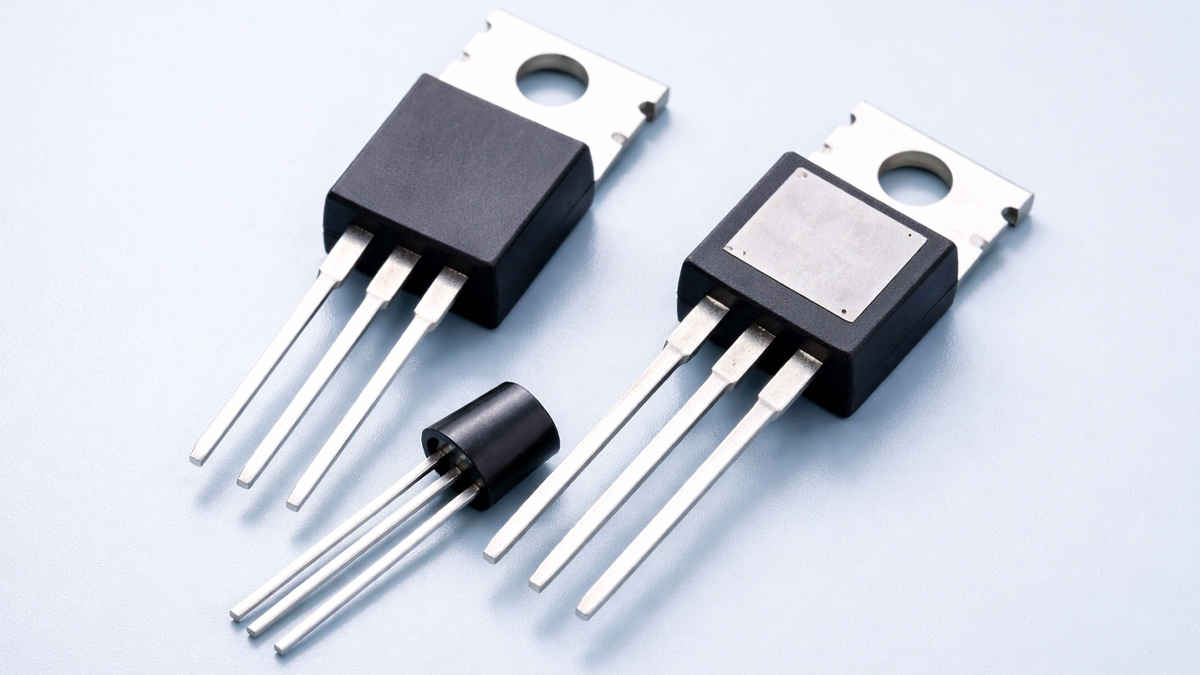
What is Field Effect Transistor?
A Field Effect Transistor is a type of transistor that controls the flow of electric current using an electric field. Instead of relying on current flowing into a control terminal the way some other transistors do, a Field Effect Transistor mainly uses voltage to control current. This makes it extremely useful in modern electronics because it can provide high input impedance, low noise performance in many designs, and efficient switching.
In simple terms, a Field Effect Transistor acts like a voltage controlled valve for electricity. When you apply a certain voltage to its control terminal, it allows more or less current to move through the device. This ability to control current smoothly or switch it quickly is one reason Field Effect Transistors appear everywhere in music electronics, from guitar pedals to mixing consoles, audio interfaces, studio preamps, synthesizers, amplifiers, wireless microphone systems, and power supplies inside audio gear.
In the music industry, sound quality and reliability matter as much as creativity. A Field Effect Transistor helps audio circuits stay quiet, stable, and responsive. It can be used for very delicate tasks such as amplifying tiny signals from microphones or guitar pickups, and it can also be used for heavy tasks such as switching power efficiently inside amplifiers, speakers, and digital instruments.
How does Field Effect Transistor Work?
A Field Effect Transistor works by using an electric field to influence how easily current can pass through a semiconductor channel. The current flows between two main terminals called source and drain. The control terminal is called the gate. When the voltage at the gate changes, it changes the electrical conditions inside the channel, which changes how much current can flow from source to drain.
Gate control: The gate voltage determines whether the channel becomes more conductive or less conductive.
Channel behavior: The channel is the path through which charge carriers move, and its thickness or conductivity changes based on the gate voltage.
Current flow: When the channel is open enough, current flows easily. When the channel is restricted, current is reduced or fully stopped.
In audio circuits, this voltage control is valuable because it can be very clean and predictable. Many Field Effect Transistors can operate with very little gate current, meaning the circuit controlling the gate does not have to deliver much power. This characteristic is helpful in music electronics where sensitive signals must not be loaded down. For example, a guitar pickup produces a small signal that can lose brightness if the input circuit draws too much current. A Field Effect Transistor based input stage can protect the tone by presenting a very high input impedance.
In switching applications, Field Effect Transistors can change states quickly. This is essential in power supplies used in audio gear. Efficient switching helps reduce heat, improve reliability, and lower noise when the circuit is designed correctly. Many modern amplifiers and digital instruments use switching power supplies and Class D amplification, both of which rely heavily on Field Effect Transistors.
What are the Components of Field Effect Transistor?
A Field Effect Transistor has specific terminals and internal regions that work together to control current flow. The exact physical structure depends on the type, but the fundamental components are consistent.
Gate: The control terminal that receives a voltage to regulate current flow through the channel.
Source: The terminal where charge carriers enter the channel.
Drain: The terminal where charge carriers leave the channel.
Channel: The semiconductor path between source and drain through which current flows.
Substrate or body: The semiconductor foundation that supports the device structure and influences behavior in many designs.
Insulating layer: In many Field Effect Transistors, especially MOSFET types, the gate is separated from the channel by a thin insulating oxide layer, helping create extremely high input impedance.
In music electronics, these components matter because each one influences sound and performance. The gate structure affects input impedance and noise. The channel characteristics affect distortion behavior in analog circuits. The thermal properties and internal resistance affect how well the device handles power in amplifiers and power supplies.
Biasing network: Practical circuits often include resistors and capacitors that set the operating point so the Field Effect Transistor works in the correct region.
Protection elements: In power and stage circuits, designers may add gate resistors, zener diodes, or snubber networks to protect the transistor and reduce noise.
Coupling and filtering: Capacitors and filters are commonly used with Field Effect Transistors in audio paths to block unwanted DC and shape frequency response.
What are the Types of Field Effect Transistor?
There are several major types of Field Effect Transistors, each suited to different audio and music electronics tasks. Understanding the types helps you understand why certain pedals, preamps, mixers, and amplifiers sound and behave differently.
JFET: A Junction Field Effect Transistor uses a gate junction to control the channel. It is often valued in audio because its behavior can be smooth and musical in analog stages.
MOSFET: A Metal Oxide Semiconductor Field Effect Transistor uses an insulated gate, giving extremely high input impedance and efficient switching capabilities.
MESFET: A Metal Semiconductor Field Effect Transistor is often used in high frequency applications, less common in everyday music gear but relevant in RF and wireless systems.
HEMT: A High Electron Mobility Transistor is used for very high frequency and low noise applications, sometimes relevant in advanced wireless receivers and specialized audio communication equipment.
Within JFET and MOSFET families, there are additional classifications.
N channel and P channel: These refer to the dominant charge carrier type and the direction of conduction in circuit design.
Depletion mode: The device can conduct at zero gate voltage and is turned off by applying a gate voltage that reduces channel conduction.
Enhancement mode: The device is normally off at zero gate voltage and is turned on by applying a gate voltage that creates a conductive channel.
Music electronics often use JFETs in input buffers, low noise preamps, and analog effects. MOSFETs dominate in power amplification, switching power supplies, and modern high efficiency designs.
What are the Applications of Field Effect Transistor?
Field Effect Transistors appear in many applications across music electronics because they can work as amplifiers, buffers, switches, and variable resistors when configured correctly.
Input buffers: Used in guitar pedals and instrument preamps to prevent signal loss and preserve high frequency detail.
Preamplifiers: Used in microphone preamps, DI boxes, and mixer input stages for clean gain and low noise performance.
Analog effects: Used in overdrive, distortion, compression, tremolo, phaser, and envelope controlled circuits depending on design goals.
Voltage controlled resistance: In some circuits, a Field Effect Transistor can behave like a variable resistor for modulation, attenuation, or dynamic control.
Switching and muting: Used in silent switching, channel switching, bypass systems, and audio routing.
Power amplification: MOSFET devices are used in output stages of amplifiers, including some Class AB designs and many Class D systems.
Power supplies: Switching regulators and power conversion circuits rely heavily on MOSFETs for efficiency.
Wireless and RF sections: Specialized Field Effect Transistors can appear in transmitters and receivers used in wireless microphones and in ear monitoring systems.
Digital instruments and synths: Used in power regulation, signal conditioning, and sometimes in analog stages around converters.
A key reason for this wide use is flexibility. The same device family can support tiny signal handling and large power handling depending on the specific transistor type and rating.
What is the Role of Field Effect Transistor in Music Industry?
In the music industry, Field Effect Transistors help shape the journey of sound from performance to recording to playback. They affect tone, clarity, noise level, reliability, power efficiency, and how equipment responds to musicians.
Instrument tone preservation: Many electric instruments have pickups that are sensitive to loading. A Field Effect Transistor buffer at the input of a pedal or amplifier can keep the instrument sounding bright and open by providing high input impedance.
Low noise amplification: Studio gear often needs to amplify quiet signals without adding hiss. Field Effect Transistors can support low noise input stages and stable biasing in high quality preamps and mixers.
Dynamic response and feel: Some designs using JFETs are known for a smooth response that musicians describe as touch sensitive. This is part of why JFET based circuits are popular in certain overdrive pedals and preamp emulations.
Efficient power for touring: Live music relies on robust gear that stays cool and reliable. MOSFET based switching power supplies and Class D amplification improve efficiency and reduce weight, helping touring setups.
Modern amplifier design: Many modern amplifiers and powered speakers use MOSFETs in power sections. This supports high power output with controlled distortion and improved thermal handling when engineered well.
Audio routing and switching: Stage rigs often require fast switching between channels, effects loops, and signal paths. Field Effect Transistor based switching can be designed for quiet operation to avoid pops and clicks.
Digital workflows: Audio interfaces, digital mixers, synth workstations, and controllers use Field Effect Transistors extensively in their internal power regulation and signal conditioning, enabling stable performance and consistent sound.
The Field Effect Transistor is not just a component in the background. It influences the character of analog circuits, supports the efficiency of modern power systems, and helps ensure the sound you create reaches the audience cleanly.
What are the Objectives of Field Effect Transistor?
The objectives of using a Field Effect Transistor in electronics, especially music electronics, focus on control, stability, efficiency, and signal integrity.
Voltage based control: The objective is to control current flow using voltage at the gate, allowing precise and low power control.
High input impedance: The objective is to avoid loading sensitive audio sources, preserving tone and frequency response.
Low noise performance: The objective is to support cleaner signal paths, especially in preamps and input buffers.
Signal amplification: The objective is to increase signal strength without significantly degrading sound quality.
Efficient switching: The objective is to switch power and signals quickly with low losses, improving overall system efficiency.
Thermal management: The objective is to reduce heat generation in power stages and regulators, improving reliability.
Compact and scalable design: The objective is to allow equipment to be smaller, lighter, and more integrated while maintaining performance.
Consistent behavior: The objective is to provide repeatable performance across different units, important for professional audio manufacturing and touring reliability.
In music electronics, these objectives connect directly to user experience. Musicians want consistent tone and dependable gear. Engineers want low noise and accurate reproduction. Manufacturers want efficiency and reliability. Field Effect Transistors help satisfy all these goals.
What are the Benefits of Field Effect Transistor?
Field Effect Transistors bring practical benefits that directly matter in music electronics.
High input impedance benefit: Helps preserve the natural sound of instruments and microphones by minimizing signal loading.
Low power control benefit: Gate control usually requires minimal current, enabling efficient circuit operation and longer battery life in pedals.
Low noise benefit: Many designs can achieve low hiss and clean amplification, crucial for studio recording and quiet passages.
Fast switching benefit: Supports modern switching power supplies and Class D amplifiers, enabling lightweight and efficient audio systems.
Good thermal efficiency benefit: Efficient operation can reduce heat, increasing lifespan and stability on stage and in studios.
Design flexibility benefit: Can be used for buffering, gain stages, switching, modulation, and power handling.
Improved reliability benefit: When properly designed, Field Effect Transistor based stages can be rugged and stable under varying conditions.
Smooth analog behavior benefit: Certain JFET designs can offer musical clipping characteristics, useful in tone shaping devices.
These benefits are why Field Effect Transistors are common in both vintage inspired analog circuits and cutting edge digital audio equipment.
What are the Features of Field Effect Transistor?
A Field Effect Transistor has technical features that define how it behaves in circuits. In music electronics, these features translate into performance characteristics you can hear and rely on.
Unipolar conduction: Current flow is primarily due to one type of charge carrier, which affects device behavior and modeling.
Voltage controlled operation: The gate voltage controls channel conductivity, enabling sensitive and low power control.
High input impedance: Especially in MOSFETs, the insulated gate provides extremely high input impedance.
Low gate current: The gate draws very little current in many types, helping battery powered music devices.
Transconductance: The relationship between gate voltage change and drain current change defines gain capability.
Drain source resistance: In switching and power applications, lower resistance reduces power loss and heat.
Frequency response capability: Field Effect Transistors can operate effectively across audio frequencies and far beyond, supporting stable amplification and switching.
Noise characteristics: Device construction influences hiss and interference, critical for high gain audio paths.
Thermal characteristics: How the device handles heat affects long term reliability in amplifiers and power systems.
Biasing sensitivity: Operating point selection influences distortion, headroom, and tonal character in analog music circuits.
When designers select a Field Effect Transistor, they consider these features in context. A studio preamp needs low noise and linear behavior. A distortion pedal may want controlled nonlinearity. A powered speaker needs efficient power switching and heat management.
What are the Examples of Field Effect Transistor?
Field Effect Transistors can be found in many real world examples across music electronics and related systems.
Guitar pedal input buffer example: A JFET buffer at the front of a pedal chain prevents tone loss and keeps the signal strong for long cable runs.
Overdrive and preamp voicing example: JFET stages can be biased to create gentle saturation that resembles certain tube like response patterns in some designs.
Analog tremolo and modulation example: A Field Effect Transistor can be used as a variable resistor to control amplitude, creating tremolo effects.
Noise gate and mute switching example: Field Effect Transistor switching can mute signals silently between song sections or during channel changes when designed carefully.
Mixer input stage example: Field Effect Transistor devices can help create high impedance, low noise front ends for line and instrument inputs.
Power amplifier output stage example: MOSFETs are used in some amplifier output designs due to their power handling and thermal behavior characteristics.
Class D amplifier switching example: High power MOSFETs switch rapidly to drive efficient amplifier stages in powered speakers and modern amplifiers.
Switching power supply example: Many audio devices use MOSFET based switching regulators to convert AC or battery power into stable DC rails.
Wireless microphone receiver example: Specialized Field Effect Transistor based RF stages can appear in low noise amplification and signal handling sections.
These examples show that the Field Effect Transistor is not limited to one kind of equipment. It supports the entire chain from instrument input to stage power delivery.
What is the Definition of Field Effect Transistor?
The definition of Field Effect Transistor is a semiconductor device that controls current flow through a channel using an electric field created by a voltage applied to a gate terminal. It is designed so that the gate voltage changes the conductivity of the channel between source and drain, enabling amplification or switching.
What is the Meaning of Field Effect Transistor?
The meaning of Field Effect Transistor can be understood by breaking down the phrase. Field effect refers to the way an electric field influences the movement of charge carriers in a semiconductor. Transistor refers to a device that can transfer and control signals, acting as an amplifier or switch. Together, the term describes a transistor whose control mechanism is based on an electric field, allowing voltage to regulate current flow.
In practical music electronics terms, it means you can control audio signals and power behavior in a precise way without heavily loading the source signal. That helps preserve tone, reduce noise, and improve efficiency, depending on how the device is used.
What is the Future of Field Effect Transistor?
The future of Field Effect Transistors in music electronics will likely grow even stronger because audio equipment continues to demand better efficiency, lower noise, smaller size, and smarter integration.
Higher efficiency amplification: Continued improvement in MOSFET technology supports more efficient Class D and hybrid amplifier designs, reducing weight and heat for touring and installed sound.
Lower noise front ends: Advances in device fabrication and circuit techniques can further reduce noise in microphone preamps, instrument inputs, and high gain stages.
Better power management: Modern audio gear requires stable power rails for digital processing and converters. Improved Field Effect Transistors help make power supplies quieter, smaller, and more efficient.
Integration with digital control: Audio devices increasingly combine analog stages with digital control for recall, automation, and presets. Field Effect Transistors support switching and routing that can be controlled by microcontrollers while keeping audio paths clean.
Improved reliability: New packaging, thermal designs, and protection features can make Field Effect Transistor based systems more robust for harsh stage environments.
Wide bandgap materials: Materials such as gallium nitride and silicon carbide are becoming more common in power electronics. These technologies can enable faster switching and higher efficiency, which may lead to smaller power supplies and more compact high power audio amplifiers.
Better wireless performance: As wireless audio grows, advanced Field Effect Transistor based RF components can support cleaner reception, lower noise, and better battery performance in transmitters and receivers.
The biggest trend is that Field Effect Transistors will keep enabling professional sound in smaller, lighter, and more energy efficient equipment, while also supporting high quality analog tone shaping in pedals and studio gear.
Summary
- A Field Effect Transistor controls current flow using an electric field created by gate voltage.
- It uses source, drain, gate, and a semiconductor channel to regulate signal or power behavior.
- Major types include JFET and MOSFET, with additional variations such as N channel, P channel, depletion mode, and enhancement mode.
- In music electronics, it is used for buffers, preamps, modulation, switching, routing, amplification, and power conversion.
- It helps preserve instrument tone through high input impedance and supports low noise signal paths in studio gear.
- MOSFET based designs improve efficiency and reduce heat in switching power supplies and modern amplifier systems.
- The future includes better efficiency, lower noise, improved power management, and wider adoption of advanced materials for high performance audio equipment.

