

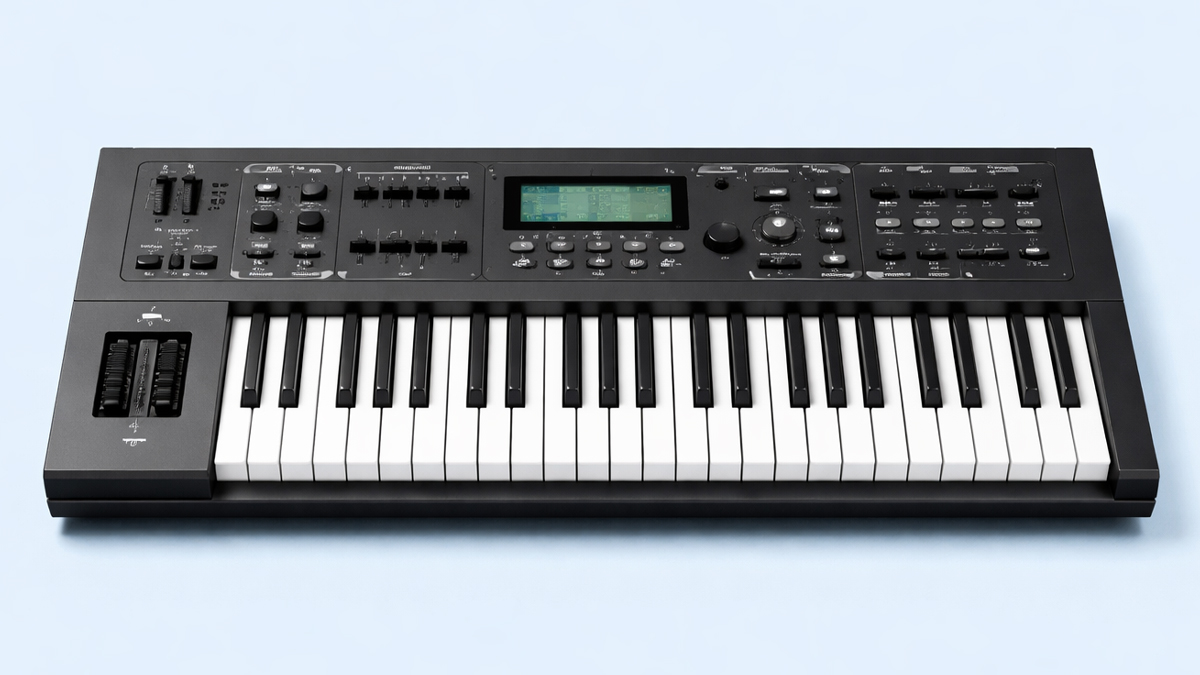
What is FM Operator?
An FM Operator is a complete sound building unit used in frequency modulation synthesis inside a synthesizer. In practical music electronics terms, an operator is usually made of an oscillator plus a level control and an amplitude envelope, and sometimes additional shaping tools such as a pitch envelope or a keyboard scaling curve. The oscillator produces a waveform, most commonly a sine wave because it keeps modulation clean and predictable. The envelope controls how the operator changes over time, so the sound can strike, bloom, fade, or sustain in a musical way.
In FM synthesis, operators work together. Some operators are heard directly as audio and some operators are used to change another operator. When an operator is heard directly, it acts like a carrier. When it changes another operator, it acts like a modulator. By adjusting operator frequency, modulation amount, and envelope shapes, you can create bright metallic tones, expressive electric pianos, punchy basses, evolving pads, glassy bells, and many hybrid timbres that feel both acoustic and futuristic.
FM Operators became famous through classic digital synthesizers, but the concept is now everywhere. It appears in hardware workstations, software synths, modular style environments, and modern plug ins. Even when the interface is simplified, the engine often still uses operators under the hood. Understanding the operator level is one of the fastest ways to move from random FM tweaking to intentional sound design.
How does FM Operator Work?
An FM Operator works by generating a waveform and then either sending it to the output or using it to influence the frequency of another operator. FM means that one signal changes the frequency of another signal. When the modulator operator pushes and pulls the carrier frequency, the carrier produces additional harmonics called sidebands. These sidebands form the timbre you hear. The operator itself is the controllable source that can act as carrier, modulator, or sometimes both depending on routing.
Signal role: A carrier operator produces the audible tone, while a modulator operator shapes that tone by changing its frequency. If you increase the modulator level, the sound generally becomes brighter and more complex. If you lower it, the sound becomes purer and more sine like.
Frequency relationship: Operators can run at a fixed frequency ratio relative to the played note, or at a fixed absolute frequency. Ratio settings keep harmonic relationships stable across the keyboard, which is useful for musical instruments like electric piano or brass. Fixed frequency settings are useful for inharmonic textures like bells, gongs, and special effects.
Modulation index: The amount of frequency change applied to the carrier is often described as the modulation index. In many synthesizers this is controlled by a modulator level parameter or an output level from the modulator operator. Higher modulation index creates more sidebands and a brighter or noisier tone. Lower modulation index creates fewer sidebands and a rounder tone.
Envelope shaping: The amplitude envelope of each operator is crucial. A modulator with a fast decay can create a bright attack that quickly softens, a classic trick for plucked and percussive sounds. A modulator with a slow attack can make the brightness gradually increase, producing evolving pads. Meanwhile the carrier envelope sets the overall loudness contour.
Algorithms and routing: Operators are connected through algorithms, which are predefined or freely patchable routing structures. Some algorithms place modulators in series so that one modulator modulates another modulator before reaching the carrier. This produces deep complexity. Other algorithms place modulators in parallel, allowing multiple brightness layers to be mixed.
Feedback: Many FM engines allow feedback, where an operator feeds its own output back into its input. This can turn a simple sine into something closer to a saw or noise like spectrum. Small feedback adds edge. High feedback can create aggressive textures and percussion.
An FM Operator works as a controllable oscillator plus time shaping that either becomes the sound you hear or becomes the force that sculpts another operator into a rich musical tone.
What are the Components of FM Operator?
An FM Operator is commonly built from a few core components. Some synthesizers expose all of them, while others hide certain parts behind macro controls.
Oscillator core: This is the waveform generator. Many FM designs use sine waves for clean modulation. Some modern operators allow additional waveforms such as triangle or custom shapes, which can increase harmonic density even before modulation.
Frequency control: This sets the operator pitch. It may include coarse tuning, fine tuning, fixed frequency mode, and ratio mode. Ratio mode ties the operator to the played note for consistent harmonic structure.
Phase control: Phase determines where the waveform starts when a note is triggered. Some FM instruments allow phase reset, free running, or random phase. Phase affects transient character and stereo feel when multiple voices stack.
Output level: This controls how much signal the operator sends forward. For a carrier, output level affects loudness. For a modulator, output level affects modulation depth, which changes timbre.
Amplitude envelope generator: This shapes the operator level over time. Common stages include attack, decay, sustain, and release. FM operators rely heavily on envelope differences between carriers and modulators for realistic instrument behaviors.
Keyboard scaling: Many FM synths include level scaling across the keyboard. This helps make sounds balanced so that low notes do not become too dull or too bright, and high notes do not become overly harsh.
Velocity sensitivity: This determines how playing strength affects operator level or envelope. For expressive patches, velocity may increase modulator level for brighter attacks and also raise carrier level for louder notes.
Pitch envelope or key tracking: Some engines provide extra pitch shaping. Even a subtle pitch envelope can create convincing percussive strikes or brass like bite when applied to modulators.
Feedback path: If the operator supports feedback, it includes a feedback amount and internal routing to feed its own output back for richer spectra.
Routing connection: The operator includes a path to either the audio output as a carrier, or into another operator input as a modulator, or both when the engine allows mixed routing.
These components together make an operator a flexible building block rather than a simple oscillator.
What are the Types of FM Operator?
FM Operators can be described in types based on role, behavior, or configuration inside an FM engine. While different synthesizers may use different terminology, these categories help clarify how operators function.
Carrier operator: This operator contributes directly to the final audio output. Its envelope largely defines the perceived loudness contour. It may still be influenced by other operators modulating it.
Modulator operator: This operator does not need to be heard directly. It shapes another operator by modulating its frequency. Its envelope often defines brightness changes over time.
Stacked modulator operator: This is a modulator that is itself modulated by another operator. It increases complexity and can create evolving or noisy spectra with fewer operators.
Parallel modulator operator: Multiple modulators feed the same carrier in parallel. This allows layered brightness and timbral blending, similar to mixing different harmonic components.
Feedback operator: This operator uses internal feedback to generate a richer waveform from a simple oscillator. It can act as a carrier for gritty tones or as a modulator for intense harmonic spread.
Ratio based operator: This operator frequency is set as a ratio of the played note. It is excellent for harmonic sounds like strings, organs, and electric pianos where the overtones should stay musically aligned.
Fixed frequency operator: This operator runs at a constant frequency regardless of the key played. It is useful for inharmonic percussion, resonant clangs, and special effects.
Waveform extended operator: Some modern FM synths allow operators to use waveforms other than sine, or to shape the waveform with distortion, waveshaping, or filters. This expands the palette beyond classic FM.
Noise or sample based operator: In certain hybrid FM engines, an operator can be noise or a sample source. Modulating with noise can create breath, bow scrape, or snare like textures.
Even if your synthesizer does not label these types explicitly, you can identify them by how you route and configure each operator.
What are the Applications of FM Operator?
FM Operators are used wherever precise control of tone and time based expression is needed. They are especially valuable when you want rich timbre without heavy filtering or large sample libraries.
Electric piano and tine instruments: FM operators can create the bright initial strike, the hollow body resonance, and the gentle sustain behavior typical of classic electric pianos. One modulator handles the transient brightness while another shapes mid harmonics.
Bells, mallets, and metallic percussion: Inharmonic ratios and fixed frequency modulators generate bell like partials and shimmering clang. Fast decays on modulators create realistic strikes.
Bass and leads: FM operators can produce tight bass with articulate attack and clear pitch. By controlling modulation depth with envelopes, you can create a punchy edge that softens into a stable tone.
Pads and evolving textures: Slow envelopes, stacked modulators, and subtle detuning create motion. Parallel modulators can bring in different harmonic layers over time.
Digital drums and hits: Feedback operators and fixed frequency modulators can produce snappy kicks, sharp snares, metallic hats, and tuned percussion. FM is also great for laser zaps and game style effects.
Sound effects and cinematic design: Operators with extreme modulation or unusual routings create sci fi sweeps, risers, impacts, and complex drones. Fixed frequency operators can add mechanical or industrial character.
Resynthesis and harmonic sculpting: Some modern FM engines allow you to approximate a spectrum by carefully selecting operator ratios and levels. This approach is useful for crafting signature timbres.
Educational and research contexts: FM operators are also used to teach synthesis because they clearly demonstrate relationships between modulation, sidebands, and perceived brightness.
In many workflows, operators provide a quick route to complex tone that would otherwise require multiple oscillators, filters, and distortion stages.
What is the Role of FM Operator in Music Industry?
FM Operators play a major role in how modern music electronics shape sound identity across genres. They matter because they offer an efficient, expressive, and distinctive way to generate timbre.
Signature sounds in popular music: FM based electric pianos, bells, and basses have defined countless recordings. Operators allow these sounds to be consistent and programmable, which made them ideal for studio production and touring rigs.
Genre defining digital character: Many styles use the clarity and bite of FM tones, especially when producers want crisp transients and harmonic detail that cuts through a mix. Operators can create bright presence without relying solely on EQ boosts.
Compact sound design power: FM operators produce complex spectra with relatively low CPU or hardware resources compared to some subtractive chains. That efficiency matters for live performance, embedded devices, and multi timbral workstations.
Expressive performance control: Operators respond well to velocity, aftertouch, and modulation wheels. Players can map brightness to performance gestures by routing control to modulator levels. This makes FM patches playable rather than static.
Innovation in instruments and plug ins: Many modern synthesizers include FM sections because operators expand the palette beyond analog style subtractive sound. Hybrid designs combine operators with filters, effects, and wavetable sources to meet current production trends.
Consistency across platforms: Because operators are algorithmic rather than sample heavy, patches can translate easily between systems, making them reliable for collaboration, touring, and long term project recall.
The role of the FM operator is therefore both artistic and practical. It helps create distinctive sound and also helps deliver that sound efficiently in real production environments.
What are the Objectives of FM Operator?
The objectives of an FM Operator within a synthesizer design and within a sound design workflow are clear and purposeful.
Timbre generation: The first objective is to create a controllable harmonic spectrum through modulation. Operators allow the designer to move from pure tones to complex, bright, or metallic tones without changing the core architecture.
Time based articulation: Operators aim to shape how timbre changes over time. Separate envelopes for carriers and modulators make it possible to recreate natural instrument behaviors such as bright attacks and mellow sustain.
Efficient complexity: Operators are designed to generate complex sound with a small number of building blocks. This keeps instruments efficient and responsive.
Predictable musical mapping: Ratio based operator tuning aims to keep harmonic relationships stable so patches sound musical across the keyboard.
Expressive control: Operators aim to translate performance gestures into timbral change. Velocity and aftertouch can increase modulation depth, making the sound respond like an acoustic instrument.
Flexible routing: Operators are intended to be combined through algorithms or free routing, enabling both simple and highly complex structures for many genres.
Sound design repeatability: An operator based engine aims to make sound design reproducible and programmable so artists can recall exact tones.
These objectives make the operator concept central to FM synthesis rather than a minor technical detail.
What are the Benefits of FM Operator?
FM Operators provide benefits that are both sonic and workflow related.
Wide timbral range: Operators can produce smooth, warm tones as well as bright metallic and complex textures. This range comes from modulation relationships rather than heavy processing.
High clarity and definition: FM tones can be precise and present, which helps them sit in a mix. The attack transients can be very articulate.
Expressive dynamics: Because modulation depth can respond to velocity and control inputs, operators allow a sound to become brighter when played harder and softer when played gently.
Efficient synthesis: FM operator systems can generate complex spectra with fewer processing stages, which often means lower CPU usage in software and efficient hardware implementation.
Compact patch design: With careful operator tuning and envelopes, you can recreate many instrument families without needing multiple layers or samples.
Distinctive digital character: Operators can create a recognizable modern tone that contrasts nicely with analog subtractive synthesis, giving producers more sonic contrast.
Creative unpredictability with control: Small parameter changes can produce dramatic results, which encourages experimentation. At the same time, operator ratios and envelopes offer a framework for intentional design.
What are the Features of FM Operator?
An FM Operator includes features that support deep control over pitch, level, and timbre shaping. The exact list depends on the instrument, but common features are consistent.
Waveform generation: Many operators generate sine waves, while modern designs may include additional waveforms or shaping options.
Ratio and fixed tuning: Operators can track the keyboard by ratio or ignore it with fixed frequency, enabling both harmonic and inharmonic textures.
Independent envelopes: Operators have dedicated amplitude envelopes, and sometimes extra envelopes for pitch or modulation depth.
Level scaling and velocity response: Operators can change level based on keyboard position and performance intensity for realistic response.
Feedback control: Some operators include feedback amount to expand harmonic content dramatically.
Algorithm routing: Operators can be arranged in series, parallel, or mixed structures, from simple two operator patches to large networks.
Multiple carriers: Some FM engines allow more than one carrier, enabling layered outputs within one patch.
Stereo and panning behaviors: In certain synths, operators or carrier outputs can be panned or spread for width.
Modulation matrix integration: Operators can be targets in modulation routing, so LFOs, envelopes, and performance controls can change operator level, tuning, or feedback dynamically.
Fine tuning and detune: Operators often support small detuning for chorusing effects, especially when multiple carriers are used.
These features allow operators to work as both the tone source and the timbre sculptor in a single unified concept.
What are the Examples of FM Operator?
FM Operators appear in many real synthesizers and software instruments, even when the interface uses different wording.
Classic digital FM synthesizers: Many well known FM instruments use multiple operators and predefined algorithms. In these systems, each operator includes an oscillator and envelope, and the user chooses how operators connect.
FM capable modern hardware synths: Many modern keyboards, grooveboxes, and desktop synths include an FM engine where operators can be configured with ratio tuning, feedback, and multi operator routing.
Software FM synthesizers: Many plug ins present operators directly, sometimes with visual routing diagrams. Others provide macro controls but still use operators internally.
Hybrid synth engines: Some instruments combine operators with filters, wave tables, samples, or additive components. In such cases, an operator might be a sine, a shaped waveform, or a sample that acts as a modulator.
DAW integrated FM tools: Some digital audio workstations include FM instruments where operators are part of the internal structure and can be routed through effects and automation.
Modular environments: In modular style software, you can build operators by combining oscillators, VCAs, and envelopes, then route them like classic operator algorithms.
These examples show that the operator concept is not limited to one brand or era. It is a foundational method for building sound in music electronics.
What is the Definition of FM Operator?
An FM Operator is a synthesis building block consisting of an oscillator and amplitude control that can function as a carrier or as a modulator within frequency modulation synthesis, where modulators change the frequency of other operators to create complex harmonic spectra.
What is the Meaning of FM Operator?
The meaning of FM Operator is practical and musical. It means a controllable sound unit inside an FM synthesizer that either becomes the sound you hear or becomes the control signal that shapes another sound. The term operator highlights that this unit performs an operation on another signal when used as a modulator. In everyday use, it means you can build a complete instrument by combining several operators with specific tunings, envelopes, and routings.
What is the Future of FM Operator?
The future of FM Operator is closely tied to how synthesizers continue to blend deep synthesis with user friendly control. FM will keep evolving because it solves a timeless problem in music production: how to create rich tone with expressive movement using efficient computation.
User interface innovation: Future FM instruments will likely present operators in more intuitive visual forms, such as interactive routing graphs, harmonic previews, and spectrum guided controls. This will help more musicians understand operator relationships without needing advanced math.
Hybrid operator engines: More instruments will combine operators with wave tables, samples, filters, and physical modeling. Operators may modulate not only frequency but also wave shape, filter parameters, and resonant models for highly realistic and unique tones.
Smarter modulation assistance: Some systems may include guided patch generation, where the synth suggests operator ratios and envelope shapes based on a desired instrument type. This could reduce trial and error while still allowing expert control.
Improved expressiveness: The operator future will include deeper performance mapping, using MPE, polyphonic aftertouch, and advanced controllers to shape modulator levels and feedback per note, making FM feel more like an acoustic instrument.
Better anti aliasing and high fidelity: As processing power grows, FM engines can run at higher internal rates with cleaner results, especially for extreme modulation, reducing digital artifacts unless intentionally desired.
Community driven patch ecosystems: Operators are excellent for sharing patches. Future platforms may emphasize interoperable patch formats and cloud libraries, making operator based sound design more collaborative.
The future of the FM Operator is strong because it remains one of the most powerful ways to generate distinctive musical timbres while staying efficient and expressive.
Summary
- An FM Operator is an oscillator plus level and envelope control that can act as a carrier or a modulator in FM synthesis.
- Carriers produce the audible output, while modulators shape timbre by changing carrier frequency and creating sidebands.
- Operator frequency settings, especially ratio and fixed modes, strongly influence whether the result is harmonic or inharmonic.
- Independent envelopes for carriers and modulators allow realistic articulation such as bright attacks and mellow sustain.
- Algorithms and routing determine how operators interact, enabling simple tones or highly complex evolving textures.
- Feedback expands an operator spectrum and supports aggressive, metallic, or noisy sounds when needed.
- FM operators are widely used for electric pianos, bells, basses, pads, drums, and sound effects in the music industry.
- The future of FM operators points toward more intuitive interfaces, hybrid engines, and richer expressive control.

