

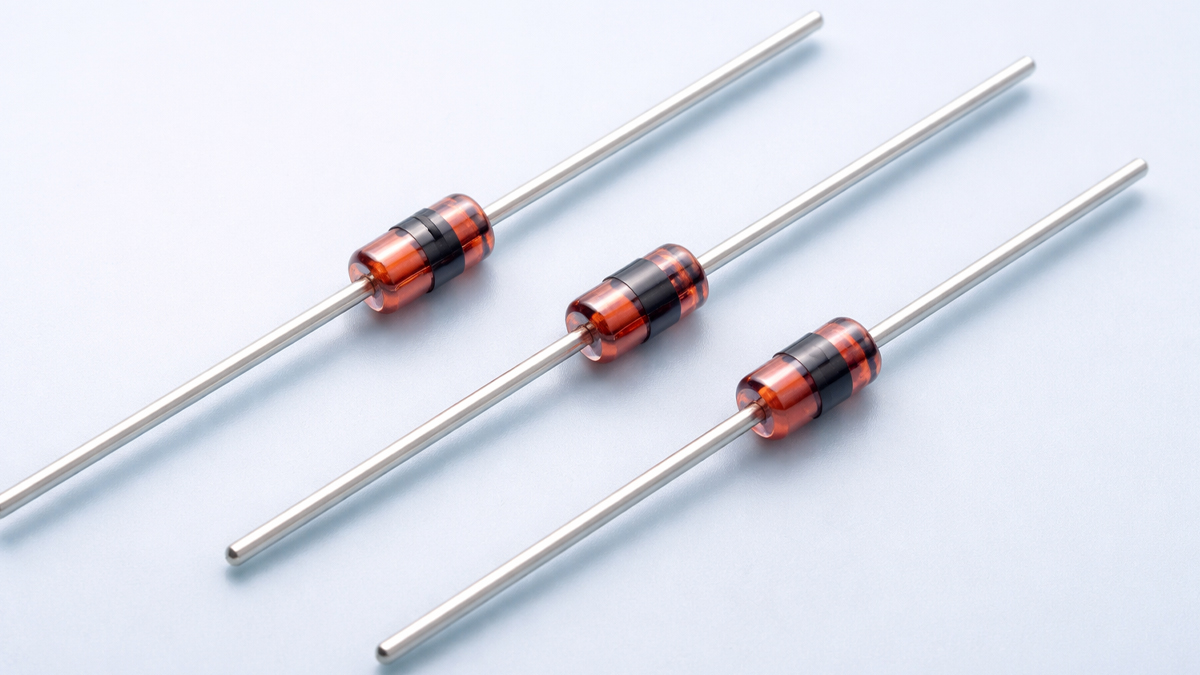
What is General Purpose Signal Diode?
A general purpose signal diode is a small semiconductor diode designed mainly for low power, low current, and relatively high speed signal tasks. It is built to handle tiny electrical signals rather than heavy power conversion. In everyday electronics, it is used for switching, protecting sensitive inputs, shaping waveforms, detecting signals, and routing small currents. Compared to power diodes, a general purpose signal diode has a smaller junction area, lower forward current capability, and faster switching behavior, which makes it ideal for fast signal paths.
In cinematic electronics under the cinema industry, the same basic purpose stays consistent: it helps manage and protect low level signals moving through control boards, audio circuits, sensor interfaces, camera accessories, LED drivers, networking equipment, and power management logic. Cinema systems often involve a mix of delicate analog signals and high speed digital signals. A signal diode plays a simple but critical role by making sure current flows in the intended direction, unwanted spikes do not reach fragile components, and switching events happen cleanly.
While it is a small component, it often sits at important places in a circuit: near connectors, near transistor bases, at the input of integrated circuits, around relays, and across coils. Because cinema equipment is expected to run reliably for long shoots, live events, and long screening schedules, engineers value components that are predictable, inexpensive, and easy to integrate. General purpose signal diodes match this need and appear across a wide range of cinema related electronics.
How does General Purpose Signal Diode Work?
A general purpose signal diode works using a semiconductor junction called a PN junction. Inside the diode, one side is P type material and the other side is N type material. When the diode is forward biased, meaning the anode is at a higher electrical potential than the cathode, the junction allows current to flow. When it is reverse biased, meaning the cathode is at a higher potential than the anode, the diode blocks current except for a very small leakage current.
Forward conduction: When forward biased, the diode acts like a one way valve for current. Once the applied voltage crosses a certain level, typically around 0.6 to 0.7 volts for common silicon signal diodes, the diode begins conducting significantly. In signal circuits, this property is used to steer or clamp voltages, create rectified waveforms, and protect inputs from going below ground or above supply rails.
Reverse blocking: When reverse biased, the diode blocks current flow. This is useful for isolating sections of a circuit, preventing back feeding, and ensuring signals follow intended paths. In cinema devices, this helps protect batteries and power rails from accidental reverse polarity connections and prevents one module from powering another unintentionally through signal lines.
Switching behavior: Many signal diodes are selected because they switch quickly. Switching speed matters when the diode is used in high frequency signal paths such as clock lines, fast logic switching, RF related subcircuits, or rapid sensor pulses. A diode does not switch instantly because charge can be stored in the junction. General purpose signal diodes are engineered to minimize this stored charge so they can turn off faster when reverse biased.
Clamping and protection: In many designs, a diode is placed between a signal line and a supply rail to prevent the signal from exceeding safe limits. If a voltage spike tries to exceed the rail, the diode conducts and shunts the excess energy away from sensitive IC inputs. In cinema electronics, this becomes important for connectors that face the outside world, such as remote control ports, audio inputs, trigger lines, and sensor cables.
What are the Components of General Purpose Signal Diode?
A general purpose signal diode looks simple from the outside, but it includes several important internal and external elements that define how it behaves.
PN junction: The PN junction is the core active region where rectification and switching happen. The quality of the junction strongly affects forward voltage drop, leakage current, and switching speed. In signal diodes, the junction is typically optimized for low capacitance and quick recovery.
Semiconductor die: The diode die is the small piece of silicon that contains the junction. Its size influences current handling and thermal performance. Signal diode dies are typically small because their job is to handle small currents efficiently and switch quickly.
Anode and cathode regions: These are the P and N doped regions of the silicon. Doping levels and diffusion profiles are chosen to balance low forward voltage, manageable leakage, and desired switching speed. The diode is marked externally to show which side is the cathode.
Metal contacts and bond wires: Conductive layers connect the silicon to the package leads. Bond wires link the die to the external terminals. Their design affects resistance and reliability under thermal cycling.
Package body: Signal diodes are commonly found in small packages such as axial glass packages or surface mount packages. The package provides mechanical protection, insulation, and heat dissipation. In cinema equipment, surface mount versions are common because boards are compact and densely populated.
Encapsulation material: Many small signal diodes use glass or molded epoxy encapsulation. Glass packages often provide stable characteristics and good reliability. Epoxy packages offer low cost and compatibility with automated assembly.
Marking and polarity indicator: The package usually includes a stripe or marking on the cathode side. This matters in production and repair because reversing the diode changes circuit behavior.
What are the Types of General Purpose Signal Diode?
General purpose signal diode is a broad category, and within it there are common types defined by speed, construction, and intended signal domain.
Standard switching silicon diode: This is the most common type used for general switching and protection in low frequency and moderate frequency circuits. It is widely used in logic interfacing, clamping, and general signal routing.
High speed switching diode: These diodes are optimized for faster turn off and lower junction capacitance. They are often chosen in circuits where switching frequency is high, such as fast digital control signals and pulse circuits.
Small signal rectifier diode: Some signal diodes are used for small rectification tasks, such as demodulation or low current power steering. They are still signal class devices but used for small rectifying action rather than heavy power conversion.
Low leakage signal diode: Some applications need very low reverse leakage, such as high impedance sensor inputs or precision analog measurement paths. Low leakage variants help maintain accuracy and reduce drift.
Low capacitance signal diode: In RF paths, high impedance audio preamps, and fast edge digital circuits, junction capacitance can distort signals. Low capacitance types are chosen to reduce loading.
Dual signal diode in one package: Many manufacturers offer two diodes in one package, either isolated or configured as a common cathode or common anode pair. This is convenient for signal steering and protection in compact designs.
General purpose diodes compared to special diodes: It is important to separate signal diodes from specialized diode families such as Zener diodes, Schottky diodes, and PIN diodes. Those have unique behaviors. A general purpose signal diode is typically a silicon PN diode aimed at standard switching and signal processing tasks.
What are the Applications of General Purpose Signal Diode?
General purpose signal diodes appear across electronics because they solve practical problems in a simple and affordable way. Their applications in cinematic electronics are just an extension of their wider use.
Signal switching and routing: A diode can route a signal to one path while blocking it from another path. This is used in simple logic gating, input selection, and signal steering networks in control boards.
Wave shaping and clipping: Diodes can clip the top or bottom of a waveform to limit amplitude. In cinema related audio circuits, clipping is not always desirable, but controlled clipping can be useful in protection circuits and in some detection stages.
Signal rectification and detection: A diode can convert AC or varying signals into a DC representation. This is used in envelope detection, peak detection, and simple demodulation circuits. For example, some sensor circuits use rectification to turn pulses into measurable voltage levels.
Input protection for microcontrollers and DSPs: Many cinema devices use microcontrollers and digital signal processors for audio processing, control, and automation. Their input pins are sensitive. Diodes can clamp unexpected voltage spikes and protect pins from electrostatic discharge events.
Reverse polarity protection on signal lines: While power inputs often have their own protection, signal connectors can also accidentally see reversed voltage. Diodes help block damaging reverse currents.
Flyback and transient suppression for small coils: In control circuits, relays and small solenoids produce voltage spikes when turned off. A diode placed across the coil provides a safe path for current to decay, protecting switching transistors and logic circuits. Cinema equipment includes relays in power distribution units, projector control boards, and automation systems.
Power OR and power steering for low current rails: Diodes can combine two sources so that whichever source is higher supplies the load. This is used for backup supplies or for combining USB power and battery power for small logic sections.
Level shifting and bias networks: In analog circuits, diode drops can create reference points or help shift signal levels by a predictable voltage drop. This can support biasing in audio front ends or sensor conditioning.
What is the Role of General Purpose Signal Diode in Cinema Industry?
Cinema industry electronics include cameras, lenses, follow focus systems, monitors, recorders, wireless transmitters, audio mixers, projectors, cinema servers, lighting control systems, automation panels, and many other devices. Inside these systems, general purpose signal diodes play roles that support reliability, signal integrity, and protection.
Camera and rig control electronics: Modern camera rigs include accessory control boards for power distribution, tally lights, timecode interfaces, and remote start stop connections. Signal diodes are used to isolate control lines, prevent back feeding between accessories, and protect inputs from accidental cable events. When a crew frequently plugs and unplugs accessories, diodes help reduce the risk of damage caused by spikes and polarity mistakes.
Audio signal chain support: Cinema audio equipment includes preamps, mixers, wireless microphone receivers, and monitoring systems. While audio paths are carefully designed to avoid distortion, diodes still appear in protection circuits at connectors and in control sections that manage switching, muting, and logic control. A signal diode can also appear in detector circuits that track levels, trigger indicators, or manage auto functions.
Projection and cinema server hardware: Digital projectors and servers contain many boards: power management, cooling control, sensor feedback, communication interfaces, and safety interlocks. Signal diodes are used for input protection, relay flyback control, and safe signal steering. They also help maintain clean control signals for fans, shutters, lamp drivers, and status monitoring.
Lighting and stage control: Many cinema productions depend on lighting control networks and dimming systems. These include trigger inputs, DMX interfaces, and sensor based automation. Signal diodes protect interface electronics from surges, cable discharge events, and inductive switching spikes. They also support simple logic functions in low cost interface boards.
Automation and safety interlocks: Cinema halls use automation systems for curtains, masking, house lights, and audio presets. Signal diodes help protect the electronics controlling relays and motors at the low voltage logic level, while larger protection components handle the high voltage side. In safety interlocks, diodes help ensure signals move in one direction so that fault conditions are interpreted correctly.
Serviceability and robustness: Cinema systems must survive continuous operation, travel, vibration, and repeated handling. Signal diodes are easy to source and easy to replace. Their use in protection networks often reduces failure rates in expensive control ICs and connectors. That reliability directly supports operational uptime for theaters and smooth workflows on film sets.
What are the Objectives of General Purpose Signal Diode?
The objectives of a general purpose signal diode in a circuit are practical and repeatable. It is chosen to achieve predictable control of current and voltage in low power signal conditions.
One directional current control: The main objective is to allow current to flow in one direction while blocking it in the other direction. This prevents unwanted reverse currents that could disturb circuits or damage components.
Signal integrity support: Another objective is to maintain clean switching behavior. In many circuits, a diode prevents signal reflections or unintended current paths that could change logic levels or corrupt analog signals.
Voltage limiting and clamping: A diode is used to prevent voltages from exceeding safe ranges. This protects microcontrollers, DSPs, and interface chips from spikes or cable discharge events.
Switching and steering: Signal diodes are used to route signals, combine signals, or create simple logic behavior without needing complex active components.
Transient management: In circuits with inductive elements, diodes provide a path for current when a coil is switched off, reducing voltage spikes and protecting switching devices.
Cost effective reliability: A general purpose signal diode helps designers reach reliability goals without adding expensive parts. In cinema equipment, this objective matters because robust design reduces downtime and repair cost.
What are the Benefits of General Purpose Signal Diode?
General purpose signal diodes provide benefits that explain why they appear so frequently in electronics including cinema industry equipment.
Simple and predictable behavior: Engineers can depend on consistent one direction conduction and known forward voltage behavior, which makes circuits easier to design and troubleshoot.
Fast switching in small signal tasks: Many signal diodes switch quickly enough for control logic and moderate frequency circuits, supporting clean digital transitions and reliable timing.
Protection of sensitive electronics: Diodes help protect expensive ICs by clamping spikes, blocking reverse currents, and reducing damage from miswiring or electrostatic discharge events.
Compact size and easy integration: These diodes are available in tiny packages, making them suitable for compact cinema devices such as wireless transmitters, camera accessories, and small interface boards.
Low cost and wide availability: Signal diodes are among the most common components in the world, so they are inexpensive and easy to source for production and repair.
Versatility across functions: The same diode can be used for switching, protection, detection, and steering. This reduces part variety and simplifies inventory for manufacturers.
Reliability under normal conditions: When used within ratings, signal diodes tend to be durable. They handle normal temperature swings and long operation hours well, which is valuable in theaters and production environments.
What are the Features of General Purpose Signal Diode?
A general purpose signal diode has a set of features that make it suitable for low level signal circuits. These features vary by part number, but the core themes remain similar.
Low forward voltage drop for silicon PN: While not as low as Schottky diodes, the forward drop is predictable and suitable for many signal tasks.
Low current handling optimized for signals: The diode is intended for small currents such as a few milliamps up to a few hundred milliamps depending on package and design.
Fast enough switching for typical signal circuits: Many parts have good switching speed for logic and moderate frequency applications. Higher speed variants improve this further.
Low junction capacitance: Small junction capacitance reduces loading on signal lines and helps maintain high frequency performance.
Defined reverse voltage rating: Signal diodes provide a defined maximum reverse voltage that helps designers keep circuits safe and predictable.
Low leakage compared to many power devices: Leakage current exists but is generally small, supporting use in high impedance circuits when chosen appropriately.
Standardized packaging and polarity marking: Clear cathode marking and standard packages make automated manufacturing and servicing easier.
Compatibility with protection networks: Signal diodes combine well with resistors, capacitors, and transient suppressors to build layered protection for cinema equipment connectors.
What are the Examples of General Purpose Signal Diode?
Many widely used diode part families are considered general purpose signal diodes. Specific selection depends on speed, voltage, package, and reliability requirements.
Common switching diode examples: The 1N4148 is a widely recognized small signal switching diode used in many circuits for switching and protection. The 1N914 is another classic switching diode often seen in similar roles.
Surface mount equivalents: The same diode behavior is available in surface mount versions such as parts commonly referred to as switching diodes in SOD packages. Many manufacturers provide equivalents designed for automated assembly.
General signal steering diodes: Many catalog signal diodes used in logic steering networks fall into this category, including dual diode arrays used to protect and route input signals on compact boards.
Cinema equipment context examples: Inside a camera power distribution board, a signal diode may isolate a tally output line. Inside a projector control board, it may clamp a sensor input. Inside an audio mixer, it may appear across a relay coil to suppress transients.
When using examples, engineers should always verify ratings such as maximum reverse voltage, forward current, switching speed, and package thermal limits. In cinema electronics, they also consider operating temperature, vibration, and long duty cycles.
What is the Definition of General Purpose Signal Diode?
A general purpose signal diode is defined as a semiconductor diode intended for low power signal processing tasks such as switching, steering, protection, and small signal rectification. It is typically a silicon PN junction diode designed for relatively fast switching and low junction capacitance compared to power rectifier diodes. Its design priorities focus on predictable behavior in signal paths rather than high current power conversion.
What is the Meaning of General Purpose Signal Diode?
The meaning of general purpose signal diode can be understood by separating the phrase into parts.
General purpose: It means the diode is not specialized for a narrow role such as voltage regulation, ultra low forward drop, or microwave RF. Instead, it is suitable for many common signal tasks across many circuits.
Signal diode: It means the diode is intended for small signal levels rather than large power handling. It is used in circuits where currents and voltages are relatively small and where switching behavior and signal integrity matter.
Combined meaning: A general purpose signal diode is a commonly used diode for everyday signal control, switching, and protection functions across a broad range of electronics including cinematic electronics.
What is the Future of General Purpose Signal Diode?
The future of the general purpose signal diode remains strong because the core needs it addresses will continue to exist. Even as integrated circuits become more advanced, physical interfaces still face real world problems such as cable discharge, miswiring, inductive spikes, and noisy environments. Diodes remain one of the simplest and most effective tools to manage these issues.
Integration into ICs and modules: Some protection diodes are integrated into microcontrollers and interface chips, but discrete diodes are still needed when energy levels exceed what internal structures can safely handle. Cinema equipment often connects to long cables and external devices, so discrete protection remains valuable.
Smaller packages and higher density boards: The cinema industry continues moving toward compact devices with high functionality. Signal diodes will continue to be offered in smaller packages to match dense layouts in wireless devices, camera accessories, and portable monitors.
Improved performance variants: Manufacturers continue improving switching speed, leakage, and capacitance characteristics. This supports higher data rates, cleaner signal edges, and better analog performance, which aligns with modern cinema workflows involving high speed control links and precise sensors.
Reliability focus in harsh environments: Film sets and theaters can involve heat, dust, vibration, and long operating hours. The future will include more robust packaging options and better qualification practices so designers can confidently deploy diodes in demanding conditions.
Complementary protection strategies: Signal diodes will be used alongside other protection devices such as transient voltage suppressors, series resistors, and filtering networks. This layered approach will remain important as cinema electronics becomes more connected and more sensitive.
The general purpose signal diode will continue as a foundational building block. It will not disappear because it solves basic electrical control problems with simplicity, reliability, and low cost.
Summary
- A general purpose signal diode is a low power diode used mainly for switching, steering, detection, and protection in signal circuits.
- It works by allowing current to flow in one direction under forward bias and blocking current under reverse bias.
- Its key internal elements include the PN junction, semiconductor die, contacts, bond wires, and a marked package for polarity.
- Common types include standard switching silicon diodes, high speed variants, low leakage versions, low capacitance versions, and dual diode packages.
- Applications include signal routing, waveform clipping, detection, microcontroller input protection, reverse current blocking, and coil transient suppression.
- In the cinema industry it supports reliability in cameras, audio equipment, projectors, servers, lighting control, automation, and safety interlocks.
- Objectives include one direction current control, clean switching, voltage clamping, signal steering, and transient management.
- Benefits include simplicity, predictable behavior, compact size, low cost, wide availability, and improved protection of expensive electronics.
- Features commonly include defined forward drop, fast switching for signal tasks, low junction capacitance, and standardized packaging.
- The future remains strong due to ongoing needs for external interface protection, compact designs, better performance variants, and reliability in harsh environments.

