

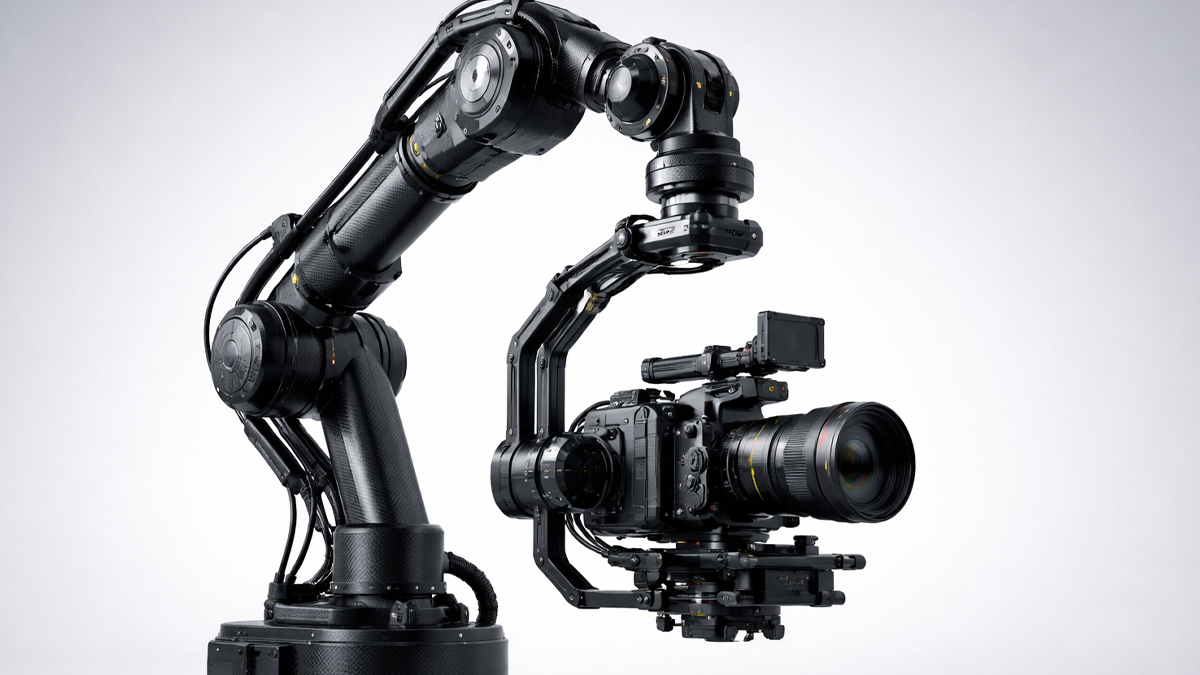
What is Gimbal Integrated Robot?
A Gimbal Integrated Robot is an advanced robotic camera rig that combines a multi axis gimbal stabilization system with a programmable robotic arm or motion platform. It is designed to capture smooth, stable, and highly precise cinematic shots, even during complex movements. In the field of cinematic technologies, this system represents the fusion of robotics, mechanical engineering, and digital control systems to deliver repeatable and creative camera motion.
A gimbal is a stabilization mechanism that allows a camera to rotate smoothly around multiple axes, typically pan, tilt, and roll. When this gimbal is integrated with a robotic arm or automated motion base, the result is a highly dynamic camera system capable of complex trajectories. This integration enables filmmakers to execute shots that would otherwise require multiple crew members, cranes, dollies, or custom rigs.
Within robotic camera rigs, the Gimbal Integrated Robot stands out because it not only stabilizes the camera but also allows for pre programmed motion paths. It can follow specific coordinates, synchronize with lighting and special effects, and repeat movements with extreme accuracy. This makes it valuable for high budget films, commercials, music videos, and virtual production environments.
How does Gimbal Integrated Robot Work?
The working of a Gimbal Integrated Robot is based on the coordination of mechanical motion, sensor feedback, and computer controlled programming. At its core, the system includes a robotic arm or motorized base and a gimbal unit mounted at the end of that arm. The robotic arm controls the position of the camera in three dimensional space, while the gimbal stabilizes and adjusts the orientation of the camera.
Motion Control System: The robotic arm operates using servo motors and stepper motors that receive commands from a control computer. These motors move the arm along predefined paths. Operators can program these paths using motion control software, specifying speed, direction, and timing.
Stabilization Mechanism: The gimbal uses gyroscopic sensors and accelerometers to detect unwanted vibrations or sudden movements. It automatically compensates by adjusting the camera angle in real time. This ensures that even if the robotic arm moves quickly, the captured footage remains smooth.
Synchronization Technology: Modern Gimbal Integrated Robots can synchronize with other cinematic technologies. For example, they can coordinate with focus pull systems, lighting cues, and visual effects triggers. This allows seamless integration into complex production workflows.
Feedback and Precision: Sensors constantly monitor position and orientation. The system sends feedback to the controller, which corrects any deviations. This closed loop control ensures high accuracy and repeatability.
As a result, the Gimbal Integrated Robot works as a unified system where robotic movement and stabilization operate together to deliver flawless cinematic shots.
What are the Components of Gimbal Integrated Robot?
A Gimbal Integrated Robot is built from multiple interconnected components that function together to achieve precise and stable camera movement.
Robotic Arm or Motion Base: This is the primary structural component. It can be a multi axis industrial robotic arm or a motorized dolly platform. It provides the range of movement required for cinematic shots.
Gimbal Stabilizer Unit: The gimbal is mounted at the end of the robotic arm. It typically offers three axis stabilization, controlling pan, tilt, and roll. High end models may include additional stabilization features.
Camera Mount and Payload System: This component securely holds the camera. It must support various camera sizes and weights while maintaining balance for optimal stabilization.
Control System and Software: The control unit includes a computer interface and specialized software that allows operators to program motion paths, adjust speed, and manage synchronization with other equipment.
Sensors and Gyroscopes: These sensors detect motion, vibration, and orientation changes. They provide real time data to the control system to maintain stability and precision.
Power Supply System: The robot requires a reliable power source. This may include wired power connections or high capacity batteries for mobile setups.
Safety and Emergency Systems: Safety sensors and emergency stop mechanisms ensure that the system operates without causing harm to crew members or equipment.
Together, these components form a complete robotic camera rig capable of delivering advanced cinematic motion control.
What are the Types of Gimbal Integrated Robot?
There are several types of Gimbal Integrated Robots, depending on design, functionality, and intended use.
Industrial Arm Based Systems: These systems use modified industrial robotic arms integrated with high performance gimbals. They are common in large film studios and high budget productions.
Dolly Mounted Robotic Systems: These combine a motorized ground dolly with a gimbal unit. They are suitable for tracking shots and long horizontal movements.
Crane Mounted Gimbal Robots: These systems integrate a gimbal with a robotic crane. They are used for dramatic overhead or sweeping shots.
Compact Studio Robots: These are smaller, lightweight systems designed for television studios, live broadcasts, and smaller production environments.
Vehicle Mounted Gimbal Robots: These systems are installed on moving vehicles for action sequences. The gimbal ensures stability even when the vehicle moves at high speed.
Each type serves specific production needs and provides different levels of mobility, payload capacity, and control precision.
What are the Applications of Gimbal Integrated Robot?
The applications of Gimbal Integrated Robot are diverse within the cinema industry and beyond.
Feature Films: Filmmakers use these robots to capture complex action sequences, dynamic camera moves, and precise repeatable shots for visual effects.
Commercial Advertising: Advertisements often require highly controlled product shots. The robot can repeat the same motion multiple times to capture perfect angles and lighting.
Music Videos: Directors use robotic rigs to create energetic and visually striking camera movements synchronized with music.
Virtual Production: In virtual studios, robotic systems integrate with real time rendering engines. They ensure that camera movement matches digital backgrounds accurately.
Sports Broadcasting: Compact gimbal robots are used in stadiums and indoor arenas to provide stable and immersive footage.
Documentary Filmmaking: In controlled environments, the robot can deliver cinematic quality movement while maintaining safety and stability.
The versatility of this technology makes it suitable for any scenario requiring stable and programmable camera movement.
What is the Role of Gimbal Integrated Robot in Cinema Industry?
In the cinema industry, the Gimbal Integrated Robot plays a transformative role by enhancing creative freedom and technical precision.
Creative Enhancement: Directors and cinematographers can design complex camera paths that would be impossible or unsafe for manual operation. This expands storytelling possibilities.
Efficiency and Repeatability: For scenes requiring multiple takes, especially those involving visual effects, the robot ensures identical movement in each take. This is crucial for compositing and digital enhancements.
Safety Improvement: High risk shots, such as those involving stunts or explosions, can be executed without placing camera operators in danger.
Integration with Digital Workflows: The robot integrates with modern cinematic technologies, including motion capture and augmented reality systems. This alignment supports advanced production techniques.
Cost Optimization: While the initial investment is high, the efficiency and precision of robotic systems can reduce production time and minimize errors.
What are the Objectives of Gimbal Integrated Robot?
The objectives of a Gimbal Integrated Robot are centered around performance, creativity, and reliability.
Precision Control: The system aims to provide exact camera positioning and movement.
Smooth Stabilization: Maintaining stable footage regardless of motion intensity is a primary objective.
Repeatability: The ability to replicate the same motion path multiple times is essential for professional productions.
Creative Flexibility: The robot should enable diverse movement styles and shot compositions.
Operational Safety: Ensuring safe operation around crew and actors is a critical goal.
Workflow Integration: The system must integrate seamlessly with other cinematic technologies.
These objectives guide the design and development of modern robotic camera rigs.
What are the Benefits of Gimbal Integrated Robot?
The benefits of Gimbal Integrated Robot are significant for filmmakers and production companies.
Enhanced Image Stability: The integrated gimbal ensures smooth footage even during rapid movement.
Advanced Motion Capabilities: Robotic arms can perform complex trajectories beyond human capability.
Improved Production Quality: Consistent and precise shots contribute to higher visual standards.
Time Efficiency: Automated motion reduces setup time and retakes.
Creative Innovation: Filmmakers can experiment with unique perspectives and movements.
Reduced Physical Strain: Camera operators are not required to perform physically demanding movements.
These benefits collectively improve both artistic output and production efficiency.
What are the Features of Gimbal Integrated Robot?
A Gimbal Integrated Robot offers a range of advanced features.
Multi Axis Movement: It provides movement across multiple axes, allowing complex three dimensional paths.
Programmable Motion Paths: Operators can store and recall predefined movements.
High Payload Capacity: Many systems can support heavy cinema cameras and lenses.
Real Time Monitoring: Integrated displays and software provide live feedback.
Remote Operation: The robot can be controlled remotely, increasing flexibility.
Synchronization Capability: It can integrate with lighting, sound, and visual effects systems.
Durable Construction: Designed for professional use, the system is built with robust materials.
These features make it a powerful tool in modern filmmaking.
What are the Examples of Gimbal Integrated Robot?
Several professional systems demonstrate the concept of Gimbal Integrated Robots in real world applications.
Bolt High Speed Cinebot by MRMC: A robotic arm system integrated with a stabilized camera head, widely used in commercials and product films.
Technodolly Motion Control System: A telescopic robotic crane combined with stabilized camera control, used in major film productions.
Kira Motion Control System: A compact robotic camera system designed for film and television studios.
Mo Sys Robotic Heads: Systems that combine robotic movement and stabilization for broadcast and virtual production environments.
These examples illustrate how integrated robotics and gimbal technology are shaping cinematic technologies.
What is the Definition of Gimbal Integrated Robot?
The definition of Gimbal Integrated Robot is a robotic camera rig that integrates a multi axis stabilization gimbal with an automated motion control system to achieve precise, stable, and repeatable camera movements for cinematic applications.
It combines mechanical robotics, electronic stabilization, and programmable software into a single unified system designed for professional film and media production.
What is the Meaning of Gimbal Integrated Robot?
The meaning of Gimbal Integrated Robot lies in the combination of two concepts. A gimbal provides stabilization and smooth rotation around multiple axes. A robot provides programmable and automated movement. When integrated, they form a system that can move a camera through space while maintaining stable orientation.
In practical terms, it means a smart camera machine that can move and stabilize itself according to programmed instructions, delivering professional cinematic results.
What is the Future of Gimbal Integrated Robot?
The future of Gimbal Integrated Robot is closely connected with advancements in artificial intelligence, machine learning, and real time rendering technologies.
Artificial Intelligence Integration: Future systems may use intelligent tracking to follow subjects automatically without manual programming.
Compact and Lightweight Designs: As materials improve, robots will become more portable and easier to deploy on location.
Enhanced Virtual Production Integration: Robots will synchronize directly with digital environments and game engines for immersive filmmaking.
Improved Safety Systems: Advanced sensors and predictive algorithms will enhance operational safety.
Cost Accessibility: Over time, technology becomes more affordable, making robotic systems accessible to smaller production houses.
The evolution of cinematic technologies suggests that Gimbal Integrated Robots will become a standard tool in professional filmmaking.
Summary
- A Gimbal Integrated Robot combines robotic motion control with gimbal stabilization for precise cinematic shots
- It uses motors, sensors, and software to achieve smooth and repeatable movement
- Key components include a robotic arm, gimbal unit, control system, and sensors
- It is used in films, commercials, music videos, and virtual production
- It enhances creativity, efficiency, and safety in the cinema industry
- It offers features such as programmable paths and multi axis movement
- The future includes artificial intelligence integration and broader accessibility
- It represents a major advancement in robotic camera rigs within cinematic technologies

