

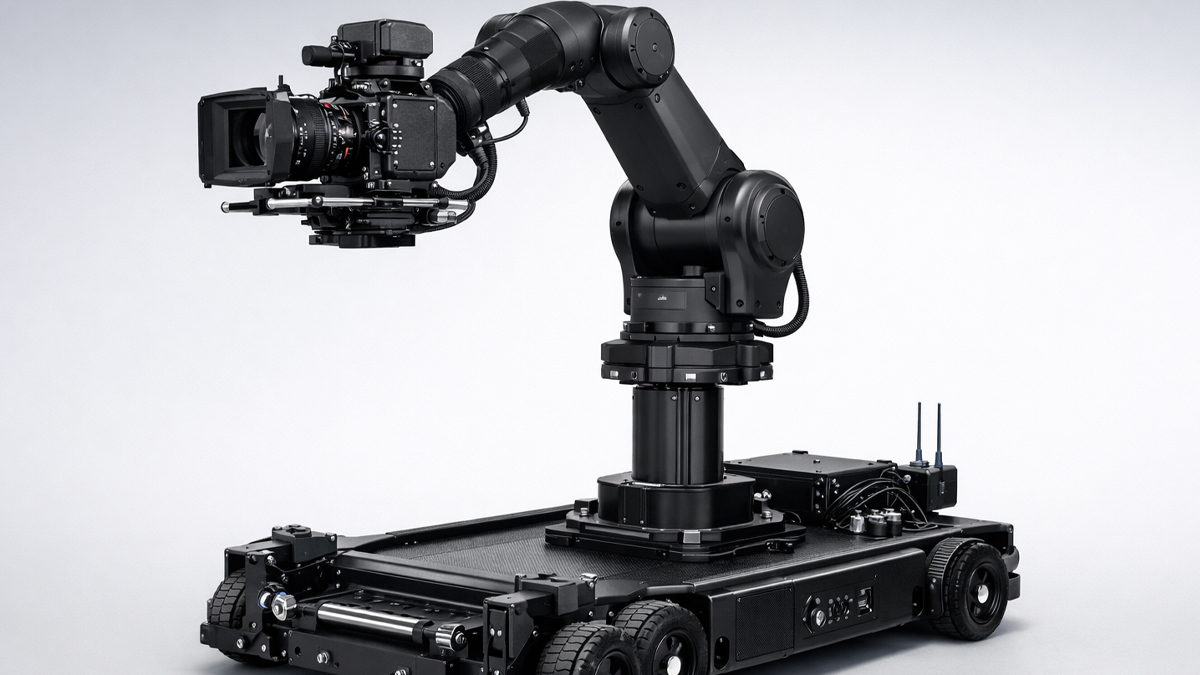
What is Ground Based Dolly Robot?
A Ground Based Dolly Robot is an advanced robotic camera movement system designed to move a camera smoothly across the ground during film production. It is a motorized platform that carries a camera and sometimes additional equipment such as stabilization systems, sensors, and control modules. Unlike traditional manual dollies that rely on physical pushing or pulling by crew members, a Ground Based Dolly Robot uses programmable controls, precision motors, and intelligent software to create highly accurate and repeatable camera movements.
In the field of Robotic Camera Rigs under Cinematic Technologies within the Cinema Industry, this system represents a significant technological development. It combines mechanical engineering, robotics, computer programming, and cinematography into one integrated platform. The primary purpose of this robot is to create smooth tracking shots, dramatic reveals, dynamic chase sequences, and controlled motion effects with consistent accuracy.
A Ground Based Dolly Robot typically moves along flat surfaces or specially designed tracks. Some models operate on rails, while others use wheeled or omni directional drive systems that allow free movement in multiple directions. Because it is robotic, it can repeat the same motion several times with exact precision. This is especially important in visual effects heavy productions where multiple passes are required for compositing.
How does Ground Based Dolly Robot Work?
A Ground Based Dolly Robot works by combining hardware and software systems to control movement, speed, direction, and camera operation. At its core, the robot consists of a motorized base that carries the camera. This base is powered by electric motors connected to wheels or rail mechanisms. The movement is controlled either through a remote control system or through pre programmed software instructions.
Programming and Motion Control: Before shooting begins, the operator defines the path that the robot should follow. This can be done by manually guiding the robot through a rehearsal path or by entering coordinates into a control system. Advanced models allow operators to define acceleration curves, speed limits, and stopping points.
Sensor Integration: Modern Ground Based Dolly Robots are equipped with sensors such as encoders, gyroscopes, and sometimes lidar systems. These sensors track position, orientation, and movement accuracy. The data collected ensures that the robot moves exactly as programmed.
Camera Synchronization: The robot can synchronize its movement with camera operations such as pan, tilt, focus, and zoom. In many cases, it is integrated with robotic heads and focus control systems. This allows coordinated motion where the platform moves while the camera angle changes simultaneously.
Real Time Control: During live shoots, operators can control the robot through wireless controllers. They can adjust speed or direction instantly. In studio settings, the robot can also be connected to motion control software that synchronizes multiple devices.
Safety Systems: Safety features include emergency stop buttons, obstacle detection, and software based speed limits. These features ensure safe operation on busy film sets.
In essence, the Ground Based Dolly Robot works as a precise, programmable transportation system for cameras, allowing filmmakers to execute complex shots reliably.
What are the Components of Ground Based Dolly Robot?
A Ground Based Dolly Robot is made up of several essential components that work together as a unified system.
Chassis and Frame: The chassis forms the structural base of the robot. It is typically made from strong yet lightweight materials such as aluminum or carbon fiber. The frame supports the camera, batteries, motors, and control systems.
Drive System: The drive system includes motors, wheels, and sometimes tracks. High precision electric motors power the wheels. Some systems use rail based mechanisms, while others use rubber wheels or omni wheels for flexible movement.
Control Unit: The control unit acts as the brain of the robot. It processes commands from the operator and translates them into motor actions. It also handles sensor data and motion programming.
Power Supply: Most Ground Based Dolly Robots are battery powered. High capacity lithium ion batteries provide the necessary energy for motors and electronics.
Sensors: Sensors such as position encoders, gyroscopes, and accelerometers provide feedback about movement and orientation. Some advanced models include obstacle detection sensors.
Camera Mounting System: This includes mounting plates, stabilization systems, and sometimes robotic pan and tilt heads. The mounting system ensures the camera remains stable and secure.
Communication Module: Wireless communication systems allow operators to control the robot remotely. This can include radio frequency systems or WiFi based control.
User Interface: The interface may include a handheld remote, tablet application, or computer software that allows operators to program movements.
Each component plays a crucial role in ensuring smooth, reliable, and precise camera movement.
What are the Types of Ground Based Dolly Robot?
Ground Based Dolly Robots can be categorized based on their movement mechanism and control capabilities.
Rail Based Dolly Robots: These robots move along fixed tracks. They are ideal for linear tracking shots where precision is critical. Rail systems provide stable and vibration free motion.
Trackless Wheeled Dolly Robots: These robots use wheels to move freely across smooth surfaces. They are more flexible and can perform curved or complex paths without laying tracks.
Omni Directional Dolly Robots: Equipped with omni wheels, these robots can move in any direction without rotating the chassis. This allows creative camera angles and fluid motion.
Heavy Duty Studio Dolly Robots: Designed for large film cameras and extensive equipment, these robots are used in professional film studios.
Compact Portable Dolly Robots: Smaller and lighter, these models are suitable for independent productions and tight shooting locations.
Autonomous Dolly Robots: These advanced systems use intelligent navigation and obstacle detection to operate with minimal human input.
Each type serves different production needs and environments within the cinema industry.
What are the Applications of Ground Based Dolly Robot?
Ground Based Dolly Robots are widely used in various areas of film and media production.
Feature Films: In large scale film productions, these robots create smooth tracking shots, dramatic entrances, and precise visual effects sequences.
Television Production: In studio environments, they provide consistent camera movement for talk shows, news broadcasts, and live programs.
Commercial Advertising: Advertisements often require repeated takes with identical movement. Robotic dollies ensure perfect repetition.
Music Videos: Creative camera movement enhances storytelling and visual appeal in music videos.
Virtual Production: In modern virtual sets, robotic dollies integrate with digital environments and motion tracking systems.
Sports Broadcasting: These robots capture dynamic ground level shots during live sports events.
Their versatility makes them valuable tools across multiple media formats.
What is the Role of Ground Based Dolly Robot in Cinema Industry?
In the cinema industry, Ground Based Dolly Robots play a transformative role. They enhance the artistic and technical capabilities of filmmakers.
Precision and Repeatability: Motion control is essential for special effects. When multiple layers of footage need to be combined, exact repetition is required. Robotic dollies provide this accuracy.
Creative Freedom: Directors and cinematographers can experiment with complex movement patterns that would be difficult or risky with manual systems.
Efficiency: Automated systems reduce setup time and minimize human error.
Integration with Technology: These robots work seamlessly with digital cameras, motion tracking systems, and visual effects pipelines.
By improving both creativity and efficiency, Ground Based Dolly Robots have become essential tools in modern filmmaking.
What are the Objectives of Ground Based Dolly Robot?
The primary objectives of a Ground Based Dolly Robot are centered on improving camera movement and production workflow.
To achieve smooth and stable camera motion.
To enable repeatable and programmable shots.
To enhance creative possibilities.
To improve safety by reducing manual handling.
To integrate with modern cinematic technologies.
To increase efficiency in complex productions.
These objectives align with the growing demands of high quality visual storytelling.
What are the Benefits of Ground Based Dolly Robot?
Ground Based Dolly Robots provide numerous benefits in professional filmmaking.
High Precision: Movements are accurate and consistent.
Time Saving: Reduced need for manual adjustments.
Cost Effective in Long Term: Fewer retakes and efficient workflows.
Enhanced Safety: Reduced physical strain on crew.
Advanced Motion Control: Perfect for visual effects.
Professional Output: Smooth cinematic results.
These benefits contribute to improved production quality and reduced operational challenges.
What are the Features of Ground Based Dolly Robot?
Ground Based Dolly Robots come equipped with advanced features.
Programmable motion paths.
Variable speed control.
Wireless remote operation.
High load capacity.
Integration with robotic heads.
Battery powered operation.
Real time monitoring.
Emergency stop systems.
Compact and portable designs in certain models.
These features make them adaptable to various production environments.
What are the Examples of Ground Based Dolly Robot?
Several companies in the cinematic technology sector have developed well known systems.
The Scorpio Dolly by Servicevision.
The Panther Dolly Systems robotic platforms.
The MRMC Track based systems by Mark Roberts Motion Control.
The Fisher 10 Dolly robotic integration systems.
These examples demonstrate the variety of solutions available for different production scales.
What is the Definition of Ground Based Dolly Robot?
A Ground Based Dolly Robot is a motorized and programmable robotic platform designed to move cameras smoothly across ground surfaces or tracks during film and media production, enabling precise, repeatable, and controlled cinematic camera movements.
What is the Meaning of Ground Based Dolly Robot?
The meaning of Ground Based Dolly Robot refers to an automated ground level camera transport system that replaces manual dollies with robotic precision. It represents the integration of robotics and cinematography to achieve controlled motion in visual storytelling.
What is the Future of Ground Based Dolly Robot?
The future of Ground Based Dolly Robot technology looks highly promising. Advancements in artificial intelligence, machine learning, and sensor technology will make these systems even smarter and more autonomous.
Future developments may include improved obstacle avoidance, automated path planning, and enhanced integration with virtual production environments. Robots may communicate directly with lighting and camera systems to coordinate movements automatically.
As cinema increasingly adopts digital and immersive formats, the demand for precise motion control will continue to grow. Lightweight materials, longer battery life, and cloud based control systems may further enhance flexibility.
Summary
- A Ground Based Dolly Robot is a robotic platform designed for smooth and precise camera movement on the ground.
- It works through programmable motion control, motorized drive systems, and sensor feedback.
- Key components include chassis, motors, control units, sensors, and camera mounts.
- There are different types such as rail based, wheeled, omni directional, and autonomous systems.
- It is widely used in films, television, advertising, music videos, and virtual production.
- In the cinema industry, it enhances creativity, precision, and production efficiency.
- Its objectives include stability, repeatability, safety, and integration with advanced technologies.
- Benefits include high accuracy, time savings, and professional cinematic results.
- Modern features include wireless control, programmable paths, and safety mechanisms.
- The future of Ground Based Dolly Robot technology includes intelligent automation and deeper integration with digital filmmaking systems.

