

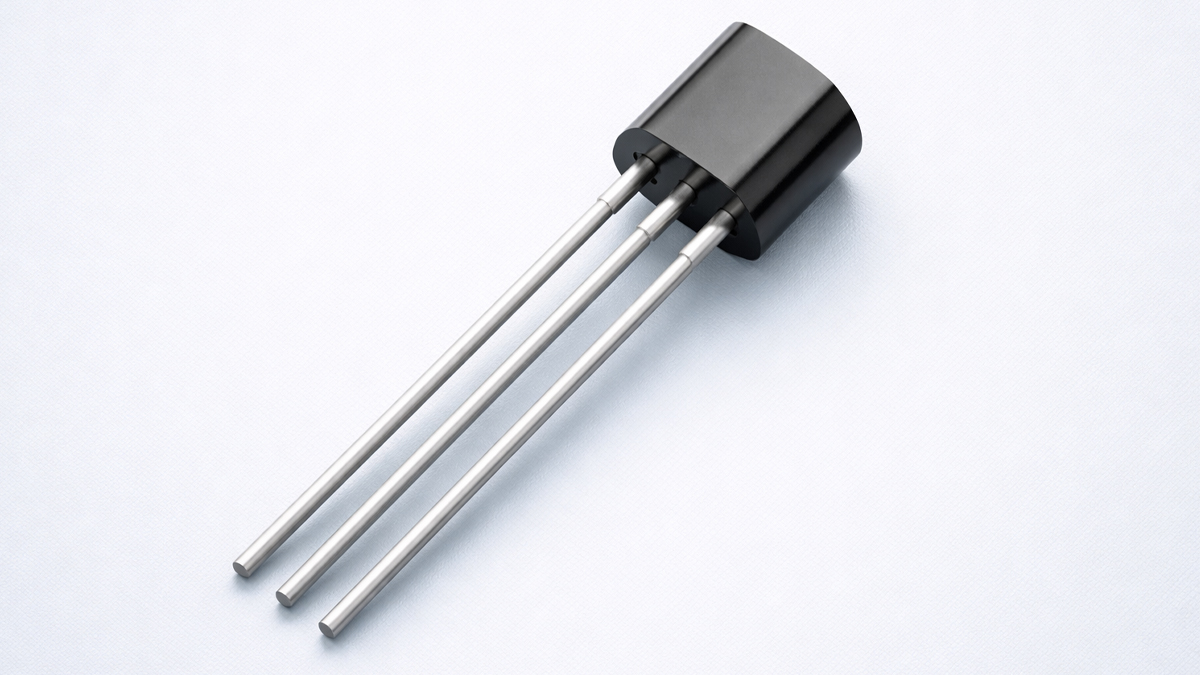
What is Junction FET?
A Junction Field Effect Transistor, commonly called a Junction FET or JFET, is a transistor that controls electric current using an electric field. Unlike current controlled devices, a JFET is voltage controlled, which means a small change in voltage at its control terminal can regulate a much larger current flowing through it. This behavior makes Junction FET devices very useful in audio circuits where clean signal handling, low noise, and smooth control are important.
In music electronics, Junction FET circuits appear in guitar pedals, preamps, mixing consoles, audio interfaces, synthesizers, wireless receivers, and many other products. Designers like Junction FET devices because they can provide high input impedance, which helps protect delicate signal sources such as guitar pickups and piezo transducers. They can also be biased to operate in very linear ways for clean amplification, or pushed into controlled nonlinear regions for musical coloration.
Junction FET devices have a simple internal structure compared to many other transistor types. They use a conductive channel through which current flows, and a gate region that forms a junction with that channel. When the gate is reverse biased, the depletion region widens and narrows the channel, reducing the current. This physical mechanism is the heart of how the Junction FET works and why it can act as a variable resistor, amplifier, or switch depending on how the circuit is designed.
How does Junction FET Work?
A Junction FET works by controlling the width of a semiconductor channel using a reverse biased junction. The three terminals are called gate, source, and drain. Current flows from drain to source through the channel, and the gate controls how much current can pass.
Basic operating idea: The gate forms a PN junction with the channel. When the gate is reverse biased relative to the source, the depletion region grows. As it grows, it squeezes the channel and reduces its conductivity. A more negative gate to source voltage in an N channel JFET reduces drain current. A more positive gate to source voltage in a P channel JFET reduces drain current. The polarity changes, but the controlling principle remains the same.
Pinch off concept: As drain to source voltage increases, the voltage along the channel is not uniform. Near the drain, the channel sees a stronger reverse bias and the depletion region becomes wider. At a certain point, the channel becomes very narrow near the drain. This condition is called pinch off. Importantly, pinch off does not mean current stops. Instead, the device enters a region where drain current becomes relatively stable for a given gate to source voltage.
Regions of operation: At small drain to source voltages, the Junction FET behaves like a voltage controlled resistor. This is often called the ohmic or linear region. At higher drain to source voltages beyond pinch off, it enters the saturation region, where it can provide amplification with good predictability. If the gate junction becomes forward biased, it begins to conduct like a diode, which is usually avoided in normal JFET amplifier operation because it can load the signal source and introduce distortion.
Audio relevance: In music electronics, designers choose the bias point to shape sound and performance. If the Junction FET is biased in a linear region with enough headroom, it can amplify cleanly, preserving tone and dynamics. If it is biased closer to cutoff or driven harder, the transfer curve can create gentle compression and harmonic shaping that many musicians perceive as warm or touch sensitive.
What are the Components of Junction FET?
A Junction FET can be understood through its physical parts and its circuit terminals. Both viewpoints matter in music electronics because the internal structure explains behavior, while the external terminals determine how it is used in pedals and audio devices.
Terminals and their roles: The gate is the control terminal. The source is the reference terminal for the controlling voltage. The drain is the terminal through which the controlled current enters or leaves the channel, depending on circuit polarity.
Channel: The channel is the main conduction path. In an N channel Junction FET, the channel is made of N type material. In a P channel Junction FET, the channel is made of P type material. The channel behaves like a resistor whose effective width changes as the depletion region expands or contracts.
Gate junction: The gate forms a PN junction with the channel. This junction is normally reverse biased in typical JFET operation, which makes the gate current extremely small. That is one reason Junction FET inputs can be very high impedance and friendly to sensitive audio sources.
Depletion region: The depletion region is the zone around the reverse biased gate junction where mobile charge carriers are removed. As the depletion region grows, it restricts the channel. This region is not a separate component you can touch, but it is a key functional part of how the device works.
Ohmic contacts: The source and drain connections are made through ohmic contacts to the channel, allowing current to enter and exit. Good contact behavior helps keep noise and nonlinearity low, which is valuable in low level audio paths.
Packaging and practical elements: In real music hardware, the Junction FET comes in common packages such as through hole and surface mount. Heat dissipation is usually modest for small signal JFET devices used in audio, but layout and shielding still matter because JFET stages often handle very small signals that can pick up hum or interference.
What are the Types of Junction FET?
Junction FET devices are classified in a few practical ways. For music electronics, the most important distinctions relate to channel type, operating mode, and intended usage.
N channel Junction FET: This is the most common type in many audio circuits. It typically offers good performance, wide availability, and well known behavior. In an N channel Junction FET, the gate to source voltage that reduces current is negative relative to the source during normal operation.
P channel Junction FET: This type is less common in typical audio signal paths but appears in complementary designs and special biasing arrangements. In a P channel Junction FET, the gate to source voltage that reduces current is positive relative to the source during normal operation.
Small signal Junction FET: These are optimized for low noise and signal handling rather than high power. They are widely used in microphone preamps, instrument preamps, input buffers, and analog switching.
JFET analog switch devices: Some Junction FET parts are designed for switching and can be arranged to pass audio signals as variable resistors or switches in routing and muting circuits. They can be used in synthesizers and mixers for signal gating, modulation, or soft switching when designed carefully.
Matched pair and low noise variants: Some applications benefit from matched device characteristics, such as in differential input stages or balanced circuits. Low noise Junction FET parts are chosen for sensitive front ends.
Depletion type behavior: In typical operation, a Junction FET is naturally on at zero gate to source voltage and can be turned toward cutoff by reverse biasing the gate. This depletion behavior is a defining characteristic of the classic JFET, and it influences how bias networks are designed in audio gear.
What are the Applications of Junction FET?
Junction FET devices have many applications across electronics, but several stand out in music electronics due to their high input impedance, low noise potential, and smooth transfer characteristics.
Input buffers for instruments: Electric guitars, basses, and many acoustic pickup systems benefit from a buffer stage that prevents tone loss. A Junction FET input stage can present a very high impedance, reducing loading on the pickup and preserving high frequency content and dynamic response.
Preamplifiers: Junction FET stages are used in clean preamps where the goal is to amplify small signals with minimal coloration. They can also be used in colored preamps where bias and gain are chosen to create pleasing harmonic texture.
Microphone and sensor front ends: In certain microphone circuits and specialized audio sensors, the very low gate current of a Junction FET is helpful. It allows the circuit to sense tiny signals without stealing energy from the source.
Voltage controlled resistors: In the linear region, a Junction FET can behave like a controllable resistor. This property is used in some compressors, limiters, auto wah designs, tremolo effects, and modulation circuits, where control voltage changes the effective resistance and shapes the audio.
Analog switching and muting: Junction FET devices can be used to mute outputs, switch signal paths, or implement soft switching to avoid loud pops. Careful design is needed to control charge injection and distortion.
Oscillators and synthesizer circuits: Junction FET devices can appear in oscillator cores, shaping networks, or as part of analog control circuits. While many modern synthesizers use other semiconductor solutions, Junction FET devices still have a place in analog signal paths and control interfaces.
Impedance converters and DI stages: Direct injection boxes and stage interfaces sometimes use Junction FET devices to present a friendly input impedance and convert it into a low impedance balanced signal.
Noise reduction and specialty circuits: In certain designs, a Junction FET can help create low noise current sources, active loads, and bias networks that stabilize operating points, improving consistency of audio performance.
What is the Role of Junction FET in Music Industry?
Junction FET devices play a quiet but important role across the music industry because they sit inside the tools musicians, engineers, and producers rely on every day. They are not visible on stage, but they influence clarity, feel, and reliability of equipment.
Protecting tone at the very first stage: Many tone problems begin at the input. If an instrument pickup is loaded by a low impedance input, highs can roll off and dynamics can feel dull. Junction FET input buffers help prevent that by presenting a high impedance and converting the signal into a form that can travel through cables and pedalboards without losing character.
Delivering touch sensitive response: Guitarists often describe certain circuits as touch sensitive, meaning the sound responds smoothly to picking strength and playing nuance. Junction FET stages can contribute to this feeling because their transfer curve can introduce gentle compression and harmonic enhancement when biased and driven in musical ways.
Supporting classic effect designs: Many famous pedal topologies use Junction FET devices for buffering, gain stages, and clipping behavior. Designers can shape a wide range of textures from clean boost to gritty overdrive by selecting bias points, source resistors, drain resistors, and feedback networks. This flexibility makes Junction FET devices valuable for boutique pedal builders and large manufacturers alike.
Improving studio signal integrity: In studio equipment such as microphone preamps, DI boxes, and channel strips, Junction FET devices are used to achieve low noise and high input impedance stages. This helps keep recordings clean, especially when dealing with quiet sources or long cable runs.
Helping live sound and touring rigs: Reliability matters in touring gear. Junction FET devices are simple, robust, and easy to bias with stable circuits. They can be used in muting, switching, and protection networks to reduce pops, manage routing, and keep systems stable.
Enabling compact and efficient designs: Modern music products often need to be compact and power efficient. Small signal Junction FET devices can provide useful performance with low current draw, which helps battery powered pedals and portable audio tools.
What are the Objectives of Junction FET?
The objectives of using a Junction FET in electronic design, especially in music electronics, revolve around control, signal quality, and practical circuit behavior.
Objective of voltage controlled current regulation: A Junction FET allows a designer to regulate current through a channel using a voltage at the gate. This gives precise control with minimal gate current, simplifying interfacing with high impedance sources.
Objective of high input impedance: One key objective is to achieve a very high input impedance stage that does not load the signal source. This protects tone and improves compatibility across instruments, pickups, and microphones.
Objective of low noise performance: Many Junction FET designs aim to keep noise low at the front end, where noise is most noticeable. Proper device selection and biasing can help reduce hiss and maintain a clean noise floor.
Objective of linear amplification: In many audio circuits, the objective is faithful amplification without harsh distortion. Junction FET devices can be biased for relatively linear operation, making them suitable for clean gain stages.
Objective of musical nonlinearity when desired: In creative audio design, an objective may be controlled distortion or compression. Junction FET devices can be used to introduce gentle saturation, producing harmonics that can sound pleasing in guitar and bass effects.
Objective of predictable bias and stability: Designers often want circuits that are stable across temperature and supply changes. Junction FET bias networks are designed to place the device at a consistent operating point for repeatable sound and performance.
Objective of compact and efficient circuitry: Another objective is achieving useful gain, buffering, or switching with a small number of components, supporting compact pedal layouts and portable music gear.
What are the Benefits of Junction FET?
Junction FET devices bring several benefits to music electronics, especially when compared with other transistor options in specific roles.
Benefit of very small input current: Because the gate junction is reverse biased in normal operation, gate current is extremely small. This enables high impedance inputs and reduces interaction with pickups and sensors.
Benefit of high input impedance: High input impedance helps preserve high frequencies and dynamics from passive instruments. It also improves compatibility with piezo pickups, which can sound thin when loaded improperly.
Benefit of low noise potential: Many Junction FET parts are suitable for low noise front end stages. With careful layout and biasing, they can produce clean amplification suitable for recording and performance.
Benefit of smooth transfer characteristics: Junction FET devices can offer a smooth relationship between control voltage and drain current. This can translate into musical response in dynamic effects and gain stages.
Benefit of simple biasing networks: Many Junction FET circuits can be biased with a source resistor and gate reference, making them straightforward to design and service. This simplicity is appreciated in pedals and analog gear.
Benefit of useful operation as a variable resistor: In the linear region, Junction FET devices can approximate a voltage controlled resistor. This allows creative designs in tremolo, auto wah, compressors, and modulators.
Benefit of good performance at low supply voltages: Many portable music devices run on batteries or limited supplies. Junction FET devices can function well in such conditions, especially in buffer and low gain stages.
Benefit of proven reliability: Junction FET devices have been used for decades. Their behavior is well understood, and they can be reliable components in long lasting music equipment.
What are the Features of Junction FET?
Junction FET devices have characteristics that designers consider features when selecting parts for music electronics.
Feature of voltage controlled operation: The gate voltage controls channel current without needing significant gate current, enabling easy interfacing with passive sources and control circuits.
Feature of depletion mode nature: At zero gate to source voltage, a Junction FET typically conducts. Applying reverse bias reduces conduction. This feature influences bias design and makes the device naturally on in many circuits.
Feature of high impedance gate: The reverse biased gate junction creates a very high impedance input, which is ideal for buffering and preserving tone.
Feature of operation in multiple regions: The ability to operate in linear region, saturation region, and cutoff enables the Junction FET to act as a resistor, amplifier, or switch depending on circuit design.
Feature of low distortion potential in proper bias: When biased correctly, a Junction FET can offer low distortion amplification, suitable for clean audio paths.
Feature of temperature dependent parameters: Junction FET characteristics can vary with temperature, especially pinch off voltage and drain current at zero gate bias. Designers treat this as a feature to manage through biasing and feedback, ensuring stable real world behavior.
Feature of compatibility with analog audio design: Junction FET devices pair well with resistors, capacitors, and simple bias networks, fitting naturally into classic analog audio architectures.
Feature of useful harmonic shaping: When driven beyond strict linear operation, Junction FET stages can introduce harmonics in a way that many listeners perceive as smooth, which is useful in musical effects.
What are the Examples of Junction FET?
In practical music electronics, Junction FET examples are best understood as circuit roles rather than a list of part numbers, because designers often choose different devices based on availability, noise performance, and bias characteristics.
Example as an instrument input buffer: A Junction FET configured as a source follower is a classic way to buffer a guitar or bass. The output follows the input voltage closely but provides lower output impedance, allowing the signal to drive cables and further stages without losing high end.
Example as a preamp gain stage: A Junction FET configured in a common source amplifier can provide voltage gain. By choosing drain and source resistors and adding bypass capacitors, a designer can shape gain, frequency response, and feel. This appears in boosters, overdrives, and preamp pedals.
Example as a variable resistor in a tremolo: In some tremolo designs, a control voltage from a low frequency oscillator changes the gate bias of a Junction FET, which changes its channel resistance. That resistance change modulates signal level, creating the tremolo effect.
Example as a compressor control element: Junction FET based compressors use the device as a controllable resistance element in the gain control path. The control circuit adjusts gate bias in response to signal level, reducing gain when the signal becomes strong. This can create a classic style compression used in studio and broadcast.
Example as a mute and pop reduction switch: A Junction FET can short a signal to ground or isolate a path during power up and power down. With careful timing and bias control, this reduces pops and thumps in amplifiers and audio interfaces.
Example as an analog switch in synthesizers: Junction FET switching can be used for gating signals, routing modulation paths, or controlling the flow of audio between blocks, especially in analog or hybrid synthesizer designs.
Example as a high impedance sensor interface: Piezo pickups used in acoustic instruments often require very high impedance. A Junction FET stage can provide that, helping the pickup sound fuller and more natural.
What is the Definition of Junction FET?
A Junction FET is defined as a field effect transistor in which the current flowing through a semiconductor channel between drain and source is controlled by the electric field created by a reverse biased PN junction at the gate. The key idea in this definition is that the device uses a junction, specifically a PN junction, to form the gate control region, and it controls current by changing the channel conductivity rather than by injecting significant current into the control terminal.
This definition highlights why the Junction FET is widely used in audio signal paths. Because the gate is reverse biased, the control action is mainly electric field based, which enables high input impedance operation and low loading on signal sources.
What is the Meaning of Junction FET?
The meaning of Junction FET becomes clearer when you break down the term into its parts and connect it to practical use.
Meaning of Junction: The word junction refers to the PN junction formed between the gate material and the channel material. This junction is central to how the device controls current.
Meaning of Field Effect: Field effect means the device controls current using an electric field rather than using a control current. The electric field changes the depletion region size, which changes how easily carriers can flow through the channel.
Meaning of Transistor: The word transistor indicates the component can control a large signal using a smaller control input, enabling amplification, switching, or variable resistance behavior.
In music electronics, the meaning translates into a very practical idea. A small voltage at the gate can manage how a signal flows through the circuit, enabling buffering, gain shaping, dynamics control, and switching with minimal interference to the original tone.
What is the Future of Junction FET?
The future of Junction FET devices in the music industry is shaped by both technology trends and the ongoing demand for analog sound character. Even as digital signal processing grows, analog front ends remain essential because every real world audio signal must enter and leave through analog circuitry.
Future in analog front ends: Instruments, microphones, and pickups will continue to require high impedance and low noise input stages. Junction FET devices remain strong candidates for these roles because they can deliver excellent signal preservation and low loading.
Future in boutique and character driven audio: Many musicians and producers value the feel and harmonic behavior of analog circuits. Junction FET based pedals and preamps will likely remain popular because designers can tune them for specific sonic signatures and dynamic response.
Future in hybrid designs: Many modern products combine analog and digital sections. Junction FET stages can serve as the analog input buffer, gain stage, or soft limiter before the signal reaches an analog to digital converter. This can improve headroom handling and reduce harsh clipping.
Future in low power portable gear: Portable music devices, battery powered pedals, and compact wireless systems need efficient analog circuits. Junction FET devices can support low power signal conditioning, especially in buffer and switching roles.
Future challenges and adaptations: Some classic Junction FET part numbers have become harder to source over time, and device parameters vary between production batches. Designers address this by using improved bias schemes, auto bias techniques, selection and matching, and alternative parts that provide similar behavior. This trend will continue, and design practices will become more robust to part variation.
Future in education and repair culture: The music electronics community includes builders, repair technicians, and hobbyists. Junction FET devices are widely taught and relatively easy to understand, which supports continued use in DIY and professional maintenance. That educational momentum contributes to their long term presence in music technology.
Summary
- Junction FET is a voltage controlled transistor that uses a reverse biased PN junction at the gate to control channel current.
- It offers high input impedance, which helps preserve tone from guitars, basses, and piezo pickups.
- It operates in regions that allow it to behave as an amplifier, a switch, or a voltage controlled resistor.
- Common uses in music electronics include input buffers, preamps, tremolo circuits, compressors, and soft muting switches.
- Benefits include low gate current, low noise potential, smooth dynamic response, and simple biasing.
- Features include depletion mode behavior, flexible operating regions, and useful harmonic shaping when driven musically.
- The future of Junction FET remains strong in analog and hybrid audio designs, especially for front end signal integrity and classic tone circuits.

