

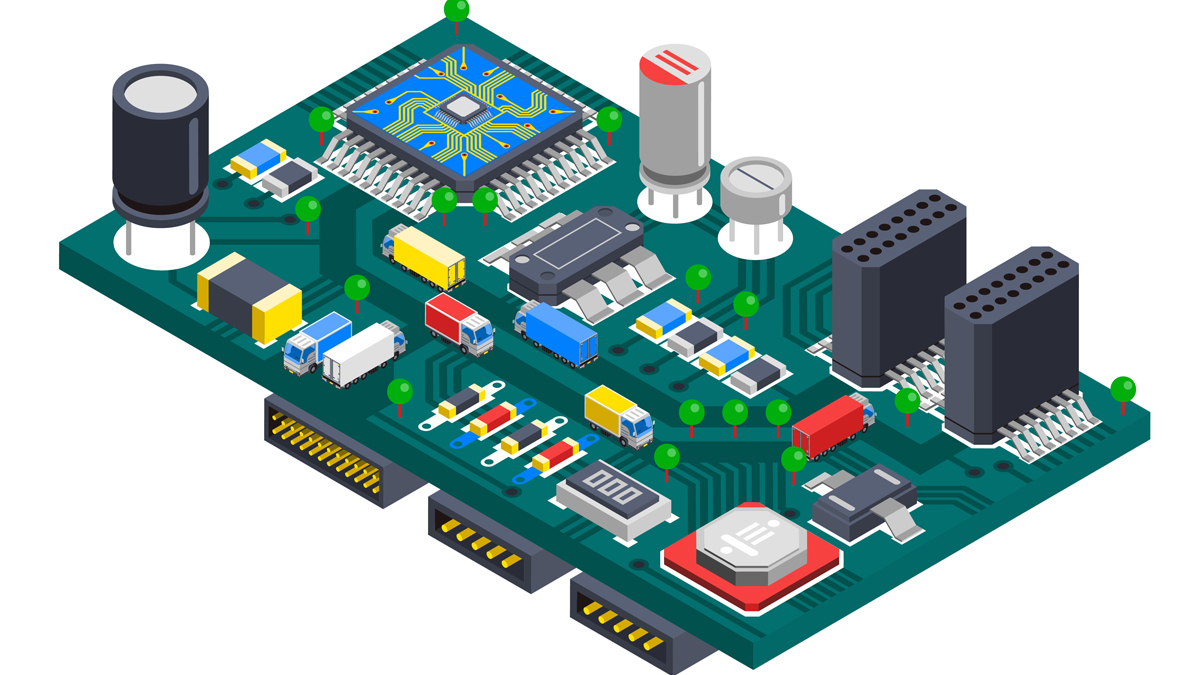
What is Microcontroller Unit?
A Microcontroller Unit, commonly called an MCU, is a compact integrated circuit designed to control specific electronic functions inside a device. It combines a processor, memory, and input output interfaces in one small chip. Unlike a general-purpose computer processor that depends on many external components, a microcontroller is made to run dedicated tasks efficiently, reliably, and at low power.
In the context of microcontrollers under music electronics and the music industry, a Microcontroller Unit is the decision-making core that helps musical devices sense, process, and respond. It can read button presses on a MIDI controller, scan keys on a digital keyboard, manage LEDs on a drum machine, control timing inside an effects pedal, and communicate with audio software or other hardware through protocols such as MIDI, USB, SPI, I2C, or UART.
A Microcontroller Unit is built for control. It is not meant to replace a full computer in most musical products. Instead, it handles well defined jobs such as reading sensors, managing presets, updating displays, and coordinating digital signals. Because of this focused design, it has become one of the most important building blocks in modern music electronics.
From a practical viewpoint, many musical devices that look simple on the outside rely on a Microcontroller Unit on the inside. A compact pad controller, a smart metronome, a digital tuner, a programmable amplifier footswitch, or a synthesizer control panel may all use one or more MCUs. The chip makes the device interactive, responsive, and programmable.
How does Microcontroller Unit Work?
A Microcontroller Unit works by executing instructions stored in its memory. These instructions are written in firmware, which is software designed specifically for the microcontroller. The firmware tells the MCU what to do, when to do it, and how to respond to external events.
Working process: The MCU begins operation when power is supplied. It loads its startup routine, configures its internal peripherals, and enters the main program loop. During operation, it continuously checks inputs, processes logic, and updates outputs. In musical equipment, this cycle can happen thousands or millions of times per second depending on the application.
For example, inside a MIDI keyboard, the microcontroller may scan the key matrix repeatedly to detect which keys are pressed. It measures the timing difference between contact points to calculate velocity. Then it converts that information into MIDI note messages and sends them to a synthesizer or computer. At the same time, it may update the display, read modulation wheel movement, and manage preset buttons.
Input handling: The MCU receives signals from buttons, knobs, sliders, touch sensors, encoders, footswitches, pressure pads, and other electronic components. These signals may be digital or analog. If they are analog, the MCU often uses an Analog to Digital Converter to transform them into digital values that firmware can interpret.
Processing logic: After reading input data, the MCU applies rules programmed into the firmware. It may debounce a button, smooth noisy sensor readings, map a knob value to a parameter range, or decide whether to send a MIDI Control Change message.
Output control: Once the logic is complete, the MCU controls outputs. These outputs may include LEDs, OLED screens, LCD panels, relays, DAC circuits, motorized faders, or communication ports. In music electronics, the output may also involve synchronization signals, clock pulses, or patch control data.
Timing and synchronization: One of the major strengths of an MCU is timing control. In music equipment, timing is extremely important. Sequencers, arpeggiators, loopers, rhythm machines, and tempo synced effects all depend on precise timing. The MCU uses internal clocks, timers, and interrupts to keep events happening at the right moment.
Communication: Musical devices rarely work in isolation. The MCU often communicates with other chips and systems. It may send MIDI messages to another instrument, receive USB commands from a computer, talk to a display driver, or exchange data with memory chips storing presets. This communication ability makes the microcontroller central to modern music workflows.
What are the Components of Microcontroller Unit?
A Microcontroller Unit is made of several essential parts that work together in a single chip. Understanding these components makes it easier to see why MCUs are so useful in music electronics.
Central Processing Unit: The CPU is the brain of the microcontroller. It executes instructions and performs arithmetic, logic, and control operations. In a music device, the CPU may decide how button inputs change settings, how fast the tempo clock should run, or how a menu system behaves.
Memory: Memory inside a microcontroller usually includes three main types. Flash memory stores the firmware permanently until it is reprogrammed. RAM stores temporary working data while the device runs. EEPROM or similar non-volatile memory may store settings and presets. In a digital guitar pedal, for example, RAM might hold temporary values while flash stores the firmware and EEPROM stores user preferences.
Input Output Ports: These pins allow the MCU to connect with the outside world. Digital pins can read switch states or drive LEDs. Analog pins can read voltages from potentiometers, expression pedals, or sensors. These ports make the MCU flexible for many musical interfaces.
Timers and Counters: Timers help the MCU track time, generate delays, create pulse widths, and manage periodic events. In music equipment, timers are vital for tempo generation, note duration handling, synchronization, and clock division.
Analog to Digital Converter: Many musical controls are analog. Knobs, sliders, and pedals produce variable voltages. The ADC converts these voltages into digital numbers so the MCU can interpret them. This is how a hardware synthesizer may read filter cutoff or resonance knobs.
Digital to Analog Converter: Some microcontrollers have built in DACs. These convert digital values into analog voltages. In music electronics, this can be useful for control voltage generation, parameter automation, or simple audio related output tasks.
Communication Interfaces: Common interfaces include UART, SPI, I2C, CAN, USB, and sometimes Ethernet or wireless modules. In music devices, these interfaces support MIDI over serial lines, display communication, memory expansion, sensor integration, and computer connectivity.
Interrupt System: Interrupts let the MCU respond quickly to important events without constantly checking everything manually. For example, an incoming MIDI byte or a clock edge can trigger an interrupt so the device reacts immediately.
Clock System: The clock determines how fast the MCU runs. Some devices use internal oscillators, while others use crystal oscillators for better precision. In rhythm sensitive music gear, stable timing from the clock system is especially important.
Power Management Unit: This component manages power use and operating modes. Battery powered music tools such as portable loopers, tuners, or practice devices depend on efficient power management to extend usage time.
What are the Types of Microcontroller Unit?
Microcontroller Units can be classified in several ways, including word size, architecture, memory arrangement, and application focus. Each type suits different levels of complexity in music electronics.
By word size: Traditional classifications include 8 bit, 16 bit, and 32 bit microcontrollers. An 8 bit MCU is simple and affordable, often used in basic controllers, pedals, or educational musical devices. A 16 bit MCU offers more processing capability and better efficiency for moderate complexity. A 32 bit MCU provides higher speed, larger memory space, and more advanced peripherals, making it suitable for feature rich synthesizers, samplers, and modern MIDI controllers.
By instruction architecture: Some MCUs use RISC architecture, which focuses on a simpler instruction set for fast execution. Others use CISC style approaches with more complex instructions. In product design, the architecture affects performance, power use, and development tools.
By memory design: Some microcontrollers use Harvard architecture, where program memory and data memory are separated. Others use Von Neumann style designs, where memory space is more unified. Harvard architecture is common in many embedded systems because it can improve efficiency.
By application focus: General purpose MCUs handle a wide range of tasks and are common in many music products. Specialized MCUs may include advanced timers, audio interfaces, touch sensing, motor control, or wireless features, making them useful for particular kinds of musical equipment.
By connectivity: Some microcontrollers are designed with built in USB, Bluetooth, Wi Fi, or high speed communication features. These are especially useful in music products that connect to computers, tablets, smartphones, or cloud based control systems.
By performance class: Low power MCUs are ideal for portable music devices. High performance MCUs are better for real time control with complex user interfaces, fast scanning, and heavy communication loads.
Music electronics perspective: A simple DIY MIDI controller may use an 8 bit microcontroller. A modern groovebox with color screens, encoders, memory card support, and multiple communication channels may use a 32 bit microcontroller. The choice depends on cost, processing needs, timing demands, and the expected user experience.
What are the Applications of Microcontroller Unit?
Microcontroller Units are used in a wide range of products, and music electronics is one of the most creative areas where they appear. Their applications extend from simple timing circuits to highly interactive performance tools.
Consumer electronics: MCUs are found in televisions, washing machines, remote controls, thermostats, and smart home devices. Their job is to automate tasks and coordinate electronic behavior.
Industrial systems: In factories, MCUs control sensors, motors, control panels, and safety systems. Their reliability makes them valuable in continuous operation environments.
Medical devices: Portable monitors, infusion pumps, diagnostic tools, and wearable health products use microcontrollers for sensing and control.
Automotive systems: Modern vehicles use MCUs in engine control, dashboard systems, lighting, power windows, and infotainment units.
Educational tools: Many learning kits use microcontrollers to teach programming, electronics, robotics, and digital design.
Music electronics: This is where the MCU becomes especially interesting for the music industry. Applications include MIDI keyboards, pad controllers, drum machines, sequencers, effects pedals, tuners, looper pedals, digital mixers, stage automation interfaces, smart amplifiers, synthesizer modules, audio switchers, digital metronomes, and practice devices.
Specific musical uses: A microcontroller can scan a keybed, read aftertouch data, control preset recall, manage scene changes in live rigs, synchronize tempo across devices, display patch names, read foot controller input, and route signals based on user commands. It can also manage wireless communication in modern performance tools.
Behind the scenes: Even when the MCU is not processing audio directly, it often controls the entire user interface and system logic around audio. That makes it central to the overall functionality of a musical product.
What is the Role of Microcontroller Unit in Music Industry?
The role of the Microcontroller Unit in the music industry is both technical and creative. It acts as the control core of many devices used in composition, performance, recording, teaching, sound design, and live production.
Instrument control: In digital pianos, synthesizers, and MIDI controllers, the MCU handles key scanning, pad detection, velocity measurement, screen navigation, preset selection, and communication with other systems. Without the MCU, the instrument would not respond intelligently to the performer.
Effects and signal management: In guitar pedals, bass processors, and rack effects, microcontrollers control user settings, preset memory, bypass switching, tap tempo, display output, and parameter modulation. They make modern effects units programmable and stage friendly.
Timing and sequencing: Drum machines, sequencers, arpeggiators, and loop stations rely heavily on MCUs for precise timing. These devices must keep consistent rhythm and trigger events at exact moments. The microcontroller makes this possible through timers and firmware logic.
MIDI communication: The music industry depends on digital communication between instruments, software, and controllers. MCUs generate, receive, decode, and route MIDI messages. This allows musicians to connect hardware and software into larger systems.
User interface management: Screens, LEDs, touch panels, rotary encoders, buttons, and performance pads all need coordination. The MCU interprets user actions and turns them into meaningful responses, making the device intuitive and expressive.
Product innovation: Many new music products are possible because MCUs allow designers to combine physical controls with programmable behavior. A single knob can serve different functions depending on mode. A footswitch can trigger scenes, loops, or program changes. A controller can be updated through firmware to gain new features after purchase.
Accessibility and affordability: Microcontrollers help manufacturers build compact, cost effective, and feature rich products. This means more musicians can access advanced tools without needing large and expensive systems.
Live performance role: On stage, reliability matters. The MCU helps manage patch switching, synchronized clocks, controller mapping, and visual feedback. It supports stable operation in devices used under demanding live conditions.
Studio role: In recording and production, MCUs help hardware interact with software environments. They enable controllers, transport units, programmable mixers, and hybrid audio setups that speed up workflow and reduce manual complexity.
What are the Objectives of Microcontroller Unit?
The main objectives of a Microcontroller Unit are centered around efficient control, fast response, compact design, and dependable performance. These objectives become especially meaningful in music electronics, where timing, usability, and consistency are essential.
Control objective: The primary goal of an MCU is to control a specific system or process. In a musical device, this may include reading performer input, making logical decisions, and driving outputs such as displays or communication messages.
Integration objective: By combining processing, memory, and interfaces in one chip, the MCU reduces the need for many separate parts. This saves space, lowers cost, and simplifies hardware design.
Real time response objective: Musical devices often need immediate response. A note should trigger instantly. A tap tempo press should update timing without delay. An MCU is designed to support real time behavior.
Power efficiency objective: Many music products are portable. Battery powered tuners, wireless controllers, and compact practice devices need low power consumption. A microcontroller is built to operate efficiently.
Reliability objective: Electronic music devices must behave predictably during performance and recording. The MCU aims to deliver stable operation over long periods and repeated use.
Flexibility objective: Through firmware, the same hardware platform can support different functions. This helps designers create versatile music products and allows future updates.
Communication objective: Modern musical equipment must exchange data with many other devices. The MCU objective includes supporting communication standards that make integration possible.
User experience objective: The MCU also helps create smooth interaction. Fast menu navigation, responsive buttons, stable synchronization, and consistent display behavior all contribute to better usability.
What are the Benefits of Microcontroller Unit?
Microcontroller Units provide many advantages that explain their widespread use in music electronics and across the wider electronics world.
Compact design: Because the processor, memory, and interfaces are integrated into one chip, the overall circuit can be smaller. This is valuable in compact pedals, portable controllers, and lightweight stage devices.
Lower cost: Fewer external components often means lower production cost. This helps manufacturers develop affordable musical products with useful features.
Low power consumption: MCUs are usually designed for efficient operation. This is important in battery powered devices and in equipment that must remain powered for long sessions.
Reliable control: A well designed MCU system can perform the same task accurately for a long time. Musicians benefit from dependable preset switching, stable tempo, and repeatable behavior.
Easy programmability: Firmware can be written, updated, and improved. This allows product upgrades, bug fixes, and new feature development without redesigning all the hardware.
Fast real time operation: Microcontrollers can react quickly to button presses, sensor changes, and communication events. This helps create responsive musical tools.
Versatility: One MCU can handle many jobs at once, such as scanning controls, driving a display, storing settings, and managing communication. This makes it suitable for many kinds of music products.
Scalability: Designers can choose different MCU families according to complexity. A simple educational musical toy may use a small MCU, while a sophisticated performance controller may use a more powerful one.
Support for innovation: Microcontrollers encourage experimentation. Designers and independent builders can create custom instruments, interactive installations, and new performance devices more easily than before.
What are the Features of Microcontroller Unit?
A Microcontroller Unit offers a combination of hardware and functional features that make it highly effective in embedded systems and music electronics.
Integrated architecture: The MCU combines CPU, memory, timers, and interfaces in a single chip. This integration is one of its defining features.
Programmable firmware: The behavior of the MCU can be changed by programming it. This allows the same chip to support many different products and functions.
Digital and analog interfacing: MCUs can read both digital and analog signals, making them ideal for musical devices with buttons, knobs, sliders, pedals, and sensors.
Timer based precision: Built in timers help with scheduling, pulse generation, clock handling, and synchronization. This is critical in sequencers and tempo driven equipment.
Interrupt support: Important events can be handled immediately through interrupts. This improves responsiveness and timing accuracy.
Memory options: Flash, RAM, and non volatile storage support both fixed firmware and changing user data such as presets and settings.
Communication capabilities: Many MCUs support common protocols needed in music electronics, including serial communication for MIDI and USB for computer connectivity.
Low power modes: Sleep modes and power saving functions help extend battery life in portable devices.
Small physical footprint: The chip can be very small, allowing dense and efficient circuit design.
High customization potential: Engineers can pair the MCU with displays, sensors, memory chips, converters, and wireless modules to create products tailored to specific musical needs.
What are the Examples of Microcontroller Unit?
There are many well known Microcontroller Units used in electronics, education, and music related projects. Some are found in commercial products, while others are common in prototyping and learning.
ATmega328P: This MCU is widely known because it is used in many Arduino Uno boards. It has been popular for MIDI controllers, simple sequencers, DIY synthesizer interfaces, and educational music electronics projects.
ATmega32U4: This microcontroller is often used in boards that support native USB communication. It is useful for USB MIDI controllers, compact performance tools, and programmable input devices.
PIC16F877A: This is a classic microcontroller used in many embedded systems and academic projects. It is suitable for learning control logic and can be used in basic music electronics designs.
STM32 series: These 32 bit microcontrollers are powerful and flexible. They are used in more advanced embedded products that need higher speed, better peripheral support, and richer interfaces. They are suitable for sophisticated controllers, instrument displays, and complex timing tasks.
ESP32: This MCU includes wireless connectivity such as Wi Fi and Bluetooth in many versions. It is useful for smart musical devices, wireless controllers, network connected practice tools, and mobile app linked music equipment.
Teensy compatible MCUs: Teensy development boards use high performance microcontrollers that are popular in music technology because of their speed, strong USB support, and suitability for MIDI and audio related control projects.
Practical music examples: A DIY MIDI drum pad may use an ATmega based MCU. A wireless rehearsal assistant may use an ESP32. A modern synthesizer control board may rely on an STM32. A programmable pedal switcher may use a smaller 8 bit MCU if its job is focused and timing demands are moderate.
What is the Definition of Microcontroller Unit?
The definition of a Microcontroller Unit is a small, self contained integrated circuit that includes a processor, memory, and programmable input output peripherals for controlling embedded electronic systems.
Formal understanding: A Microcontroller Unit is not just a processor. It is a complete control platform on a chip. It is built to monitor inputs, execute programmed instructions, and drive outputs in a dedicated application.
In music electronics, the definition becomes even more practical. A Microcontroller Unit is the embedded control system that allows a musical device to sense performer actions, make programmed decisions, and manage communication or interface behavior in real time.
This definition highlights three important ideas. First, it is integrated. Second, it is programmable. Third, it is application focused. These qualities distinguish it from more general computing solutions.
What is the Meaning of Microcontroller Unit?
The meaning of Microcontroller Unit can be understood in both technical and practical terms.
Technical meaning: It refers to a compact controller built into an electronic system to manage specific operations. It is called a controller because its main purpose is to control processes rather than to serve as a general computing platform.
Practical meaning: In everyday electronic products, including music gear, it is the internal chip that makes the device responsive, intelligent, and configurable. It turns passive hardware into an interactive system.
Meaning in music electronics: In a musical instrument or controller, the Microcontroller Unit represents the bridge between human action and electronic response. When a musician presses a key, turns a knob, or taps a pad, the MCU is often the part that interprets that gesture and turns it into a useful result.
Broader significance: The meaning of the MCU also includes accessibility and innovation. It has made it possible for engineers, students, hobbyists, and music technology designers to build smart devices without needing large computer systems.
What is the Future of Microcontroller Unit?
The future of the Microcontroller Unit is strong because embedded intelligence is becoming more important in almost every industry, including music. As musical devices become more connected, more expressive, and more customizable, the MCU will continue to play a central role.
Higher integration: Future MCUs will likely combine more features on a single chip, such as better communication modules, faster processing, improved converters, stronger security, and advanced power management. This will help music devices become smaller yet more capable.
Better connectivity: Wireless communication is becoming more common in musical products. Future MCUs will support smoother integration with computers, tablets, smartphones, cloud services, and stage networks.
Improved real time control: As musicians expect lower latency and richer interaction, MCUs will continue to improve their speed and timing precision. This will benefit sequencers, controllers, synchronized effects, and performance systems.
More intelligent interfaces: Future music electronics may include gesture sensing, adaptive controls, smarter displays, and context aware presets. MCUs will likely manage much of this interaction logic, especially in devices where full computers are unnecessary.
Firmware driven evolution: More products will gain new features through firmware updates. This means the value of an MCU will not only be in hardware capability but also in how well it supports ongoing improvement.
Growth in DIY and boutique music technology: Independent designers and small brands are creating new musical tools at a fast pace. Accessible microcontroller platforms will continue to support this innovation and allow more experimentation in instruments, controllers, and interactive installations.
Closer integration with audio systems: In some products, MCUs may work alongside DSP chips or more advanced processors. The MCU will continue to handle system control, communication, and interface logic while coordinating with specialized chips for audio processing.
Sustainability and efficiency: Future designs will also focus more on low power operation, longer product life, and maintainable firmware. Microcontrollers are well suited to support these goals.
Summary
- A Microcontroller Unit is a compact chip that combines processing, memory, and input output control in one integrated device.
- It works by running firmware that reads inputs, processes logic, manages timing, and controls outputs.
- Key components include the CPU, memory, input output ports, timers, converters, communication interfaces, interrupts, and clock system.
- Microcontrollers can be classified by word size, architecture, memory design, connectivity, and application focus.
- They are used widely in electronics and have major applications in music equipment such as MIDI controllers, synthesizers, sequencers, pedals, and digital instruments.
- In the music industry, the MCU supports control, timing, synchronization, preset management, user interface behavior, and communication between devices.
- Its objectives include efficient control, real time response, low power use, reliability, flexibility, and good user experience.
- Benefits include compact design, lower cost, dependable operation, programmability, versatility, and support for product innovation.
- Important features include integrated architecture, analog and digital interfacing, timer precision, interrupt handling, communication support, and low power modes.
- Common examples include ATmega, PIC, STM32, ESP32, and other microcontrollers used in both commercial products and creative music projects.
- The definition of a Microcontroller Unit is a self contained embedded control chip designed for dedicated electronic tasks.
- Its meaning in music electronics is the internal intelligence that turns performer input into organized electronic response.
- The future of the Microcontroller Unit is promising because music devices are becoming more connected, more interactive, and more firmware driven.

