

What is MOSFET?
A Metal Oxide Semiconductor Field Effect Transistor, commonly called MOSFET, is one of the most widely used transistor types in modern electronics. In simple terms, a MOSFET is an electronic switch or amplifier that controls the flow of electric current using an electric field. Unlike some older transistor families that rely mainly on current control at the input, a MOSFET is primarily voltage controlled. This makes it extremely useful in circuits where you want high efficiency, fast switching, and minimal loading on the signal source.
In the world of music electronics under the music industry, MOSFETs quietly do a huge amount of work. They help power amplifiers deliver sound to speakers, allow digital instruments to run cool and efficiently, and protect sensitive audio circuits from faults. They also appear in effects pedals and studio gear, where engineers either use them as part of the power system or sometimes even as part of the tone shaping circuit.
MOSFETs are also a key reason modern music equipment can be compact, lightweight, and reliable. Many powerful amplifiers and powered speakers that used to require large heavy designs now benefit from MOSFET based switching power supplies and efficient power amplification approaches. At the same time, MOSFETs can be used in analog audio paths when designers want specific behaviors such as soft clipping characteristics, buffering, or controlled switching that avoids clicks and pops.
How does MOSFET Work?
A MOSFET works by controlling a conductive path between two terminals using an electric field created at a third terminal. The three primary terminals are called gate, drain, and source. When you apply a certain voltage to the gate, it changes the conductivity of a channel inside the semiconductor. If the channel becomes conductive, current can flow between drain and source. If the channel is not conductive, the current is blocked.
Gate control: The gate is separated from the channel by a very thin insulating layer, typically silicon dioxide. Because of this insulation, the gate draws extremely little steady state current. This is a major advantage in audio electronics because it means the circuit that drives the gate does not have to supply continuous current, which reduces loading and improves efficiency.
Threshold behavior: A MOSFET does not conduct strongly until the gate to source voltage reaches a certain level called the threshold voltage. Once the gate voltage crosses that point, the channel begins to form, allowing current to flow. As the gate voltage increases further, the channel becomes more conductive and the MOSFET can carry more current with lower resistance.
Switching and amplification: In many applications, MOSFETs are used as switches. When used as a switch, the design goal is typically to move quickly between fully off and fully on states so that the device wastes minimal power as heat. In other applications, MOSFETs operate in a region where they can act as amplifiers, controlling drain current with gate voltage variations. Audio designers may use MOSFETs in amplification stages, buffering stages, or as variable resistive elements in certain controlled circuits, depending on the desired performance and sound behavior.
Body diode behavior: Most power MOSFETs inherently include a diode like path between drain and source due to the internal structure. This built in diode matters in power conversion and in amplifier output stages because it affects current flow when the MOSFET is off and the circuit current tries to reverse direction.
In music electronics, the way a MOSFET works is used in two big categories. The first category is power handling, such as amplifiers and power supplies. The second category is signal handling, such as switching audio paths silently, controlling mute circuits, and managing signal routing without adding noise or distortion when properly designed.
What are the Components of MOSFET?
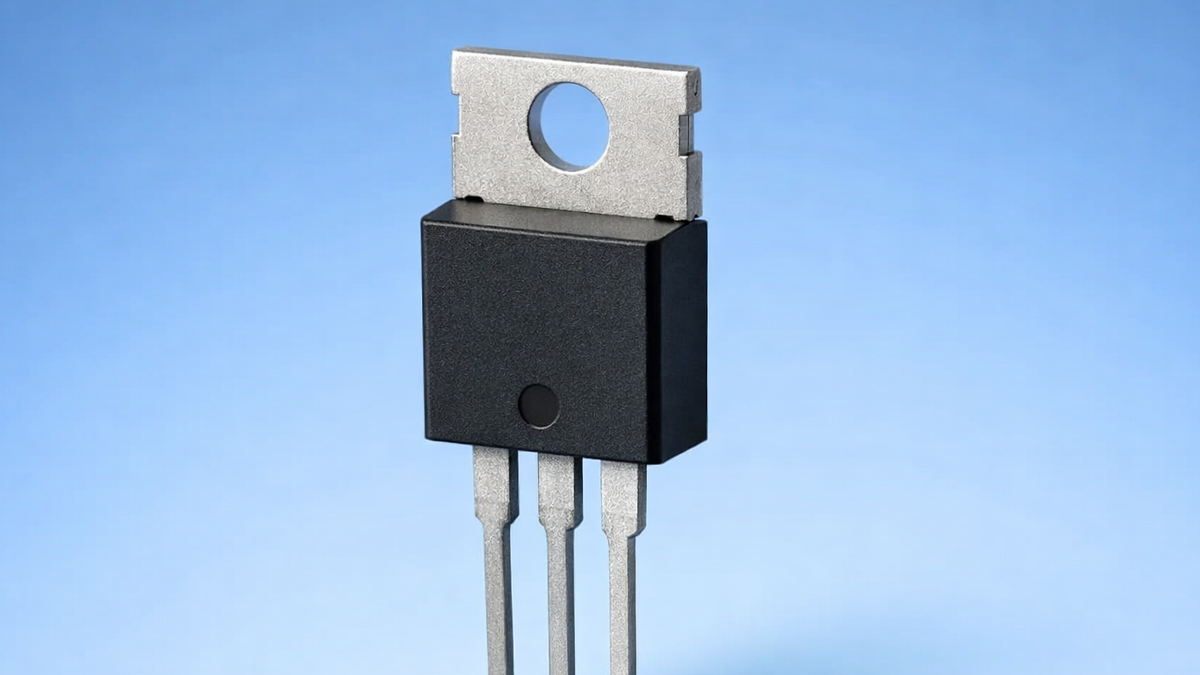
A MOSFET is a device with a simple external appearance but a carefully engineered internal structure. Understanding its components helps explain why it is so effective in music electronics.
Gate: The gate is the control terminal. A voltage applied here creates an electric field that influences the channel conductivity. The gate is insulated from the channel, which is why MOSFETs have high input impedance and low steady state gate current.
Oxide layer: The oxide is the insulating layer between the gate and the semiconductor. This thin layer is critical because it allows the gate to control the channel using an electric field. It also makes the device sensitive to static electricity, which is why handling precautions are important in electronics manufacturing and repair.
Source: The source is one end of the current path through the device. In many circuits, the source is tied to a reference point such as ground or a supply rail depending on the configuration.
Drain: The drain is the other end of the current path. When the MOSFET is on, current flows between drain and source based on the circuit design. In audio power amplifiers, the drain may connect to the supply and the source may connect to the load path, or vice versa, depending on topology.
Channel: The channel is the region in the semiconductor that becomes conductive when the gate voltage is sufficient. The channel can be n type or p type depending on MOSFET type. The channel formation is what turns the MOSFET from off to on.
Body or substrate: This is the underlying semiconductor region that supports the device structure. The body is often connected internally to the source in many discrete power MOSFETs. The body contributes to the built in diode behavior.
Body diode: Due to the internal structure, a diode effect exists between drain and source. This is not an added component you can remove, it is a natural result of how the MOSFET is made. Designers account for it in power stages, switching converters, and some amplifier output stages.
Package and thermal path: In real music equipment, the MOSFET is not just silicon. It is also a physical package designed to carry current, dissipate heat, and connect reliably to a circuit board or heatsink. Power amplifiers, powered monitors, and switching supplies often rely heavily on the thermal performance of MOSFET packages.
What are the Types of MOSFET?
MOSFETs come in different types based on how they conduct and how they are controlled. Each type can be useful in music electronics depending on the function required.
Enhancement mode MOSFET: This is the most common type in modern circuits. In enhancement mode, the MOSFET is normally off when the gate voltage is zero relative to the source. You apply a suitable gate voltage to enhance or create a conductive channel. Most power switching MOSFETs used in amplifiers and power supplies are enhancement mode devices.
Depletion mode MOSFET: In depletion mode, the MOSFET is normally on when the gate voltage is zero. You apply a gate voltage of the opposite polarity to reduce conduction and turn it off. These are less common but can be useful in specialized audio circuits where a default on behavior is desirable.
N channel MOSFET: This type conducts using electrons as the primary carriers. N channel MOSFETs typically have lower on resistance and better performance for a given size compared to p channel devices. They are widely used in switching power supplies, class D output stages, and many power management functions in music gear.
P channel MOSFET: This type conducts using holes as the primary carriers. P channel MOSFETs are often used for high side switching in simpler designs because driving them can be easier in some cases. However, they usually have higher on resistance compared to n channel devices of similar size, so designers use them where appropriate rather than everywhere.
Power MOSFET: This category is optimized for handling significant current and voltage with low losses. Power MOSFETs are common in amplifiers, powered speakers, pedalboard power units, mixers, and audio interfaces where efficient power conversion is needed.
Small signal MOSFET: These MOSFETs are designed for lower currents and are often used for switching, buffering, muting, or signal routing. In music electronics, small signal MOSFETs can be used to switch audio paths, manage control signals, or handle low power analog sections.
Audio oriented MOSFET usage: While MOSFETs are not inherently labeled as audio devices, some designers select specific MOSFET families for analog audio stages based on noise, capacitance, linearity, and predictable transfer characteristics. This is more common in high end analog designs and boutique effects.
What are the Applications of MOSFET?
MOSFETs have an extremely wide range of applications, and many of them directly support the music industry through the devices musicians and engineers use daily.
Power amplification: MOSFETs are used in audio power amplifiers, especially in certain output stages and in many class D amplifier designs where fast switching devices are essential.
Switching power supplies: Many modern audio products use switch mode power supplies for efficiency and compact size. MOSFETs are key switching elements in these supplies, controlling energy transfer through inductors and transformers at high frequency.
Battery powered equipment: Portable music devices such as wireless microphones, guitar pedalboards with rechargeable supplies, portable recorders, and compact synthesizers rely on MOSFETs for battery protection, power switching, and efficient voltage conversion.
Muting and pop noise control: Audio gear often needs silent start up and shut down. MOSFETs can be used in muting circuits that smoothly connect or disconnect signal paths to avoid clicks and pops.
Signal routing and switching: In mixers, audio interfaces, and digital instruments, MOSFETs can be used to route signals, select sources, or control analog switching networks when designed carefully to minimize distortion and noise.
Protection circuits: MOSFETs can act quickly to protect equipment from reverse polarity, overcurrent, short circuits, and fault conditions. This is very important in powered speakers, amplifiers, and pedalboard supplies.
Motor and actuator control: Some music equipment includes moving parts, such as motorized faders in mixing consoles or cooling fans in amplifiers. MOSFETs drive these loads efficiently and can be controlled by microcontrollers.
Digital audio systems: Modern music electronics includes processors, microcontrollers, and digital signal processors. MOSFETs support voltage regulation, power sequencing, and switching needed to keep digital systems stable and quiet.
Lighting and stage equipment: The music industry includes stage electronics, lighting controllers, and special effects devices. MOSFETs are widely used to switch LED currents, drive loads, and handle power conversion in these systems.
What is the Role of MOSFET in Music Industry?
MOSFETs play a foundational role in the music industry because they enable the electronics that power performance, recording, and production. Even though they are rarely seen by end users, they are essential inside amplifiers, mixers, interfaces, synthesizers, effects pedals, and stage systems.
Efficient amplification for live sound: Live sound systems need high power, reliability, and manageable heat. MOSFETs support efficient amplifier designs, especially class D amplifiers, which are common in powered speakers and modern touring rigs. These designs allow high output with less weight and less heat compared to many older approaches.
Clean and stable power for studio gear: Studios rely on low noise power because any ripple or interference can add hum or unwanted noise. MOSFETs in switching supplies and voltage regulators help deliver stable power rails. With proper filtering and layout, they allow compact power solutions without sacrificing audio quality.
Compact pedalboard and instrument power systems: Modern pedalboards often include multiple voltage rails and isolated outputs. MOSFETs help manage these rails efficiently, protect against shorts, and provide soft switching to avoid loud power on artifacts.
Silent switching and control in equipment: Many devices need to switch audio paths or engage functions such as mute, standby, or channel selection. MOSFETs can perform these functions with controlled behavior that prevents audible artifacts, especially when paired with proper control timing and filtering.
Protection for expensive equipment: In the music industry, downtime is costly and equipment damage can be expensive. MOSFET based protection systems can respond quickly to faults such as shorted outputs, incorrect power adapters, or accidental reverse polarity connections. This reduces failures and improves reliability for touring and studio setups.
Thermal and energy management: Heat management matters in amplifiers and powered speakers. MOSFET efficiency improvements help reduce heat, which can extend component life and reduce the need for loud cooling fans, a major benefit in studio monitoring environments.
Tone shaping and boutique design choices: Some designers use MOSFETs in analog signal paths to achieve certain behaviors. While tone is mainly defined by the overall circuit, MOSFETs can contribute to clipping behavior, dynamic response, and switching characteristics in certain effect designs. In those cases, MOSFET choice and biasing can affect the feel and sound in subtle but real ways.
What are the Objectives of MOSFET?
The objectives of using MOSFETs in electronics are closely aligned with performance, efficiency, and controllability. In music electronics, these objectives become even more important because sound quality and reliability must coexist.
High efficiency switching: One key objective is to switch power with minimal energy loss. This reduces heat and improves reliability in amplifiers, powered speakers, and power supplies.
Voltage controlled operation: MOSFETs are designed to be controlled primarily by voltage rather than continuous input current. This simplifies driver circuits in many applications and reduces signal source loading in control systems.
Fast response and high frequency capability: Many MOSFETs can switch very quickly. This objective supports switching power supplies and class D amplification, both common in modern audio equipment.
High input impedance: The insulated gate offers very high input impedance, which is useful for interfacing with control circuits and microcontrollers in digital music equipment.
Scalability from small signal to power: MOSFET technology supports devices from tiny signal switches to large power transistors. This allows designers to use similar control concepts across an entire product.
Reliable protection and control: MOSFETs are often used to achieve objectives such as overcurrent protection, reverse polarity protection, load switching, and controlled start up behavior.
Compact system design: Because MOSFETs enable efficient power conversion and efficient amplification, the overall system can be lighter, smaller, and easier to integrate. This objective benefits portable music devices and modern touring equipment.
What are the Benefits of MOSFET?
MOSFETs provide many practical benefits that directly influence the experience of musicians, engineers, and technicians.
Lower heat generation: Efficient MOSFET switching and low on resistance can reduce wasted power, lowering internal temperature and improving device lifespan.
Higher power density: With better efficiency, designers can create smaller power supplies and amplifiers that deliver high output without bulky heat sinks and transformers.
Improved battery life: Portable music electronics benefit from MOSFET efficiency because less energy is lost in conversion and switching, extending battery runtime.
Fast protection response: MOSFETs can act quickly in protection circuits, reducing the chance of damage during faults such as short circuits or reverse polarity.
Better control and automation: MOSFETs interface well with microcontrollers, enabling smart power management, soft start behavior, and programmable control in modern equipment.
Reduced mechanical wear: Many switching tasks that used to rely on relays can be done electronically using MOSFETs, reducing clicking noise, improving reliability, and eliminating mechanical wear.
Design flexibility: MOSFETs are available in many ratings and characteristics. Designers can select devices optimized for low noise, low capacitance, high current, or high voltage depending on the needs of the music device.
Cleaner system integration: When used correctly with proper grounding and filtering, MOSFET based power systems can support clean audio operation while still being compact and efficient.
What are the Features of MOSFET?
MOSFETs have features that make them a central building block in modern music electronics and in electronics overall.
High input impedance: The insulated gate draws extremely little steady state current, allowing easy control from logic circuits.
Low on resistance in power devices: Many power MOSFETs have very low drain to source resistance when turned on, which reduces power loss and heat.
High switching speed: MOSFETs can switch at high frequencies, enabling modern power conversion and class D amplification techniques.
Wide range of voltage and current ratings: MOSFET families cover low voltage battery applications and high voltage mains powered systems.
Built in body diode: The inherent diode path influences current flow in certain conditions, which designers can use or must manage depending on the circuit.
Gate capacitance effects: MOSFETs have capacitances that affect how quickly they switch. This feature matters because it influences driver design, switching losses, and potential noise coupling.
Thermal performance options: Packages vary widely, from tiny surface mount devices to large packages designed for heat sinking. This helps designers match the thermal requirements of amplifiers and power supplies.
Compatibility with modern manufacturing: MOSFETs are widely used in surface mount technology, making them well suited for compact devices such as audio interfaces, pedals, and synthesizers.
What are the Examples of MOSFET?
MOSFETs appear in many real music industry products and circuit functions. Here are practical examples of where MOSFETs show up and what they do.
Class D amplifier output stage: In many powered speakers and modern amplifiers, MOSFETs switch rapidly to create a high power output waveform that is later filtered to drive speakers efficiently.
Switch mode power supply in a mixer: A live sound mixer may use a switching supply where MOSFETs control energy transfer, keeping the unit light and compatible with different input voltages.
Pedalboard power protection: A pedalboard supply may use MOSFETs to protect against reverse polarity and short circuits, preventing damage when cables are miswired or pedals fail.
Soft start circuit in a studio monitor: Powered monitors may use MOSFETs to limit inrush current at startup, reducing pops and extending component life.
Mute switching in an audio interface: MOSFETs can be used to mute outputs during power up and power down, avoiding loud clicks that can damage speakers or headphones.
Battery management in portable recorders: MOSFETs can switch charging paths, manage protection against over discharge, and control efficient DC to DC conversion.
Motorized fader drive: Mixing consoles with motorized faders use MOSFET drivers to control the fader motors smoothly and efficiently.
Signal switching in synthesizers: Some synthesizer designs use MOSFET based switching to route signals or manage analog control paths under digital control.
What is the Definition of MOSFET?
A MOSFET is defined as a voltage controlled semiconductor device that uses an insulated gate to control current flow between drain and source terminals through an electric field. It is a type of field effect transistor and is widely used for switching and amplification in both analog and digital circuits. In the context of music electronics, this definition remains the same, but the emphasis often falls on efficient power control, silent switching, low noise operation, and reliable protection.
What is the Meaning of MOSFET?
The meaning of MOSFET can be understood in two ways, one technical and one practical.
Technical meaning: MOSFET stands for Metal Oxide Semiconductor Field Effect Transistor. The name reflects the key elements of the device structure, including the metal gate concept, the oxide insulation layer, and the semiconductor channel controlled by an electric field.
Practical meaning: A MOSFET is an electronic control element that behaves like a very efficient switch or a controllable valve for current. In music electronics, the meaning is strongly connected to reliability and efficiency because MOSFETs help audio devices deliver strong performance without excessive heat, noise, or size.
What is the Future of MOSFET?
The future of MOSFET technology in music electronics looks strong because the music industry continues to demand lighter, more efficient, and more intelligent equipment. As venues, touring rigs, and home studios evolve, designers keep pushing for better power density, lower heat, and improved audio performance.
Higher efficiency power systems: Future audio gear will likely use even more advanced switching supplies and power management. MOSFET improvements such as lower losses, better gate charge characteristics, and improved thermal handling will support smaller and cooler designs.
Better class D amplification: Class D amplification is already mainstream, and MOSFET advancements can improve switching behavior, reduce distortion, and enhance efficiency. This can mean lighter amplifiers, more compact powered speakers, and improved performance for portable sound systems.
Wide bandgap competition and integration: Technologies like gallium nitride and silicon carbide are growing in some power applications. Even with that competition, silicon MOSFETs are expected to remain dominant in many audio products due to cost, maturity, and wide availability. In some high frequency and high efficiency designs, manufacturers may combine different transistor technologies depending on the product goals.
Smarter protection and control: Music devices are becoming more connected and more automated. MOSFETs will increasingly be used in intelligent load switching, programmable power rails, and fast protection schemes controlled by microcontrollers. This will help prevent failures on stage and improve safety.
Lower noise design techniques: As studios demand quieter electronics and as recording moves closer to portable devices, designers will focus more on managing switching noise. MOSFET improvements combined with better layouts, filtering, and control methods will help deliver efficient power without audible interference.
More compact and modular gear: The future of live sound and studio gear includes modular systems, pedalboard ecosystems, and portable production setups. MOSFET based power conversion and control will remain central to making these products compact, reliable, and user friendly.
Summary
- MOSFET is a voltage controlled transistor that uses an electric field to control current flow between drain and source.
- The insulated gate gives MOSFET high input impedance and low steady state control current needs.
- MOSFETs are used heavily in switching power supplies, class D amplifiers, protection circuits, and signal control in music electronics.
- Key components include gate, oxide layer, drain, source, channel, body, and an inherent body diode.
- Common types include enhancement mode and depletion mode, as well as n channel and p channel devices.
- Benefits include high efficiency, lower heat, compact designs, improved battery life, and fast protection response.
- Features such as low on resistance, fast switching, and wide rating availability make MOSFETs versatile in audio equipment.
- In the music industry, MOSFETs enable reliable amplification, clean power delivery, silent switching, and robust equipment protection.
- The future points toward even more efficient, smaller, and smarter audio gear supported by continued MOSFET improvements.

