

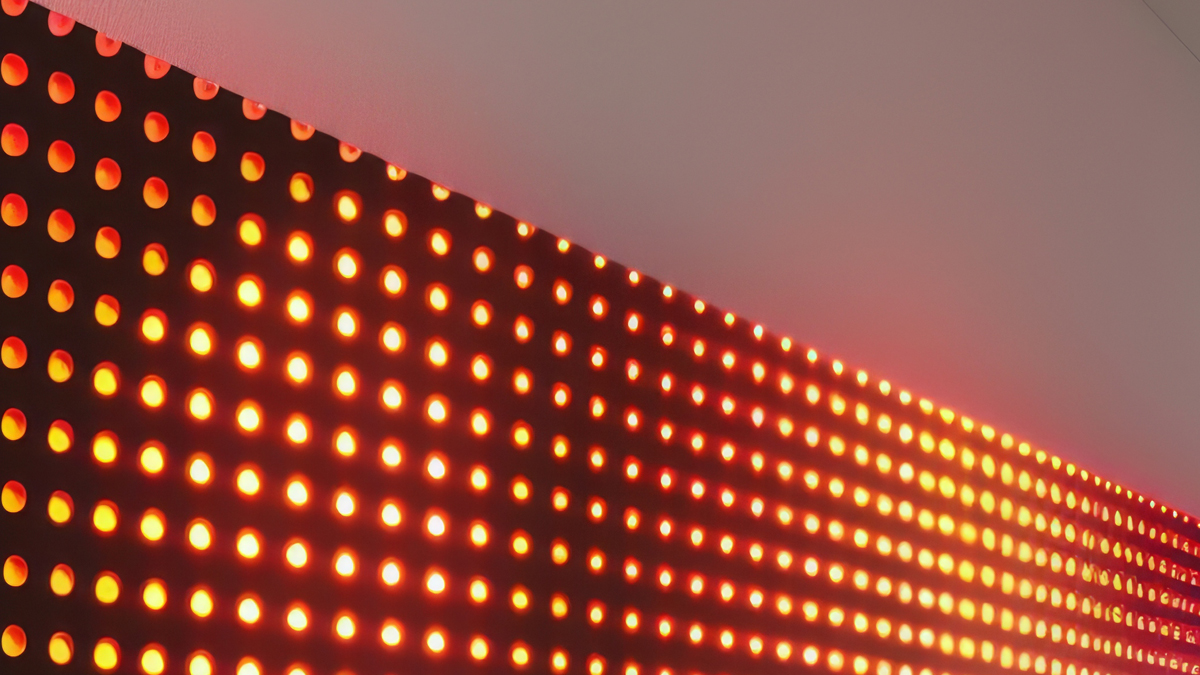
What is Mounting Grid?
Core idea: A mounting grid is the structural backbone that holds an LED Volume Wall in the correct position, shape, and alignment. It is the physical framework that the LED cabinets or LED panels attach to, so the wall stays stable, level, and precisely arranged during filming.
Why it matters in LED Volume Walls: In cinematic virtual production, the LED wall is not just a screen. It becomes the background environment, a key light source, and a technical reference for camera tracking. A mounting grid makes sure every LED panel sits exactly where it should, so the final image looks seamless and believable on camera.
How it connects to the stage: The mounting grid usually connects to a larger stage support system such as a truss structure, a steel subframe, or a purpose-built studio wall. It spreads the weight of the LED panels safely across the supporting points while keeping the surface flat or intentionally curved.
How does Mounting Grid Work?
Load handling: The grid takes the combined weight of LED panels, mounting hardware, power and data cabling, and sometimes service platforms. It transfers that load into the main support structure, which could be floor-supported, wall-supported, or ceiling-hung.
Precision alignment: The grid provides standardized attachment points that match the LED cabinet mounting pattern. Technicians use these points to align rows and columns, maintain consistent spacing, and keep the LED surface smooth. This helps avoid visible seams, uneven reflections, and misaligned pixels that can distract the viewer.
Adjustability: A good mounting grid includes fine adjustment methods. These can include leveling screws, shims, sliding rails, or micro-adjust brackets. The goal is to allow tiny corrections in height, tilt, and depth until the LED surface is uniform and camera-ready.
Stability during production: When cameras move, when people walk on the stage, or when air conditioning and sound systems vibrate the building, the mounting grid must resist flexing. Rigidity is critical because even small shifts can affect camera tracking accuracy and the realism of in-camera visual effects.
Service access: LED walls require maintenance. The grid design often supports front-service or rear-service workflows. It can include access corridors, removable sections, or quick-release mounts so technicians can replace a module without dismantling the entire wall.
What are the Components of Mounting Grid
Primary frame: This is the main structural skeleton, often made from steel, aluminum, or engineered truss systems. It defines the overall shape and size of the LED wall.
Vertical and horizontal members: These are the rails or beams that form the grid pattern. They create the mounting plane and provide repeated attachment points for LED cabinets.
Mounting plates and brackets: These connect LED cabinets to the grid. They may include hooks, clamps, bolts, or quick-lock mechanisms depending on the cabinet design.
Adjustment hardware: This includes leveling feet, turnbuckles, shims, micro-adjust brackets, and alignment pins. It helps achieve a flat surface or a controlled curve.
Fasteners and locking elements: Bolts, nuts, washers, locking pins, safety clips, and anti-loosening hardware keep the structure secure during long production days.
Safety systems: Safety cables, secondary suspensions, load-rated slings, and certified attachment points reduce risk if a primary connection fails. Safety is especially important in ceiling-hung installations.
Cable management: Cable trays, clips, channels, and strain relief points keep power and data cables organized. Good cable management prevents signal issues, reduces trip hazards, and supports faster troubleshooting.
Integration points for tracking and staging: Many LED stages require mounting spots for tracking markers, reference sensors, witness cameras, lighting fixtures, or speakers. The grid can include standardized points for these add-ons.
What are the Types of Mounting Grid
Fixed flat wall grid: This is designed for a flat LED wall. It is common in studios that repeatedly shoot the same style of scenes and want maximum repeatability.
Curved wall grid: This supports a curved LED surface, often used to wrap the background around the camera and talent. Curved grids help improve immersion and can reduce unwanted reflections by controlling angles.
Modular truss-based grid: This uses modular truss sections and standardized rails so the wall can be expanded, reduced, or reconfigured. It is popular for stages that need flexibility for different productions.
Floor-supported grid: This transfers most of the load into the floor, often through base frames and stabilizing outriggers. It is useful when ceiling rigging is limited or when fast setup is needed.
Ceiling-hung grid: This is suspended from overhead rigging points using motors, chain hoists, or fixed suspension. It keeps the floor clear and can allow height changes, but requires strict engineering and safety compliance.
Hybrid grid: This combines floor support and overhead stabilization. It can improve rigidity and safety, especially for tall walls or large curved volumes.
Mobile or rolling grid: Some productions use a grid on a rolling base for repositioning smaller LED walls. This is more common for partial volumes, product shoots, or quick location work.
Custom engineered grid: High-end cinema stages often use a custom steel or aluminum subframe designed for specific wall dimensions, curvature, and access requirements.
What are the Applications of Mounting Grid
Virtual production stages: The primary application is supporting LED Volume Walls used for in-camera environments, interactive lighting, and real-time backgrounds.
Film and television sets: Mounting grids make it possible to build repeatable LED backgrounds for episodic content, commercials, and feature films.
XR and broadcast studios: Extended reality studios rely on stable LED walls for live compositing and camera tracked graphics. The grid ensures consistent geometry for reliable results.
Product and automotive shoots: LED walls are used to create realistic reflections and controlled lighting. A rigid grid prevents surface warping that can distort reflections on glossy products.
Theme parks and immersive attractions: Permanent installations use mounting grids for large LED scenic walls and domes where reliability and long-term durability matter.
Events and large venues: Concerts, corporate events, and product launches use LED walls frequently. A modular grid can speed up assembly and maintain safety in temporary builds.
Training and simulation: Some simulation environments use LED walls for realistic visuals. The grid provides accurate positioning to maintain consistent perspective and realism.
What is the Role of Mounting Grid in Cinema Industry
Image continuity on camera: In cinema, small visual issues become obvious. A mounting grid helps keep the LED surface smooth, reducing visible seams and alignment errors that can break immersion.
Support for camera tracking accuracy: Many virtual production workflows rely on camera tracking systems. If the wall position shifts or flexes, tracking calibration can drift. A stable grid helps maintain the physical reference that tracking systems depend on.
Control of wall shape for creative needs: Directors and cinematographers may choose a flat wall for certain compositions or a curved wall for wraparound environments. The grid makes these shapes possible while keeping the LED panels correctly aligned.
Reliable stage operations: Film sets are busy environments. The mounting grid creates a safe, organized structure that can integrate cables, access paths, and service points. This reduces delays and supports a smoother production schedule.
Consistency across shooting days: Continuity is essential in cinema. If the LED wall moves even slightly between days, matching shots becomes harder. A properly engineered grid enables repeatable positioning and consistent results.
Safety and compliance: Large LED walls are heavy. The mounting grid is a core safety element that must meet load requirements and protect crew and equipment. In cinema studios, safety standards are non-negotiable.
What are the Objectives of Mounting Grid
Structural safety: The first objective is to hold the LED wall securely under all expected loads, including static weight and dynamic forces such as vibration and accidental contact.
Precision alignment: The grid must allow precise positioning of LED cabinets so the displayed image remains seamless and distortion-free.
Rigidity and vibration control: The grid should resist flexing and reduce vibration transfer, supporting stable imaging and accurate tracking.
Scalability and modularity: Productions vary in size. The grid should support expansion, reconfiguration, and upgrades without rebuilding everything from scratch.
Efficient installation and teardown: Time is expensive in cinema. The grid should support fast assembly, clear labeling, and repeatable build methods.
Serviceability and maintenance: The grid should make it practical to access power supplies, data connections, and LED modules for repair or replacement.
Clean integration: The grid should support cable routing, power distribution, and optional attachments such as light fixtures or tracking accessories in a tidy, safe way.
What are the Benefits of Mounting Grid
Better visual quality: A flat or properly curved surface improves visual uniformity, reduces gaps between panels, and helps keep the background believable on camera.
Reduced technical issues: Stable mounting reduces the chance of misalignment, loose connections, and physical stress on LED cabinets. This can lower downtime during critical shooting windows.
Faster production workflow: With a well-designed grid, teams can build the wall faster, calibrate more efficiently, and return to known configurations for repeat shoots.
Improved safety for crew and equipment: Load-rated design, proper anchoring, and built-in safety measures help prevent accidents in a high-pressure production environment.
Higher reliability over long shoots: Cinema shoots can run for weeks. A robust grid maintains performance, reducing the need for constant adjustments.
Flexibility for creative setups: Curves, corners, and partial volumes become easier to execute when the grid supports modular changes.
Cleaner stage environment: Integrated cable management and organized mounting points reduce clutter, which helps both safety and speed.
What are the Features of Mounting Grid
Load-rated engineering: A professional mounting grid is designed with known weight limits and safety factors, supporting predictable performance.
Fine adjustment capability: Features such as micro-adjust brackets, shimming zones, and leveling points allow precise alignment.
Repeatable alignment references: Alignment pins, reference marks, and standardized mounting patterns help technicians recreate the same wall geometry across projects.
Compatibility with LED cabinet systems: Many grids are designed around common cabinet mounting methods, including quick-lock systems and standard bolt patterns.
Corrosion resistance and durability: Powder-coated steel, anodized aluminum, and quality fasteners help the grid perform over time, especially in permanent studios.
Vibration resistance: Reinforced joints, cross-bracing, and proper anchoring reduce flex and vibration, which protects both visuals and tracking stability.
Service-friendly design: Features like removable sections, access corridors, and front-service support reduce maintenance disruption.
Integrated cable management: Channels, trays, and tie points keep power and data organized and reduce troubleshooting time.
Expandable architecture: The grid can be extended upward, outward, or around corners to support evolving stage requirements.
What are the Examples of Mounting Grid
Studio truss with mounting rails: A common approach uses certified truss structures with attached horizontal rails that match LED cabinet mounting points. This is popular for modular stages.
Steel subframe wall: Many permanent LED volumes use a welded steel subframe anchored into the building structure. It offers high rigidity and long-term stability.
Aluminum extrusion grid: Lightweight aluminum profiles can form a precise grid with repeatable slots for brackets. This can be useful for medium-sized walls and controlled environments.
Curved segment grid system: For curved volumes, the grid can be built from curved ribs with radial supports, allowing consistent curvature and accurate panel alignment.
Hybrid floor base with overhead stabilization: A large wall may sit on a heavy base frame while using overhead tie points to reduce sway and improve rigidity.
Motor-assisted ceiling suspension: Some stages suspend the grid using motors or hoists, allowing height adjustments and easier access during reconfiguration, while still meeting strict safety requirements.
What is the Definition of Mounting Grid
Technical definition: A mounting grid is a load-bearing structural framework designed to support, align, and secure LED display cabinets or panels in a defined geometry, enabling stable operation and precise visual continuity for an LED Volume Wall in cinematic environments.
Scope of the definition: The definition includes the physical grid members, the mounting interfaces, the adjustment methods, and the safety elements that together create a reliable support system for the LED wall.
What is the Meaning of Mounting Grid
Practical meaning: In simple terms, a mounting grid is the strong, carefully measured structure behind the LED wall that makes the wall possible. It is what turns a collection of LED panels into one unified, professional screen surface.
Meaning for filmmakers: For a cinema crew, the mounting grid means confidence. It means the wall will not shift, the image will stay consistent, and the stage will remain safe and dependable throughout production.
Meaning for visuals: For the final picture, it means clean lines, stable backgrounds, and fewer visual distractions, helping the audience stay focused on the story instead of noticing technical flaws.
What is the Future of Mounting Grid
Smarter and lighter structures: Mounting grids are likely to become lighter without losing strength, using improved aluminum designs and advanced composites where appropriate, especially for stages that need frequent reconfiguration.
Faster build systems: Expect more tool-free or low-tool connection methods, such as quick-latch brackets and repeatable locking interfaces that reduce setup time while maintaining precision.
Integrated sensing and monitoring: Future grids may include sensors that monitor load, vibration, temperature, and movement. This can help crews detect issues early and maintain tracking accuracy.
Better integration with digital planning: Digital twins and precise 3D planning tools can improve how grids are designed and installed. This can lead to faster alignment, more predictable performance, and easier collaboration between engineering and creative teams.
Improved modular curvature options: As more productions adopt curved and partial volumes, grid systems will likely offer more standardized curved segments and easier ways to combine flat and curved sections in one stage.
Higher safety standardization: As LED volumes become more common, industry standards and certification practices around grid design, rigging, and inspection may become more consistent, helping studios adopt safer and more reliable systems.
Summary
- Mounting grid is the structural framework that supports and aligns LED Volume Walls for cinematic use.
- It works by handling load, enabling precise alignment, resisting vibration, and supporting service access.
- Key components include the primary frame, grid members, brackets, adjustment hardware, safety systems, and cable management.
- Common types include flat, curved, modular truss-based, floor-supported, ceiling-hung, hybrid, mobile, and custom engineered grids.
- Applications include virtual production stages, film and television sets, XR studios, product shoots, attractions, events, and simulation spaces.
- In cinema, the grid supports image continuity, tracking accuracy, creative wall shapes, reliable operations, and safety compliance.
- Objectives focus on safety, precision, rigidity, scalability, speed of installation, maintenance access, and clean integration.
- Benefits include better visual quality, fewer technical issues, faster workflows, improved safety, and higher reliability during long shoots.
- Future trends include lighter materials, faster build methods, integrated monitoring, improved digital planning, and more modular curvature systems.

