

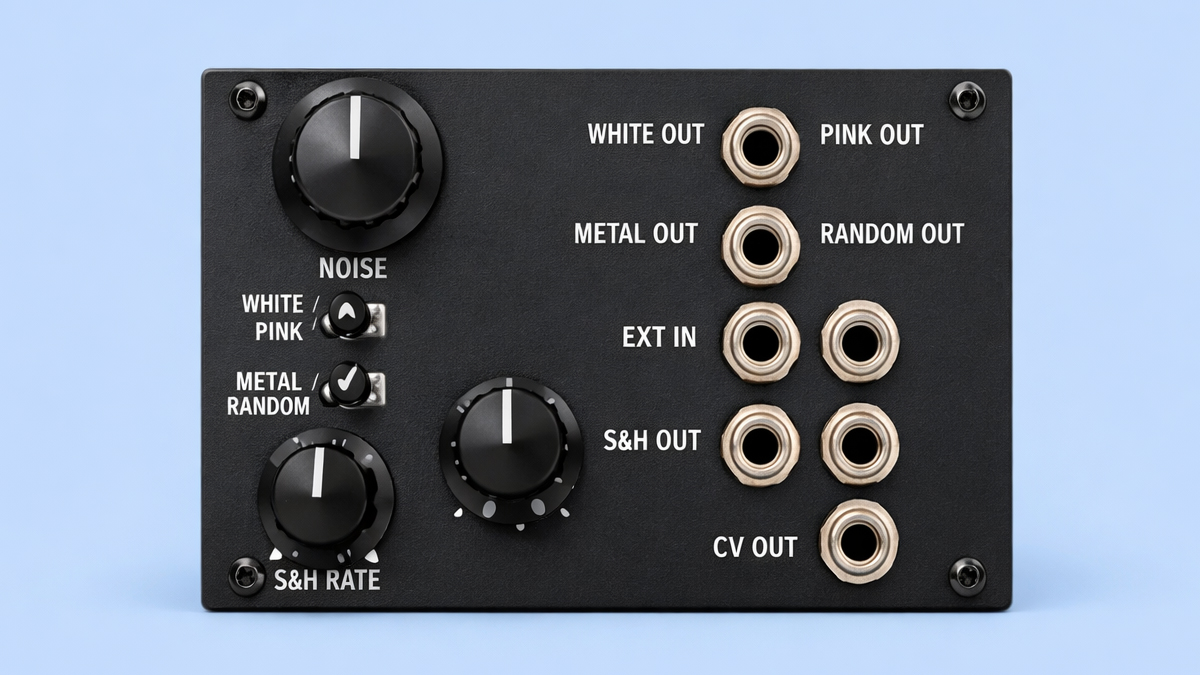
What is Noise Generator?
A noise generator in a synthesizer is a sound source that produces a signal with no clear musical pitch. Instead of vibrating at one stable frequency like an oscillator, it creates a dense spread of frequencies that feels like texture: hiss, wind, surf, breath, crackle, rumble, or static. In music electronics, noise is not an accident. It is a deliberate building block that helps you design drums, create ambience, add realism to acoustic style patches, and shape the character of a sound so it feels alive.
In a subtractive synthesizer, noise is often treated like a raw material that you sculpt with filters, envelopes, and modulation. In a modular synth, it can be a utility source for both audio and control signals. In digital synthesizers, noise can be generated by algorithms and then colored, layered, or routed in very flexible ways. No matter the platform, the core idea remains the same: a noise generator supplies controlled randomness that you can turn into musical results.
Noise is valuable because it fills space in a mix without behaving like a note. It can sit behind a lead as air, sharpen the front of a snare as snap, thicken a pad as shimmer, or drive a filter as a modulator to add movement. That is why many classic and modern synths include a dedicated noise source alongside oscillators.
How does Noise Generator Work?
At the electronic level, a noise generator creates a constantly changing voltage. That changing voltage becomes an audio signal when it moves fast enough to fall in the audible range. The synthesizer then routes this signal through the same sound shaping path used for other sources.
Analog noise generation: In many analog circuits, noise is produced by exploiting naturally random behavior in electronic components. A common method uses a reverse biased semiconductor junction, where tiny fluctuations in current create a broadband random signal. This raw noise is very small, so it is amplified and then conditioned to reach a usable level. The result is a continuous signal that is inherently unpredictable.
Digital noise generation: In digital synthesizers, noise is often made by pseudo random number generation. The synth generates a stream of values that appear random and converts them into audio. Depending on the algorithm and sample rate, the noise can be extremely consistent from note to note or can be made to vary in a more organic way. Digital systems can also generate specific noise colors by shaping the spectrum mathematically.
Signal path shaping: After generation, the noise passes through gain staging so you can set its level. Then it often goes through a mixer where it can blend with oscillators. From there it typically enters a filter, then a VCA, controlled by envelopes and modulators. This is where noise becomes musical. A short envelope can turn noise into a percussion transient. A slow envelope can turn it into a swelling wind like pad layer. Modulation can animate its brightness, volume, or stereo placement.
Control and utility behavior: Noise can also be used outside the main audio path. If you route noise into a sample and hold circuit, you can generate random stepped control voltages for modulating pitch, filter cutoff, or pan. If you lightly mix noise into an FM or ring modulation path, you can add grit and complexity.
What are the Components of Noise Generator?
A noise generator block in a synthesizer can be simple, but it usually contains several functional pieces that make the noise stable, controllable, and useful.
Noise source element: This is the part that produces the raw randomness. In analog designs it can be a transistor junction or diode based circuit. In digital designs it is a mathematical generator that outputs random or pseudo random values.
Amplification stage: Raw noise is typically low in level and needs amplification. An amplifier raises the signal to a standard audio level. Good designs keep this stage quiet and stable.
Level control and mixing: Many synths provide a dedicated noise level knob or mixer slider. This lets you blend noise with oscillators before the filter. Some instruments offer separate level controls for different noise colors.
Spectral shaping network: Noise often needs tone control. Some synths provide white and pink noise options by using filtering networks. Others allow noise to be routed into the main filter for deeper shaping. Digital synths may offer multiple spectral profiles directly in the noise generator menu.
Output buffering and routing: Buffers keep the noise signal consistent and prevent loading issues when it is routed to multiple destinations. In modular systems, a noise module may provide multiple outputs, sometimes at different levels, for audio and for modulation tasks.
Modulation and control interfaces: In a complete synthesizer voice, the noise signal is commonly shaped by envelopes, LFOs, and velocity. The noise generator itself may also offer parameters like color, rate, or clocked randomness depending on the instrument.
Calibration and stability support: In analog instruments, component tolerances and temperature can affect levels. Some designs include trimming or compensation to keep the noise level consistent.
What are the Types of Noise Generator?
Noise in synthesizers is often categorized by its frequency content and by how it behaves over time.
White noise: White noise contains equal energy per frequency band, so it sounds bright and hissy. It is excellent for cymbals, snares, breath noise, and bright sweeps. When filtered, it can resemble wind, surf, or airy textures.
Pink noise: Pink noise has less energy as frequency increases, roughly balancing the spectrum so it sounds warmer and more natural to many ears. It is useful for atmospheric sounds, thunder like layers when filtered, and more mellow percussion components.
Brown noise: Brown noise, sometimes called red noise, is even heavier in the low frequencies. It sounds like deep rumble. It can be used for thunder, sub swells, and heavy ambience. In some synths it is created through integration style filtering of white noise.
Blue and violet noise: These have increasing energy toward higher frequencies. They sound extremely bright and can be harsh, but they can be useful for special effects, digital shimmer layers, or aggressive noise transients in experimental music.
Gray noise: Gray noise is shaped to sound subjectively even across frequencies based on human hearing sensitivity. It can be useful in sound design contexts where you want a balanced perception of noise.
Periodic or looped noise: Some digital synths can generate noise from a short repeating buffer. It still sounds noisy, but it may develop a subtle pitch or pattern. This can be musically interesting for gritty textures.
Random pulse and crackle noise: Some generators produce impulsive noise like clicks, crackles, or bursts. These are great for vinyl style effects, glitch percussion, and lo fi layers.
Noise bursts and gated noise: Many synth patches use a VCA envelope to turn continuous noise into bursts. The generator may be continuous, but the result is a controlled burst that becomes percussion or rhythmic texture.
What are the Applications of Noise Generator?
Noise is one of the most versatile sources in synthesis because it can act like a sound, a texture, or a modulation ingredient.
Percussion design: Noise forms the core of many drum sounds. A snare often combines a pitched body with a noise burst to simulate snare wires. Hi hats and cymbals are often built from filtered noise with fast envelopes and sometimes metallic resonances.
Wind, surf, and environmental ambience: Filtered noise with slow modulation can mimic wind, ocean waves, rain, or distant air movement. Adding subtle pitch modulation and reverb can make it cinematic and wide.
Breath and articulation layers: In wind instrument or vocal like patches, a small amount of noise adds breath, air, and realism. You can route noise through a high pass filter and use velocity to control its level for expressive playing.
Sweeps and risers: Noise through a resonant filter sweep creates classic whooshes. Envelopes and LFOs can animate cutoff and resonance to produce build ups for transitions.
Texture thickening: A tiny layer of noise behind a pad, lead, or bass can add dimension. It can reduce the sterile feel of pure waveforms and help the sound sit in a mix.
Special effects: Crackle noise can create lo fi aesthetics. Brown noise can create thunder and rumble. Extreme bright noise can create digital fizz and aggressive edges.
Modulation source: Noise can be fed into sample and hold circuits to create random control voltages. It can also be used to modulate filters or amplitude for subtle analog style instability.
Testing and calibration in audio: Outside music production, noise sources are used for testing audio systems. In studio practice, pink noise is sometimes used for room and speaker checks. In synthesizers, this is more of a side benefit than a primary musical use, but it shows the broader utility of noise.
What is the Role of Noise Generator in Music Industry?
Noise generators have shaped the sound of modern music across genres because they support both realism and imagination.
Sound design and production: Producers use noise to create impact, energy, and movement. A short noise burst can make a kick or snare feel more present. A rising noise sweep can build tension into a drop. A gentle noise layer can make a pad feel warm and wide.
Electronic genres and signature textures: From classic analog synth pop to techno, drum and bass, ambient, and experimental music, noise is a key ingredient. It powers percussive elements, adds grit, and fills high frequency space that helps tracks feel bright and alive.
Film, television, and game audio: Noise is essential for creating atmosphere. Wind, drones, distant air, machinery hiss, and abstract tension beds are often noise based. With filters and modulation, a noise generator can become an evolving cinematic texture quickly.
Live performance and modular culture: In modular synthesizers, noise is a practical utility. Performers use it to create random modulation, chaotic rhythms, and generative music structures. The noise generator becomes part of the instrument logic, not only the audio output.
Education and learning synthesis: Noise is a clear teaching tool because it demonstrates how filtering, envelopes, and modulation shape sound. When you start with noise, the effect of a filter sweep or an envelope curve is very easy to hear.
Brand and instrument identity: Some instruments are known for the character of their noise, especially in analog designs. The spectral balance and level can influence how snares, hats, and ambience sound, creating a subtle but real signature.
What are the Objectives of Noise Generator?
Provide a controllable non pitched sound source: The main objective is to supply a stable, usable noise signal that can be shaped musically.
Enable realistic acoustic elements: Noise helps simulate breath, friction, air, and transient components that exist in real instruments and environments.
Support percussion creation: Many drum sounds rely on noise for snap, sizzle, and texture, so noise generation is a core objective for drum synthesis.
Create transitions and movement: Noise makes it easy to build sweeps, risers, falls, and impact layers that drive arrangement dynamics.
Add complexity and character: Noise can reduce sterility, add grit, and create depth when mixed subtly with tonal sources.
Provide randomness for modulation: Noise serves as the raw material for random modulation and generative patches, especially when paired with sample and hold.
Offer a flexible sound design tool: A noise generator should integrate smoothly with filters, VCAs, effects, and modulation sources to support diverse creative goals.
What are the Benefits of Noise Generator?
Wide sound palette: With one source and a few shaping tools, you can create drums, ambience, texture, and effects.
Fast results in patch design: Noise reacts strongly to filters and envelopes, so you can craft useful sounds quickly.
Improved realism: Subtle noise layers make synthetic patches feel more natural and expressive.
Mix support: Noise can fill frequency gaps and add presence without competing for pitch space the way another oscillator might.
Creative modulation options: Random modulation derived from noise can create evolving, organic motion that feels less repetitive than typical LFO patterns.
Compatibility with many synthesis methods: Noise works in subtractive, modular, digital, granular, and hybrid synth architectures.
Cost effective feature: From a hardware design perspective, a noise generator can add significant value with relatively small circuitry or code.
What are the Features of Noise Generator?
Noise color selection: Many synths provide white and pink noise, and some add brown or other colors. This gives you immediate tonal choices.
Dedicated level control: A noise knob or slider allows precise blending with other sources.
Routing flexibility: In many architectures, noise can be routed to the filter, directly to the amplifier, into effects, or to modulation paths.
Stereo and spatial options: Some digital instruments offer stereo noise, pan modulation, or uncorrelated channels to create width.
Clocked randomness: Some noise sources can be synchronized so randomness changes on a clock, useful for rhythmic modulation.
Noise bursts and gating support: While gating can be done with envelopes, some instruments include built in burst functions that simplify drum patching.
Consistency and stability: Good noise generators maintain predictable level and spectrum so patches sound reliable across sessions.
Integration with modulation: The best implementations make it easy to modulate noise level, color, and filtering using velocity, aftertouch, envelopes, or LFOs.
Low noise floor in the wrong places: The synth should keep noise out of the signal path when you do not want it, using proper gain staging and clean mixing.
What are the Examples of Noise Generator?
Analog subtractive synthesizer noise sections: Many classic analog style synths include a noise source in the oscillator mixer, often selectable between white and pink noise. Producers use these for snares, hats, and sweeps.
Drum synthesizers and percussion modules: Dedicated drum synths often rely on noise generators for cymbals and snare components, with quick envelopes and bright filtering.
Modular noise modules: Eurorack and other modular formats include noise sources that output multiple colors, random voltages, and sometimes digital flavors like crackle or bit noise. These modules are used for both audio and modulation.
Digital wavetable and virtual analog instruments: Many software synths include noise as an oscillator type. They may offer multiple noise samples or algorithms such as tape hiss, vinyl crackle, breath noise, or textured noise tuned for specific use cases.
Samplers and hybrid instruments: Some engines include noise layers in their synthesis section to add realism to sampled instruments, such as bowed strings, flutes, or brass.
Effects processors with noise generation: Certain multi effects units and creative plugins include noise sources for special effects chains, gated reverb style impacts, or lo fi processing.
What is the Definition of Noise Generator?
A noise generator is a synthesizer circuit or algorithm that produces a random, non periodic signal across a range of frequencies, intended to be used as an audio source or as a modulation source for sound design and synthesis.
What is the Meaning of Noise Generator?
The meaning of noise generator in the context of synthesizers is a tool that creates controlled randomness. It is a musical utility that turns static like sound into creative material. Instead of representing a note, it represents texture, air, movement, and unpredictability. In practical terms, it means you can add realism, impact, and evolving character to a patch without needing additional pitched oscillators.
What is the Future of Noise Generator?
Richer noise models: Future synths will likely include more realistic noise profiles that mimic specific physical phenomena such as breath turbulence, bow friction, or room air, making expressive patches more convincing.
Higher quality random modulation tools: Expect more advanced random generators with control over probability, distribution, smoothing, and musical constraints. Instead of purely chaotic results, you will be able to shape randomness into patterns that feel intentional.
Hybrid analog and digital character control: Hardware instruments may combine analog noise sources with digital shaping so you get organic unpredictability with precise control over color and dynamics.
Context aware noise layers: Intelligent synth engines may automatically adjust noise level and spectrum based on playing style, velocity, and articulation, improving realism for performance.
Immersive and spatial noise: As spatial audio becomes more common, noise generators will be designed with multichannel and binaural workflows in mind. Uncorrelated noise across channels can create enveloping ambience and motion.
Integration with generative music systems: Noise will remain a key ingredient for generative and evolving compositions. Future systems may use noise driven modulation to create long form development, interactive soundscapes, and adaptive music in games.
Creative lo fi and texture trends: The ongoing popularity of lo fi aesthetics suggests continued demand for specialized noise types such as tape hiss, vinyl crackle, circuit hum, and bit reduced textures, offered as ready to use noise models.
Summary
- A noise generator produces non pitched sound that acts as texture, air, and randomness in a synthesizer
- It can be analog, using natural electronic fluctuations, or digital, using random algorithms
- Common noise types include white, pink, and brown, each with a different tonal balance
- Noise is widely used for snares, hi hats, cymbals, sweeps, ambience, and realism layers
- It also works as a modulation source for random voltages and generative patch behavior
- Key features include color selection, level control, routing flexibility, and modulation integration
- In the music industry, noise supports production impact, cinematic sound design, and live modular performance
- The future points toward richer noise models, smarter random tools, and better spatial integration

