

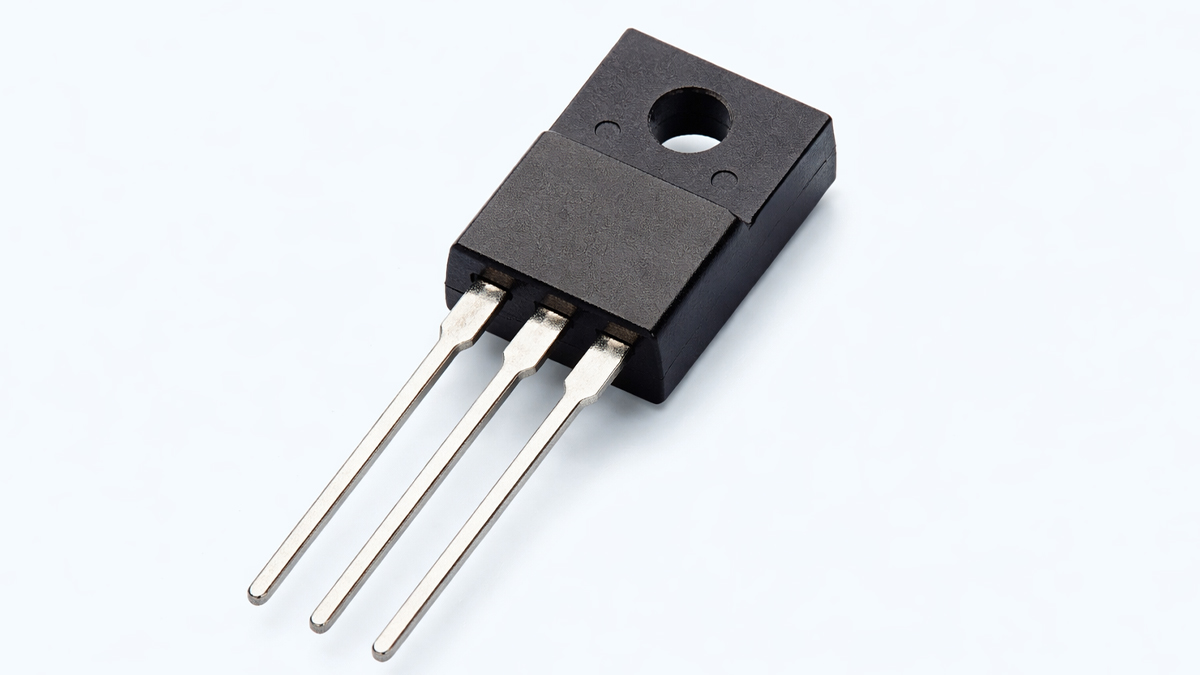
What is NPN Transistor?
An NPN transistor is a type of bipolar junction transistor that is widely used to amplify signals and to switch electronic circuits on and off. In an NPN device, the semiconductor layers are arranged as N type, P type, and N type. This structure allows the transistor to control a larger current using a much smaller input current, which is one of the reasons it is so useful in electronics.
In music electronics, an NPN transistor often appears inside audio amplifiers, guitar pedals, synthesizers, mixers, microphones, and many other sound related devices. Music signals are usually small and delicate at the beginning of the audio chain. For example, a guitar pickup or a microphone capsule produces a relatively low level signal. That signal needs amplification, shaping, buffering, or switching. An NPN transistor can do all these jobs, depending on how it is connected in the circuit.
A helpful way to understand an NPN transistor is to picture it as a controllable valve for electrical current. You apply a small control input at one terminal, and it allows a larger current to flow between two other terminals. This capability makes it valuable in audio circuits where you want to increase signal strength, control tone shaping networks, drive other components, or switch signal paths.
In practical music industry products, NPN transistors may be used as individual discrete parts or inside integrated circuits that contain many transistors. Even when the end user never sees them, these transistors influence sound quality, noise level, headroom, dynamic response, and the reliability of the equipment.
How does NPN Transistor Work?
An NPN transistor has three terminals called emitter, base, and collector. The key idea is that a small base current controls a much larger collector current. For an NPN transistor to work in its typical active mode, the base must be slightly more positive than the emitter. This small difference forward biases the base emitter junction. When this happens, charge carriers move in a way that allows current to flow from collector to emitter, controlled by the base.
Biasing basics: The transistor needs correct DC voltages to operate properly for audio amplification. In music electronics, signals are AC, meaning they swing up and down. But the transistor must be placed at a stable operating point so that the audio waveform can swing without distortion. This operating point is created by biasing resistors, sometimes with capacitors to keep DC stable while allowing the audio signal to pass.
Active mode behavior: In active mode, the transistor behaves like an amplifier. Small changes in base current create larger changes in collector current. This makes it possible to amplify a microphone signal, boost a guitar signal, or increase the output from a filter stage in a synthesizer. The gain depends on transistor characteristics and the surrounding resistors and load.
Switching behavior: In switching mode, the transistor is driven into cutoff or saturation. Cutoff means the transistor is off and little current flows. Saturation means it is fully on and acts like a closed switch. In music devices, switching is used for LED indicators, relay drivers, muting circuits, channel switching, and logic control inside digital or hybrid instruments.
Signal flow in many audio circuits: A common setup is the common emitter amplifier. The input signal is applied to the base through a capacitor, the emitter has a resistor for stability, and the collector has a load resistor. The output is taken from the collector, and the amplified signal is often inverted in phase. This matters in multi stage designs because phase relationships can influence feedback loops and tone shaping networks.
Thermal and stability factors: Transistor parameters shift with temperature. Good audio designs include emitter resistors, bias networks, and sometimes thermal compensation to keep performance consistent. This is important in stage equipment where temperature can change due to lighting, crowded venues, and long operating times.
What are the Components of NPN Transistor?
An NPN transistor is built from semiconductor regions that form a three layer structure. Each region has a specific job in controlling current flow.
Emitter: The emitter is heavily doped N type material. Its role is to inject charge carriers into the base region. In an NPN transistor, the emitter is the source of electrons, which are the main carriers in the device operation.
Base: The base is thin and lightly doped P type material. It is designed to control the flow of carriers. Because it is thin, many carriers injected from the emitter can pass through the base and reach the collector. The base is where the small control current flows.
Collector: The collector is N type material and is typically larger physically than the emitter. It collects the carriers that travel through the base. In amplification, the collector handles the larger current and dissipates more heat, so its design supports power handling.
Junctions: An NPN transistor contains two junctions, the base emitter junction and the base collector junction. In active mode, the base emitter junction is forward biased and the base collector junction is reverse biased. This combination enables controlled amplification.
Leads and package: In real devices, the semiconductor structure is enclosed in a package such as TO 92, TO 18, SOT 23, TO 220, or surface mount variants. The package affects heat dissipation, noise pickup, and mechanical strength. Audio gear uses both through hole and surface mount packages depending on design style and production needs.
Key electrical parameters: Important transistor parameters include current gain, maximum voltage ratings, maximum current, power dissipation, transition frequency, noise performance, and saturation voltage. In music electronics, noise and linearity often matter as much as raw gain.
What are the Types of NPN Transistor?
NPN transistors can be categorized by purpose, construction, and performance characteristics. Different types are chosen depending on whether the circuit is for low noise preamplification, switching control, or power amplification.
Small signal NPN transistors: These are used for low current applications such as preamps, tone stages, oscillators, and buffering. They typically handle modest voltages and currents but can provide good gain and low noise when selected properly.
Low noise NPN transistors: These are optimized to reduce hiss and unwanted noise. They are used in microphone preamps, phono stages, and high gain guitar pedal circuits where noise can be easily amplified.
High gain NPN transistors: These are designed for higher current gain. They are useful in circuits where a small input needs to control a larger output without demanding much base current. However, very high gain can sometimes increase sensitivity to noise and bias drift, so the design must be balanced.
Switching NPN transistors: These are optimized to turn on and off quickly. They are used in control circuits, LED drivers, muting circuits, switching relays, and digital interfaces in musical equipment.
Power NPN transistors: These handle higher currents and higher power dissipation. They are used in power amplifier output stages, power supplies, and motor drivers in musical devices such as tape machines, mechanical organs, and stage effects with moving parts.
Darlington NPN transistors: These contain two transistors connected to provide very high current gain. They are often used for switching higher loads with very small control signals. In music devices, they can drive relays or lamps, though their higher voltage drop can be a disadvantage in some designs.
RF capable NPN transistors: These operate well at high frequencies. While audio frequencies are low, RF capable devices may be used in wireless microphone circuits, transmitters, and certain oscillator sections.
What are the Applications of NPN Transistor?
NPN transistors appear in a wide range of electronic applications. In the context of music electronics, they are found across the entire signal chain, from input to output, and also in supporting control and power circuits.
Audio signal amplification: NPN transistors can amplify weak signals from microphones, pickups, and line level sources. They can be used in discrete preamps, boost pedals, and internal gain stages of analog synthesizers and mixers.
Buffering and impedance matching: Many instruments and audio circuits require a buffer to prevent signal loss and tone changes when driving cables or other circuits. NPN transistors can serve as emitter followers, which provide high input impedance and low output impedance.
Oscillators and waveform generation: In analog synthesizers, transistor based circuits can generate oscillations and shape waveforms. NPN transistors may appear in timing networks and switching cores.
Tone control and filtering: Transistors can be part of active tone circuits where gain and filtering are combined. This includes equalizer stages, active filters, and certain classic guitar pedal tone stacks.
Switching and muting: NPN transistors can switch signals or control signal paths indirectly. They are used in muting circuits to reduce pops, in channel switching circuits, and in effect bypass control systems.
Voltage regulation and power supply support: Many musical devices need stable power. NPN transistors can be used in regulator circuits, current limiting, and protection functions. Stable power directly impacts noise and headroom.
Driving loads: NPN transistors can drive LEDs, relays, small speakers in practice amps, and control elements inside equipment. They also appear in headphone amplifier driver stages in some designs.
Protection circuits: Output stages often need protection from overload, overheating, and short circuits. NPN transistors can detect current and trigger protection mechanisms that save the amplifier and the connected speakers.
What is the Role of NPN Transistor in Music Industry?
The music industry relies on a wide ecosystem of electronic tools, from instruments and recording gear to live sound systems and broadcast equipment. NPN transistors play a central role in making these tools work reliably while maintaining the quality and character of sound.
Preamplification for microphones and instruments: Many microphones produce low level signals that need clean amplification before they can be recorded or mixed. NPN transistors, especially low noise types, are used in early gain stages where preserving detail matters. Similarly, guitar and bass signals can be buffered and boosted using NPN transistor stages to preserve tone and dynamics.
Signature sound in analog gear: A large amount of classic music gear uses transistor based amplification. Certain distortion and overdrive pedals rely on transistor clipping behavior, bias points, and interaction with surrounding components. An NPN transistor stage can produce harmonic content that is perceived as warm, gritty, punchy, or aggressive depending on the design.
Mixers, equalizers, and outboard processors: Many analog mixers include transistor stages for gain, buffering, and routing. Equalizers and compressors may use transistor circuits in their signal paths or side chain control paths. Even when op amps are used, internal transistor stages are still fundamental to operation.
Power amplification for live sound: Large power amplifiers that drive speakers use transistor output stages, often in push pull arrangements. NPN power transistors, paired with complementary PNP devices in many designs, deliver the current needed for loudspeakers. This is crucial for concerts, festivals, clubs, and public address systems.
Reliability in touring equipment: Touring gear must be rugged. NPN transistors provide dependable switching and control functions, such as driving relay based signal routing, protection relays, fan controls, and status indicators. These support systems reduce failure risk on stage.
Modern hybrid systems: Many modern musical instruments and processors combine digital control with analog audio. NPN transistors are commonly used in the interface between microcontrollers and analog or power components. For example, a microcontroller output can use an NPN transistor to drive a relay coil, an LED, or a muting circuit.
Noise control and audio cleanliness: NPN transistors also influence the noise floor of audio equipment. Good design choices, such as selecting low noise transistors and correct biasing, help keep hiss low and dynamics high, which is essential for studio recordings and high fidelity playback.
What are the Objectives of NPN Transistor?
The objective of using an NPN transistor in a circuit is to control and shape electrical current in a predictable way. In music electronics, these objectives are connected directly to sound quality, stability, and functionality.
Signal amplification objective: One main objective is to increase the strength of weak audio signals without losing musical detail. Proper amplification ensures that a vocal recording stays clear, an instrument signal stays full, and the signal can travel through later processing stages.
Signal buffering objective: Another objective is to provide impedance matching and isolation. This protects the tone from being changed by cable lengths, loading effects, or mismatched input and output stages.
Switching objective: NPN transistors are used to switch circuits on and off quickly and reliably. This supports channel switching, effect activation, muting, and control logic inside instruments and processors.
Control objective: NPN transistors allow low power control signals to operate higher power elements. This includes driving relays, lamps, motors, and other components used in music equipment.
Stability objective: In audio circuits, stable operation is essential. NPN transistors help designers create stable gain stages, stable bias points, and predictable frequency response across different conditions.
Protection objective: In amplifiers and power sections, NPN transistors can help detect overload conditions and activate protective responses. This objective is critical for preventing equipment damage during performances.
What are the Benefits of NPN Transistor?
NPN transistors offer several benefits that make them suitable for music electronics across studio and live environments.
High amplification capability: An NPN transistor can provide significant current gain, allowing small input signals to control larger outputs. This is helpful for boosting audio signals and driving later stages.
Simple and cost effective design: Many useful amplifier and switch circuits can be built with a small number of components when using NPN transistors. This simplicity can improve reliability and reduce manufacturing cost.
Wide availability: NPN transistors are among the most common semiconductor components. Designers can source many different models for low noise, high gain, switching, or power needs.
Fast switching response: For control circuits, NPN transistors can switch quickly. This helps in clean muting, fast relay control, and accurate logic interfacing in modern gear.
Good compatibility with common power rails: Many music devices use standard supply voltages. NPN transistors work well in these environments and can be biased easily with resistors and capacitors.
Flexible circuit configurations: NPN transistors can be used in common emitter, common collector, and common base configurations. This flexibility lets designers choose the behavior that best suits a preamp, buffer, or switching circuit.
Sound shaping possibilities: In analog music circuits, NPN transistors can be used to create musical distortion, compression like behavior, and harmonic coloration. Many classic circuits rely on transistor character as part of the sound.
What are the Features of NPN Transistor?
An NPN transistor has distinctive features that define how it behaves in circuits, especially in audio and control applications.
Three terminal control device: It has emitter, base, and collector terminals, enabling small input control at the base to influence a larger current path.
Current gain behavior: A key feature is its ability to provide current gain. This is the foundation for amplification stages in music electronics.
Operates in multiple regions: It can operate in cutoff, active, and saturation regions. This makes it useful for both amplification and switching.
Polarity and bias characteristics: For active mode, the base must be at a higher potential than the emitter. This polarity is convenient in many low side switching designs, where the transistor switches the ground side of a load.
Wide range of device variants: There are many NPN transistor models optimized for low noise, high power, high frequency, or high gain.
Thermal sensitivity: Transistor parameters change with temperature. This feature is important in audio designs because it influences bias stability. Designers often include emitter resistors and feedback to reduce the impact.
Nonlinear behavior at extremes: When pushed hard, an NPN transistor becomes nonlinear. In music electronics, this can be a problem if you want clean audio, or a creative advantage if you want distortion and character.
Compact size: Many NPN transistors are small and fit easily in compact pedals, portable recorders, and dense synthesizer boards.
What are the Examples of NPN Transistor?
In practical electronics, there are many commonly used NPN transistor models. Some are popular in hobby and education, while others are chosen for audio quality, noise performance, or power handling.
General purpose examples: 2N3904, 2N2222, BC547, BC548, BC337. These are used for switching, small signal amplification, and many general audio control tasks.
Low noise audio examples: BC549, BC550, 2SC1815, 2SC2240. These are often selected for preamps and low noise gain stages where hiss reduction matters.
Power examples: TIP31, TIP41, 2N3055, MJ15003. These are used in power supply and power amplifier contexts, though modern designs may use newer parts with improved performance.
Darlington examples: TIP120, TIP122. These provide high gain for driving loads like relays, although designers must consider the higher voltage drop and heat.
Music equipment context examples: In a guitar boost pedal, a small signal NPN transistor can provide gain and mild coloration. In a mixer preamp, a low noise NPN transistor can be part of the input amplification stage. In a power amplifier, NPN power transistors can be part of the output stage delivering current to speakers. In a synthesizer, NPN transistors can appear in oscillator cores, filter circuits, and envelope generator switching.
What is the Definition of NPN Transistor?
An NPN transistor is defined as a bipolar junction transistor made of two N type semiconductor regions separated by a P type region, designed to control current flow between collector and emitter using a smaller base current. It can operate as an amplifier or as a switch depending on how it is biased and connected.
In music electronics, this definition matters because it highlights the main purpose of the device. It is a controlled current device that enables amplification, buffering, switching, and sound shaping across audio circuits.
What is the Meaning of NPN Transistor?
The meaning of NPN transistor can be understood by looking at its structure and naming. NPN indicates the sequence of semiconductor doping types inside the device. The first N is the emitter region, the P is the base region, and the second N is the collector region.
This meaning also hints at how it behaves in common circuits. When the base is made slightly more positive than the emitter, the device can conduct strongly from collector to emitter. In music gear, this becomes meaningful because it describes how designers control signal stages and switching behavior using simple bias networks.
Another meaning in practical terms is that an NPN transistor is a building block. It is a small component that enables large system behavior, such as turning an LED on when an effect is active, amplifying a guitar signal into a distortion circuit, or driving a power stage that fills a venue with sound.
What is the Future of NPN Transistor?
The future of NPN transistors remains strong, even as digital technology advances. Many modern music devices rely on digital signal processing, but the analog front end and supporting circuits still depend on transistors for essential functions.
Continued use in analog character circuits: Many musicians and producers still value analog tone and tactile hardware. Guitar pedals, analog synth modules, preamps, and boutique equipment continue to use discrete NPN transistors to achieve particular sound signatures.
Integration into advanced manufacturing: While discrete transistors remain common, many NPN transistor structures will continue to be used inside integrated circuits. Op amps, analog switches, voltage regulators, and audio driver chips all rely on transistor structures. This means NPN behavior remains a foundation even when the transistor is not a separate part.
Improved performance and consistency: Semiconductor manufacturing continues to improve. This can lead to better matching, lower noise, and more consistent gain from part to part. For music equipment, this improves reliability and repeatability, especially in mass produced products.
Hybrid analog and digital instruments: Many future instruments will blend analog signal paths with digital control. NPN transistors will remain a simple, efficient way to interface digital control outputs with analog loads, such as relays, mute switches, voltage control blocks, and LED systems.
Sustainability and repair culture: The music industry has a strong culture of repair and long term use of gear. Since NPN transistors are widely available and inexpensive, they support repairability. This is important for studios, touring companies, and musicians who want equipment that can be maintained for years.
New creative circuit design: Designers continue to experiment with transistor biasing, clipping, and feedback to create new textures. Even with modern digital effects, many musicians still enjoy the organic response of transistor circuits. This creative exploration will keep NPN transistors relevant.
Summary
- NPN transistor is a bipolar junction transistor with N type, P type, and N type regions that can amplify or switch currents
- It works by using a small base current and correct biasing to control a larger collector to emitter current
- Its main parts include emitter, base, collector, and two junctions that define its operating behavior
- Types include small signal, low noise, high gain, switching, power, Darlington, and high frequency variants
- Applications include audio amplification, buffering, filtering support, oscillators, switching, power supply functions, and protection circuits
- In the music industry it supports microphones, instruments, pedals, mixers, synthesizers, and power amplifiers while influencing tone and noise
- Objectives include clean amplification, reliable switching, control of higher loads, stability across conditions, and protection of equipment
- Benefits include strong gain, simple design, wide availability, fast switching, flexible configurations, and sound shaping potential
- Features include three terminal control, multi region operation, polarity based biasing, many device variants, and nonlinear character when pushed
- Examples range from general purpose parts to low noise and power devices commonly found in music equipment
- Definition and meaning connect its NPN structure to its role as a controllable current device in electronic sound systems
- Future relevance remains strong due to analog sound demand, integration inside ICs, better manufacturing, hybrid instruments, and repairability

