
What is Open Sound Control?
Open Sound Control is a communication method used to control sound, music software, and smart musical instruments over a network. It is often shortened to OSC, but here we will use the full name. Open Sound Control lets one device send control messages to another device in a clear and flexible format. These messages can represent musical actions such as changing volume, triggering notes, moving a filter cutoff, switching presets, or adjusting effects in real time.
In the world of smart musical instruments, Open Sound Control is important because modern instruments are no longer only physical. Many smart instruments include sensors, touch surfaces, wireless modules, apps, and cloud connected features. They create a constant flow of performance data. Open Sound Control provides a clean way to move that data between devices so that the instrument, the performer, and the music software can stay in sync.
Another key idea is that Open Sound Control is not limited to music notes like classic MIDI. It can carry any kind of control value, including floating point numbers, text, lists, and structured data. That means it can describe complex gestures, multi touch movements, spatial audio positions, lighting cues, and visual parameters, all using the same communication style.
How does Open Sound Control Work?
Open Sound Control works by sending messages across a computer network. A message is built using two main parts. Address pattern: This is like a path that describes what the message is controlling. Argument data: This is the value or values being sent.
Address pattern: Think of it as a label that points to a control target. For example, it might point to a synthesizer parameter, a drum pad trigger, a sensor reading, or a mixer channel setting.
Argument data: This carries the information. It could be a number, a group of numbers, or text. For example, it could send a value like 0.75 to represent a knob position, or it could send three values for x y z coordinates from a motion sensor.
Transport method: Open Sound Control messages commonly travel using UDP or TCP over IP networks. UDP is often chosen for live performance because it is fast and low overhead. TCP is chosen when reliability and guaranteed delivery matters more than speed. Some systems also use Open Sound Control over Bluetooth or other links by wrapping the messages inside their transport layer.
Timing approach: Open Sound Control can support time tagged bundles. This means messages can be grouped and scheduled to execute at a specific time. That is useful for tight synchronization in performances, installations, and multi device setups.
In a smart musical instrument setup, the instrument or its companion app can act as a sender, producing sensor data and performance gestures. A receiving device such as a laptop, tablet, audio processor, lighting controller, or another instrument interprets the address pattern and applies the values to the correct parameter.
What are the Components of Open Sound Control?
Open Sound Control has several core components that make it reliable and expressive for smart musical instruments and music systems.
Address pattern: The address pattern is a structured string that identifies the destination of the message. It is often written like a path with sections separated by slashes, but the important point is that it is hierarchical and human readable. Address pattern design: A good address pattern design makes a system easy to expand, debug, and maintain.
Arguments and data types: Open Sound Control supports multiple data types. Numeric values: Integers and floating values are commonly used for knobs, sliders, sensors, tempo values, and automation. Text values: Text can be used for labels, preset names, mode names, or commands. Arrays and mixed arguments: A single message can carry multiple values, which is useful for multi sensor devices and multi parameter updates.
Messages: A message is a single unit that contains an address pattern and arguments. Message structure: A message is the most common item sent during real time control.
Bundles: A bundle groups multiple messages together. Time tag support: Bundles can include a time tag so the receiving system can apply changes at a planned moment. Bundle usage: Bundles are helpful when multiple parameters must change together, such as switching a whole scene or updating many mixer controls at once.
Transport layer: Open Sound Control can run over UDP or TCP on top of IP networks. UDP characteristics: Fast and widely used for live control, but delivery is not guaranteed. TCP characteristics: More reliable delivery, but can add delay due to retransmission and ordering.
Sender and receiver roles: Any device can be a sender, a receiver, or both. Instrument role: A smart instrument can send gestures, sensor values, and control commands. Software role: A digital audio workstation, modular environment, or performance tool can receive and translate messages into sound changes.
Network addressing: Devices use IP addresses and ports to send and receive messages. Port management: Choosing consistent ports helps keep routing stable in a live setup.
What are the Types of Open Sound Control?
Open Sound Control can be described in types based on how it is used in real systems, especially in smart musical instruments.
Control messaging type: This is the most common type, where messages control parameters such as volume, filter, reverb mix, oscillator pitch, or loop length. Parameter mapping type: The receiver maps address patterns to internal parameters.
Sensor streaming type: Smart instruments often include accelerometers, gyroscopes, pressure sensors, and touch sensors. Continuous streaming type: The instrument streams sensor values at a steady rate so the music software can respond to movement and touch in real time. Gesture interpretation type: The receiver may convert raw sensor data into higher level musical gestures.
Event triggering type: Some messages represent discrete actions, such as triggering a sample, starting recording, or switching a scene. Trigger design type: The address pattern identifies the event and the argument may be optional or may carry velocity or intensity.
Time scheduled type: This type uses bundles with time tags so that multiple actions occur at precise times. Synchronization type: Useful for distributed performances with multiple computers or instruments.
Bidirectional feedback type: In many systems, the receiver sends messages back to the sender. Feedback type: A mixing console app might update motor faders or LED rings based on what the software is doing. State reporting type: Devices can share current presets, tempo, or mode status.
Discovery and configuration type: While Open Sound Control itself does not require a discovery system, many setups add a discovery approach on top. Configuration type: Devices may exchange network settings, port information, and capability lists using agreed address patterns.
What are the Applications of Open Sound Control?
Open Sound Control has many applications in smart musical instruments and the wider music technology ecosystem.
Performance control of software instruments: A smart instrument can control a synthesizer in a laptop or tablet by sending expressive gestures. Expressive performance application: Motion and pressure can shape timbre, vibrato, or spatial effects.
Live mixing and stage control: Open Sound Control can control digital mixers, monitor systems, and effect racks. Remote mixing application: Tablets can act as wireless controllers for front of house mixing.
Interactive installations: Museums, galleries, and public art projects use sensors to trigger sound and visuals. Installation application: A visitor movement sensor can send Open Sound Control data to a sound engine and lighting system.
Audio and visual synchronization: Many shows combine music with visuals and lighting. Multimedia application: Open Sound Control can carry cues to video software, projection mapping tools, and lighting controllers so all elements change together.
Education and research: Students and researchers use Open Sound Control to prototype new instruments and interfaces. Rapid prototyping application: It is easier to experiment with custom data structures than with older fixed control protocols.
Networked ensembles: Multiple performers can connect instruments and computers over a local network. Ensemble application: One performer control stream can influence a shared sound engine, or each performer can control a different layer.
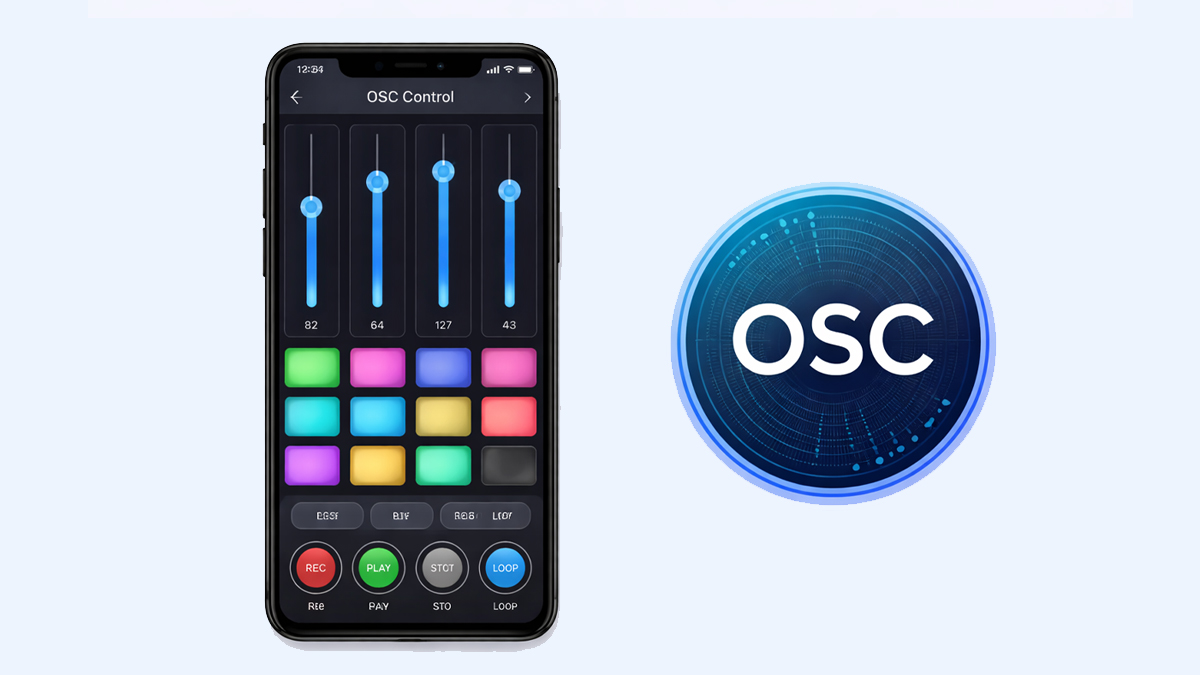
Mobile music apps and controllers: Phones and tablets can send touch gestures and sensor data. Mobile controller application: Multi touch surfaces can send many parameters at once with smooth resolution.
Studio automation and custom workflows: Producers can create custom control panels to manage complex sessions. Workflow application: A custom controller can change routing, arm tracks, and adjust effect sends quickly.
What is the Role of Open Sound Control in Music Industry?
Open Sound Control plays a growing role in how music is created, performed, and delivered in modern systems.
Bridge between instruments and software: The music industry increasingly depends on software instruments, plugins, and live performance platforms. Integration role: Open Sound Control helps smart instruments communicate with these tools using detailed data.
Support for new instrument design: Many companies and independent builders create instruments with sensors and novel interfaces. Innovation role: Open Sound Control allows these instruments to transmit unique gesture data without being limited to a small set of predefined control messages.
Enablement of hybrid performances: Concerts often blend live musicians, playback, visuals, and automation. Production role: Open Sound Control can coordinate cues across departments such as audio, lighting, and video.
Scalable control for large systems: Festivals, theaters, and touring productions use complex rigs. Scalability role: Open Sound Control can organize parameters using address hierarchies that scale from a small setup to a large one.
Interoperability between creative tools: The industry uses many different software environments. Interoperability role: Open Sound Control is widely supported in creative coding tools, modular audio systems, and performance apps, making it a practical common language.
Support for remote and distributed creation: Collaboration can happen over networks. Remote control role: Producers can build remote control systems for studio rooms, rehearsal spaces, and distributed stages, though network design and security must be handled carefully.
What are the Objectives of Open Sound Control?
The objectives of Open Sound Control focus on making musical control more flexible, expressive, and network friendly.
Expressive control: Provide higher resolution and richer data types for musical control so performers can shape sound in more detailed ways.
Human readable organization: Use structured address patterns so developers and artists can understand what a message controls and can extend a system without confusion.
Network based communication: Work smoothly over standard networks so devices can connect through Ethernet or wireless networks in studios and on stages.
Extensibility: Allow new instruments and software to define their own control messages without waiting for a central standard committee to add new message types.
Cross domain control: Support not only audio but also lighting, video, stage automation, and interactive systems, enabling unified show control.
Timing and synchronization: Provide a way to group and time schedule control actions, making coordinated changes more precise.
Device independence: Avoid being tied to a single manufacturer or hardware interface so that many different devices can participate in a creative setup.
What are the Benefits of Open Sound Control?
Open Sound Control provides practical benefits that matter to musicians, developers, educators, and production teams.
High flexibility: You can design address patterns that match the structure of your instrument, software, or show. This helps keep complex projects organized.
Rich data types: You can send floating values, text, and multiple arguments, which is ideal for smart instruments with many sensors and expressive controls.
Better resolution: Many Open Sound Control implementations use floating values for smooth changes. This is useful for subtle automation like filter sweeps and spatial motion.
Network friendliness: It works over common networking technology, making it easy to connect laptops, tablets, and smart instruments without special cabling in many cases.
Scalable system design: Address hierarchies scale well. A small controller can handle a few parameters, and a large system can handle thousands with clear organization.
Cross platform: It is used across many operating systems and creative tools, so teams can mix devices and still communicate.
Real time performance: With good network design, Open Sound Control can be very responsive, making it suitable for live performance gestures.
Creative exploration: Because the message structure is open and customizable, artists can invent new control ideas and quickly test them.
What are the Features of Open Sound Control?
Open Sound Control includes features that make it attractive for smart musical instruments and modern music systems.
Address pattern hierarchy: Messages use structured address patterns that can reflect instrument parts, software modules, or stage elements. Organization feature: This improves readability and maintainability.
Pattern matching: Many implementations support pattern matching for address patterns, allowing flexible routing rules. Routing feature: A receiver can listen to a group of related addresses without listing every one.
Multiple argument: A single message can carry multiple values. Efficiency feature: This reduces message count when sending related data like multi touch points.
Typed data feature: Arguments have defined types such as integer, float, and string. Interpretation: This reduces ambiguity when parsing incoming data.
Bundling: Multiple messages can be grouped. Coordination feature: Useful for scene changes and synchronized updates.
Time tagging: Bundles can include time tags. Timing feature: This supports scheduled execution for tighter sync.
Transport flexibility: It can run over UDP or TCP. Deployment feature: Users can choose based on speed needs or reliability needs.
Tool ecosystem: Many music and creative coding tools support Open Sound Control. Adoption feature: This lowers the barrier for building smart instrument integrations.
What are the Examples of Open Sound Control?
Here are practical examples of how Open Sound Control appears in real workflows for smart musical instruments and music production.
Smart guitar controller example: A smart guitar with pressure sensors on the fretboard sends continuous values to a software amp and effects chain. Gesture example: Higher finger pressure increases distortion drive and changes delay feedback.
Electronic drum kit example: A smart drum surface sends hit intensity and position data. Expressive percussion example: The hit position controls which sample layer is used, while intensity controls brightness and compression.
Touch keyboard example: A smart keyboard sends x position and y pressure for each touch. MPE like expression example: The software synth uses x position for timbre and y pressure for vibrato depth.
Stage lighting cue example: A performance computer sends cues to a lighting system. Show control example: When a chorus starts, the computer sends a cue that changes color and movement in lighting fixtures.
Spatial audio panning example: A motion controller sends x y z coordinates for a performer hand position. Spatial example: The audio engine maps those coordinates to a 3D panner so sound moves around the room.
Mixer control example: A tablet app sends channel fader values and mute toggles. Mixing example: The digital mixer updates the tablet with current levels so the interface reflects reality.
Installation sensor example: A camera system detects crowd density and sends a value. Installation example: As crowd density increases, the soundscape becomes more active and the visuals become brighter.
What is the Definition of Open Sound Control?
Open Sound Control is a network based protocol and message format used to exchange control information between computers, software, and digital musical devices. It defines how to represent control targets using address patterns and how to attach typed arguments to those messages. It also defines how messages can be grouped into bundles and optionally time tagged for scheduled execution.
In the context of smart musical instruments, the definition also implies a practical purpose: it is a method for sending expressive performance and control data from an instrument to a receiving system, and sometimes back again as feedback.
What is the Meaning of Open Sound Control?
The meaning of Open Sound Control can be understood at two levels.
Practical meaning: It is a way to control sound related systems over a network. It lets devices communicate musical intentions such as change this parameter, trigger this sound, move this effect, or switch this scene.
Creative meaning: It supports a more open style of musical interaction. Smart instruments often create new kinds of gestures that do not fit older control models. Open Sound Control gives artists a way to represent those gestures in a structured form and connect them to sound and multimedia outcomes.
Industry meaning: It helps unify creative technology systems. Music production and performance now often involve software, hardware, visuals, and interactive experiences. Open Sound Control acts like a shared control language between these parts when designed consistently.
What is the Future of Open Sound Control?
The future of Open Sound Control looks promising because smart musical instruments and network based production systems keep expanding.
Growth in smart instruments: More instruments will include sensors, wireless connectivity, and companion apps. Expressive data growth: Open Sound Control will remain useful because it can carry complex sensor data without forcing it into a limited format.
Deeper integration in ecosystems: More music software, mobile apps, and hardware devices will continue adding support. Workflow integration: This will make Open Sound Control setups easier for everyday musicians, not only advanced users.
Better networking and wireless performance: Wireless networks are improving in speed and stability. Live wireless control: This can reduce latency issues and make networked instruments more reliable on stage, when users design networks carefully.
Standardized message design within communities: While Open Sound Control is flexible, communities often converge on shared address patterns for common tasks. Shared conventions: This can improve interoperability between tools, especially in live performance and installation scenes.
Connection to spatial and immersive audio: Immersive formats and spatial audio are growing in live events and media production. Spatial control: Open Sound Control is well suited to moving sound objects in 3D space and controlling many parameters at once.
More bidirectional instrument feedback: Smart instruments will not only send gestures but also receive haptic and visual feedback. Feedback loops: Open Sound Control can support state updates, LED control, and performance guidance.
Security and reliability improvements: As network control becomes common, teams will pay more attention to secure routing and stable timing. Professional deployment: Expect better tooling for monitoring, logging, and managing Open Sound Control traffic in complex productions.
Summary
- Open Sound Control is a network based way to send control messages between smart musical instruments, computers, and music software.
- It works by using address patterns to identify targets and typed arguments to send values for those targets.
- Core components include messages, bundles, time tags, data types, sender and receiver roles, and network ports.
- Common types include parameter control, sensor streaming, event triggering, time scheduled control, and bidirectional feedback.
- Applications include live performance, mixing, interactive installations, audio visual synchronization, education, and studio automation.
- In the music industry, it supports innovation, interoperability, scalable production systems, and hybrid shows.
- Key objectives include expressive control, extensibility, network communication, cross domain coordination, and timing support.
- Benefits include flexibility, rich data, smooth resolution, scalability, and strong support across creative tools.
- The future includes deeper smart instrument adoption, better wireless performance, stronger conventions, and growth in spatial audio control.

