

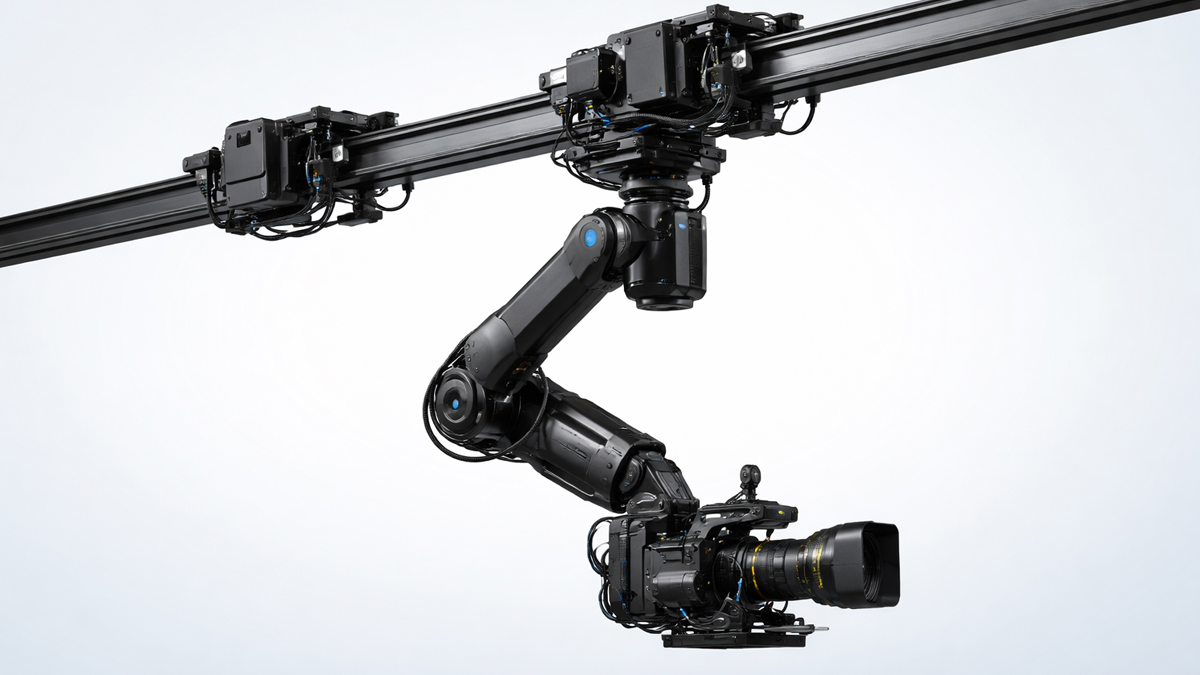
What is Overhead Track System?
An Overhead Track System is a specialized camera movement solution used in the cinema industry to capture smooth, dynamic, and controlled shots from above a set, stage, or location. It is part of robotic camera rigs under cinematic technologies and is designed to move cameras along a fixed track that is mounted overhead. This system allows filmmakers to achieve complex aerial style movements without the need for drones or cranes in many situations.
In simple terms, an Overhead Track System is a mechanical and robotic framework installed above the shooting area. A motorized trolley travels along the track, carrying a camera that can be remotely controlled. The camera can move horizontally across the set while also adjusting its tilt, pan, and sometimes vertical position. This makes it possible to capture top view shots, sweeping movements, and fluid transitions across large spaces.
Unlike handheld cameras or traditional dollies that operate on the ground, an Overhead Track System works from above. This provides a unique perspective that adds depth and creativity to visual storytelling. It is commonly used in film studios, television productions, live events, sports coverage, and commercial shoots.
The system is carefully engineered for stability and precision. Every movement is calculated and programmable, which ensures that repeated takes have identical motion. This is extremely important in modern filmmaking where visual effects and post production require consistent camera paths.
How does Overhead Track System Work?
Installation and Setup: The Overhead Track System is installed on a ceiling structure, truss, or specially designed support frame. The track is aligned precisely to ensure smooth movement. The mounting must be strong enough to support the weight of the track, trolley, and camera equipment.
Motorized Movement: A robotic trolley runs along the overhead track. This trolley is powered by motors that are controlled through a central control system. The motors allow the camera to move forward and backward along the track with high accuracy.
Camera Control: The camera mounted on the trolley is attached to a robotic head. This head enables pan, tilt, and sometimes roll movements. Operators can control the camera remotely using a joystick, control panel, or software interface.
Programmable Paths: Modern Overhead Track Systems allow operators to program specific movement paths. For example, the camera can start at one end of the track, move smoothly across the set, slow down at a key moment, and then stop at an exact position. This programmed path can be repeated multiple times.
Real Time Monitoring: The camera feed is transmitted to monitors where directors and cinematographers can see the live shot. Adjustments can be made instantly to improve framing, lighting, or timing.
Safety and Stabilization: The system includes stabilization technology to reduce vibration. Safety mechanisms are also built in to prevent sudden stops, jerks, or equipment failure.
Through this combination of mechanical precision and digital control, the Overhead Track System delivers smooth and reliable camera movement that enhances storytelling.
What are the Components of Overhead Track System?
Track Structure: The main rail or track is the foundation of the system. It is usually made of strong metal materials such as aluminum or steel. The track must be straight and precisely aligned to ensure smooth movement.
Motorized Trolley: This is the moving carriage that travels along the track. It holds the camera mounting system and contains motors and wheels designed for stable motion.
Robotic Camera Head: The robotic head allows the camera to pan, tilt, and sometimes rotate. It provides flexibility in framing while the trolley moves along the track.
Control System: The control system includes hardware and software that manage movement. It may consist of a control console, computer interface, and motion programming tools.
Power Supply: The system requires a reliable power source. This may include cables running along the track or integrated power systems within the trolley.
Cabling and Signal Transmission: Video signals and control commands must travel between the camera and control station. This is managed through cables or wireless transmission systems.
Mounting and Support Structure: The entire system must be securely mounted. This structure ensures safety and prevents vibration during operation.
Safety Mechanisms: Emergency stop features, weight sensors, and secure locking systems are included to protect both equipment and crew.
Each component plays a vital role in ensuring that the Overhead Track System operates smoothly and safely.
What are the Types of Overhead Track System?
Straight Track Systems: These systems consist of a single straight rail. They are ideal for linear camera movements across a set or stage.
Curved Track Systems: Curved tracks allow for more dynamic movements. The camera can follow a circular or semi circular path, which adds creative possibilities.
Grid Track Systems: In this setup, multiple tracks are arranged in a grid pattern. This allows the camera to move in two dimensions across a wide area.
Modular Track Systems: Modular systems can be assembled and customized according to the production requirements. They offer flexibility for different studio layouts.
Permanent Installation Systems: These are fixed installations commonly used in television studios and sports arenas.
Temporary Installation Systems: These are designed for short term use in film sets or events. They can be installed and removed as needed.
Each type serves different production needs, depending on the complexity of movement and the environment.
What are the Applications of Overhead Track System?
Film Production: In movies, the Overhead Track System is used for dramatic overhead shots, action sequences, and large set coverage.
Television Broadcasting: News studios and talk shows use overhead systems to capture dynamic angles and smooth transitions.
Sports Coverage: In sports arenas, overhead camera systems capture wide field views and player movements.
Live Events: Concerts and award shows use overhead tracks to create immersive visual experiences.
Commercial Advertising: Advertisers use overhead shots to highlight products in creative and engaging ways.
Documentary Filmmaking: Overhead systems help document large scale environments such as factories or exhibitions.
The versatility of the Overhead Track System makes it suitable for various production environments.
What is the Role of Overhead Track System in Cinema Industry?
Creative Storytelling: The system allows filmmakers to experiment with unique perspectives. Overhead shots can symbolize power, isolation, or scale.
Precision and Consistency: In modern cinema, visual effects integration requires consistent camera paths. The Overhead Track System ensures repeatable motion.
Efficiency in Production: Robotic control reduces the need for multiple crew members to manually operate cranes or dollies.
Enhanced Visual Quality: Smooth and stable movement improves the professional quality of shots.
Safety: Operating from above reduces on set clutter and minimizes the risk of accidents involving large ground equipment.
The Overhead Track System plays a crucial role in advancing cinematic technologies within the cinema industry.
What are the Objectives of Overhead Track System?
Achieve Smooth Camera Movement: The primary objective is to provide seamless and stable camera motion.
Enable Complex Shots: The system allows for intricate movement patterns that would be difficult manually.
Increase Production Efficiency: Automation reduces setup time and repeated adjustments.
Enhance Creative Freedom: Filmmakers can explore new visual styles and perspectives.
Improve Safety Standards: By operating overhead, the system keeps heavy equipment away from ground level.
Support High Quality Visual Effects: Repeatable camera paths are essential for compositing and digital effects.
These objectives guide the design and development of modern overhead systems.
What are the Benefits of Overhead Track System?
Stable and Smooth Shots: The robotic movement ensures consistent footage.
Remote Operation: Operators can control the system from a safe distance.
Repeatable Motion: Identical movements can be repeated for multiple takes.
Flexible Installation: Systems can be adapted for different studio sizes.
Professional Visual Impact: Overhead movement adds cinematic value to productions.
Reduced Crew Requirements: Automation reduces the need for manual camera handling.
Improved Safety: Secure mounting and remote control reduce risks.
These benefits make the system highly valuable in professional filmmaking.
What are the Features of Overhead Track System?
High Precision Motors: Ensure accurate positioning and movement.
Programmable Control Interface: Allows customization of motion paths.
Robust Construction: Designed to support heavy cameras.
Advanced Stabilization: Minimizes vibration and shake.
Integrated Safety Systems: Protect equipment and personnel.
Scalable Design: Suitable for small studios and large arenas.
Wireless and Wired Control Options: Offers flexibility in operation.
These features define the technical strength of the Overhead Track System.
What are the Examples of Overhead Track System?
Cable Based Robotic Systems: These systems use cables suspended across large spaces to move cameras overhead.
Studio Mounted Rail Systems: Installed permanently in television studios.
Arena Grid Systems: Used in sports stadiums for dynamic coverage.
Industrial Robotic Camera Tracks: Designed for controlled studio environments.
Each example demonstrates the adaptability of overhead systems in different production scenarios.
What is the Meaning of Overhead Track System?
The meaning of Overhead Track System refers to a structured rail based camera movement mechanism installed above a set or location. It combines mechanical tracks, robotic trolleys, and digital control systems to move cameras smoothly across a defined path.
The term overhead indicates that the system operates above the action area. The term track refers to the rail on which the camera carriage moves. Together, they describe a controlled overhead camera movement solution used in cinematic technologies.
What is the Future of Overhead Track System?
Integration with Artificial Intelligence: Future systems may include intelligent tracking that follows subjects automatically.
Enhanced Automation: Improved motion programming will allow even more complex and synchronized movements.
Lightweight Materials: Advances in materials will reduce weight while increasing strength.
Virtual Production Compatibility: Overhead systems will integrate seamlessly with virtual sets and real time rendering environments.
Wireless Power and Data Transmission: This will reduce cable management challenges.
Greater Accessibility: As technology becomes more affordable, smaller production houses will adopt overhead systems.
Summary
- An Overhead Track System is a robotic camera movement solution installed above a set or location.
- It enables smooth, precise, and programmable camera motion.
- The system includes tracks, motorized trolleys, robotic heads, control units, and safety mechanisms.
- Different types include straight, curved, grid, modular, permanent, and temporary systems.
- It is widely used in films, television, sports, live events, and advertising.
- In the cinema industry, it supports creative storytelling and visual effects integration.
- The objectives include stability, efficiency, safety, and creative flexibility.
- Benefits include repeatable motion, remote operation, and enhanced visual quality.
- Features include precision motors, programmable paths, and advanced stabilization.
- The meaning of Overhead Track System refers to a structured overhead rail based camera movement mechanism.
- The future involves artificial intelligence, automation, lightweight materials, and virtual production integration.

