
What is Pad Controller?
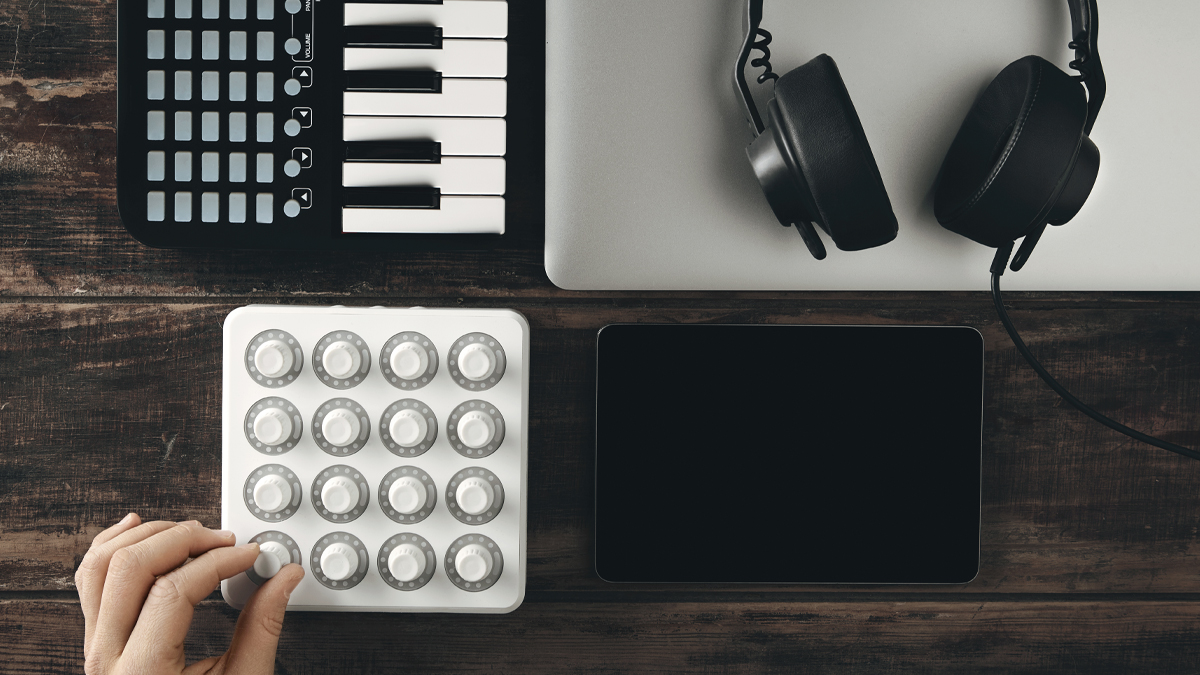
Pad Controller is a type of MIDI controller designed to trigger sounds, samples, notes, loops, and performance commands through a set of touch sensitive or pressure responsive pads. It is widely used in music production, live performance, beat making, remixing, finger drumming, and studio composition. Unlike a traditional piano style controller that focuses on keys, a Pad Controller focuses on playable pads arranged in a grid, often in square layouts such as 4 by 4 or other compact formats.
Basic concept: A Pad Controller does not usually create sound by itself. Instead, it sends MIDI data or other control signals to software instruments, drum machines, samplers, digital audio workstations, or hardware sound modules. When a user taps a pad, the controller tells the connected system what action to perform.
Practical purpose: The main purpose of a Pad Controller is to give musicians and producers a direct, physical, and expressive way to interact with rhythm and sound. It is especially valuable for creating drum patterns, launching clips, triggering one shot samples, and performing electronic music with hands on control.
Creative importance: Pad Controllers are popular because they connect human touch with digital music systems in a simple and intuitive way. They make music production feel more immediate, dynamic, and performance driven.
How does Pad Controller Work?
A Pad Controller works by detecting physical interaction on its pads and converting that interaction into MIDI messages or control data. These messages are then sent to a connected device or software environment, where the signals are interpreted as musical instructions.
Input process: When a musician touches or strikes a pad, the sensor under that pad measures the action. In many units, the system detects both the fact that the pad was hit and the force of the hit. This force is often translated into velocity, which affects how loud or intense the sound will be.
Signal translation: After the pad senses the touch, the internal electronics process the signal and assign it to a MIDI note, control command, program change, or another function. If a specific drum sample is assigned to that MIDI note in a digital audio workstation, the sample will play as soon as the pad is pressed.
Connection path: The controller usually connects through USB, MIDI ports, or wireless communication, depending on the model. Once connected, it communicates with music software such as a digital audio workstation, virtual drum machine, or sampler.
Performance response: Many Pad Controllers allow aftertouch, pressure sensitivity, or pad banks. This means one pad can perform different roles depending on how it is used or what bank is active. A producer can assign one bank for kick, snare, and hi hat sounds, and another bank for vocal chops, loops, or effects.
Workflow example: A beat maker might connect a Pad Controller to a computer, open a music production program, load a drum kit, and assign each drum sound to a different pad. By tapping the pads in rhythm, the producer creates a drum pattern in real time. The same device can later be used to trigger melodic samples, mute tracks, or launch song sections.
What are the Components of Pad Controller?
A Pad Controller contains several physical and electronic parts that work together to capture input, process data, and communicate with external systems.
Pads: The pads are the core component. These are the rubber, silicone, or responsive surfaces the user presses or strikes. They are designed to be playable, durable, and comfortable. In many modern devices, the pads are velocity sensitive and backlit.
Sensors: Beneath each pad is a sensor that detects pressure, impact, or touch. These sensors convert physical motion into electrical signals. The accuracy and sensitivity of these sensors affect the feel and expressive capability of the controller.
Microcontroller or processor: The internal processor interprets the signals received from the pads and turns them into MIDI information or control instructions. This component manages the mapping, timing, and communication of the unit.
Buttons and control keys: Many Pad Controllers include function buttons for pad banks, transport control, note repeat, full level mode, shift operations, and menu navigation. These help users perform tasks quickly during production or live use.
Knobs, faders, and encoders: Some models include rotary knobs, touch strips, or faders for extra control. These components can adjust volume, filter cutoff, effects, panning, or plugin parameters.
Display section: Advanced Pad Controllers may include screens or displays that show preset names, sample assignments, tempo, pad modes, or menu settings. This improves usability and speed.
Connectivity ports: Most controllers offer USB for power and data. Some also include five pin MIDI ports, pedal inputs, or Bluetooth support. Connectivity determines how flexible the device is in different setups.
Power system: Some Pad Controllers are bus powered through USB, while others may use batteries or external adapters. Power design affects portability and stage use.
Chassis and build structure: The outer body, frame, and base determine the durability and portability of the device. Strong build quality is important for frequent performance and travel.
What are the Types of Pad Controller?
Pad Controllers come in several types based on design, function, portability, and intended use. Each type supports different musical workflows.
Drum pad controllers: These are designed mainly for rhythm creation and finger drumming. They often feature 8, 16, or more pads, with layouts suited for drum kits, percussion samples, and beat sequencing.
Clip launch controllers: These controllers combine pads with performance software integration. They are commonly used to launch loops, scenes, stems, and patterns in live electronic music performance.
Hybrid pad controllers: These include pads along with knobs, faders, sequencers, displays, and transport controls. They serve as all in one production tools and are useful for studio and stage workflows.
Standalone pad units: Some models can trigger samples or sequence music without relying on a computer. These are often more advanced and include internal memory, sampling engines, and built in production tools.
Portable compact controllers: These are smaller units designed for mobility. They are useful for producers who travel, compose on the go, or need a lightweight secondary controller.
Professional performance controllers: These are built for demanding live use and often feature rugged construction, bright pad lighting, fast response, and deep software integration.
Educational and entry level models: These are simplified and affordable devices suitable for beginners, students, and home creators. They focus on ease of use and basic beat creation.
Specialized controllers: Some Pad Controllers are designed for niche roles such as lighting control, remix performance, DJ cue triggering, or experimental sound design. While still based on pad input, their workflow can extend beyond standard drum programming.
What are the Applications of Pad Controller?
Pad Controllers have a wide range of applications across music creation, performance, and media production. Their usefulness comes from their speed, flexibility, and tactile design.
Beat production: One of the most common uses is programming drums and percussion. Producers can tap in rhythms naturally rather than entering notes with a mouse.
Sample triggering: Pad Controllers are ideal for triggering vocal cuts, sound effects, orchestral hits, bass stabs, and cinematic elements. This makes them valuable in many genres.
Live performance: On stage, performers use pads to launch clips, start loops, trigger backing tracks, and control show flow. This supports energetic and interactive performances.
Finger drumming: Many musicians use Pad Controllers as expressive instruments for rhythm performance. Skilled finger drumming can create dynamic and human sounding drum parts.
Song arrangement: Pads can be mapped to sections such as intro, verse, chorus, or bridge. This helps artists arrange songs and experiment with structure quickly.
Studio recording: Producers often record MIDI performances through Pad Controllers to capture groove and timing. The performance can then be edited later inside the software.
Sound design: A Pad Controller can trigger layers of textures, effects, and atmospheric sounds, which is useful in film scoring, game audio, and ambient production.
DJ performance: In performance environments, pads can trigger hot cues, loops, samples, and transitions. This expands creative possibilities for DJs and remix artists.
Education and practice: Teachers and learners use Pad Controllers to study rhythm, timing, coordination, and electronic music production methods.
Content creation: They are also used in podcast production, streaming, video content, and multimedia projects for quick triggering of sound effects and stingers.
What is the Role of Pad Controller in Music Industry?
Pad Controller plays an important role in the modern music industry because it supports the growing connection between performance, production, and digital technology. It has become a practical bridge between human creativity and software based music systems.
Production support: In professional studios, Pad Controllers help producers create drum grooves, trigger samples, and control virtual instruments efficiently. This speeds up composition and improves creative flow.
Performance enhancement: In live music, the Pad Controller allows artists to bring studio elements to the stage. It helps performers launch loops, manipulate sections, and add live rhythmic input without relying only on pre recorded playback.
Genre influence: Pad Controllers are especially important in hip hop, electronic dance music, pop, trap, experimental music, and film scoring. However, they are also used in many other genres for hybrid production.
Workflow modernization: The music industry increasingly depends on digital audio workstations and virtual instruments. Pad Controllers make these systems easier to control in a physical and musical way.
Artist accessibility: Because many Pad Controllers are affordable and portable, they help independent artists, home producers, and small studios participate in professional style production workflows.
Creative identity: Many artists build a unique performance style around pad based playing. This has influenced stage design, live remix culture, beat battles, and online performance communities.
Industry integration: From music production houses to live electronic acts, Pad Controllers are integrated into recording, composing, editing, arranging, rehearsing, and touring processes.
What are the Objectives of Pad Controller?
The objectives of Pad Controller relate to control, expression, speed, and creative flexibility in digital music environments. These objectives explain why the device is so widely used.
Musical control: A major objective is to provide hands on control over sounds, samples, and commands in a way that feels more natural than using only a mouse and keyboard.
Rhythmic expression: Pad Controllers are built to help musicians perform rhythms with human feel. They make beat entry more intuitive and dynamic.
Production efficiency: Another objective is to speed up workflow. Assigning sounds to pads can reduce the time needed to create patterns, trigger events, and test ideas.
Performance readiness: Pad Controllers are designed to help artists perform live with confidence. Fast access to mapped sounds and commands improves stage control.
Creative experimentation: The device encourages exploration. Users can try different pad assignments, trigger combinations, and performance gestures without changing the whole setup.
Compact flexibility: Many Pad Controllers aim to offer maximum musical function in a small footprint. This helps both mobile production and crowded studio environments.
Learning support: They also serve an educational objective by making rhythm and digital control easier to understand for beginners and developing musicians.
What are the Benefits of Pad Controller?
Pad Controllers offer many benefits that make them valuable for both beginners and professionals in music electronics and music production.
Tactile workflow: One major benefit is the physical experience of making music. Pressing a pad feels faster and more expressive than clicking with a mouse.
Improved groove: Real time tapping often produces more natural timing and musical feel, especially for drums and percussion patterns.
Fast sample access: Producers can assign multiple sounds to a grid and trigger them instantly. This supports rapid experimentation and arrangement.
Portability: Many models are compact and easy to carry. This makes them useful for mobile studios, travel, rehearsals, and live sets.
Software integration: Modern Pad Controllers often work closely with digital audio workstations and plugin environments. This reduces setup time and improves productivity.
Versatility: The same controller can be used for drums, melodies, loops, effects, cues, and automation triggers. This gives great value in a single device.
Creative engagement: Using a Pad Controller often makes music making more enjoyable and interactive. This can support longer and more inspired creative sessions.
Accessibility: Entry level models make digital music production more approachable for students, hobbyists, and independent artists.
Stage usefulness: For live performers, the benefit lies in quick access to performance tools, which can improve reliability and audience engagement.
What are the Features of Pad Controller?
Pad Controllers include a range of features that support expressive performance and flexible control. The exact feature set depends on the model and target user.
Velocity sensitive pads: These pads respond to how hard they are struck, allowing users to create dynamic performances with louder or softer notes.
Pressure response: Some units offer pressure based expression after the initial hit. This can control filters, modulation, or effect depth.
Pad lighting: Backlit pads help users see assignments, banks, clip states, and performance activity. Color coding improves navigation.
Pad banks: Multiple banks allow the same physical pads to trigger different sets of sounds or commands. This expands functionality without increasing size.
Note repeat and arpeggiation: Many Pad Controllers include note repeat tools that help create rolls, fast hi hats, and rhythmic repetitions with precision.
Assignable controls: Knobs, buttons, and touch strips can often be mapped to effects, mixer levels, and plugin parameters for deeper control.
Transport controls: Play, stop, record, and navigation functions are often built in, letting users manage sessions without reaching for the computer.
Preset memory: Some devices let users save custom templates for different software, songs, or performance setups.
Compact design: Pad Controllers are often designed to fit on desks, live rigs, and portable setups without using much space.
Software bundles: Many products include bundled music software, sample packs, or editing tools that increase their value and usability.
What are the Examples of Pad Controller?
Many well known products in music electronics serve as examples of Pad Controller devices. These examples show the diversity of design and workflow available in the market.
Popular production models: Devices such as Akai MPD series controllers are often associated with beat making and finger drumming. They are widely used in home studios and professional production spaces.
Performance focused examples: Akai APC style devices and Novation Launchpad style units are known for clip launching and live electronic performance. Their pad grids are designed for interaction with software based performance systems.
Hybrid controller examples: Some Native Instruments Maschine controllers combine pads, screens, knobs, and software integration for a deeper production environment. These are popular among producers who want a more complete beat making workflow.
Compact entry level options: Smaller devices from brands such as Korg, Alesis, or Arturia offer accessible ways to start using pads for MIDI input and sample control.
Standalone oriented units: Some advanced products include internal sequencing or sampling features that allow broader use beyond simple pad triggering.
Use based examples: In a studio, one producer may use a Pad Controller mainly for drums. On stage, another artist may use a pad grid to launch stems and effects. In a classroom, a teacher may use the same kind of device for rhythm lessons and software demonstration.
What is the Definition of Pad Controller?
Pad Controller can be defined as an electronic input device that uses a grid or arrangement of playable pads to send MIDI or related control signals for triggering sounds, samples, notes, loops, or commands in music production and performance systems.
Technical definition: It is a member of the MIDI controller family, designed specifically around pad based interaction rather than key based or knob only control. Its primary role is not sound generation but control and communication.
Functional definition: From a workflow perspective, a Pad Controller is a hands on interface that lets a user perform rhythmic, melodic, or command based actions with direct finger input.
Industry definition: In the context of music electronics, it is a digital performance tool that improves interaction between musicians and software or hardware sound environments.
What is the Meaning of Pad Controller?
The meaning of Pad Controller goes beyond its literal name. It refers to a practical and creative tool that allows musicians to shape digital sound through touch.
Literal meaning: The word pad refers to the playable surfaces, while controller refers to the fact that the device controls external systems rather than working only as an independent sound source.
Musical meaning: In music practice, a Pad Controller means speed, rhythm, performance, and flexibility. It represents a way to move from visual screen based production toward physical, expressive interaction.
Creative meaning: For many artists, it symbolizes modern beat culture, live electronic performance, and the blending of musician skills with digital technology.
Educational meaning: It also means accessibility, because it helps learners understand sequencing, MIDI mapping, sound triggering, and rhythmic structure in a clear and engaging way.
What is the Future of Pad Controller?
The future of Pad Controller is closely tied to the evolution of music software, performance technology, artificial intelligence support tools, and portable production ecosystems. As music production becomes more connected and interactive, Pad Controllers are likely to become more intelligent, expressive, and integrated.
Improved sensitivity: Future devices will likely offer more refined velocity curves, better pressure response, and more detailed touch detection. This will make performances feel even more natural.
Deeper software integration: Pad Controllers will probably continue to integrate tightly with digital audio workstations, cloud collaboration tools, and plugin ecosystems. Automatic mapping and smarter workflow suggestions may become more common.
Standalone growth: More units may combine pad control with internal sequencing, sampling, and sound generation, reducing dependence on computers in certain workflows.
Wireless flexibility: Wireless connectivity may improve further, making Pad Controllers easier to use in live settings, mobile studios, and collaborative spaces.
Visual intelligence: Displays, pad colors, and feedback systems may become more advanced, helping users understand assignments and performance states instantly.
Adaptive control: Future controllers may use machine learning features to adapt pad response, recommend mappings, or assist with timing correction while preserving musical feel.
Cross media use: Pad Controllers may expand beyond music into stage design, interactive art, game audio, broadcast control, and multimedia performance systems.
Sustainability and design: Manufacturers may focus more on durable materials, energy efficiency, repair friendly construction, and modular features that extend product life.
Human centered creativity: Even as software becomes more powerful, the demand for physical interaction is likely to remain strong. Pad Controllers will continue to matter because they make digital music feel human, immediate, and performable.
Summary
- Pad Controller is a pad based MIDI control device used to trigger sounds, samples, loops, notes, and performance commands.
- It usually does not create sound on its own but sends MIDI or control data to software or hardware systems.
- Its main working principle involves detecting pad input, translating it into digital control signals, and sending those signals to connected music tools.
- Important components include pads, sensors, processor, buttons, knobs, displays, ports, and power system.
- There are different types such as drum pad controllers, clip launch controllers, hybrid units, compact models, and standalone oriented devices.
- Pad Controllers are used in beat making, finger drumming, sample triggering, live performance, arrangement, studio recording, and education.
- In the music industry, they support modern production, live performance, genre innovation, and accessible digital creativity.
- Their objectives include better control, rhythmic expression, faster workflow, performance readiness, and creative experimentation.
- Key benefits include tactile interaction, improved groove, portability, versatility, software integration, and stronger creative engagement.
- Common features include velocity sensitive pads, pressure response, pad lighting, pad banks, note repeat, assignable controls, transport buttons, and preset memory.
- Examples include production focused, performance focused, hybrid, compact, and standalone style devices from major music technology brands.
- The definition of Pad Controller centers on its role as an electronic pad based interface for controlling digital music systems.
- The meaning of Pad Controller includes not only its hardware function but also its role in modern creative performance and music production culture.
- The future of Pad Controller is likely to include smarter integration, better sensitivity, wireless flexibility, richer feedback, and stronger standalone capabilities.

