

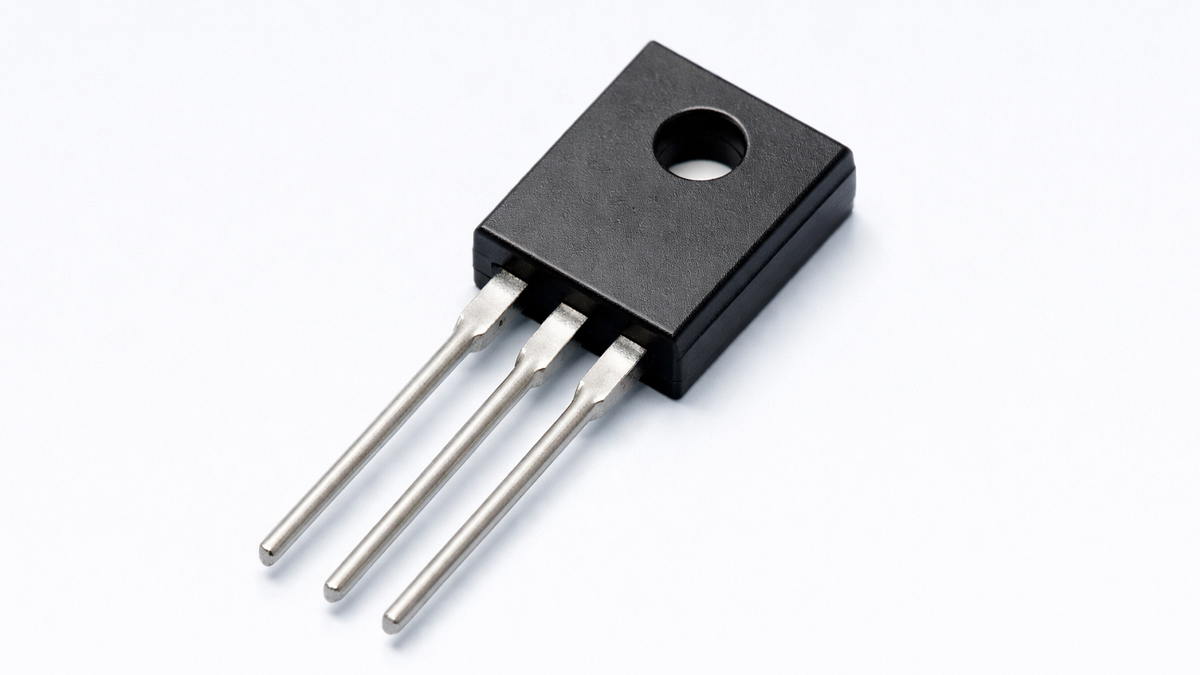
What is PNP Transistor?
A PNP transistor is a type of bipolar junction transistor used to control current and amplify signals. It is called PNP because it is built from three semiconductor layers arranged as Positive, Negative, Positive. In practical terms, that means the emitter and collector regions are made from p type material, while the base region is made from n type material.
In music electronics, a PNP transistor is often used anywhere designers need smooth signal control, low noise gain stages, switching functions, or vintage style circuit behavior. Many classic audio circuits rely on the particular electrical character of bipolar transistors, including the way they saturate, the way they introduce gentle distortion when pushed, and the way they behave with temperature and biasing. PNP transistors are not only theoretical building blocks. They are active parts that shape tone, dynamics, and feel in real musical equipment.
Polarity and current direction: A PNP transistor typically conducts when its base is at a lower voltage than its emitter by a small amount, usually around 0.6 to 0.7 volts for silicon devices. This is the opposite sense of the common NPN transistor, which usually conducts when the base is higher than the emitter.
Audio relevance: PNP devices are frequently seen in complementary pairs with NPN devices in output stages, in push pull amplifier designs, and in bias networks that give analog audio circuits their stable operating points.
Why it matters in music: A transistor is not only about turning current on and off. In audio, it is also about shaping a waveform in a controlled way, preserving quiet details, and providing enough drive to move a speaker, feed a transformer, or push the next stage of an effects pedal.
How does PNP Transistor Work?
A PNP transistor works by using a small base current to control a larger current between the emitter and the collector. In a PNP transistor, the majority charge carriers are holes, not electrons. When the transistor is correctly biased, holes flow from the emitter into the base region and then are collected by the collector, creating a controlled current path.
Bias condition and conduction: For a PNP transistor to turn on, the base must be slightly more negative than the emitter. When this condition is met, the emitter base junction becomes forward biased and carriers are injected from the emitter into the base.
Carrier movement in simple terms: The base region is thin and lightly doped, so most of the carriers injected from the emitter pass through the base without recombining and reach the collector. The collector base junction is reverse biased in normal active operation, which helps pull carriers into the collector.
Control action: A tiny change in base current or base emitter voltage produces a much larger change in collector current. That is why a transistor can amplify. In music electronics, this amplification can be used for clean gain, tone shaping networks, buffering, or intentionally saturating stages that create musical distortion.
Operating regions: A PNP transistor has several operating regions that matter for audio and switching.
Cutoff operation: When the base is not sufficiently lower than the emitter, the transistor is off and collector current is minimal. This is useful for switching and gating in synthesizers, mutes, and control logic in analog circuits.
Active operation: When the transistor is biased for active mode, it acts as an amplifier. Small variations at the base cause proportional variations in collector current, preserving the waveform shape with gain.
Saturation operation: When driven hard, the transistor enters saturation, where both junctions are forward biased. This limits voltage swing and creates compression and distortion. Many classic fuzz and overdrive designs use saturation behavior as part of the sound.
Inversion and signal phase: In many common emitter amplifier arrangements, the output signal taken from the collector is phase inverted compared to the input at the base. This matters in multi stage audio designs where phase relationships affect feedback, stability, and tone.
What are the Components of PNP Transistor?
A PNP transistor has three main terminals and three internal semiconductor regions that work together. Understanding these parts helps you see why a transistor behaves the way it does inside music gear.
Emitter: The emitter is the region that injects majority carriers into the transistor. In a PNP transistor, the emitter is p type and is usually more heavily doped than the other regions. Its job is to supply carriers efficiently.
Base: The base is the control region. It is n type in a PNP transistor and very thin. The base is where the input signal and bias are applied. Even small changes in base conditions have a big effect on conduction.
Collector: The collector is the region that gathers carriers and delivers the amplified or controlled current to the rest of the circuit. It is p type in a PNP transistor and is designed to handle voltage and dissipate heat.
Junctions: Internally, there are two pn junctions.
Emitter base junction: This junction must be forward biased for the transistor to conduct.
Collector base junction: This junction is usually reverse biased in active mode, helping collect carriers and maintain amplification.
Package and leads: Real PNP transistors come in packages such as small plastic through hole types, surface mount packages, and power packages for higher current. The package choice affects heat handling, noise pickup, and physical layout.
Biasing network: In real music circuits, the transistor is surrounded by resistors, capacitors, and sometimes diodes that set its operating point. Although not part of the transistor body, these supporting parts are essential components of how the transistor stage behaves in audio.
What are the Types of PNP Transistor?
PNP transistors come in several types based on construction, power level, frequency capability, and intended use. In music electronics, the choice is often guided by noise performance, gain, headroom, and tonal behavior.
Small signal PNP transistors: These are designed for low current, low power tasks such as preamp stages, tone control circuits, signal switching, and bias control. They are common in pedals, mixers, and instrument preamps.
Power PNP transistors: These are built to handle higher currents and dissipate more heat. They are used in power amplifier output stages, speaker drivers, and power supply regulation within audio equipment.
Low noise PNP transistors: Some PNP devices are optimized for low noise performance, which is crucial in microphone preamps and high gain input stages where hiss can become audible.
High frequency PNP transistors: These are designed to operate well at high speeds. In music gear, they can appear in radio frequency parts of wireless systems, clocking sections of digital control circuits, or fast switching tasks in certain synthesizer modules.
Germanium PNP transistors: Germanium PNP transistors are famous in vintage effects for their softer knee, lower forward voltage, and temperature sensitive behavior. Many classic fuzz circuits used germanium PNP devices, and that choice can strongly influence feel and cleanup with the guitar volume knob.
Silicon PNP transistors: Silicon PNP devices are more temperature stable, widely available, and predictable. Many modern audio designs prefer silicon for consistency and lower maintenance.
Complementary matched PNP devices: In power amplifiers, PNP transistors are frequently paired with NPN transistors to form complementary stages. Matching helps reduce distortion and improve symmetry in push pull outputs.
What are the Applications of PNP Transistor?
PNP transistors appear in many electronic applications, and music electronics uses a large share of them in both signal path and support circuits. Their ability to amplify and switch makes them versatile.
Amplification stages: PNP transistors can be used in preamplifiers, driver stages, and discrete gain blocks. They can amplify low level signals from pickups, microphones, or line sources.
Complementary output stages: Many audio power amplifiers use complementary NPN and PNP transistors in push pull output stages. This improves efficiency and reduces crossover distortion when properly biased.
Signal switching and muting: PNP transistors can act as electronic switches for muting outputs, routing signals between paths, or enabling footswitch logic in pedals.
Current sources and mirrors: Analog synthesizers, compressors, and certain tone circuits use current sources and mirrors. PNP transistors can provide stable currents that improve consistency of filter cutoff behavior and gain control characteristics.
Bias stabilization: PNP transistors can be used in bias networks to set stable operating points for amplifier stages, helping reduce drift with temperature and supply changes.
Voltage regulation and power management: In audio gear, clean power is essential for low noise. PNP transistors can be part of linear regulators, protection circuits, or reverse polarity protection schemes.
Tone shaping and clipping: When used creatively, a PNP transistor stage can clip asymmetrically or saturate in a pleasing way, creating musical harmonics in distortion, fuzz, and drive circuits.
Envelope and control circuits: Synth modules often use transistor stages for envelope generation, gating, and control voltage conditioning. PNP transistors can help implement these functions depending on the polarity of control signals.
What is the Role of PNP Transistor in Music Industry?
The music industry relies on a wide ecosystem of equipment, from instruments and pedals to studios, live sound rigs, and broadcast systems. PNP transistors play an important role across this ecosystem because they help convert delicate musical signals into strong, controllable electrical signals that can be shaped, recorded, and amplified.
Sound shaping in pedals: Many distortion and fuzz pedals use transistor stages that intentionally color the sound. PNP transistors, especially germanium types, are strongly associated with vintage fuzz tones. Their bias sensitivity and nonlinear behavior can produce a touch responsive character that players describe as dynamic, warm, or spongy.
Preamplification and buffering: Pickups and microphones produce relatively small signals. PNP transistor stages can amplify these signals or buffer them so they can travel through cables and circuits without losing clarity. Buffering is important for preserving high frequency detail and reducing tone loss caused by impedance mismatches.
Power amplification for speakers: In loudspeakers, power amplifiers must deliver significant current with low distortion. PNP transistors often appear in the output stage as the complementary half of a push pull pair. Their job is to handle one half of the waveform while the NPN partner handles the other half, improving efficiency and maintaining audio fidelity.
Studio hardware and outboard gear: Compressors, equalizers, mic preamps, and analog summing circuits may include discrete transistor stages for sonic character. Designers sometimes choose specific PNP transistors to achieve a certain harmonic profile, headroom behavior, or transient response.
Synthesizers and analog modules: Many synthesizer designs use transistor based current control. PNP transistors can be used in exponential converters, current mirrors, and switching networks that support filters and oscillators. Their role is often less visible to musicians, but it directly affects tuning stability, filter tracking, and control response.
Reliability and serviceability: In professional audio, equipment must be reliable. Silicon PNP transistors offer predictable behavior and availability, making repairs and consistent manufacturing easier. Vintage gear may use older PNP parts, and knowledge of their quirks helps technicians maintain classic sounds.
Economic impact: Because PNP transistors are fundamental, they support mass manufacturing of music electronics. Affordable transistors made it possible for pedals, amplifiers, and portable audio gear to become widely accessible, shaping the sound of modern music.
What are the Objectives of PNP Transistor?
The objectives of a PNP transistor in an electronic design are the reasons engineers include it in a circuit. In music electronics, these objectives are both technical and artistic.
Signal amplification: One primary objective is to increase signal strength. A PNP transistor can take a small input waveform and produce a larger output waveform while preserving its shape when used in a linear region.
Current control: Another objective is to control a large current with a small control signal. This is essential for driving loads, powering stages, and enabling efficient output sections.
Switching function: PNP transistors can switch circuits on and off, route signals, and implement logic functions in analog control systems. Switching objectives appear in channel selection, mute circuits, and pedal bypass control systems.
Complementary symmetry: In amplifier design, PNP transistors support objective waveform symmetry by pairing with NPN devices. This helps reduce distortion and improves efficiency.
Bias and stability: A PNP transistor can help set and stabilize bias points, ensuring that an audio stage sits at the right operating voltage for clean headroom and low noise.
Tone and character: In musical effects, an objective may be sonic coloration. Designers might select a PNP transistor specifically for how it saturates, how it compresses peaks, or how it interacts with guitar pickup impedance.
Power management: Another objective is to assist with regulation, protection, or power conditioning, helping ensure the audio path remains quiet and free from hum and ripple.
What are the Benefits of PNP Transistor?
PNP transistors provide several benefits that make them valuable in music electronics and general circuit design.
Complementary pairing benefit: PNP devices enable complementary amplifier stages with NPN devices. This improves power efficiency and supports clean reproduction in audio outputs.
Versatility benefit: A PNP transistor can be used for amplification, switching, current sourcing, and biasing. This means one device type can serve many circuit roles.
Musical saturation benefit: In audio effects, PNP transistor saturation can create pleasing harmonic content. This can be used for fuzz textures, gritty drive sounds, and smooth compression like behavior.
Low component count benefit: Many simple audio circuits can be built with only a few transistors and passive components. This helps create compact pedals and cost effective audio modules.
Analog feel benefit: Transistor based circuits often respond continuously to playing dynamics. That continuous response can feel more natural than hard digital clipping or overly quantized control systems.
Availability benefit: Silicon PNP transistors are widely available and affordable, supporting large scale manufacturing of music equipment.
Design flexibility benefit: PNP transistors give designers polarity options. Depending on supply rails, grounding scheme, and signal biasing, a PNP device may simplify the circuit layout.
What are the Features of PNP Transistor?
A PNP transistor has identifiable electrical and practical features that affect circuit behavior.
Polarity feature: The PNP transistor turns on when the base is lower in voltage than the emitter by a small amount. This feature affects how the transistor is biased and how it interfaces with other stages.
Current gain feature: A small base current can control a much larger collector current. The ratio is commonly called beta or hFE, and it varies by device type and operating conditions.
Nonlinear transition feature: As the transistor approaches saturation or cutoff, the transfer becomes nonlinear. In audio, this feature can create distortion or compression effects.
Temperature sensitivity feature: Transistor behavior changes with temperature. Germanium PNP devices are especially sensitive, while silicon PNP devices are more stable. Temperature sensitivity matters in pedal biasing and consistent performance on stage.
Noise feature: Different PNP transistors have different noise characteristics. Low noise types are preferred for input stages and high gain audio sections.
Frequency response feature: PNP transistors have limits on how fast they can amplify changing signals. For audio frequencies, most small signal PNP devices are fast enough, but frequency response still matters for stability and high frequency clarity.
Power dissipation feature: Power PNP transistors can handle larger currents and dissipate more heat, which is necessary in speaker driving stages.
Packaging feature: Packages influence thermal performance and layout. A power package can mount to a heatsink, while small packages suit compact pedals.
What are the Examples of PNP Transistor?
Examples of PNP transistors can be discussed in two useful ways for music electronics. One is examples as real world circuit uses, and the other is examples as well known device families.
Pedal fuzz input stage example: A classic fuzz circuit often uses a PNP transistor stage biased near the edge of conduction. When a guitar hits the input hard, the transistor saturates and produces thick harmonics.
Push pull power amp example: In many class AB amplifiers, a PNP power transistor works with an NPN power transistor. Each handles opposite halves of the waveform, creating efficient amplification to drive speakers.
High side switching example: A PNP transistor can be used as a high side switch, controlling power delivery to a section of a pedal or preamp while keeping the load referenced to ground in a convenient way.
Current source example: A PNP transistor can be configured to deliver a nearly constant current, useful in analog synthesizer filter cores and control circuits.
Bias servo example: A PNP transistor can help stabilize bias in an amplifier, reducing distortion and preventing thermal runaway in output stages.
Germanium fuzz character example: A germanium PNP transistor in a vintage style fuzz can produce a softer clipping edge and strong interaction with the guitar volume knob, producing cleanup that many players value.
Silicon consistency example: A silicon PNP transistor in a modern pedal can show consistent bias and tone across units, making mass production and touring reliability easier.
What is the Definition of PNP Transistor?
The definition of a PNP transistor is a bipolar junction transistor composed of a p type emitter, an n type base, and a p type collector, where conduction primarily involves holes and the device turns on when the base is at a lower potential than the emitter. It is used to amplify signals or switch currents by controlling a large collector emitter current with a smaller base current.
What is the Meaning of PNP Transistor?
The meaning of PNP transistor is directly tied to its layered structure. The letters P N P describe the order of semiconductor types from emitter to base to collector. This structure defines how current flows, how the transistor is biased, and how it behaves in amplifier and switching circuits.
Meaning in circuit language: A PNP transistor usually indicates that the device is suited for situations where the control node needs to pull lower than the emitter to turn the device on. Designers choose it for polarity convenience, complementary pairing, or specific sonic behavior.
Meaning in audio design: In music electronics, a PNP transistor often signals a design that either uses complementary output symmetry or draws inspiration from vintage effects where PNP devices were common.
What is the Future of PNP Transistor?
The future of the PNP transistor in music electronics is shaped by two parallel directions. One direction is modern manufacturing and integration, and the other is the continuing interest in classic analog tone.
Continued use in power amplification: PNP transistors will remain important in analog power amplifiers and hybrid amplifier designs. Even as some systems shift to class D power modules, many audio products still rely on analog stages where discrete PNP devices provide drive, protection, or complementary output behavior.
Integration with modern circuits: Many designs combine digital control with analog signal paths. PNP transistors will continue to appear in supporting analog sections such as input buffering, level shifting, muting, and power management.
Vintage sound demand: The market for vintage style pedals and studio gear remains strong. That means there will be ongoing interest in PNP transistor based fuzz and preamp topologies. Designers will keep exploring ways to recreate germanium like behavior using carefully biased silicon parts or modern matched components.
Improved component selection: Manufacturers continue refining transistor processes for better consistency, lower noise, and tighter gain spreads. For music equipment makers, this helps create products that sound the same unit to unit.
Sustainability and serviceability: As repair culture grows in music communities, widely available silicon PNP replacements and careful circuit documentation will matter. Designers may choose standard PNP parts that are easy to source to keep gear serviceable for many years.
Educational value: PNP transistors will remain a core topic in electronics education. This benefits the music industry because many builders, pedal designers, and technicians learn through hands on transistor circuits before moving into more complex systems.
Summary
- A PNP transistor is a bipolar junction transistor with p type emitter, n type base, and p type collector.
- It turns on when the base voltage is slightly lower than the emitter voltage.
- It amplifies signals by using a small base control to regulate a larger collector emitter current.
- It operates in cutoff, active, and saturation regions, each useful for audio and switching behavior.
- It is used in music electronics for preamps, fuzz and drive circuits, muting, routing, current sources, and power amplification.
- PNP transistors support complementary push pull stages with NPN devices, improving efficiency and audio performance.
- Germanium PNP devices are valued for vintage fuzz tone, while silicon PNP devices are preferred for stability and consistency.
- Their future remains strong due to ongoing analog audio needs, hybrid designs, and continued demand for classic transistor sound.

