

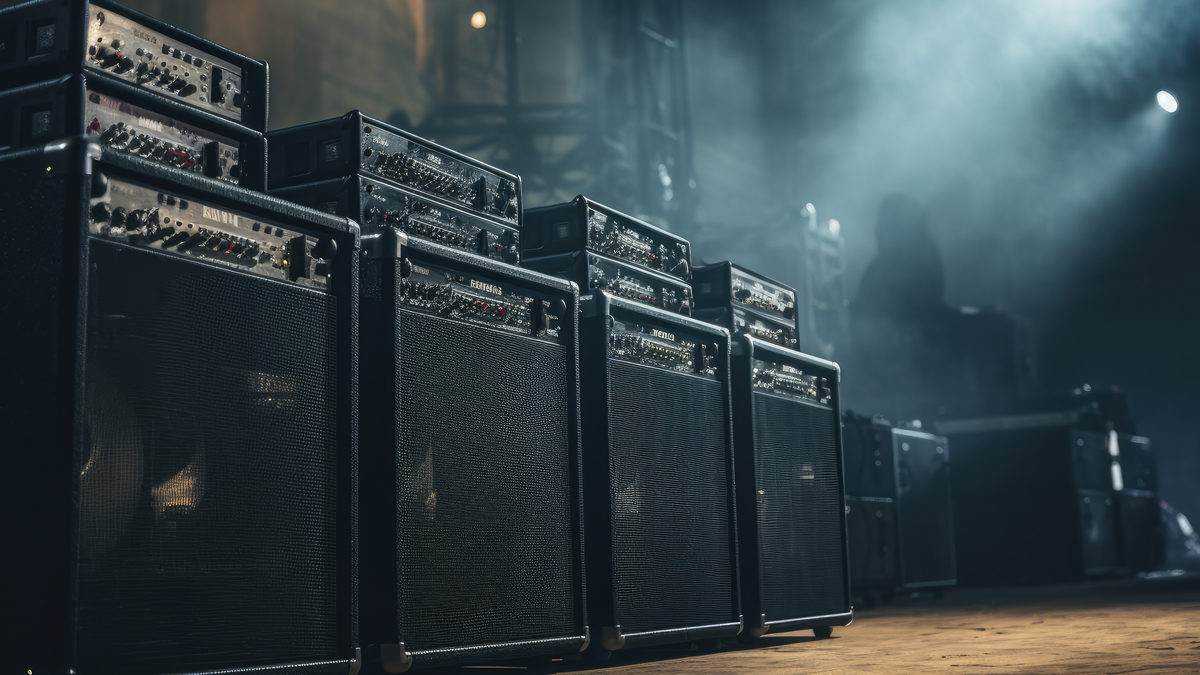
What is Power Amplifier?
Power Amplifier is an electronic device or circuit designed to increase the power level of an audio signal so that it can drive loudspeakers, speaker cabinets, studio monitors, public address systems, and other sound reproduction equipment. In the context of music electronics, it takes a relatively weak input signal from a preamplifier, mixer, audio interface, instrument processor, or playback source and raises it to a level strong enough to move speaker cones with authority and clarity.
Basic purpose: The main purpose of a Power Amplifier is to transform a low power audio signal into a high power output without losing the essential character of the original sound. This makes it possible for music to be heard clearly in rehearsal rooms, recording studios, concert venues, theaters, houses of worship, clubs, and outdoor festivals.
Audio significance: In the music industry, sound must often travel across large spaces and reach many listeners at once. A small signal from a microphone, instrument, or playback track cannot do that on its own. The Power Amplifier provides the electrical strength needed for impactful and controlled sound reproduction.
System position: In a typical audio chain, the Power Amplifier comes after tone shaping and signal processing stages. It is often placed after the preamplifier, equalizer, crossover, digital signal processor, or mixing console output. Its job is not to create the original sound but to enlarge its usable energy for speaker operation.
Professional value: Whether it is used in a guitar rig, bass system, keyboard setup, stage monitor rack, cinema audio setup, or touring PA system, the Power Amplifier is one of the most important building blocks in modern music electronics.
How does Power Amplifier Work?
Signal boosting: A Power Amplifier works by receiving a low voltage audio signal and increasing both its voltage and current so that the output carries much more power than the input. This higher power is then delivered to a speaker, which converts the amplified electrical energy into sound waves.
Input stage: The incoming signal first enters an input section where it is matched, stabilized, and prepared for amplification. This stage ensures that the signal can pass into the internal circuitry cleanly and with minimum unwanted noise.
Gain process: After the signal enters the amplifier, active electronic components such as transistors or vacuum tubes increase its amplitude. The exact process depends on the amplifier design, but the goal remains the same. The waveform should become stronger while remaining as accurate to the source as possible.
Power supply support: A Power Amplifier also relies on a dedicated power supply that draws energy from mains electricity. The amplifier uses this energy reserve to enlarge the audio signal. In simple terms, the input signal acts like a control pattern, and the power supply provides the actual energy that gets shaped into a stronger version of that pattern.
Output stage: The final amplified signal is sent to the output stage, where enough current is made available to drive a connected load such as a speaker or speaker cabinet. The impedance of the speaker, such as 4 ohms, 8 ohms, or 16 ohms, influences how the amplifier performs and how much power it can safely deliver.
Heat control: Because power amplification involves energy conversion, some electricity is lost as heat. This is why Power Amplifiers often include heat sinks, cooling fans, thermal sensors, and protection circuits.
Sound integrity: A well designed Power Amplifier maintains fidelity, dynamic range, low distortion, and stable operation even at demanding volume levels. This is especially important in music settings where clarity, punch, and tonal balance must be preserved.
What are the Components of Power Amplifier?
Input circuitry: The input circuitry receives the source signal and prepares it for clean amplification. It may include connectors, buffer stages, sensitivity controls, and noise filtering elements.
Gain stage: The gain stage is responsible for increasing the signal level. This section determines much of the amplifier’s tonal accuracy, sensitivity, and responsiveness.
Driver stage: The driver stage strengthens the signal further before it reaches the final output devices. It ensures that the output section can respond quickly and efficiently.
Output transistors or tubes: These are the main power producing elements of the amplifier. In solid state designs, transistors are used. In tube amplifiers, vacuum tubes perform the amplification role. These parts handle the heavier electrical demand required for speaker operation.
Power supply: The power supply converts mains electricity into the voltage and current levels required by the amplifier circuit. It usually includes a transformer, rectifier, filter capacitors, and voltage regulation elements.
Transformer: In many amplifier types, especially tube based designs, transformers are crucial for voltage conversion and impedance matching. They help the amplifier interact correctly with connected speakers.
Heat sink and cooling system: Since power devices generate heat, heat sinks pull thermal energy away from sensitive components. Some amplifiers also include fans for active cooling.
Protection circuits: Modern Power Amplifiers often include circuits for overload protection, short circuit protection, thermal shutdown, speaker protection, and soft start operation. These features help preserve both the amplifier and connected speakers.
Controls and indicators: Many units include gain knobs, bridge mode switches, channel selectors, clip indicators, signal indicators, protection lights, and power switches for easier operation and monitoring.
Output terminals: These connectors deliver amplified audio to speakers. Depending on the model, they may include binding posts, speakON connectors, quarter inch outputs, or specialized professional terminals.
What are the Types of Power Amplifier?
Tube Power Amplifier: This type uses vacuum tubes for amplification. It is widely appreciated for warm tonal character, rich harmonic response, and musical compression. It is especially popular in guitar amplification and some high end studio and hi fi applications.
Solid State Power Amplifier: This type uses transistors and semiconductor devices. It is known for reliability, efficiency, consistency, and lower maintenance needs. Many professional sound reinforcement systems rely on solid state designs.
Class A Amplifier: In this design, the output devices conduct during the entire signal cycle. It offers excellent linearity and low distortion, but it is less efficient and produces more heat.
Class B Amplifier: In this design, each output device handles half of the waveform. It is more efficient than Class A, but it may introduce crossover distortion if not properly implemented.
Class AB Amplifier: This is a hybrid approach that combines benefits of Class A and Class B. It provides good sound quality with better efficiency than pure Class A. It is one of the most common amplifier classes in music applications.
Class D Amplifier: This type uses high speed switching technology. It is highly efficient, lighter in weight, and ideal for modern touring systems, powered speakers, bass amplifiers, and portable audio gear.
Mono Power Amplifier: This design amplifies a single audio channel. It is often used for subwoofers, dedicated stage feeds, and specialized sound reinforcement tasks.
Stereo Power Amplifier: This version handles two channels, left and right, and is common in home audio, studio monitoring, and live sound setups.
Multichannel Power Amplifier: These amplifiers support multiple outputs and are useful in complex installations, surround sound, and venue systems.
Rackmount Power Amplifier: This type is built for professional audio racks and is widely used in touring, installed sound, and stage systems because of its compact format and organized integration.
What are the Applications of Power Amplifier?
Live concerts: Power Amplifiers are essential in concerts where large speaker systems must project music across indoor and outdoor venues. They provide the muscle needed for vocals, instruments, backing tracks, and stage monitoring.
Public address systems: In schools, auditoriums, stadiums, places of worship, and community events, Power Amplifiers strengthen speech and music signals for clear public communication.
Recording studios: Studio monitor systems often depend on external Power Amplifiers, especially in passive monitor environments. Accurate amplification is important for mixing, mastering, and critical listening.
Musical instrument amplification: Guitarists, bass players, keyboardists, and electronic musicians rely on amplifier systems that include power amplification to reproduce their sound with authority and expression.
Home audio and hi fi listening: Audio enthusiasts use Power Amplifiers to drive speakers with better control, wider headroom, and improved sound quality in listening environments.
Cinema and theater systems: Dramatic productions, film screenings, and performance spaces require stable amplification to deliver dialogue, music, and effects with impact and precision.
Broadcast and media production: Radio stations, television facilities, and event production companies use Power Amplifiers in monitoring and distribution systems.
Club and DJ systems: Dance venues and DJ rigs need amplifiers that can deliver high output, deep bass response, and reliable performance during long operating hours.
Portable sound reinforcement: Mobile entertainers, wedding sound providers, and small event organizers often use lightweight Class D Power Amplifiers for transportable sound setups.
What is the Role of Power Amplifier in Music Industry?
Performance support: In the music industry, the Power Amplifier plays a direct role in bringing sound from the artist to the audience. Without adequate amplification, even a perfectly performed piece of music would not reach listeners with proper volume and presence.
Tone preservation: A quality Power Amplifier helps preserve the tonal details shaped by instruments, pedals, processors, preamps, and mixers. This is especially important for genres where sonic identity matters deeply.
Venue scalability: Music is performed in spaces of very different sizes. A Power Amplifier allows sound systems to scale from intimate clubs to massive festival stages while maintaining controlled projection.
Artist monitoring: Musicians depend on stage monitors, in ear systems, and backline equipment to hear themselves clearly. Power Amplifiers support these systems and improve performance confidence.
Production quality: Sound engineers rely on dependable amplification to achieve balance, dynamics, and impact in live and recorded environments. A weak or poorly matched amplifier can reduce clarity, distort transients, and limit overall quality.
Infrastructure backbone: In touring rigs, fixed installations, rehearsal facilities, and studios, the Power Amplifier serves as a technical backbone between signal processing and speaker delivery.
Commercial importance: Ticketed events, studio sessions, broadcast content, and commercial releases all depend on sound quality. Power Amplifiers help ensure the final listening experience meets professional expectations.
Innovation driver: As music production and live performance continue to evolve, amplifier technology keeps adapting through lighter designs, smarter protection systems, better digital integration, and improved energy efficiency.
What are the Objectives of Power Amplifier?
Signal strengthening: The primary objective of a Power Amplifier is to raise the power level of an audio signal so it can drive speakers effectively.
Faithful reproduction: Another key objective is to preserve the original waveform as closely as possible. This means the amplifier should add minimal distortion, noise, or coloration unless a specific musical coloration is intentionally desired.
Efficient energy delivery: The amplifier should convert available electrical energy into useful audio output with as little waste as practical.
Load compatibility: A good amplifier is designed to work safely with specific speaker impedances and operating conditions.
Dynamic performance: Music contains peaks, transients, and subtle details. The amplifier should provide enough headroom to handle these changes without clipping too early.
Reliability: Since amplifiers are often used in demanding environments, their objective includes stable operation over long sessions.
Safety: Protecting speakers, connected equipment, and internal components is also an important design objective.
Control and usability: Modern Power Amplifiers aim to provide practical controls, metering, and connectivity so that engineers and musicians can operate them with confidence.
What are the Benefits of Power Amplifier?
Higher volume capability: One of the biggest benefits is the ability to achieve performance ready sound levels that can fill a room, hall, club, or stadium.
Improved speaker control: A good Power Amplifier controls speaker movement more effectively, which can improve bass response, transient accuracy, and overall clarity.
Better headroom: With adequate power reserves, the system can reproduce sudden peaks in music without harsh clipping or compression.
Enhanced sound quality: When properly matched with speakers, a Power Amplifier can improve detail, punch, balance, and listening comfort.
Greater flexibility: Power Amplifiers can be selected according to venue size, speaker type, desired sound pressure level, and tonal goals.
Professional consistency: In commercial music settings, reliable amplification helps deliver predictable performance night after night.
System expansion: Separate Power Amplifiers make it easier to build modular sound systems. Users can upgrade speakers, processors, or channels without replacing the entire setup.
Durability for demanding use: Many professional models are built for frequent transportation, long operation, and heavy performance cycles.
What are the Features of Power Amplifier?
Power output ratings: One of the defining features is rated output in watts at specified impedance levels. This helps users match the amplifier to speakers and performance requirements.
Channel configuration: Amplifiers may offer mono, stereo, or multichannel operation depending on the intended use.
Bridge mode: Some amplifiers can combine two channels into one more powerful channel for driving a single load such as a subwoofer.
Protection systems: Common features include overload protection, thermal protection, short circuit protection, limiter functions, and speaker delay circuits.
Cooling design: Many amplifiers include heat sinks, ventilation paths, or fan based cooling systems for safe operation.
Input options: Professional units may provide XLR, TRS, RCA, or digital input connectivity.
Output connectivity: Output terminals vary by model and may include binding posts, speakON connectors, and other professional speaker connections.
Lightweight construction: Modern Class D amplifiers often use compact switching power supplies and lighter materials, making transport easier.
Signal indicators: Meters and status lights help users monitor power, signal presence, clipping, and fault conditions.
Frequency response and distortion specifications: Quality amplifiers usually provide technical data showing how accurately they reproduce the audio signal.
What are the Examples of Power Amplifier?
Guitar amplifier power section: In many guitar rigs, the power section of the amplifier takes the preamp tone and boosts it to drive a speaker cabinet. This is a direct example of musical power amplification in action.
Bass amplifier head: A bass amp head includes a Power Amplifier capable of delivering strong low frequency energy to bass cabinets.
Professional PA amplifier: Rackmount amplifiers used in live sound systems are common examples. They power front of house speakers, stage wedges, and subwoofers.
Powered speaker internal amplifier: Many modern active loudspeakers contain built in Power Amplifiers, often with separate channels for low and high frequency drivers.
Home stereo power unit: Separate hi fi power amps that connect to a preamplifier are another clear example.
Studio monitor amplifier: Passive studio monitors may be powered by dedicated external amplifiers chosen for accurate monitoring.
Cinema amplifier racks: The amplifiers used in theater audio systems are examples of large scale professional power amplification.
Touring subwoofer amplifiers: High output amplifiers built to drive multiple subwoofers on concert stages demonstrate the heavy duty side of Power Amplifier technology.
What is the Definition of Power Amplifier?
Technical definition: A Power Amplifier is an electronic amplifier that increases the power of an input signal to a level sufficient to drive an output device such as a loudspeaker.
Functional definition: It is the stage of an audio system responsible for delivering amplified electrical energy to speakers so that sound can be reproduced at usable listening levels.
Music electronics definition: Within music electronics, a Power Amplifier is the section or device that turns processed or preamplified sound into a speaker driving signal capable of producing live, recorded, or broadcast audio at practical volume and impact.
What is the Meaning of Power Amplifier?
Practical meaning: The meaning of Power Amplifier lies in its purpose. It means taking sound that exists at a low signal level and giving it the strength needed to be heard properly through speakers.
Musical meaning: In music, it represents the link between artistic expression and audible reality. A performance may begin as a delicate electrical signal, but the Power Amplifier allows that signal to become a room filling experience.
Technical meaning: It also means controlled energy conversion. The amplifier does not simply make sound louder in a careless way. It increases signal strength with design discipline so that clarity, dynamics, and system safety are maintained.
What is the Future of Power Amplifier?
Efficiency growth: The future of Power Amplifier technology is strongly connected to better efficiency. Class D and related modern designs are expected to remain important because they reduce heat, size, and power consumption.
Smart integration: Amplifiers are increasingly being combined with digital signal processing, remote control features, network monitoring, and system diagnostics. This trend is likely to continue across both installed and touring sound.
Improved portability: Lighter designs will remain valuable in the music industry, especially for mobile performers, event companies, and touring crews.
Higher reliability: Future amplifiers will likely include even better thermal management, protection algorithms, and fault detection systems to reduce failures during critical events.
Better sound optimization: Intelligent amplifier platforms may continue to support automatic speaker tuning, crossover alignment, limiter setup, and load monitoring for better overall system performance.
Sustainability focus: Energy efficient designs and longer lasting components are likely to become more important as manufacturers and venues focus on environmental responsibility.
Hybrid tonal design: While modern efficiency is advancing, there will still be interest in tone rich analog and tube based character. Future products may continue blending classic sound preferences with modern control and efficiency.
Expanded creative use: As music production evolves through immersive sound, live electronics, and complex digital workflows, Power Amplifiers will continue adapting to new speaker formats, stage concepts, and listening environments.
Summary
- Power Amplifier is a device or circuit that raises a weak audio signal to a level strong enough to drive speakers.
- It is a central part of music electronics and supports live sound, studio monitoring, instrument amplification, and public address systems.
- Its operation depends on input stages, gain stages, output devices, and a stable power supply.
- Major types include tube, solid state, Class A, Class B, Class AB, and Class D designs.
- It plays a major role in the music industry by delivering sound from artists and engineers to audiences with clarity and impact.
- Important objectives include faithful sound reproduction, efficiency, reliability, safety, and proper speaker control.
- Benefits include higher volume capability, better headroom, improved clarity, and flexible system building.
- Common features include power ratings, channel options, protection circuits, cooling systems, and professional connectivity.
- Examples range from guitar amp power sections and bass heads to PA racks, active speakers, and studio monitoring systems.
- The future of Power Amplifier technology points toward smarter, lighter, more efficient, and more integrated audio solutions.

