

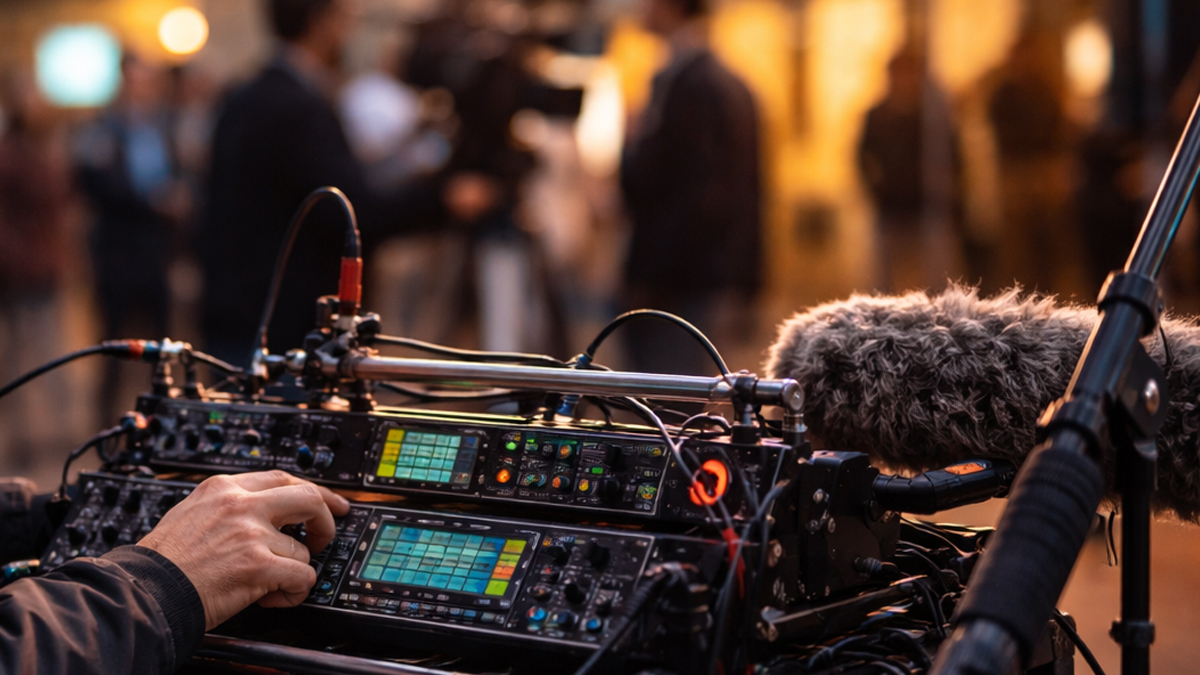
What is Production Sound Mixer?
Production sound mixer is the head of the location sound team on a film or video set. This person is responsible for recording clear and usable sound during filming, especially dialogue, while also capturing the natural atmosphere of the location. In simple words, when the camera is rolling, the production sound mixer makes sure the sound is recorded in a way that the audience can understand the story without distractions.
In cinema, visuals may grab attention first, but sound carries emotion, realism, and clarity. A beautiful shot can lose its impact if the dialogue is not understandable or if unwanted noise covers important lines. The production sound mixer works in real conditions, not in a perfect studio. That means dealing with traffic noise, wind, echo in large rooms, buzzing lights, noisy costumes, crowded locations, sudden weather changes, and unpredictable movement of actors. The work is both technical and creative because it combines careful equipment setup with quick decision making and an ear for storytelling.
Team position on set: The production sound mixer usually leads a small sound department that may include a boom operator and sometimes a utility sound technician. On larger projects, there can be more crew members to manage wireless microphones, cables, batteries, antenna systems, and sound cart logistics.
Primary goal on set: The main purpose is to capture dialogue that feels natural, clean, and consistent from shot to shot, while also recording additional material that helps post production, such as room tone and background ambience.
How does Production Sound Mixer Work?
A production sound mixer works by selecting the right microphones, placing them correctly, setting recording levels, monitoring audio quality in real time, and recording multiple tracks for flexibility in editing. The process starts before the camera even rolls and continues until the last shot is wrapped.
Pre production planning: The mixer reads the script, discusses requirements with the director and cinematographer, and plans how to mic actors in different scenes. They think about location challenges, such as wind on outdoor scenes, echoes in hallways, or loud machinery nearby. They also plan frequency coordination for wireless systems, especially in busy cities where radio interference is common.
On set workflow: The mixer typically sets up either a bag based rig worn on the body or a cart based system with more equipment. During takes, the mixer listens through professional headphones, watches audio meters, and adjusts gain carefully so dialogue stays clear without distortion. If multiple microphones are used, the mixer balances them, choosing which mic is best at each moment. Many productions record both isolated tracks for each microphone and a mixed track that reflects the intended blend.
Microphone management: Dialogue is usually captured using a boom microphone placed just out of frame, plus wireless lavalier microphones hidden on actors when needed. The mixer works closely with the boom operator to achieve the best placement and to avoid shadows or entering the frame. When wireless microphones are used, the mixer and sound utility technician manage placement, clothing noise, battery life, and signal dropouts.
Recording and metadata: Modern productions rely heavily on timecode and accurate sound reports. The mixer records audio with timecode that matches the camera, labels tracks, and notes which microphones were used. This helps the editor and the post sound team sync and organize audio quickly.
Problem solving in real time: When unwanted noise appears, the mixer may request a pause, suggest changes, or propose alternate mic placement. Sometimes the solution is moving a noisy object, adjusting actor blocking, changing wardrobe materials that cause rustle, or using wind protection on microphones. The mixer must communicate clearly and professionally because time is expensive on set.
What are the Components of Production Sound Mixer
The work of a production sound mixer depends on a full toolkit, not just one device. The core is a field mixer or mixer recorder, but the full system includes microphones, wireless links, monitoring, power, and accessories that keep everything stable during long shooting days.
Mixer or mixer recorder: This is the central unit that accepts microphone signals, provides clean preamplification, allows routing and level control, and records audio to media. Many modern units combine mixing and multitrack recording in one device.
Microphones: The main categories include shotgun microphones for boom use, hypercardioid microphones for indoor boom work, lavalier microphones for hidden placement on actors, and plant microphones placed in the scene when boom placement is difficult.
Wireless microphone system: This includes wireless transmitters worn by actors, wireless receivers at the mixer, and antenna systems to improve signal range and stability. Wireless audio is useful but requires careful frequency coordination and interference management.
Boom pole and suspension system: The boom operator uses a boom pole, shock mount, and wind protection to position the microphone close to the actor while keeping it out of frame. Wind protection may include foam, soft covers, or more advanced wind baskets.
Headphones: Accurate monitoring is essential. The mixer uses closed back headphones that isolate outside noise so they can hear issues like clothing rustle, distortion, hum, or wireless dropouts.
Timecode system: Timecode boxes or integrated timecode generators help keep audio synchronized with camera footage. Accurate sync prevents delays in post production.
IFB and communication: IFB systems send audio to directors, script supervisors, or producers who need to hear dialogue. Some systems also support communication between the mixer and boom operator.
Power system: Production sound often runs on battery power. This includes rechargeable batteries, smart distribution systems, chargers, and backups to avoid losing audio due to power failure.
Sound cart or sound bag: Depending on the production scale, the mixer may work from a wearable bag for mobility or a cart that holds recorders, receivers, antennas, power distribution, and accessories.
Cables and adapters: High quality cables, XLR connectors, and backup adapters are critical. A small cable failure can stop sound recording, so redundancy matters.
Media and backup: Recorders use memory cards or SSD media. Many mixers create backups or dual recordings for safety, because reshooting due to audio loss can be costly or impossible.
What are the Types of Production Sound Mixer
Production sound mixing can be grouped into types based on workflow, equipment setup, and production scale. The role remains the same, but the way it is done changes depending on the project.
Bag based production sound mixing: This setup is designed for mobility. The mixer wears a sound bag that holds the mixer recorder, wireless receivers, batteries, and essential accessories. It is common for documentaries, run and gun scenes, small crews, and locations where moving quickly is important.
Cart based production sound mixing: This setup uses a sound cart loaded with more equipment, such as multiple wireless channels, larger power systems, antenna distribution, IFB transmitters, and monitoring tools. It is common for feature films, high end television, and complex dialogue scenes where more control and reliability are needed.
Mixer only approach: In some workflows, a field mixer sends audio to an external recorder or to a broadcast truck. This is less common in modern narrative film, but it still appears in certain live or studio environments.
Mixer recorder approach: This is now the most common in cinema production sound. The same unit mixes and records multiple tracks, allowing isolated recordings and a main mix at the same time.
Single person sound mixing: On small productions, one person may handle mixing and some mic management. This can work for simple shoots but becomes risky when there are many actors or complicated scenes.
Team based sound mixing: On larger projects, the production sound mixer leads a boom operator and a utility technician. This improves quality because tasks like wireless placement, cable management, and troubleshooting are shared.
Location focused type: Some mixers specialize in difficult environments such as action scenes, vehicle interiors, water scenes, or extreme weather shoots, and they build systems designed for those challenges.
What are the Applications of Production Sound Mixer
Production sound mixing is needed wherever filmed storytelling depends on natural, believable audio. It is not limited to big films. Any production that records spoken dialogue or important real world sound benefits from a skilled production sound mixer.
Feature films: Dialogue scenes, emotional performances, and cinematic realism rely heavily on clean production sound. Even with post production tools, nothing replaces a strong original recording.
Television series and streaming content: Fast schedules make it even more important to capture usable sound on set, because heavy re recording later can slow delivery.
Commercials and branded content: Time is limited and locations change quickly. A production sound mixer ensures the spoken message is clear and consistent.
Documentaries: Real life situations cannot always be repeated. The mixer captures dialogue and natural sounds in unpredictable environments, often with lightweight setups.
Reality and unscripted shows: Many wireless microphones may be used at once. The mixer manages multiple participants and changing environments.
Live performance filming: Concerts, stage shows, and event coverage may blend direct feeds with ambient microphones. The production sound mixer helps capture both clarity and atmosphere.
Corporate films and interviews: Interviews require clear speech, low noise, and consistent tone. A good production sound approach makes the content feel professional and trustworthy.
Short films and student projects: These productions often have limited budgets, but good sound makes them appear far more polished and watchable.
What is the Role of Production Sound Mixer in Cinema Industry
In the cinema industry, the production sound mixer is a bridge between the creative vision on set and the technical needs of post production. The mixer is responsible for capturing audio that can be edited, shaped, and mixed into the final soundtrack without major obstacles.
Capturing performance authenticity: Actors deliver their best performances in the moment. If sound fails during that moment, recreating the exact emotion later in a studio can be difficult. Production sound preserves the authenticity of the performance.
Supporting storytelling: Sound is not just technical data. A whispered confession, a tense pause, or a sudden shout must be recorded with clarity and natural dynamics. The mixer helps protect these storytelling moments.
Maintaining continuity: Cinema is shot out of order. The mixer ensures that sound quality stays consistent across angles and takes so that edits feel seamless.
Collaboration with other departments: The mixer works closely with the camera team, assistant directors, costume department, hair and makeup, and location team. For example, lavalier placement often requires cooperation with wardrobe, while noise control may require help from location management.
Protecting production time and budget: Poor sound can lead to costly re shoots or heavy dialogue replacement. A strong production sound mixer reduces these risks by catching issues immediately.
Deliverables for post production: The mixer provides properly recorded tracks, accurate timecode, metadata, and sound reports. This reduces confusion and speeds up post production work.
What are the Objectives of Production Sound Mixer
The objectives of a production sound mixer can be understood as a set of practical goals that protect quality and efficiency across the entire filmmaking process.
Dialogue clarity objective: The highest priority is capturing speech that is clear, intelligible, and emotionally true.
Noise control objective: The mixer aims to reduce unwanted sounds such as hum, buzz, wind, handling noise, clothing rustle, and background distractions.
Consistency objective: The mixer works to keep tone and level consistent across shots so that edits do not feel jarring.
Coverage objective: The mixer ensures that every important line has usable coverage, using boom microphones, lavalier microphones, plant microphones, or a combination as needed.
Safety objective: The mixer records with enough headroom to avoid distortion, uses limiters when appropriate, and may create redundant recordings to prevent data loss.
Sync objective: The mixer ensures accurate sync with camera by maintaining stable timecode and correct file organization.
Communication objective: The mixer informs the team when a sound problem is likely to hurt the scene and suggests solutions that respect both sound and visuals.
Support objective: The mixer captures room tone and ambience when possible, because these elements help editors and re recording mixers build smooth transitions and realistic spaces.
What are the Benefits of Production Sound Mixer
A skilled production sound mixer provides benefits that are felt not only during filming, but also during editing and final sound mixing. Many of these benefits reduce stress, save money, and improve audience experience.
Better audience understanding: Clear dialogue helps viewers follow the story without effort. When people do not struggle to understand words, they stay emotionally connected.
More realistic cinema sound: Production sound captures the real acoustic character of locations. This makes scenes feel grounded and believable.
Less dependence on dialogue replacement: Automated dialogue replacement can be expensive, time consuming, and sometimes unnatural. Good production sound reduces the need for it.
Faster post production workflow: Organized multitrack audio with proper metadata saves time for editors and post sound teams.
Improved performance preservation: The exact timing, breath, and emotion of a performance is best preserved in the original recording.
Stronger creative choices: When post production receives high quality tracks, they can focus on creative sound design and mixing, instead of spending most of the time repairing problems.
Budget protection: Avoiding re shoots and reducing heavy cleanup work can protect production budgets and schedules.
Professional reputation: Productions known for good sound often attract better talent and earn stronger viewer trust, especially in dialogue heavy genres.
What are the Features of Production Sound Mixer
Production sound mixing relies on professional tools and practices. The features described here include both equipment features and working features of the role, because both directly affect results.
High quality microphone preamplifiers: Clean preamps provide low noise gain so quiet dialogue remains clear without adding hiss.
Multiple input capability: Production scenes often involve many microphones at once. Professional systems handle multiple inputs and record isolated tracks.
Flexible routing and mixing controls: The mixer can route signals to camera, to a director feed, and to internal recording tracks while building a usable mix.
Limiters and dynamic control: Sudden loud sounds can cause distortion. Limiters help protect recordings by controlling peaks, when used carefully.
High pass filtering: Filters reduce rumble from wind, handling, footsteps, or traffic vibrations, improving dialogue clarity.
Accurate metering: Clear meters help the mixer maintain safe recording levels and avoid clipping.
Timecode integration: Timecode support ensures fast syncing and reliable organization in post production.
Metadata and file naming: Track names, scene and take numbers, and notes improve workflow for editors and sound teams.
Durability for field conditions: Production sound gear is built for outdoor shoots, long days, heat, dust, and frequent movement.
Power efficiency and redundancy: Long battery life and backup options reduce the chance of losing a take due to power failure.
Wireless coordination tools: Modern setups may include scanning and coordination features to reduce interference and dropouts.
Monitoring and confidence checking: The mixer monitors the live sound continuously and checks for issues like phase problems, distortion, or hidden noise.
What are the Examples of Production Sound Mixer
Examples can be understood in two practical ways, examples of real world production sound mixer setups and examples of common cinema situations where the mixer plays a critical role.
Example of a small interview setup: A documentary interview may use one boom microphone overhead and one lavalier microphone on the subject, recorded to two isolated tracks. The mixer monitors both and selects the cleaner option in the mix track while keeping both for editing.
Example of a dialogue scene in a noisy street: A narrative scene shot outdoors may use boom for natural tone plus lavalier microphones as backup. The mixer manages wind protection, sets filters to reduce rumble, and coordinates wireless frequencies to avoid interference.
Example of a multi actor scene: A scene with five actors may involve five wireless lavalier microphones plus a boom. The mixer records all isolated tracks, builds a guide mix, and watches for overlaps, rustle, and level jumps.
Example of a vehicle interior scene: Inside a car, boom placement is limited. The mixer may use hidden plant microphones, carefully placed lavalier microphones, and special mounting to reduce vibration and seat noise.
Example of a large cart based feature film setup: A big production may use a mixer recorder with many inputs, multiple wireless receiver channels, antenna distribution, IFB transmitters, timecode boxes, and a backup recording path. The mixer works with a boom operator and utility technician to keep everything stable and consistent.
Example equipment commonly used in the field: Many productions use professional mixer recorder brands such as Sound Devices, Zaxcom, and Aaton, combined with industry standard microphones from makers like Sennheiser, Schoeps, DPA, Sanken, and Audio Technica, depending on budget and scene needs.
What is the Definition of Production Sound Mixer
Production sound mixer is a film production professional who records and manages location audio during filming by selecting microphones, controlling levels, monitoring quality, and delivering organized audio tracks for post production.
What is the Meaning of Production Sound Mixer
The meaning of production sound mixer goes beyond the literal act of mixing. It represents responsibility for capturing the voice of the film while it is being made. It means listening carefully not only to what is loud, but also to what is distracting, inconsistent, or emotionally wrong for the scene.
Meaning in storytelling terms: Production sound mixer means preserving the natural rhythm of speech, the small breaths between lines, and the subtle changes in voice that reveal emotion. These details help cinema feel human.
Meaning in technical terms: Production sound mixer means creating recordings that are clean, correctly leveled, timecode synced, and easy for post production to work with. It means reducing risk and increasing reliability.
Meaning in collaboration terms: Production sound mixer means communicating with the crew, balancing sound needs with camera needs, and finding solutions that keep production moving.
What is the Future of Production Sound Mixer
The future of production sound mixing is shaped by changing cinema workflows, new audio technologies, and rising audience expectations. Viewers now expect clear dialogue even in complex scenes, and productions are increasingly global, fast paced, and technically demanding.
Smaller and more powerful recorders: Equipment continues to become lighter while supporting more tracks, better battery life, and advanced metadata. This helps mixers work faster and more comfortably.
Improved wireless audio reliability: Wireless systems are moving toward more robust digital transmission, better interference management, and smarter coordination. This reduces dropouts and improves audio quality in crowded radio environments.
Higher dynamic range recording: Techniques such as 32 bit float recording are becoming more common in some workflows, offering extra safety against unexpected loud sounds. Even with this capability, skillful gain staging and monitoring remain important for clean results.
Remote monitoring and networked audio: Some productions are exploring ways for sound supervisors or post teams to monitor audio remotely, especially for complex shoots. Networked audio and IP based workflows may become more common in production and post integration.
Smarter noise reduction tools: Real time noise reduction and dialogue enhancement tools may become more available on set. These tools can help monitoring and communication, but they will not replace the need for good microphone placement, because fixing bad capture is always harder than capturing well.
Immersive and spatial capture needs: As immersive cinema audio grows, there may be increased demand for capturing richer location ambience and environmental detail. This could expand the mixer role to include more deliberate ambience recording plans.
More integration with post production: Future workflows may connect production audio, camera logs, and editing systems more tightly. Better metadata standards and faster file transfers can reduce confusion and speed up post production decisions.
Continued importance of human judgment: Even with automation, the core skill of listening, predicting problems, and choosing the best microphone for the moment will remain human driven. The mixer will continue to be essential because sound on set is a living, changing situation.
Summary
- Production sound mixer is the on set professional responsible for recording clear dialogue and usable location sound during filming.
- The work includes planning, microphone selection, level control, monitoring, multitrack recording, timecode sync, and detailed documentation.
- Core components include mixer recorder, microphones, wireless systems, boom tools, monitoring, timecode, power, and reliable accessories.
- Common types include bag based setups for mobility and cart based setups for complex productions, with team based workflows on larger sets.
- Applications range from feature films and television to documentaries, commercials, interviews, and unscripted content.
- In the cinema industry, the mixer protects performance authenticity, supports storytelling, maintains continuity, and delivers organized audio for post production.
- Objectives focus on clarity, noise control, consistency, coverage, safety, synchronization, and smooth collaboration with the crew.
- Benefits include better audience understanding, reduced need for dialogue replacement, faster post production, and stronger overall production value.
- Key features include clean preamps, flexible routing, accurate metering, timecode, metadata, durability, and redundancy.
- The future points toward smaller gear, stronger wireless, smarter tools, deeper post integration, and continued importance of skilled human listening.

