

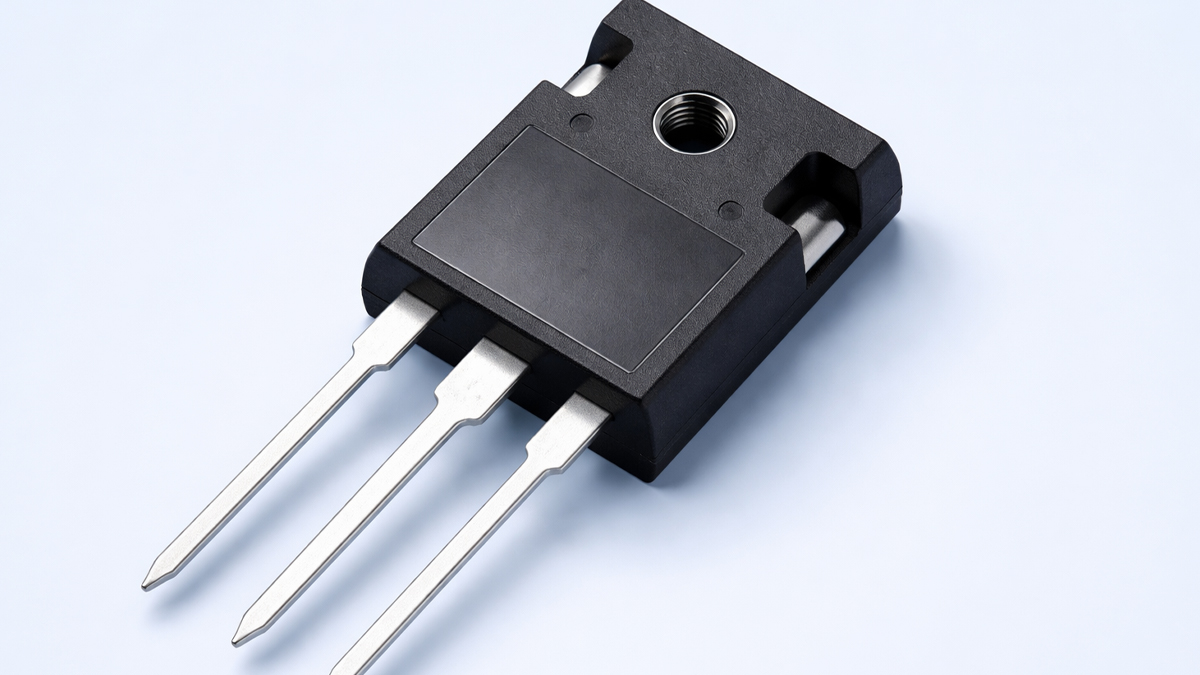
What is Soft Recovery Diode?
A soft recovery diode is a special type of power diode designed to switch off in a smoother, more controlled way when it changes from conducting current to blocking voltage. In many electronic circuits, a diode conducts current in one direction and blocks it in the other. The difficult moment happens during switching, especially when the current direction changes quickly or when a diode is forced to stop conducting because the circuit voltage reverses. In standard fast diodes, this turn off event can be abrupt and it can create spikes of voltage, bursts of electromagnetic noise, and extra stress on nearby components.
Soft recovery diodes are engineered to reduce those unwanted side effects. They do this by shaping the reverse recovery behavior. Reverse recovery is the short time during which a diode that was conducting still allows a small reverse current while it clears stored charge inside the device. A soft recovery diode reduces the sharpness of this recovery, so the reverse current falls more gradually. This smoother transition helps power supplies, motor drives, audio amplifiers, LED drivers, and other switching circuits run cleaner and more reliably.
In cinematic electronics within the cinema industry, this matters because modern cinema systems depend on stable power and low noise. Digital projectors, LED walls, camera rigs, audio processors, wireless systems, and automation equipment all rely on power electronics. A soft recovery diode supports better electromagnetic compatibility, improved reliability, and often better long term performance by reducing switching stress.
How does Soft Recovery Diode Work?
A soft recovery diode works by controlling how stored charge inside the diode disappears when the diode transitions from forward conduction to reverse blocking. When a diode is forward biased, current flows and charge carriers are injected into the semiconductor regions. In power diodes, especially those designed for high current and high voltage, a noticeable amount of charge can be stored during conduction. When the circuit suddenly applies reverse voltage, that stored charge must be removed before the diode can fully block reverse current.
Reverse recovery phase: The diode briefly conducts in reverse because stored charge is still present. This creates a reverse recovery current that can be large and can change quickly.
Softness control: In a soft recovery diode, the internal structure is designed so the reverse recovery current does not collapse sharply. Instead, it decays more gradually. That reduces the rate of change of current and voltage in the circuit.
Noise reduction effect: Lower rate of change reduces high frequency ringing, electromagnetic interference, and voltage overshoot across switches such as MOSFETs and IGBTs. It also reduces stress on transformer windings, capacitors, snubbers, and PCB traces.
Heat and stress management: Smoother switching can reduce transient losses in the switching device and reduce peak currents that cause localized heating. The diode itself still dissipates energy during recovery, but the system often benefits because the energy is spread in a less aggressive way that is easier to manage.
In cinema equipment, the difference can appear as fewer power related glitches, less interference reaching sensitive audio and video paths, and improved robustness when the system is operating at high load in a theater environment.
What are the Components of Soft Recovery Diode?
A soft recovery diode is a semiconductor component, but it can be understood through its practical and internal building blocks that affect performance.
Semiconductor junction structure: The core is a PN junction or a similar engineered junction used in power diodes. The doping profile and layer thickness strongly influence recovery softness, forward voltage, and leakage.
Lifetime control region: Many soft recovery designs use lifetime control techniques that manage how long charge carriers remain in the device. By controlling carrier lifetime, the diode can reduce abrupt recovery behavior and shape the reverse current decay.
Drift region: For higher voltage ratings, the diode includes a drift region that supports reverse voltage. The way this region is designed can influence stored charge and switching behavior.
Metal contacts and terminals: The diode uses metal contacts to connect the semiconductor to external leads or pads. Good contact design supports low resistance and reliable current handling.
Package and thermal path: The package is critical in power diodes. Soft recovery diodes may come in axial packages, surface mount packages, or power packages with metal tabs. The package provides insulation, mechanical protection, and a thermal route to a heatsink or PCB copper.
Passivation and protective layers: Surface passivation helps reduce leakage and improves stability over time. In high stress cinema environments where equipment may run for long hours, stable passivation supports reliability.
Associated circuit elements: In real designs, a soft recovery diode is rarely alone. It often works with snubber networks, gate drivers, capacitors, inductors, and transformers. These supporting parts are not inside the diode, but they are part of the complete switching behavior that the diode influences.
What are the Types of Soft Recovery Diode?
Soft recovery behavior can be found across several diode families, and the best choice depends on voltage, current, switching frequency, and efficiency targets.
Soft recovery rectifier diode: This is a general category of diodes designed for power rectification with controlled reverse recovery. They are common in power supplies and converters.
Ultrafast soft recovery diode: These diodes combine fast switching with soft recovery. They are used in high frequency converters where both speed and low noise are important.
Soft recovery epitaxial diode: Some designs use epitaxial growth techniques to precisely control layer properties. This can produce consistent softness and good efficiency.
Soft recovery high voltage diode: These diodes are optimized for high reverse voltage, such as in PFC stages, high voltage DC rails, or projector power modules.
Soft recovery high current diode: These handle large currents, often in industrial power supplies, large amplifiers, or cinema LED wall power distribution.
Soft recovery diode in bridge form: Some manufacturers provide bridge rectifiers made from soft recovery diodes for AC to DC conversion with reduced noise compared to standard bridges.
Schottky comparison note: Schottky diodes typically have no reverse recovery charge, but they have lower voltage ratings and higher leakage at high temperature. Soft recovery PN based diodes fill the gap when higher voltage is needed and when controlled recovery is preferred.
What are the Applications of Soft Recovery Diode?
Soft recovery diodes are used anywhere switching noise and switching stress must be reduced without sacrificing power handling. Common applications include:
Switch mode power supplies: In power supplies for cinema projectors, servers, audio amplifiers, and lighting systems, these diodes help reduce spikes and improve electromagnetic compatibility.
Power factor correction circuits: PFC stages often operate at high frequency and high voltage. Soft recovery behavior reduces stress on boost switches and improves system stability.
Inverters and motor drives: In cinema environments, motor drives can exist in HVAC systems, moving screens, automated curtains, and stage mechanisms. Soft recovery diodes reduce switching ringing that can disrupt control electronics.
Audio power amplifiers: High power audio amplifiers use rectification and sometimes switching converters. Cleaner rectification can reduce noise coupling into sensitive audio stages.
LED drivers: LED walls, architectural cinema lighting, and signage often use switching LED drivers. Soft recovery diodes can reduce EMI and help meet compliance requirements.
Battery chargers and UPS systems: Cinema facilities rely on backup power for critical equipment. Soft recovery diodes support reliable charging and inverter switching behavior.
Welding and industrial supplies in production: In film production environments, heavy power tools and generators may be used. Soft recovery diodes in those power modules improve robustness and reduce harmful transients.
What is the Role of Soft Recovery Diode in Cinema Industry?
The cinema industry uses a wide set of electronic systems, from the projection booth to the auditorium to production studios. A soft recovery diode plays a supporting but important role in keeping these systems stable, quiet, and dependable.
Power stability for projection systems: Digital cinema projectors contain high power supplies for lamps or lasers, control electronics, cooling systems, and signal processing boards. Power noise can lead to faults, reboots, or image artifacts. Soft recovery diodes help create cleaner DC rails and reduce switching spikes that might stress components.
Lower electromagnetic interference in sensitive signal paths: Cinematic electronics include audio processors, digital interfaces, network equipment, synchronization devices, and sometimes RF systems for microphones and control. Switching spikes can radiate through wiring and enclosures. Soft recovery diodes reduce the sharp switching events that create strong high frequency emissions.
Improved reliability during long operating hours: Cinema equipment often runs for many hours daily. Reducing voltage overshoot and current ringing helps reduce cumulative stress on MOSFETs, capacitors, transformers, and connectors. Soft recovery diodes contribute to longer service life and fewer failures.
Cleaner integration of LED walls and advanced displays: Many modern cinemas and premium venues use large LED screens, lobby displays, and dynamic signage. These systems use many switching power modules. Soft recovery diodes support lower conducted and radiated noise, making it easier to operate many modules together without interference.
Better behavior in automation and motion systems: Curtains, masking systems, moving platforms, and environmental control systems use power electronics. Lower noise helps controllers and sensors operate reliably, especially when long cable runs are present.
Support for production and post production environments: In studio and post production settings, audio recording, color grading, and editing suites require low noise power and stable grounding. Soft recovery diodes help reduce unwanted noise that can couple into analog sections or create audible hum and interference.
What are the Objectives of Soft Recovery Diode?
The objectives of a soft recovery diode are practical design goals that target cleaner switching and improved system performance.
Controlled reverse recovery: The main objective is to ensure reverse recovery current decays smoothly instead of abruptly.
Reduced voltage overshoot: By softening recovery, the diode helps reduce voltage spikes across switching devices and transformer windings.
Lower electromagnetic emissions: The diode aims to reduce high frequency ringing that causes EMI, helping systems meet compliance and reducing interference with audio and video equipment.
Reduced stress on switches: Smoother current transitions reduce peak stress on MOSFETs and IGBTs, supporting longer life and fewer failures.
Improved system robustness: The diode supports stable operation across temperature changes, load variations, and line disturbances.
Noise friendly power conversion: Another objective is to support cleaner power rails for sensitive processing electronics in cinematic systems.
Balanced efficiency: While soft recovery may slightly increase recovery time compared to extremely abrupt diodes, the objective is to balance efficiency with reduced noise and stress in a way that improves real world performance.
What are the Benefits of Soft Recovery Diode?
Soft recovery diodes offer several benefits that are especially valuable in complex electronic systems.
Lower EMI and cleaner operation: Smoother switching reduces high frequency noise that can interfere with audio processing, video transport, and wireless communication.
Reduced ringing and overshoot: Less ringing means fewer unexpected voltage peaks, which reduces risk of breakdown and reduces the need for heavy snubber networks.
Improved reliability of power switches: Switching devices suffer less stress, which can reduce failure rates in power supplies used in cinema projectors and LED systems.
Better thermal behavior in the system: Lower transient stress can reduce hot spots in switches and magnetic components, improving thermal margins.
More stable performance at high frequency: In high frequency converters, controlled recovery supports consistent behavior and less unpredictable oscillation.
Simplified compliance efforts: For cinema installations that must coexist with many electronic systems, lower EMI makes compliance and troubleshooting easier.
Cleaner audio performance: While a diode is not an audio component, power noise can leak into amplifier stages and processors. Cleaner rectification can reduce the chance of audible artifacts.
What are the Features of Soft Recovery Diode?
Soft recovery diodes are defined by a set of performance features that designers evaluate.
Soft reverse recovery waveform: The diode is designed so the reverse recovery current has a gentle slope and reduced abrupt cutoff.
Optimized reverse recovery time: Many devices offer fast recovery while still maintaining softness, making them suitable for switching converters.
High voltage capability: Many soft recovery diodes support higher reverse voltage than typical Schottky devices, useful in PFC and high voltage rails.
High current capability: Power packages and die design allow significant current handling for cinema grade power systems.
Low switching noise: The device reduces high frequency noise generation by limiting sudden current changes.
Thermal and mechanical reliability: Power diode packages are designed to dissipate heat and tolerate thermal cycling, which is important in equipment that runs daily.
Stable characteristics across temperature: Good designs keep recovery softness and leakage within predictable limits as temperature changes.
Compatibility with snubbers and clamps: Soft recovery diodes work well with common protection circuits and can reduce how aggressive those circuits need to be.
What are the Examples of Soft Recovery Diode?
Examples can be described by where soft recovery diodes are used and by typical device categories found in real equipment.
Ultrafast soft recovery diodes in projector power supplies: High frequency power supplies in modern projectors may use ultrafast soft recovery diodes in rectification and freewheeling paths.
Soft recovery diodes in PFC boost stages: Many AC to DC front ends use a boost diode where controlled recovery reduces switch stress and improves EMI.
Soft recovery diodes in high power audio amplifier supplies: Rectifier stages and auxiliary switching rails can use soft recovery diodes to reduce noise that may couple into audio sections.
Soft recovery bridge rectifiers in cinema rack power units: Distribution and conditioning equipment may use bridges designed for lower noise rectification.
Soft recovery diodes in LED wall driver modules: Large LED display systems use many switching converters where soft recovery improves system level noise performance.
Soft recovery diodes in UPS inverter sections: Backup power systems may include diode paths that benefit from controlled recovery during switching transitions.
What is the Definition of Soft Recovery Diode?
A soft recovery diode is defined as a power diode engineered to exhibit a controlled, gradual reverse recovery behavior when switching from forward conduction to reverse blocking, reducing abrupt current interruption, voltage spikes, and electromagnetic interference in power electronic circuits.
What is the Meaning of Soft Recovery Diode?
The meaning of soft recovery diode is that the diode recovers from conduction in a soft and smooth manner rather than in a hard and sudden manner. Soft refers to a gentle change in reverse recovery current, and recovery refers to the process of clearing stored charge so the diode can block reverse voltage. In practical terms, it means the diode is kinder to the circuit around it. It produces less electrical shock to switches, transformers, and wiring, and it helps the system behave more quietly and predictably.
What is the Future of Soft Recovery Diode?
The future of soft recovery diodes is closely linked to the evolution of power electronics in both entertainment and industrial systems. Cinema technology continues to adopt more efficient and higher power systems, including laser projection, large scale LED walls, advanced audio amplification, automation, and networked control. As power density increases, switching frequencies rise, and compliance requirements become stricter, the need for controlled switching behavior remains important.
Wide bandgap semiconductors such as silicon carbide and gallium nitride are changing power design. Silicon carbide diodes often have extremely low or near zero reverse recovery, and they can operate at high voltage and high temperature. This may reduce the need for traditional soft recovery behavior in some designs. However, soft recovery diodes still have a strong position where cost sensitivity is high, where switching frequencies are moderate, and where designers want predictable, smooth recovery characteristics with proven silicon manufacturing.
Future improvements are expected in several directions. Manufacturers will continue optimizing softness while lowering forward voltage and leakage. Packaging will improve with better thermal paths, lower inductance layouts, and more compact footprints. Designers will also combine soft recovery diodes with smarter snubber networks, improved gate driving, and better PCB layout to push EMI lower. In cinema industry equipment, this will support quieter racks, more stable projector power modules, and better coexistence between high power electronics and sensitive audio and video paths.
Summary
- Soft recovery diodes are power diodes designed to switch off smoothly during reverse recovery.
- They reduce voltage spikes, ringing, and electromagnetic interference in switching circuits.
- Their operation focuses on controlled removal of stored charge to avoid abrupt current cutoff.
- They are used in power supplies, PFC stages, inverters, LED drivers, chargers, and UPS systems.
- In the cinema industry, they help improve power stability, lower noise, and increase equipment reliability.
- Key objectives include controlled recovery, reduced overshoot, lower EMI, and reduced stress on switches.
- Benefits include cleaner operation, easier compliance, better robustness, and improved long term performance.
- Features include soft recovery waveforms, high voltage and current capability, and stable thermal behavior.
- The future includes continued optimization in silicon and increased use of wide bandgap alternatives where suitable.

