

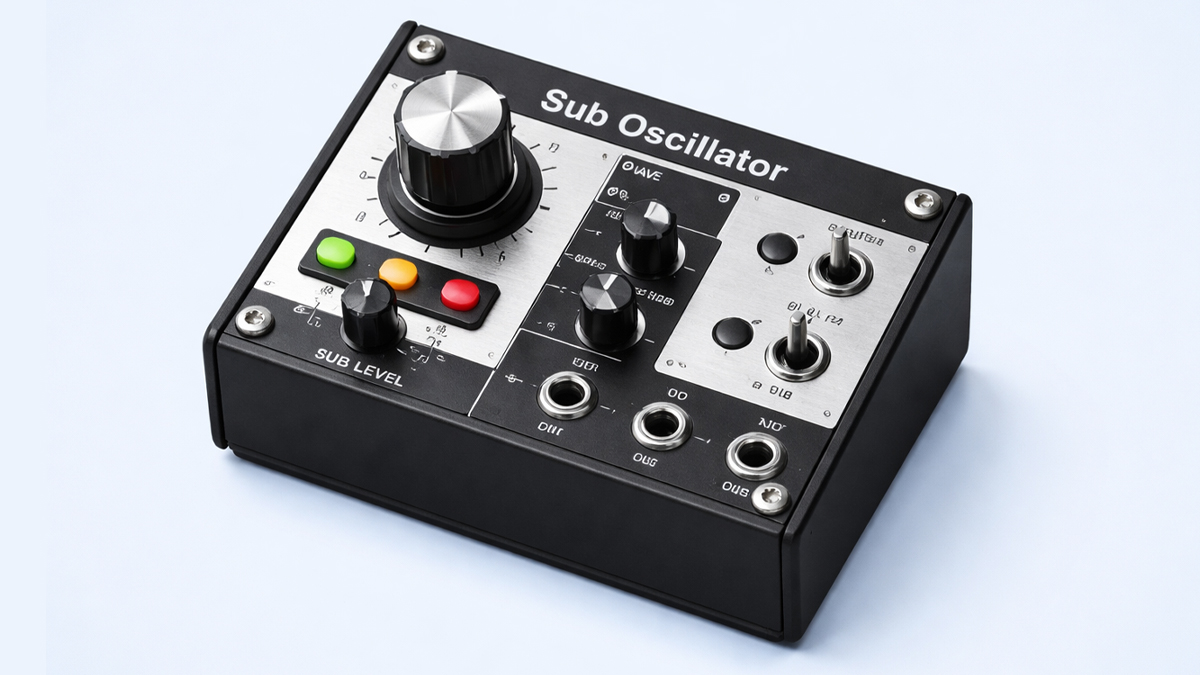
What is Sub Oscillator?
A sub oscillator is an additional sound source in a synthesizer that plays at a lower pitch than the main oscillator. In most instruments, it is set one octave below the primary oscillator, although some designs offer two octaves down or other interval options. The main purpose is simple: add weight, depth, and low frequency power to a patch without needing extra layers or external processing.
In synthesis, an oscillator is the tone generator. It creates a periodic waveform such as a sawtooth, square, triangle, or sine. When you add a sub oscillator, you are effectively adding a supporting foundation underneath the main tone, similar to how a bass instrument supports a band. This foundational tone makes sounds feel bigger and more stable, especially in monophonic leads, basses, and modern electronic music patches.
Sub oscillators are common in analog and virtual analog synthesizers, modern software synths, grooveboxes, and even some digital workstations. Many classic monosynth designs became famous partly because their sub oscillators made their bass patches punchy and unmistakable. Even when the sub oscillator is subtle, it can change how the ear perceives the entire sound, because low frequencies strongly influence perceived loudness, warmth, and physical impact.
Purpose and musical feel: The sub oscillator is often used to create a sense of body and authority in a sound.
Typical tuning: The sub oscillator commonly plays one octave lower than the main oscillator for a clean and musical reinforcement.
Common waveform choice: The sub oscillator is frequently a square wave because it is harmonically rich and cuts through mixes while still feeling solid.
How does Sub Oscillator Work?
A sub oscillator works by generating a tone that is mathematically related to the main oscillator, usually at half the frequency. Half the frequency equals one octave lower. If the main oscillator is playing A at 110 Hz, a sub oscillator one octave down will play A at 55 Hz. This relationship keeps the pitch locked and musically consistent.
There are two common design approaches. In many analog style synthesizers, the sub oscillator is derived from another oscillator or from a frequency divider circuit. A divider takes a waveform from an existing source and outputs a version at a lower frequency. This is a stable and efficient method and is a big reason why sub oscillators can feel tight and consistent. In many digital or software instruments, the sub oscillator is simply another oscillator voice tuned down, but it is often simplified for clarity and CPU efficiency.
The sub oscillator signal is then mixed with the main oscillator signal in the mixer stage. After that, the combined signal typically goes through the rest of the synthesizer voice path: filter, amplifier, envelopes, modulation, and effects. Because the sub oscillator sits in the low register, it interacts strongly with the filter. For example, a low pass filter that is slightly closed can keep the sub oscillator energy while softening bright harmonics from the main oscillator, creating a warm and thick tone. On the other hand, aggressive resonance can thin out low frequencies, so many sound designers balance resonance with sub level to avoid losing the bass foundation.
Frequency relationship: The sub oscillator is usually one octave down by running at half the frequency of the main oscillator.
Signal flow: The sub oscillator is mixed with the main oscillator before the filter and amplifier stages in most synthesizer architectures.
Mix behavior: Increasing sub level can raise perceived power and thickness, but too much can cause muddiness or overload in the low end.
What are the Components of Sub Oscillator?
A sub oscillator is not always a separate physical module, but it typically involves a set of functional components inside the synthesizer voice architecture. Understanding these components helps you predict how a sub oscillator will behave in different instruments.
Waveform source: The sub oscillator needs a waveform generator or a derived waveform from an existing oscillator. Many designs use a square wave because it is easy to derive with simple circuitry and it adds strong harmonics that reinforce bass presence.
Frequency control or division: To achieve a pitch one octave lower, the system must reduce frequency. Analog designs often use a frequency divider that takes the main oscillator output and divides it by two. Digital designs may simply tune a separate oscillator down by 12 semitones.
Tuning and interval selection: Some synthesizers let you choose one octave down, two octaves down, or a fifth below. This is usually controlled by a switch or a parameter in the oscillator section.
Level control in the mixer: A sub oscillator is only useful if you can blend it. Most synths provide a dedicated sub level knob or a mixer slider. This is where you decide whether the sub is a gentle support or a dominant layer.
Routing into the voice path: The sub oscillator output is routed into the same filter and amplifier path as the main oscillators in many classic synths. Some modern instruments also let you route it differently or apply independent processing, but the classic approach is shared routing.
Phase and retrigger behavior: Some instruments retrigger oscillator phase on each note for consistent punch. Others allow free running phase for a more organic and less predictable feel. Sub oscillator phase relationships can affect transient impact and perceived tightness.
Modulation options: In many synths the sub oscillator has limited modulation compared to the main oscillator. However, in flexible instruments you may be able to modulate sub level with an envelope, velocity, aftertouch, or an LFO to create movement in the low end.
Waveform generation: The core element that creates the sub tone, often square or triangle depending on the instrument design.
Divider or tuning logic: The mechanism that produces the octave down relationship, either by frequency division or by tuning a second oscillator.
Mixer control: The dedicated level parameter that balances sub energy against the rest of the patch.
What are the Types of Sub Oscillator?
Sub oscillators come in several types depending on how they are generated and how much control they offer. These differences matter because they change the tone, stability, and flexibility.
Divider based sub oscillator: This type is derived from the main oscillator using frequency division. It tends to be stable and tightly locked to the main pitch. Many classic analog monosynths use this approach. The sound often feels solid because the sub is directly linked to the primary oscillator.
Independent oscillator sub: This is a separate oscillator that is simply tuned down, usually by 12 semitones. It may offer more waveform options and modulation. In some synths, it can drift or detune slightly if analog modeled behavior is included, which can make the sound wider but less centered.
Fixed waveform sub: Many instruments provide a sub oscillator with a fixed waveform, commonly square. This keeps the sound consistent and avoids complicated tone shaping. It is perfect for fast workflow bass building.
Selectable waveform sub: Some modern synths offer triangle, sine, square, and sometimes pulse width options for the sub. A sine sub is clean and pure, excellent for deep bass without extra harmonics. A triangle is slightly richer than sine but still smooth. A square is harmonically dense and can make basslines more audible on small speakers.
Octave and interval switch sub: This type focuses on interval control. It may let you choose one octave down, two octaves down, or add a fifth. This is useful for creating broader harmonic foundations or more aggressive low end.
Polyphonic sub oscillator: In polyphonic synths, the sub oscillator may exist per voice, meaning each played note gets its own sub. This can sound huge for chords but can also create too much low frequency buildup. Many poly synth patches use sub levels carefully to avoid a muddy mix.
Monophonic bass focused sub: In some instruments, the sub oscillator is designed mainly for bass and mono sounds, often with strong amplitude and a waveform that cuts through. This type is common in bassline synthesizers.
Generation method: Divider based subs are derived and locked, while independent subs behave like separate oscillators tuned down.
Tone character: Fixed waveform subs are consistent, while selectable waveform subs can be clean or harmonically rich depending on the chosen shape.
Voice behavior: Polyphonic subs can be massive for chords but require careful balance to avoid low end overload.
What are the Applications of Sub Oscillator?
Sub oscillators are used across many sound design tasks because they provide low frequency reinforcement quickly and musically. They are not limited to bass patches, although bass is their most famous application.
Bass synthesis: The most common use is building strong basslines. A main oscillator provides character and harmonics, while the sub provides fundamental weight. This combination creates bass that is both heard and felt.
Lead sounds with body: Many leads can sound thin, especially with bright waveforms and open filters. Adding a subtle sub oscillator makes the lead feel larger and more confident, especially in monophonic solos.
Plucks and arpeggios: Short plucks can gain impact with a sub layer. Even a small amount of sub can make the attack feel stronger, but you must control envelope and filter settings so the low end does not linger.
Pads and chords: In polyphonic contexts, adding a sub oscillator can make pads feel cinematic and warm. However, too much sub on chords can crowd the mix, so it is often used sparingly or combined with high pass filtering after the synth.
Kick and bass layering: In electronic production, sub oscillators can serve as a built in layer that behaves like a bass foundation. Some producers use a sub oscillator to complement kick drums, but careful tuning and sidechain compression are often needed to avoid conflicts.
Sound effects and drones: Drones, rumbles, and cinematic impacts often benefit from a stable low fundamental. A sub oscillator can provide that steady anchor while other oscillators create movement and texture.
Mix translation support: A square or triangle sub adds harmonics that can make bass more audible on smaller speakers. A pure sine sub may feel deep on large systems but can disappear on phone speakers, so the right sub type can help translation.
Basslines: The sub oscillator reinforces the fundamental and adds power without needing extra layers.
Leads and plucks: A controlled sub level adds thickness and perceived loudness while maintaining clarity.
Sound design and drones: The sub oscillator provides a stable low anchor that supports evolving textures.
What is the Role of Sub Oscillator in Music Industry?
In the music industry, the sub oscillator plays a practical and creative role. It helps producers, composers, sound designers, and live performers achieve professional low end quickly. Low frequencies are a defining element in many modern genres, and the sub oscillator is one of the fastest ways to shape that foundation inside a synthesizer.
Genre defining low end: Styles like techno, house, drum and bass, hip hop, trap, dubstep, and cinematic electronic rely on controlled sub energy. A sub oscillator makes it easy to create bass that fills clubs and festivals, while still being musical and consistent.
Sound design identity: Many signature synthesizer sounds are built from a balance of main oscillator bite and sub oscillator weight. The sub oscillator often acts as the hidden ingredient that makes a patch feel expensive and authoritative.
Efficient production workflow: Instead of layering multiple instruments, a producer can use one synth patch and blend sub oscillator level to achieve the needed depth. This reduces complexity and keeps arrangement cleaner.
Live performance reliability: On stage, reliable low end matters. A sub oscillator provides consistent bass reinforcement without needing extra instruments. Many live performers rely on sub oscillators to keep leads and bass patches strong in different sound systems.
Film and media scoring: In trailers and cinematic music, sub foundations create tension and scale. A sub oscillator can help build drones and impacts that translate well in theaters and on large sound systems.
Music technology product design: Manufacturers include sub oscillators because they are immediately useful to musicians. A simple sub control often improves user experience and perceived quality, especially in entry level synths that need to sound big quickly.
Low end foundation: The sub oscillator supports genre appropriate bass energy that is essential in many modern productions.
Signature sound building: It strengthens patches and contributes to recognizable synth identities.
Workflow and performance: It reduces layering needs and provides consistent low end in live setups.
What are the Objectives of Sub Oscillator?
A sub oscillator is included in synthesizers to accomplish specific musical and technical goals. These objectives are consistent across many instrument designs, even though the implementation details differ.
Add low frequency reinforcement: The primary objective is to strengthen the fundamental of the note and provide a deeper, fuller sound.
Increase perceived power: Low frequencies contribute strongly to perceived loudness and impact. A controlled sub makes sounds feel bigger without necessarily increasing harshness.
Improve mix stability: A stable sub layer can help keep bass consistent across notes and articulation changes. This is especially useful when the main oscillator is heavily filtered, distorted, or modulated.
Enhance harmonic structure: Depending on waveform, a sub oscillator can add harmonics that make bass audible on smaller speakers. This helps translation, especially in consumer playback.
Support musical roles: In arrangements, the sub oscillator helps a synth occupy the role of a bass instrument or strengthen the lower register of a lead.
Simplify sound design: Another objective is convenience. Instead of designing a separate bass layer, the user can blend a sub within the same patch and keep modulation and envelopes unified.
Provide controllable thickness: The sub oscillator is often used like a thickness knob. You can dial it in until the sound feels grounded, then stop before it becomes muddy.
Low end reinforcement: The objective is to add depth and fundamental strength to synth tones.
Translation and audibility: The objective is to help bass remain present across different speaker systems.
Workflow simplicity: The objective is to achieve bigger sounds inside one patch with minimal extra processing.
What are the Benefits of Sub Oscillator?
The benefits of a sub oscillator show up in both sound quality and production efficiency. When used well, it can make patches feel professional and mix ready.
Stronger bass presence: A sub oscillator can make basslines hit harder and feel more physical, especially on good speakers and subwoofers.
Thicker sound without clutter: Because the sub is pitch aligned and simple, it can add thickness without requiring additional layers that might create phase issues or tuning conflicts.
Better note definition in low register: The sub helps the ear identify pitch in bass notes by reinforcing the fundamental. This can make basslines more intelligible.
Improved mix translation: With the right waveform, the sub can add harmonics that improve audibility on small speakers. This is useful for streaming and mobile listening.
More expressive lead sounds: Leads can feel more emotional and powerful when they have a subtle low support. This is especially effective when playing melodic lines.
Reduced reliance on external processing: Instead of relying on heavy equalization or bass enhancers, you can build the low end at the source. This often sounds cleaner and more controlled.
Faster patch creation: Sound designers can reach satisfying results faster by blending a sub oscillator rather than building complex layers.
Impact and warmth: The sub oscillator adds depth and makes patches feel warmer and more powerful.
Cleaner layering: It provides thickness while avoiding many layering problems like detuning conflicts.
Production efficiency: It speeds up sound design and can reduce the need for extra processing.
What are the Features of Sub Oscillator?
Sub oscillator features vary across synthesizers, but most instruments provide a core set of controls. Understanding these features helps you use a sub oscillator intentionally instead of simply turning it up.
Octave selection: Many synths allow one octave down. Some allow two octaves down. A deeper octave can be huge but can also be difficult to manage in a mix.
Waveform selection: Common options include square, triangle, and sine. Square is bold and harmonic rich. Triangle is smoother. Sine is pure and deep.
Level control: A dedicated level knob or slider is the most important feature. It determines whether the sub is subtle support or dominant low end.
Routing behavior: In many synths, the sub goes through the same filter and amplifier as the main oscillator. This means filter cutoff changes affect sub presence. Some instruments provide routing options to keep the sub unfiltered for consistent bass, but this is less common in classic designs.
Phase and retrigger: Some synths retrigger oscillator phase for consistent punch. Others let oscillators free run for organic variation. This can affect how tight or soft the bass feels.
Modulation destinations: Some synths let you modulate sub level with envelopes or LFOs. This can create dynamic bass movement, such as a sub that appears only at the start of a note for punch.
Mono and poly behavior: In poly synths, sub per voice can build massive chords. Some synths include controls to manage low end buildup, such as voice allocation strategies or built in filtering.
Waveform and octave control: These features shape the character and depth of the sub layer.
Level and routing: These features determine how the sub blends and how the filter influences it.
Phase and modulation: These features influence tightness, punch, and movement in the low end.
What are the Examples of Sub Oscillator?
Sub oscillators appear in many synthesizer contexts, from classic analog to modern software. Here are practical examples of how they are commonly used in real sound design scenarios.
Classic analog bass patch: A sawtooth main oscillator provides bite and midrange harmonics. A square sub oscillator one octave down adds weight. The filter is set moderately low with a snappy envelope. The result is a punchy bass that remains clear.
Warm mono lead: A pulse or saw main oscillator provides brightness. The sub oscillator is blended quietly, just enough to add body. Slight portamento makes the line expressive. This creates a lead that feels strong without sounding overly bass heavy.
Pluck with low support: A short envelope creates a percussive pluck. The sub oscillator is mixed at a low level and the filter is slightly closed. This gives the pluck a stronger transient and more presence in a mix.
Deep cinematic drone: A triangle or sine sub provides a steady fundamental. Another oscillator adds slow modulation and texture. The filter remains fairly open but controlled. This creates a large, low bed of sound suitable for dramatic scenes.
Chord patch with restrained sub: In a poly synth, the sub oscillator is used very lightly, often with a high pass filter after the synth or with careful equalization. This keeps the warmth while preventing muddiness.
Modern software bass design: Many software synths allow independent sub oscillator routing. You can keep the sub cleaner, apply distortion to the main oscillator only, and then compress the combined signal. This keeps the sub stable while giving the bass character.
Bass foundation patch: Sub used strongly with a harmonically rich main oscillator to create club ready bass.
Lead enhancement patch: Sub used subtly to add body to melodic lines.
Cinematic and texture patch: Sub used as a stable low anchor for drones and atmospheric sound design.
What is the Definition of Sub Oscillator?
A sub oscillator is a tone generating source in a synthesizer that produces a pitch below the main oscillator, typically one octave lower, and is used to reinforce low frequencies and add depth to the overall sound.
Pitch relationship: The sub oscillator is commonly tuned one octave lower than the primary oscillator.
Function: The sub oscillator reinforces bass and thickens the sound by adding low frequency content.
Integration: The sub oscillator is usually mixed with the main oscillator and processed through the same voice path.
What is the Meaning of Sub Oscillator?
The meaning of sub oscillator in practical music terms is that it is a built in way to create a bass support layer inside a synthesizer patch. It means you can make a sound feel grounded without changing the main oscillator tone too much. Musicians often treat it like a low end support control that can be dialed in to match the genre, the arrangement, and the playback system.
Musical meaning: It represents low end reinforcement that supports the main tone.
Production meaning: It represents a fast way to achieve fuller patches without extra layering.
Performance meaning: It represents reliable bass support that remains consistent across different playing styles.
What is the Future of Sub Oscillator?
The future of sub oscillator design is likely to focus on more intelligent control, better mix translation, and deeper integration with modern production needs. While the basic idea is simple, modern music production demands precision in the low end, especially for streaming platforms and diverse playback devices.
More flexible routing: Future synths may offer more options to keep the sub clean while letting the main oscillator go through heavy distortion, waveshaping, or complex filters. This helps maintain tight low end even in aggressive sound design.
Smarter dynamic control: Instruments may include automatic sub management that adjusts sub level based on note range, velocity, or the number of voices playing. This could prevent low frequency buildup in polyphonic patches.
Enhanced waveform shaping: Instead of a fixed square or sine, future sub oscillators may include subtle harmonic shaping tools that improve audibility on small speakers while keeping the deep fundamental intact.
Better phase and transient control: Future designs may provide clearer control over phase alignment and retrigger behavior, helping producers create bass that punches consistently without unwanted cancellations.
Integration with mixing tools: Some synthesizers may include built in sidechain style modulation or low end ducking features that allow the sub oscillator to move out of the way of the kick drum automatically, improving mix clarity.
Context aware presets: Preset systems may suggest sub oscillator settings tailored for genre and playback targets, such as club systems, headphones, or mobile speakers.
Routing innovation: Future sub oscillators will likely be easier to keep clean and controlled while other layers become more complex.
Dynamic intelligence: Future designs may manage low end automatically to prevent muddiness in polyphonic playing.
Mix integration: Future synths may include tools that help the sub coexist with drums and dense arrangements.
Summary
- A sub oscillator is a synthesizer sound source that plays below the main oscillator, usually one octave lower.
- It works by generating a lower frequency tone, often through frequency division or by tuning a second oscillator down.
- Key components include waveform generation, octave or interval control, level control, and routing into the synth voice path.
- Common types include divider based subs, independent subs, fixed waveform subs, selectable waveform subs, and polyphonic subs.
- Applications include basslines, thicker leads, stronger plucks, warm pads, drones, and improved mix translation.
- In the music industry it supports modern low end focused genres, speeds up production workflow, and improves live reliability.
- Objectives focus on reinforcing fundamentals, increasing perceived power, improving consistency, and simplifying sound design.
- Benefits include deeper bass, thicker patches, better audibility, and reduced need for external layering or processing.
- Features often include octave selection, waveform selection, level control, phase behavior, and sometimes modulation.
- The future points toward smarter routing, dynamic low end management, improved transient control, and tighter integration with mixing workflows.

