

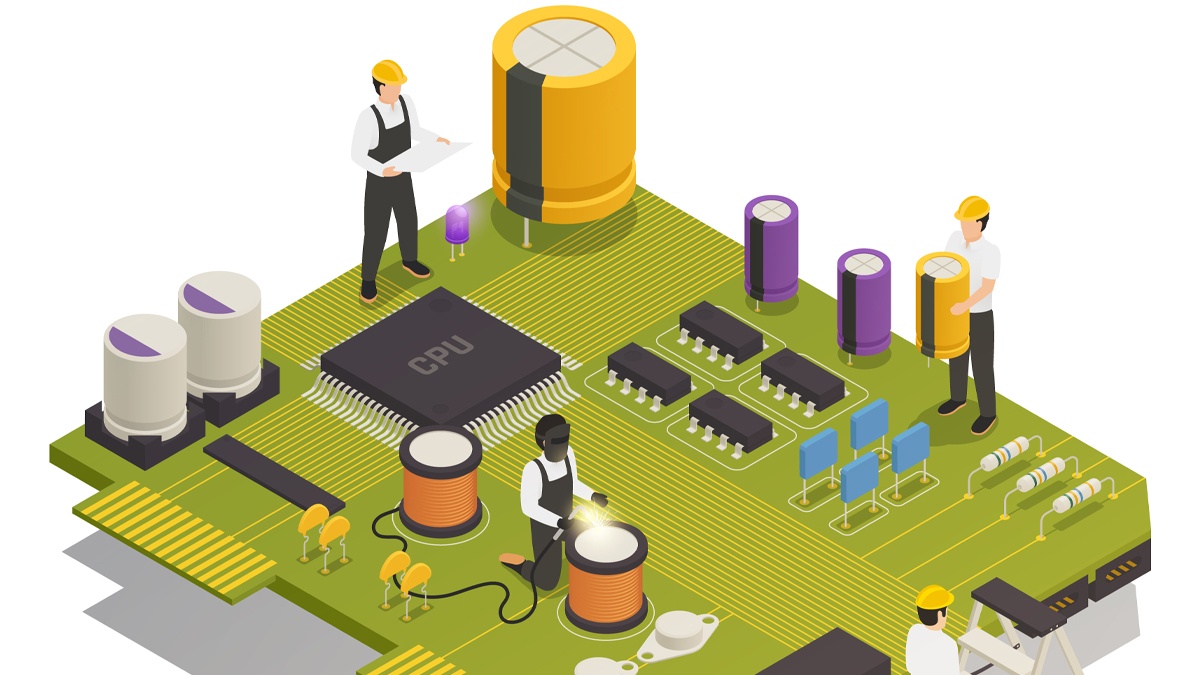
What is System on Chip?
System on Chip is an integrated electronic system in which many essential computing and control functions are placed inside a single chip. Instead of using several separate chips for processing, memory control, communication, audio handling, and peripheral management, a System on Chip combines these functions into one compact unit. In the field of microcontrollers and music electronics, this integration is especially valuable because it saves space, lowers power use, improves efficiency, and makes devices easier to design and manufacture.
A traditional electronic system may use one chip for the processor, another for memory control, another for wireless communication, and yet another for audio processing. A System on Chip reduces this complexity by bringing these parts together. This gives designers a highly capable platform that can handle sensing, signal processing, connectivity, storage control, display output, and real time system management in one package.
In music electronics, System on Chip technology appears in digital instruments, smart speakers, MIDI controllers, audio interfaces, portable recorders, wireless performance tools, and modern music production devices. It helps products become smaller, faster, and more intelligent. A compact music controller can read button presses, process control signals, connect wirelessly to a computer, and manage visual feedback through a display because of a single SoC. This makes System on Chip one of the most important technologies in modern embedded music hardware.
How does System on Chip Work?
A System on Chip works by integrating multiple functional blocks that communicate internally through carefully designed buses, control logic, and data pathways. At its core, the SoC contains a processor, often based on an architecture such as ARM, RISC V, or another embedded design. This processor runs instructions, manages timing, interprets input signals, and coordinates the chip’s internal resources.
Processing flow: When a music device receives input, such as a key press on a keyboard, a control signal from a knob, or digital audio data from a wireless source, the SoC captures that input through its input interfaces. The processor then interprets the data according to the software or firmware stored within the system. It may adjust volume, trigger a sound engine, process an effect, update a screen, or transmit MIDI information to another device.
Internal communication: Each internal block in the SoC, such as memory, timers, communication modules, and audio interfaces, shares information through internal buses. These buses act like organized roads for data movement. The central processor or controller decides where the data needs to go and when. Some SoCs also include direct memory access units that move data without burdening the main processor, which is highly useful in audio streaming and real time music processing.
Audio control: In music electronics, the SoC often handles low latency tasks. Low latency means the system responds quickly, which is essential in live performance. When a performer presses a drum pad, there must be minimal delay before the sound is heard. The SoC can read the input, process the event, and trigger output in a rapid sequence.
Connectivity support: Many SoCs include wireless modules such as Bluetooth or Wi Fi. This allows a music product to connect with apps, cloud services, DAWs, or other instruments. A smart audio speaker, for example, may stream music, decode the digital audio file, apply equalization, and send the final signal to an amplifier, all under the control of the SoC.
Power efficiency: Another important working principle is power management. The SoC can switch different blocks on or off depending on demand. In battery operated music devices, this helps extend operating time while still supporting advanced features.
What are the Components of System on Chip?
A System on Chip contains several integrated components, each serving a specific role within the overall system. The exact combination depends on the application, but most SoCs include the following core parts.
Central processor: This is the main computing engine of the chip. It executes instructions, runs firmware, and controls system behavior. In music devices, the processor may manage user input, sequencing, playback, and communication.
Memory blocks: SoCs usually include different types of memory support. Some include on chip RAM or cache memory for fast data access. Others interface with external flash or dynamic memory. Memory is important for storing firmware, temporary audio data, settings, and user presets.
Input and output interfaces: These allow the SoC to connect with the outside world. Examples include GPIO pins, USB, SPI, I2C, UART, ADC, DAC, and digital audio interfaces such as I2S. In music electronics, these interfaces connect sensors, buttons, sliders, encoders, displays, and audio codecs.
Timers and counters: Timing is critical in embedded systems. Timers help the SoC schedule tasks, generate precise delays, measure intervals, and synchronize musical events. They are useful in tempo control, step sequencing, clock generation, and performance timing.
Communication modules: Many SoCs include Bluetooth, Wi Fi, Ethernet, CAN, or other networking features. These support wireless MIDI, app control, audio streaming, firmware updates, and remote management.
Graphics or display controller: In devices with visual interfaces, the SoC may include hardware support for screens, LEDs, or touch panels. This helps with menu navigation, waveform display, track control, and performance feedback.
Audio processing support: Some SoCs include dedicated digital signal processing capabilities. This allows them to perform equalization, filtering, mixing, effects processing, noise reduction, and sample manipulation more efficiently than a basic controller alone.
Power management unit: This section regulates voltage, clocks, sleep modes, and energy distribution. It improves battery life and thermal behavior, which is important in portable music products.
Security and boot logic: Modern SoCs may include secure boot, encryption support, or protected memory features. These help protect firmware, licensed sound libraries, and connected services.
What are the Types of System on Chip?
System on Chip devices can be grouped in several ways based on performance, purpose, architecture, and application. In the context of microcontrollers and music electronics, a few common types are especially relevant.
Microcontroller based SoC: This type combines a microcontroller core with memory, timers, communication modules, and control peripherals. It is used in compact music devices such as MIDI controllers, pedal interfaces, tuners, metronomes, and portable instrument accessories.
Application processor SoC: These SoCs are more powerful and are designed to run advanced operating systems, graphical interfaces, and multimedia applications. They are found in tablets, smart speakers, streaming devices, and advanced digital music workstations.
Wireless SoC: This type includes built in wireless communication such as Bluetooth or Wi Fi. It is common in wireless headphones, Bluetooth speakers, wireless MIDI systems, and mobile music accessories.
Audio SoC: Some SoCs are specifically optimized for audio applications. They may include digital signal processors, audio codecs, and interfaces designed for sound capture and playback. These are often used in mixers, smart amplifiers, voice enabled devices, and digital recording tools.
FPGA assisted or hybrid SoC: Some advanced platforms combine a processor system with programmable logic. This allows designers to customize hardware behavior for low latency audio, special control routines, or unique digital instrument functions.
Low power SoC: These are designed for portable and battery operated devices. In music electronics, they are used in small controllers, wearables for music practice, clip on tuners, and compact sound modules.
High performance multimedia SoC: These are used in products that handle audio, video, networking, and user interface functions together. Examples include smart stage systems, media hubs, and connected music education devices.
What are the Applications of System on Chip?
System on Chip has a very wide range of applications because it offers compact design, efficient control, and integrated performance. In the broader electronics world, SoCs are used in phones, smart appliances, vehicles, medical tools, industrial systems, and consumer devices. In music electronics, their applications are equally important and continue to grow.
Portable music players: SoCs manage file decoding, user controls, storage access, and audio output in a compact and energy efficient design.
Digital musical instruments: Electronic keyboards, synthesizers, drum machines, and samplers use SoCs for control logic, display handling, effects management, and communication.
MIDI controllers: Many modern MIDI devices use SoCs to scan pads, keys, faders, and knobs while also supporting USB and wireless connectivity.
Audio interfaces: Some interfaces use SoCs for routing, signal management, monitoring control, firmware processing, and host communication.
Smart speakers: These systems rely on SoCs to handle streaming, wireless networking, voice recognition support, playback control, and app integration.
Wireless headphones and earbuds: SoCs control Bluetooth communication, power use, touch input, microphone processing, and audio output behavior.
Digital mixers and processors: In compact systems, an SoC can manage menus, presets, network control, and coordination with dedicated audio processing blocks.
Music learning devices: Interactive practice systems, digital tutors, and connected lesson hardware use SoCs to combine sound playback, sensing, display functions, and internet connectivity.
Stage accessories: Foot controllers, wireless transmitters, metronomes, tuners, and programmable switching systems benefit from integrated SoC design.
What is the Role of System on Chip in Music Industry?
System on Chip plays a major role in the music industry because it supports the design of smarter, smaller, and more connected devices across production, performance, distribution, and education. It has helped the industry move from large isolated equipment toward compact digital ecosystems that communicate with software, cloud services, and mobile platforms.
In music production, SoCs support controllers, interfaces, and smart studio devices. A compact pad controller can use a single SoC to detect touch input, manage lighting, send MIDI data, and store user mappings. This reduces hardware complexity while improving portability and reliability.
In performance technology, SoCs enable live tools that respond quickly and remain lightweight. Wireless MIDI adapters, intelligent pedalboards, stage automation units, and digital monitoring accessories all benefit from SoC integration. Live performance demands stability and low delay, and SoCs help meet those demands in a small form factor.
In consumer music products, SoCs are central to Bluetooth speakers, streaming players, headphones, and voice enabled listening devices. These products need audio decoding, wireless communication, user interface control, and power management. A System on Chip makes this possible without requiring a large number of separate integrated circuits.
In music education and practice, SoCs support interactive keyboards, ear training devices, rhythm trainers, and connected learning platforms. These devices can process audio, guide lessons, collect user performance data, and sync with educational apps.
In manufacturing and product innovation, SoCs reduce the number of parts needed in a design. This often lowers cost, simplifies assembly, and allows faster product development. For music companies, this means they can create compact and feature rich products for both professionals and general consumers.
What are the Objectives of System on Chip?
The objectives of System on Chip are centered on integration, efficiency, performance, and intelligent control. It is designed to solve several engineering challenges at once by combining many functions into a single chip.
Integration objective: One of the main goals is to reduce the need for multiple separate chips. This simplifies circuit design, saves board space, and reduces system complexity.
Efficiency objective: SoCs aim to use energy and processing resources more effectively. In music electronics, this helps battery powered devices last longer while still offering advanced functions.
Performance objective: A System on Chip seeks to deliver reliable control, fast data handling, and coordinated operation across many subsystems. This is especially important when audio, timing, and communication must work together.
Cost objective: By reducing component count and simplifying production, SoCs can help lower manufacturing costs. This makes advanced music technology more affordable and accessible.
Miniaturization objective: Another key aim is to make electronics smaller and lighter. Portable music tools, wearable audio devices, and compact studio accessories depend heavily on this benefit.
Connectivity objective: Modern SoCs are designed to support communication with other devices, apps, and networks. This supports the connected nature of the modern music industry.
Scalability objective: A well designed SoC platform allows manufacturers to build different product versions from the same technical foundation. This speeds up development and helps maintain consistency across product lines.
What are the Benefits of System on Chip?
System on Chip offers many practical benefits in electronics, and these advantages are especially meaningful in music equipment where size, speed, and user experience matter greatly.
Compact design: Since many functions are built into one chip, the overall device can be made smaller. This is very useful for portable controllers, headphones, wireless adapters, and compact sound modules.
Lower power consumption: Integrated architecture usually improves energy efficiency. Battery powered music devices can run longer and generate less heat.
Reduced component count: Fewer external chips mean simpler circuit boards, less wiring complexity, and fewer points of failure. This often improves reliability.
Faster communication inside the system: Internal blocks in an SoC communicate more efficiently than separate chips connected across a board. This can improve response time and support better real time behavior.
Improved manufacturing efficiency: A simpler hardware design often means easier assembly, lower part inventory needs, and more consistent product quality.
Support for advanced features: Because many SoCs include wireless functions, processing acceleration, display support, and memory control, even a small music device can provide modern features.
Better portability: Smaller and lighter devices are easier for musicians, engineers, and students to carry and use.
Strong platform for innovation: Designers can create new products more quickly when they have a flexible SoC foundation that already includes core hardware building blocks.
What are the Features of System on Chip?
System on Chip is known for a set of features that make it highly attractive for embedded design and music electronics.
High integration: The defining feature of an SoC is that it combines many essential system elements on one chip.
Processor and control logic: Every SoC includes a processing core or multiple cores that manage operations and execute software.
Peripheral support: SoCs often contain timers, communication ports, analog interfaces, digital interfaces, and input output controllers.
Built in communication: Many SoCs support wireless or wired communication directly, which is helpful for app connected and networked music products.
Power management features: Sleep modes, clock control, voltage regulation support, and energy optimization are often built in.
Memory support: SoCs may include internal memory or high speed access to external memory for firmware and data storage.
Multimedia capability: Some SoCs can handle audio playback, voice input, codec control, and graphical interfaces.
Real time responsiveness: In many designs, the architecture supports quick event handling, which is essential for music timing and performance.
Programmability: SoCs are controlled by software or firmware, allowing manufacturers to update features, fix issues, or customize product behavior.
Security functions: Protected boot and encryption support can be included for safer connected operation.
What are the Examples of System on Chip?
Many well known platforms and devices use System on Chip technology. Some examples are broad consumer platforms, while others relate more directly to embedded control and music electronics.
Smartphone SoCs: Chips used in smartphones are among the best known examples. They integrate processing, graphics, memory control, communication, and multimedia functions. These platforms have influenced how compact music devices are designed.
Raspberry Pi Broadcom SoC: This is a popular example used in education, prototyping, media projects, and custom music systems. Many developers use it to build streamers, synthesizer interfaces, digital jukeboxes, and experimental audio tools.
ESP32: This is a widely used wireless SoC with microcontroller capabilities, Bluetooth, and Wi Fi support. It appears in wireless MIDI controllers, smart audio accessories, remote control systems, and connected music gadgets.
Audio focused embedded platforms: Some products use SoCs designed for smart speakers, voice assistants, or network audio playback. These platforms manage streaming, control, and user interaction in a single device architecture.
Tablet and media device SoCs: Music production apps, live control software, and portable composition tools often run on hardware powered by advanced SoCs that support touch interfaces and multimedia workloads.
Custom SoCs in branded products: Some major technology companies design their own SoCs for phones, tablets, laptops, and smart accessories that are used widely in music creation and playback environments.
What is the Definition of System on Chip?
The definition of System on Chip is a single integrated circuit that combines the functions of an entire electronic system onto one chip. These functions commonly include a processor, memory support, input and output interfaces, communication modules, control logic, and sometimes audio, graphics, or signal processing blocks.
From an engineering perspective, the term refers to a design approach that emphasizes integration and coordination within one semiconductor device. Instead of building a system from many separate integrated circuits, the SoC places core system resources together so they can operate as one tightly connected platform.
In the context of microcontrollers and music electronics, the definition can be expressed in practical terms as a compact chip that gives a music device the ability to sense inputs, process commands, communicate with other hardware or software, and manage outputs efficiently.
What is the Meaning of System on Chip?
The meaning of System on Chip goes beyond its technical definition. It represents a design philosophy in modern electronics where intelligence, control, communication, and efficiency are brought together into a unified hardware platform.
In simple language, the meaning of System on Chip is that the chip itself acts like a complete miniature system. It is not merely a processor. It is a full operational core for the device. It can run code, handle signals, communicate with peripherals, and support user features.
For the music industry, the meaning of SoC is closely tied to progress in product design. It means smaller gear with more power. It means better wireless tools, smarter instruments, more capable practice devices, and compact audio products that still deliver high functionality. It also means designers can build devices that feel modern, connected, and responsive without requiring large hardware assemblies.
What is the Future of System on Chip?
The future of System on Chip is very promising because electronic products continue to demand more intelligence, more integration, and better energy efficiency. As music electronics evolve, SoCs will likely become even more important.
Smarter audio devices: Future music hardware will use SoCs to support adaptive sound control, intelligent routing, user personalization, and more advanced signal handling.
More wireless integration: Wireless MIDI, wireless monitoring, and connected stage tools will continue to expand. SoCs with stronger and more efficient communication features will support this growth.
Artificial intelligence support: Some future SoCs will include specialized acceleration for machine learning tasks. In music products, this could help with automatic accompaniment, intelligent practice feedback, source separation, performance analysis, and voice control.
Improved low latency performance: Live music systems need fast response. Future SoCs will continue to improve timing precision and event handling for instruments, controllers, and performance processors.
Greater energy efficiency: Battery powered music equipment will benefit from better power management and lower heat generation, making portable devices more practical and more reliable.
Higher integration in compact gear: More functions will fit into smaller products. A single chip may control sensing, processing, streaming, display, and effects in a device that fits into a pocket or pedal format.
Faster product development: As SoC platforms become more flexible and software driven, manufacturers will be able to launch new music devices more quickly and update them more easily through firmware.
Summary
- System on Chip is a single integrated circuit that combines many electronic system functions into one compact chip.
- It works by linking processors, memory support, interfaces, and control blocks through internal communication pathways.
- Key components include processors, memory, timers, communication modules, input and output interfaces, and power management.
- Different types of SoCs include microcontroller based, wireless, audio optimized, low power, and high-performance multimedia designs.
- In music electronics, SoCs are used in MIDI controllers, smart speakers, digital instruments, headphones, audio interfaces, and learning devices.
- The role of SoC in the music industry is to make products smaller, more efficient, more connected, and easier to manufacture.
- Main objectives of SoC include integration, efficiency, cost reduction, miniaturization, and better performance.
- Benefits include compact design, lower power consumption, faster internal communication, and support for advanced features.
- Important features include high integration, programmability, built in communication, real time responsiveness, and multimedia capability.
- The future of System on Chip in music electronics includes smarter audio tools, stronger wireless systems, artificial intelligence support, and greater portability.

