

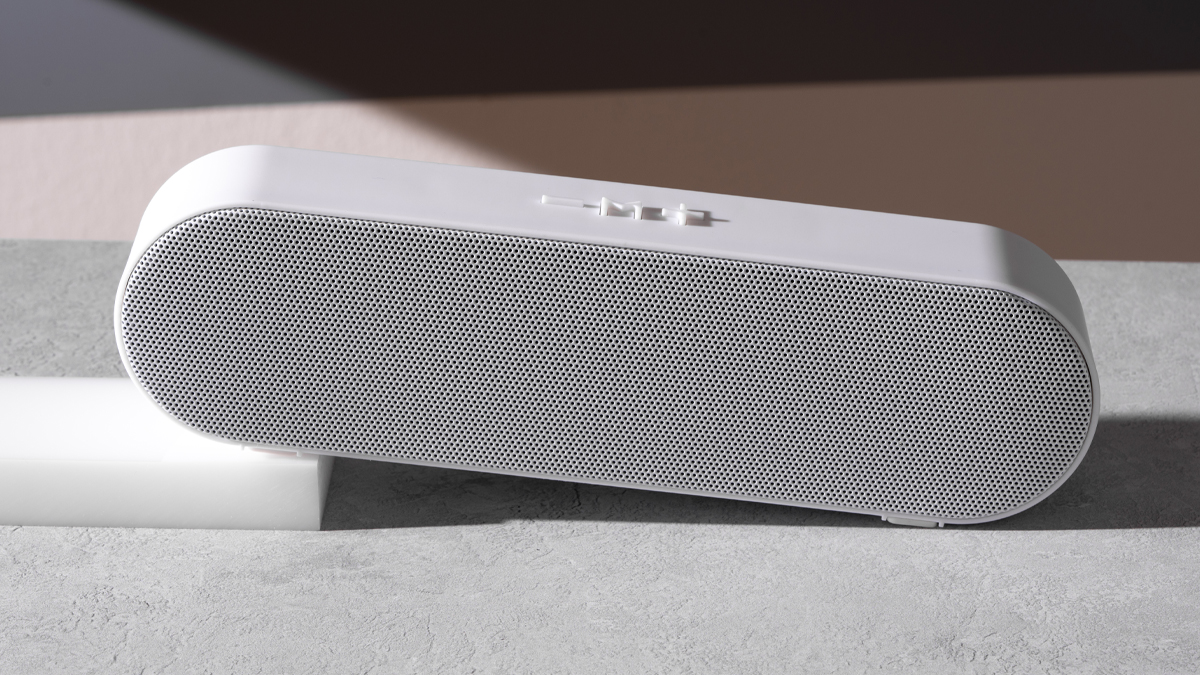
What is Tweeter?
Tweeter is a small speaker driver made to reproduce high frequency sounds. In a speaker system, different drivers are often used for different parts of the audio range. The woofer handles low frequencies, the midrange driver handles middle frequencies, and the tweeter handles the upper part of the sound spectrum. This high range includes details such as cymbals, violin harmonics, the sparkle of acoustic guitar strings, breath in vocals, and many of the sharp textures that make music feel open and alive.
Purpose: The main purpose of a tweeter is to play sounds that are too high for a woofer or midrange driver to reproduce clearly. If a speaker system had no tweeter, music would often sound dull, closed, and lacking detail. The crispness in percussion, the air in vocals, and the brightness of many instruments would be reduced.
Position in speaker systems: Tweeters are usually placed near the top of a speaker cabinet because high frequencies are more directional than low frequencies. This means the listener often hears them best when the tweeter is closer to ear level. In home speakers, car speakers, studio monitors, public address systems, and many professional sound systems, the tweeter is an important part of the full audio picture.
Sound character: A good tweeter does not simply make music brighter. It should deliver clarity, precision, speed, and detail without becoming harsh. Its job is to reproduce upper frequencies in a balanced way so that the listener hears texture, space, and fine musical information.
Importance in education and audio knowledge: Understanding the tweeter helps people learn how speakers are designed, why different drivers exist, and how sound is divided across the frequency spectrum. For anyone interested in music electronics and the music industry, the tweeter is one of the most important components in modern loudspeaker design.
How does Tweeter Work?
A tweeter works by converting electrical audio signals into high frequency sound waves. Like other speaker drivers, it uses electromagnetic movement to create sound, but it is specially built for very fast and very small movements. High frequency audio changes rapidly, so a tweeter must respond with great speed and precision.
Signal handling: When an amplifier sends an audio signal to a speaker, the full signal contains low, mid, and high frequencies. A crossover network separates this signal into ranges. The tweeter receives only the high frequency part. This protects it from low frequencies that could damage it or reduce its performance.
Voice coil action: Inside most tweeters, a voice coil sits in a magnetic field. When electrical current passes through the coil, it creates a changing magnetic force. That force moves the diaphragm back and forth. Because the diaphragm is very light, it can move quickly enough to reproduce high frequency sound.
Diaphragm movement: The diaphragm is the sound producing surface of the tweeter. Its movement pushes and pulls air, creating sound waves. Since the motions are very small but very fast, the material of the diaphragm must be light, stiff, and well controlled.
Crossover support: The crossover is a key part of how a tweeter works in a speaker system. It ensures that the tweeter only receives frequencies it is designed to handle. In a two way speaker, the crossover typically divides sound between the woofer and the tweeter. In a three way speaker, it works with other drivers too.
Directional output: High frequencies are more focused than low frequencies. Because of this, tweeters are designed to control how sound spreads into the room. Some are made for wide listening angles, while others are built for focused projection, especially in professional sound reinforcement.
Listening result: When the tweeter works properly, the listener hears more detail, more sparkle, and better separation between instruments. The upper part of the music feels cleaner and more realistic.
What are the Components of Tweeter?
A tweeter may look simple from the outside, but it contains several important parts that help it reproduce high frequencies accurately. Each component plays a role in speed, control, durability, and tonal balance.
Diaphragm: The diaphragm is the main vibrating part of the tweeter. It moves air to create sound. Common materials include silk, metal, aluminum, titanium, and synthetic composites. The material affects the sound character, weight, stiffness, and smoothness of response.
Voice coil: The voice coil is a fine wire coil attached to the diaphragm. It receives the electrical signal and reacts with the magnetic field. The quality of the voice coil affects efficiency, heat handling, and responsiveness.
Magnet: The magnet creates the magnetic field in which the voice coil moves. Common magnet materials include ferrite and neodymium. Strong magnets help improve control and efficiency.
Suspension system: The suspension keeps the diaphragm centered and allows controlled movement. It must be flexible enough for motion but stable enough to prevent distortion.
Faceplate: The faceplate is the front structure around the tweeter. It helps mount the tweeter and can influence sound dispersion. Its shape can affect how the sound spreads across the listening area.
Chamber or rear cavity: Some tweeters include a rear chamber behind the diaphragm. This helps control resonance and improve low end extension within the tweeter operating range.
Protective grille: Many tweeters have a grille or mesh to protect the delicate diaphragm from dust, fingers, and physical damage. This is especially useful in consumer products and public systems.
Terminals: The terminals connect the tweeter to the speaker wiring. Good terminals ensure stable signal transfer and easy installation.
Waveguide or horn structure: In some designs, the tweeter is paired with a waveguide or horn. This helps control directivity, increase output, and improve efficiency.
What are the Types of Tweeter?
Tweeters come in several types, each with its own design method, sound character, and common use. The choice depends on performance needs, budget, and application.
Dome tweeter: This is one of the most common types. It uses a dome shaped diaphragm and is widely found in home speakers and studio monitors. Soft dome tweeters often sound smooth and natural, while metal dome tweeters may sound more detailed and crisp.
Cone tweeter: Cone tweeters use a small cone diaphragm. They were more common in older speaker systems and some budget designs. They can still be useful, but they are less common than dome types in many modern quality speakers.
Horn tweeter: Horn tweeters use a diaphragm that feeds into a horn shaped structure. This increases efficiency and output. They are common in public address systems, live sound, and some home speakers. They are valued for projection and dynamic performance.
Compression driver tweeter: This is a professional version of high output high frequency reproduction. It is often used with horns in concert systems, clubs, large venues, and cinemas. It can deliver strong output over long distances.
Ribbon tweeter: Ribbon tweeters use a very thin strip of conductive material suspended in a magnetic field. Because the moving element is extremely light, ribbon tweeters can produce excellent detail and fast response. They are often found in high fidelity speakers.
Planar magnetic tweeter: This design uses a flat diaphragm with conductive traces. It offers low mass and good transient response. Many listeners appreciate its clean and open sound.
Electrostatic tweeter: Electrostatic designs use an electrically charged diaphragm placed between conductive panels. These can provide remarkable detail and transparency, though they are more specialized and less common in general consumer speakers.
Piezo tweeter: Piezo tweeters use piezoelectric material to create movement. They are inexpensive and can be found in some budget and utility systems. However, they are generally less respected in high fidelity audio because their sound quality often does not match more refined designs.
Super tweeter: A super tweeter is designed to reproduce very high frequencies above the normal tweeter range. It is often used in specialty systems to extend top end response and increase perceived air and openness.
What are the Applications of Tweeter?
Tweeters are used in many audio products and environments because high frequency reproduction is necessary for complete sound.
Home audio systems: In bookshelf speakers, floor standing speakers, soundbars, and home theater systems, tweeters help create clear dialogue, detailed music playback, and a more realistic listening experience.
Studio monitors: Music producers, mixing engineers, and mastering professionals rely on tweeters in studio monitors to hear fine high frequency details. Accurate tweeters help professionals make correct decisions about equalization, vocal brightness, cymbal balance, and overall clarity.
Car audio systems: Tweeters are widely used in car speakers to improve the sense of detail and presence. Since cars are small listening spaces with many reflections, tweeter placement and design are very important.
Public address systems: In auditoriums, schools, airports, religious venues, and event spaces, tweeters or high frequency drivers help speech sound more intelligible. Clear treble makes announcements easier to understand.
Live sound reinforcement: Concert systems and stage speakers use high frequency drivers to project vocals, instruments, and effects to large audiences. In professional settings, strong and durable tweeters are essential.
Portable speakers: Even compact Bluetooth speakers often use tweeter like high frequency drivers to improve clarity in a small format.
Cinema sound systems: Movie theaters depend on high frequency drivers for dialogue intelligibility, sound effects, and musical detail. Without strong treble reproduction, film sound loses realism and emotional impact.
Musical instrument amplification: Some keyboard amps, acoustic guitar amplifiers, and bass cabinets with full range designs use tweeters to reproduce upper harmonics and articulate detail.
What is the Role of Tweeter in Music Industry?
The tweeter has an important role in the music industry because so much of modern sound production depends on accurate and controlled high frequency reproduction. From recording studios to concert venues, tweeters support the creation, evaluation, and delivery of music.
Recording and monitoring: During recording sessions, engineers listen carefully to high frequency details such as sibilance in vocals, cymbal sheen, string noise, and room ambience. Tweeters make these details audible so that recording decisions can be more precise.
Mixing and mastering: In mixing, balance in the upper range is critical. Too much treble can make a track feel sharp and tiring, while too little can make it feel lifeless. Accurate tweeters allow engineers to shape the sound so that it translates well across many playback systems.
Loudspeaker manufacturing: Speaker brands in the music electronics field invest heavily in tweeter design because it strongly affects product identity. Some brands are known for smooth tweeters, some for bright analytical sound, and others for wide dispersion or high efficiency.
Live performance quality: On stage and in audience systems, tweeters help deliver vocal definition, percussion attack, and instrument detail. This is essential for live concerts where listeners expect energy and clarity.
Consumer listening standards: The music industry is also influenced by listener expectations. People have become used to hearing detailed high frequency sound in headphones, speakers, cars, and mobile devices. Tweeters help meet that demand in full range systems.
Innovation and competition: New materials, better crossover design, computer modeling, and acoustic testing have pushed tweeter technology forward. This supports higher quality sound products and improves the listening experience across the industry.
What are the Objectives of Tweeter?
Tweeters are designed with specific objectives in mind. Their purpose goes beyond simply adding treble to a speaker system.
Accurate high frequency reproduction: One major objective is to reproduce upper frequencies faithfully so that musical detail remains clear and natural.
Improved clarity: Tweeters help make vocals, percussion, strings, and fine harmonic content easier to hear. This leads to greater clarity in both music and speech.
Balanced system performance: A speaker system should cover the full audible range in a smooth way. The tweeter contributes the top end so that the overall sound feels complete and well balanced.
Fast transient response: High frequency sounds often involve fast attacks, such as drum hits, plucked strings, and sharp consonants in speech. A tweeter should respond quickly to preserve those details.
Controlled dispersion: Another objective is to spread sound properly across the listening area. Designers aim for a useful balance between focus and coverage.
Efficiency and protection: Tweeters should deliver strong output within their range while remaining protected from harmful low frequencies. This is why crossovers and material choices are important.
Low distortion: Good tweeters are designed to minimize unwanted noise, breakup, and harshness. The goal is clean sound even at normal or high listening levels.
What are the Benefits of Tweeter?
Tweeters provide many benefits in speaker systems, and these benefits are easy to notice when comparing a speaker with good high frequency reproduction to one without it.
Better detail: Tweeters reveal subtle elements in music that would otherwise be hidden. This includes breath sounds, finger movement on strings, cymbal shimmer, and reverb tails.
Greater clarity in vocals: Human voices contain important upper frequency information. Tweeters help speech and singing sound more distinct and understandable.
Improved instrument separation: When high frequencies are reproduced well, instruments become easier to distinguish from one another. This makes music feel less crowded.
More realistic soundstage: Tweeters help create a sense of openness, air, and space. This improves stereo imaging and makes recordings feel more lifelike.
Balanced listening experience: Since music spans a wide range of frequencies, a speaker needs proper treble output to sound complete. Tweeters make the overall response more balanced.
Enhanced emotional impact: Many musical textures that create excitement, tension, elegance, and brilliance live in the upper range. Tweeters help preserve those emotional qualities.
Better performance in professional environments: For engineers, performers, and sound technicians, good tweeters support more accurate work. This improves production quality and live sound delivery.
What are the Features of Tweeter?
Tweeters are built with features that suit the demands of high frequency sound reproduction. These features vary by design, but several are commonly valued.
Lightweight diaphragm: A key feature is a low mass diaphragm that can move very quickly. This helps the tweeter reproduce fast high frequency signals.
Wide frequency response: Good tweeters can cover a broad high frequency range with consistency and control.
Compact size: Tweeters are usually smaller than woofers and midrange drivers. Their compact form makes them easy to place in multi driver speaker systems.
High sensitivity: Many tweeters are efficient enough to produce strong output with relatively small movement. This is useful in both consumer and professional speakers.
Controlled dispersion pattern: Tweeters may be designed for wide listening angles or more focused output, depending on the application.
Durable materials: Quality tweeters use carefully chosen materials for the diaphragm, coil, and motor structure to improve performance and lifespan.
Integration with crossovers: Tweeters are designed to work smoothly with passive or active crossover systems so that the transition from midrange or woofer to tweeter is natural.
Protective construction: Some tweeters include ferrofluid cooling, protective grilles, or other design features to improve reliability and reduce the risk of overheating or damage.
What are the Examples of Tweeter?
There are many practical examples of tweeters across different audio products and professional systems.
Bookshelf speaker tweeter: A compact home speaker often uses a soft dome tweeter for smooth and enjoyable listening in living rooms, bedrooms, and study spaces.
Studio monitor tweeter: Nearfield monitors used in recording studios frequently include dome, ribbon, or waveguide loaded tweeters for accurate monitoring.
Car door system tweeter: Many car audio setups place small tweeters in door panels, dashboard corners, or pillar mounts to improve detail and soundstage.
Horn loaded concert tweeter: Large live sound systems use compression drivers and horns to project high frequencies across long distances in venues and outdoor events.
Ribbon tweeter in high fidelity systems: Premium home audio speakers may use ribbon tweeters for refined treble detail and a sense of openness.
Soundbar tweeter: Some soundbars include small dedicated high frequency drivers to improve dialogue and sparkle in movies and television.
Portable PA speaker tweeter: Event speakers for DJs and presenters usually include a high frequency driver for speech clarity and music energy.
Acoustic instrument amplifier tweeter: Amplifiers for acoustic guitars or keyboards may use tweeters to reproduce upper harmonics with more realism.
What is the Definition of Tweeter?
Definition: A tweeter is a loudspeaker driver specifically designed to reproduce high frequency sound, usually the upper part of the audible range, with speed, clarity, and precision.
Technical understanding: In a multi driver speaker system, the tweeter is responsible for the treble region. It is usually smaller and lighter than other drivers because high frequencies require rapid diaphragm movement rather than large excursion.
Functional understanding: The tweeter adds detail, brightness, and articulation to audio playback. It works together with crossovers and other drivers to create a complete sound system.
Practical understanding: In everyday audio use, the tweeter is the part of a speaker that helps music sound crisp and speech sound clear.
What is the Meaning of Tweeter?
Meaning in simple language: Tweeter means the part of a speaker that plays the high notes and fine details in sound. It is the driver that handles the upper end of music and speech.
Meaning in audio systems: In speaker design, the tweeter represents specialization. Instead of asking one large driver to reproduce every frequency, the system gives the high range to a dedicated component that can perform it better.
Meaning in listening experience: For listeners, the tweeter means clarity, sparkle, and air. It is closely connected with the sense of detail that makes recordings feel more vivid and complete.
Meaning in music electronics: In the broader field of music electronics, the tweeter is a vital example of how engineering supports artistic sound reproduction. It shows how careful design helps preserve the fine details of music.
What is the Future of Tweeter?
The future of tweeter technology is likely to be shaped by better materials, smarter system design, digital processing, and rising listener expectations.
Advanced materials: Manufacturers continue to explore lighter, stronger, and better damped diaphragm materials. These can improve speed, reduce distortion, and create smoother sound.
Better waveguide design: Computer modeling allows engineers to shape sound dispersion more precisely. This means future tweeters may offer more even coverage, better imaging, and improved integration with other drivers.
Stronger motor systems: Improved magnet structures and more refined voice coil designs can increase efficiency and control while reducing unwanted resonances.
Active speaker integration: Many modern speakers now use active electronics and digital signal processing. In these systems, tweeters can be managed with greater precision, allowing better crossover accuracy, time alignment, and protection.
Compact high performance systems: As users demand smaller speakers with better sound, tweeter design will continue to improve so that compact systems can still deliver clean and detailed treble.
Smart audio products: Wireless speakers, immersive audio systems, and intelligent home devices will continue to rely on efficient high frequency drivers. Tweeters will remain important in delivering clarity in increasingly connected products.
Professional audio evolution: In concerts, studios, and cinema, tweeters and compression drivers will keep evolving to meet the need for higher output, lower distortion, and better consistency.
Sustainability direction: Future speaker design may also focus more on energy efficiency, durable construction, and materials that support environmentally responsible manufacturing.
Summary
- Tweeter is a speaker driver designed to reproduce high frequency sound.
- It plays an essential role in clarity, detail, sparkle, and upper range balance.
- Tweeters work by converting electrical signals into fast diaphragm movement.
- Important components include the diaphragm, voice coil, magnet, faceplate, and terminals.
- Common types include dome, horn, ribbon, planar magnetic, electrostatic, and piezo tweeters.
- Tweeters are used in home speakers, studio monitors, car audio, live sound, cinema, and public address systems.
- In the music industry, tweeters are important for recording, mixing, mastering, manufacturing, and live performance.
- Main objectives include accurate treble reproduction, fast response, low distortion, and controlled sound dispersion.
- Key benefits include better detail, clearer vocals, improved instrument separation, and a more realistic listening experience.
- Common features include lightweight diaphragms, wide frequency response, compact size, and protective construction.
- The meaning of tweeter is closely linked with high notes, sound detail, and precision in speaker design.
- The future of tweeter technology includes better materials, smarter crossover control, active systems, and more refined acoustic performance.

