

What is Voltage Controlled Oscillator?
A Voltage Controlled Oscillator, also called a VCO, is an electronic circuit that produces a repeating electrical signal whose frequency is controlled by an input voltage. In simple words, it is a sound generator where voltage acts like a musical steering wheel. When the control voltage changes, the oscillator changes pitch. Because pitch is directly related to frequency, the VCO is the part of a synthesizer that can create the fundamental tone that later becomes a musical note, a bass line, a lead sound, or a textured drone.
In synthesizers under music electronics, the VCO is often one of the first building blocks in the signal chain. It creates a raw waveform such as a sine wave, triangle wave, sawtooth wave, or square wave. That raw sound can be shaped by filters, amplifiers, modulators, and effects. Even when a modern synthesizer is digital, the concept remains the same: there is a part of the instrument that generates a periodic signal, and some value equivalent to voltage tells it what frequency to generate.
Musicians and engineers care about VCOs because they are expressive. They translate performance gestures into pitch changes. That might mean a keyboard note, a pitch bend wheel, an envelope sweep, an LFO modulation, or a control voltage from a modular synth patch. The VCO becomes the voice that responds to those movements, turning control voltage into audible tone.
In classic analog synthesizers, the VCO is literally voltage controlled. In many digital instruments, the frequency is controlled by numbers rather than voltage, but the musical role is similar. Understanding the VCO helps you understand why synthesizers feel alive, how pitch tracking works, why tuning stability matters, and how different waveforms create different timbres.
How does Voltage Controlled Oscillator Work?
A VCO works by converting an input control voltage into an oscillation frequency. The circuit is designed so that changes in voltage alter the rate at which a repeating waveform cycles. Each cycle of the waveform represents one period. The number of cycles per second is the frequency, measured in hertz. Higher frequency means higher pitch, lower frequency means lower pitch.
Control voltage relationship: Many synthesizers use a standard where a change of 1 volt corresponds to a change of one octave. This is called the one volt per octave convention. If the voltage rises by 1 volt, the oscillator frequency doubles, which musically is an octave up. If the voltage drops by 1 volt, the frequency halves, which is an octave down. This mapping is convenient because it matches how humans perceive pitch, since musical pitch is logarithmic.
Core oscillation mechanism: Inside the VCO, there is usually an oscillator core that repeatedly charges and discharges a capacitor, or otherwise cycles through a stable repeating process. The control voltage changes the current that charges the capacitor, or changes a parameter in a feedback loop, making the capacitor charge faster or slower. Faster charging means the waveform cycles faster, so the pitch goes up. Slower charging means fewer cycles per second, so the pitch goes down.
Wave shaping stage: The oscillator core often produces one basic waveform internally, commonly a ramp or triangle. A wave shaping section converts that core waveform into other shapes. For example, a ramp core can be processed into a square wave through a comparator, or into a triangle wave using integration, or into a sine like shape using a shaping network. Each waveform has a different harmonic content, which changes the sound character.
Sync and modulation behavior: Many VCOs include features like hard sync, soft sync, pulse width modulation, and frequency modulation. Hard sync forces the oscillator to restart its cycle when another oscillator resets it. This produces bright, harmonically rich sounds especially when you sweep the synced oscillator pitch. Pulse width modulation changes the duty cycle of a square wave, creating movement and a chorus like richness. Frequency modulation applies another signal to the control input, causing vibrato at low rates or complex sidebands at audio rates.
Tuning and stability: Real analog components change with temperature, power supply variation, and component tolerances. That means the control voltage to frequency mapping can drift. Many VCO designs include temperature compensation and calibration trims to keep pitch stable. Some intentionally allow small instabilities because tiny pitch variation can sound warm and musical.
What are the Components of Voltage Controlled Oscillator?
A VCO includes several functional blocks that work together to produce a controlled waveform. Not every design uses the same exact parts, but most analog VCOs can be described through these core components.
Input and scaling stage: This section receives the control voltage from a keyboard, sequencer, envelope, or other control source. It scales and offsets the voltage so the oscillator can track musical intervals correctly. It often includes summing so multiple voltages can influence pitch at once, such as a base pitch plus modulation from an LFO plus pitch bend.
Exponential converter: Musical pitch is exponential, because each octave is a doubling of frequency. Many analog VCOs use an exponential converter so that a linear control voltage produces an exponential change in current or frequency. This is commonly implemented using matched transistor pairs. The converter is a major contributor to tuning accuracy and temperature sensitivity.
Integrator or timing capacitor network: A common oscillator core charges a capacitor with a current and then resets it. The capacitor voltage rises linearly when charged with constant current, creating a ramp. The time it takes to reach a threshold determines the period. The control voltage influences the current, which changes the rate of charging, changing the frequency.
Comparator or threshold detector: This block detects when the capacitor voltage reaches a certain level. When the threshold is reached, it triggers a reset mechanism. It can also produce a square wave output by comparing the ramp or triangle to a reference level.
Reset and discharge circuit: When the threshold is reached, the capacitor must be reset quickly. The reset circuit rapidly discharges the capacitor or flips the direction of integration. This creates the sharp corner in a ramp waveform or creates the reversal that forms a triangle wave.
Wave shapers: This section converts the core waveform into additional waveform outputs. A ramp can be turned into a triangle by integrating and reflecting, a triangle can be turned into a sine like shape by nonlinear shaping, and a ramp can be converted into a square through a comparator. Many VCOs offer multiple simultaneous outputs, which is useful for layering and modulation routing.
Pulse width control for square waves: If the VCO offers variable pulse width, there is a pulse shaping block that changes the threshold or timing of the comparator. This allows the duty cycle to move away from 50 percent. Modulating this parameter creates animated timbres.
Temperature compensation elements: Because transistor behavior changes with temperature, VCOs often include a temperature coefficient resistor or another compensation method. The goal is to counteract temperature drift so that the oscillator stays in tune as the instrument warms up.
Power supply regulation and buffering: A clean power supply improves stability. Buffer amplifiers isolate the oscillator core from external loads so that connecting multiple modules does not change the frequency or waveform shape.
Calibration trimmers: Many analog VCOs include adjustable trimmers for scale and offset. These are used during manufacturing or maintenance to ensure accurate tracking over multiple octaves.
What are the Types of Voltage Controlled Oscillator?
There are several ways to categorize VCOs. Some types are based on the oscillator core topology, others are based on waveform generation, and others are based on how the control voltage is interpreted.
Analog VCO: An analog VCO uses continuous time electronic components such as capacitors, resistors, and transistors to create and shape the waveform. It is associated with classic subtractive synthesis. Analog VCOs can be valued for their organic behavior, but they can also drift and require calibration.
Digital controlled oscillator with analog style control: Some instruments use a digitally controlled oscillator that behaves like a VCO from a user standpoint. The control voltage may be converted into digital values, and a digital oscillator generates the waveform. This can improve tuning stability while still supporting modulation and musical control.
Sawtooth core VCO: Many classic VCOs are based on a ramp or sawtooth core. The core produces a rising ramp that resets quickly. From this ramp, other waveforms can be derived. This type is popular because the ramp is useful for generating a rich sawtooth and for creating other shapes.
Triangle core VCO: A triangle core VCO generates a triangle waveform as the primary core output. Triangle cores can have different sonic behavior and can be more symmetrical by design. A triangle waveform is also a convenient starting point for sine shaping.
Sine core VCO: True sine core designs are less common in classic modular contexts because generating a low distortion sine directly is not trivial. However, some VCOs include specialized sine generation methods or high quality shaping to create clean sine waves, which are essential for certain FM tones and pure bass.
Relaxation oscillator VCO: A relaxation oscillator charges a capacitor until a threshold is reached and then discharges it rapidly. This is a broad category that includes many ramp core oscillators. They can be simple and effective but may require careful design for stability.
LC tank VCO: An LC tank VCO uses an inductor and capacitor resonant circuit. This type is common in radio frequency electronics but can appear in specialized audio contexts. In synthesizers, LC designs are not as common because inductors can be bulky, but the concept is important to understand in the broader world of oscillators.
Ring oscillator VCO: A ring oscillator uses a chain of inverters or delay stages. The total delay creates oscillation. This is common in digital integrated circuits and can appear in clock generation. In music electronics, it can be used for lo fi textures or as part of a digital system.
Quadrature VCO: This type produces two signals with a 90 degree phase difference. Quadrature outputs are useful for certain modulation techniques and for creating complex stereo or phase based effects.
Through zero FM capable VCO: Some VCOs are designed to support frequency modulation in a way that allows the frequency to cross through zero, reversing phase rather than clipping. This can produce more stable and musically useful FM tones.
What are the Applications of Voltage Controlled Oscillator?
VCOs are used anywhere a controllable frequency source is needed. In music electronics, their main job is sound generation, but their usefulness goes beyond just making a note.
Primary sound source in synthesizers: In subtractive synthesizers, one or more VCOs create the raw tone that is later shaped by a filter and amplifier. Layering multiple VCOs enables thick sounds, detuning, beating, and chord like stacks.
Modulation source: A VCO can operate at low frequencies, effectively becoming a voltage controlled LFO. In that mode it can modulate filters, amplitude, pulse width, and other parameters. The advantage is that its frequency can be voltage controlled across a very wide range.
Audio rate modulation: When a VCO modulates another VCO, filter, or amplifier at audio rates, it creates frequency modulation, amplitude modulation, or filter FM effects. This can produce metallic tones, bells, growls, and evolving textures.
Clock and timing: In modular systems, a VCO can act as a clock when its output is a pulse or square wave. That clock can drive sequencers, trigger envelopes, or synchronize rhythmic events. Voltage control allows tempo to be modulated creatively.
Sync effects: Hard sync between oscillators is an application where one oscillator forces another to reset. This produces a bright, ripping lead sound. Soft sync can create gentler spectral shifts.
Control signal generation for testing and calibration: Engineers use controllable oscillators as signal generators to test audio circuits, measure frequency response, and calibrate devices.
Communication and control systems within music gear: Inside digital synthesizers, drum machines, and effects units, oscillator like circuits may be used for clocking, sampling rates, and internal timing. Even when they are not called VCOs, the principle of voltage or parameter controlled frequency appears.
Hybrid synthesis and modular integration: Many modern setups combine modular analog gear with digital control. VCOs can receive control voltages from MIDI to CV converters, DAW interfaces, or control surfaces, enabling the VCO to be used in modern production environments.
What is the Role of Voltage Controlled Oscillator in Music Industry?
In the music industry, the VCO is a foundational technology that shapes how electronic music is created, performed, recorded, and produced. Its role extends from instrument design to the sound identity of entire genres.
Sound identity and timbre creation: Many iconic synth sounds start with the harmonics of a sawtooth or pulse wave from a VCO. Classic basses, bright leads, and thick pads often rely on multiple VCOs slightly detuned. That detuning creates beating, which gives motion and perceived width. Genres like synthpop, techno, house, and many film score textures build on these properties.
Expressive performance control: A VCO translates performance control into pitch. When a keyboard player changes notes, when a ribbon controller slides, or when pitch bend is used, the VCO follows. In modular performances, artists patch control voltages from sequencers, random sources, and envelopes to create evolving melodies that feel alive.
Studio production workflows: In recording studios, VCO based synthesizers are used both as lead instruments and as layers. Producers may record a VCO bass line, then overdub a second VCO lead, then add a pad made from a different waveform. Because VCOs can be sensitive to tuning and drift, that behavior can become part of the character. Some producers love slight pitch instability because it creates a natural chorus effect.
Innovation in instrument design: Many synthesizer architectures are organized around the oscillator section. Manufacturers design VCOs to offer different waveforms, stable tuning, and flexible modulation. The oscillator design influences the perceived quality of an instrument. In high end modular systems, oscillator modules are marketed based on their core design, stability, and unique wave shaping features.
Education and skill development: Learning synthesis often begins with understanding oscillators. Musicians who understand VCO behavior can design sounds intentionally rather than randomly. That knowledge improves sound design for albums, games, film scores, and live shows.
Integration with modern digital systems: The music industry today blends analog and digital. VCOs are often controlled by digital sequencers and DAWs through interfaces that generate accurate control voltages. This allows the classic sound of VCOs to fit into modern grid based production while keeping the feel of hands on analog modulation.
Reliability and touring considerations: For live touring, stable pitch and repeatability are crucial. Some musicians prefer digitally stabilized oscillators, while others embrace analog drift. Many modern synths provide auto tuning routines or hybrid designs to keep VCO behavior manageable on stage.
Influence on genre evolution: When artists discovered that modulating VCO pitch at audio rates creates aggressive sidebands, new sonic palettes appeared. When they used sync sweeps, signature lead tones emerged. When they explored pulse width modulation, pads became lush and animated. These technical options shaped musical trends over decades.
What are the Objectives of Voltage Controlled Oscillator?
A VCO is designed with clear objectives that serve musicians, engineers, and instrument builders. These objectives help define what makes a VCO effective and musically useful.
Generate a stable periodic waveform: The primary objective is to produce a repeating signal with a controllable frequency. The waveform should be consistent in shape and amplitude so downstream modules can process it predictably.
Translate control voltage into pitch: A key objective is accurate mapping between control voltage and frequency. In many systems this means one volt per octave tracking so the oscillator stays in tune across multiple octaves.
Offer musically useful waveforms: A VCO should provide waveforms with different harmonic content, such as sine, triangle, sawtooth, and square. These waveforms are the raw material for sound design.
Support modulation without unwanted artifacts: The VCO should respond smoothly to modulation such as vibrato, FM, and pulse width changes. It should avoid clicks, glitches, or unstable behavior when modulated, unless a particular effect is intentionally designed.
Maintain tuning stability: Another objective is to minimize drift due to temperature and power variation. Many designs include temperature compensation, stable power regulation, and calibration controls to meet this goal.
Provide a wide frequency range: A VCO should cover sub audio, audio, and sometimes ultrasonic frequencies. This allows it to act both as an audible sound source and as a modulation or clock source.
Enable synchronization and interaction: Many VCOs aim to support features like sync, reset, and phase control so multiple oscillators can interact in musically interesting ways.
Be patch friendly in modular environments: In modular synthesis, the objective includes offering multiple outputs and inputs, proper signal buffering, and predictable voltage ranges so the oscillator integrates well with other modules.
What are the Benefits of Voltage Controlled Oscillator?
A VCO provides benefits that are both technical and musical. These benefits are why the VCO remains central to synthesizers and music electronics.
Expressive control: Because pitch can be modulated continuously, musicians can create vibrato, bends, slides, and microtonal movement easily. This adds emotion and realism to electronic sounds.
Rich harmonic starting point: Waveforms like sawtooth and pulse contain many harmonics. This makes them ideal for subtractive synthesis, where filters carve the spectrum into different colors. A strong oscillator sound makes the rest of the synth chain more effective.
Creative modulation possibilities: VCOs can be modulated by envelopes, LFOs, random voltages, and other oscillators. This produces evolving textures and complex tones that are difficult to replicate with fixed sample based instruments.
Multiple roles in a system: A VCO can be a sound source, a modulator, a clock, or a control signal generator. That versatility is valuable in modular systems where one module can serve many musical tasks.
Analog character and musical imperfection: In analog VCOs, small variations can create warmth and movement. Slight drift and component nonlinearity can sound pleasing, especially in layered sounds.
Compatibility with control standards: VCOs are designed to work with common control voltage standards, making them easy to integrate with sequencers, keyboards, and converters. This supports a wide ecosystem of music electronics.
Layering and thickness: Using two or more VCOs and detuning them slightly creates a thick sound. This is a classic technique for pads and leads and is one of the fastest ways to make a synth sound big.
Sound design education: Working with a VCO teaches you the fundamentals of waveform, frequency, harmonics, modulation, and signal flow. That knowledge transfers to many other audio technologies.
What are the Features of Voltage Controlled Oscillator?
VCOs often include features that increase musical flexibility and make the module or instrument easier to use. Different products offer different sets, but the following features are common.
Multiple waveform outputs: Many VCOs provide simultaneous outputs such as sine, triangle, sawtooth, and square. This allows blending, cross modulation, and routing different waveforms to different destinations.
Coarse and fine tuning controls: Coarse tuning sets the general pitch range and fine tuning adjusts small differences. This is essential for matching oscillators, creating chords, and setting musical intervals.
Octave switching: Many VCOs include an octave selector that shifts pitch by octaves quickly, making it easier to place sounds in the right register.
Linear and exponential FM inputs: Exponential FM changes pitch in a way that follows musical intervals, useful for vibrato and expressive effects. Linear FM changes frequency more directly and is useful for complex FM timbres. Some VCOs provide both.
Sync input: A sync input allows external signals to reset the oscillator cycle. Hard sync is used for aggressive lead sounds and harmonic sweeps.
Pulse width and PWM: For square waves, pulse width control changes the duty cycle. A PWM input allows modulation of pulse width, creating animated and rich timbres.
Reset and phase control: Some VCOs provide reset inputs or phase outputs for precise timing and rhythmic applications.
Temperature compensated tuning: Good VCOs include design elements to reduce drift, improving tuning consistency during a session or performance.
Wide frequency range: Many VCOs can go from very slow cycles to ultrasonic frequencies. This supports both modulation and audio applications.
Stable amplitude and low noise output: A well designed VCO maintains stable output levels and reduces unwanted noise, making it easier to mix and process.
Calibration support: Some VCOs include accessible trim points or auto calibration routines, improving long term reliability.
What are the Examples of Voltage Controlled Oscillator?
Examples of VCOs can be described in several ways, including by classic synthesizer oscillator sections, common modular oscillator modules, and typical VCO behaviors found in many instruments. This section focuses on concept examples rather than brand marketing.
Classic subtractive synth oscillator section: A typical analog polysynth or monosynth includes one or two VCOs per voice. Each VCO provides sawtooth, pulse, and sometimes triangle and sine. The musician selects waveforms, tunes the oscillators, and mixes them before sending the signal to a filter and amplifier.
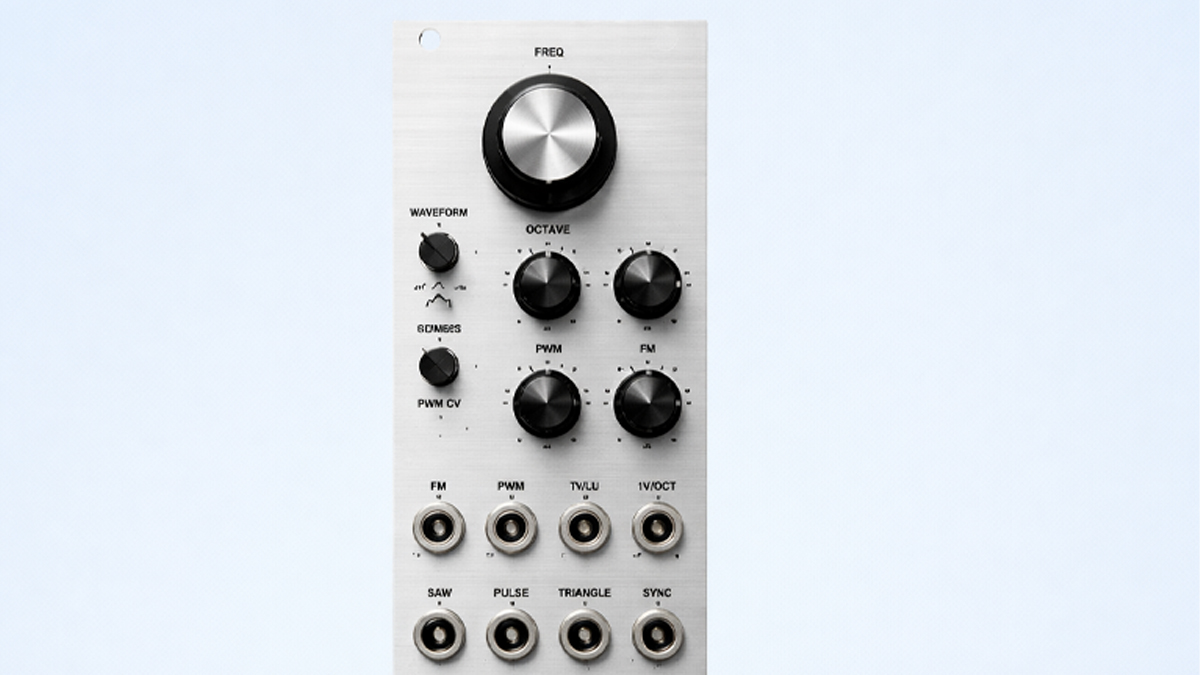
Modular VCO module: In a modular synthesizer, a VCO is often a standalone module with multiple waveform outputs, pitch inputs, FM inputs, sync input, and pulse width controls. The musician patches control voltages and audio connections to build a custom voice.
Through zero FM oscillator: Some advanced VCOs are designed for stable linear FM and through zero behavior. These are often used for complex FM sounds, metallic percussion, and evolving harmonic structures.
Quadrature oscillator for phase based synthesis: A VCO that produces sine and cosine outputs can be used for phase shifting, stereo modulation, and certain forms of complex modulation where phase relationships matter.
VCO used as a clock: A VCO set to a square wave can drive a sequencer or trigger envelopes. When the pitch control input is modulated, the tempo shifts in a controllable way, enabling accelerations, decelerations, and rhythmic movement.
VCO paired with a filter for classic bass: A sawtooth wave from a VCO into a low pass filter with an envelope creates a common bass sound. The oscillator provides the harmonics and the filter shapes the brightness.
VCO sync lead patch: One oscillator is the master and another is the slave. The slave is synced and its pitch is swept by an envelope. The resulting sound is bright and cutting, common in many classic lead lines.
What is the Definition of Voltage Controlled Oscillator?
A Voltage Controlled Oscillator is defined as an oscillator whose output frequency is controlled by an input voltage. The oscillator produces a periodic waveform, and variations in the control voltage cause predictable variations in frequency, enabling the oscillator to generate different pitches and to respond to modulation signals.
In music electronics, this definition is often extended in a practical way: a VCO is the controllable tone generator in a synthesizer that responds to control voltage standards so it can play musical notes, support vibrato and pitch bends, and interact with other modules through modulation.
What is the Meaning of Voltage Controlled Oscillator?
The meaning of Voltage Controlled Oscillator can be understood by breaking the phrase into parts.
Voltage: The control signal is represented as electrical potential, usually measured in volts. In a synthesizer, this voltage represents musical intent such as pitch, modulation depth, or performance gesture.
Controlled: The oscillator is not free running at one fixed frequency. It is meant to be guided. The control voltage acts as the guiding input that determines what the oscillator does.
Oscillator: The circuit generates a repeating signal. That signal can be a smooth sine, a sharp sawtooth, a hollow square wave, or another periodic shape.
Put together, the phrase means a tone generator whose pitch can be changed by a voltage. In the context of synthesizers, it means you can play melodies by changing voltage, and you can add expression by continuously modulating that voltage.
What is the Future of Voltage Controlled Oscillator?
The future of the VCO in the music industry is shaped by how musicians want instruments to feel, how manufacturers balance analog character with stability, and how modular ecosystems continue to grow.
More hybrid designs: Many future synthesizers will likely continue blending analog VCO behavior with digital control and stabilization. This can provide the musical feel of voltage control while improving tuning accuracy, patch recall, and integration with software.
Improved temperature stability and auto calibration: Advances in component matching, temperature sensing, and calibration algorithms can make VCOs more reliable. Some systems already use auto tuning routines and future designs can make that faster and more transparent in live performance.
Deeper modulation and control standards: As modular and semi modular gear continues to expand, VCOs may support more standardized control ranges, better tracking, and more inputs for expressive control such as velocity, aftertouch, and polyphonic control voltage systems.
New wave shaping and timbre control: Future VCOs can include more sophisticated wave shaping that moves beyond basic shapes. Oscillators may morph continuously between waveforms, add controlled harmonic folding, or include built in shaping stages that behave like miniature synthesis engines while still being voltage controllable.
Integration with software and DAWs: VCOs may be controlled more directly from DAWs through interfaces that generate accurate control voltages and timing. This enables tight synchronization, automation, and recall while keeping the analog sound source in the loop.
Sustainability and manufacturing shifts: The music electronics industry is becoming more aware of sustainable manufacturing and long term serviceability. Future VCO designs may prioritize repairable construction, widely available components, and stable calibration procedures.
Education and accessibility: As synthesis education becomes more common online, more musicians understand oscillators and want hands on control. This demand can keep VCO based instruments relevant, especially in modular learning environments.
Continued artistic demand for analog behavior: Many artists enjoy the subtle variation of analog VCOs. Even as digital synthesis improves, the desire for tactile, voltage responsive instruments can keep VCOs central to electronic music creation.
Summary
- A Voltage Controlled Oscillator is a frequency generating circuit whose pitch changes when control voltage changes.
- In synthesizers, the VCO is a primary sound source that creates waveforms such as sine, triangle, sawtooth, and square.
- A VCO works by converting control voltage into a change in the oscillation rate, often using an exponential converter and a timing capacitor core.
- Common VCO building blocks include input scaling, exponential conversion, oscillator core, reset circuitry, waveform shaping, buffering, and temperature compensation.
- VCO types include analog VCOs, digitally controlled oscillators with VCO style control, ramp core and triangle core designs, and specialized FM capable oscillators.
- Applications include tone generation, low frequency modulation, audio rate modulation, clocking, sync effects, and testing or timing functions in music gear.
- In the music industry, VCOs shape the sound identity of genres, support expressive performance, and remain central to synth design and sound education.
- The objectives of a VCO include stable waveform generation, accurate voltage to pitch tracking, wide frequency range, and strong modulation support.
- Benefits include expressive pitch control, rich harmonic content, versatile system roles, layering capability, and the musical character of analog behavior.
- The future of VCOs likely includes more hybrid systems, better stability, deeper modulation options, advanced wave shaping, and stronger DAW integration.

