

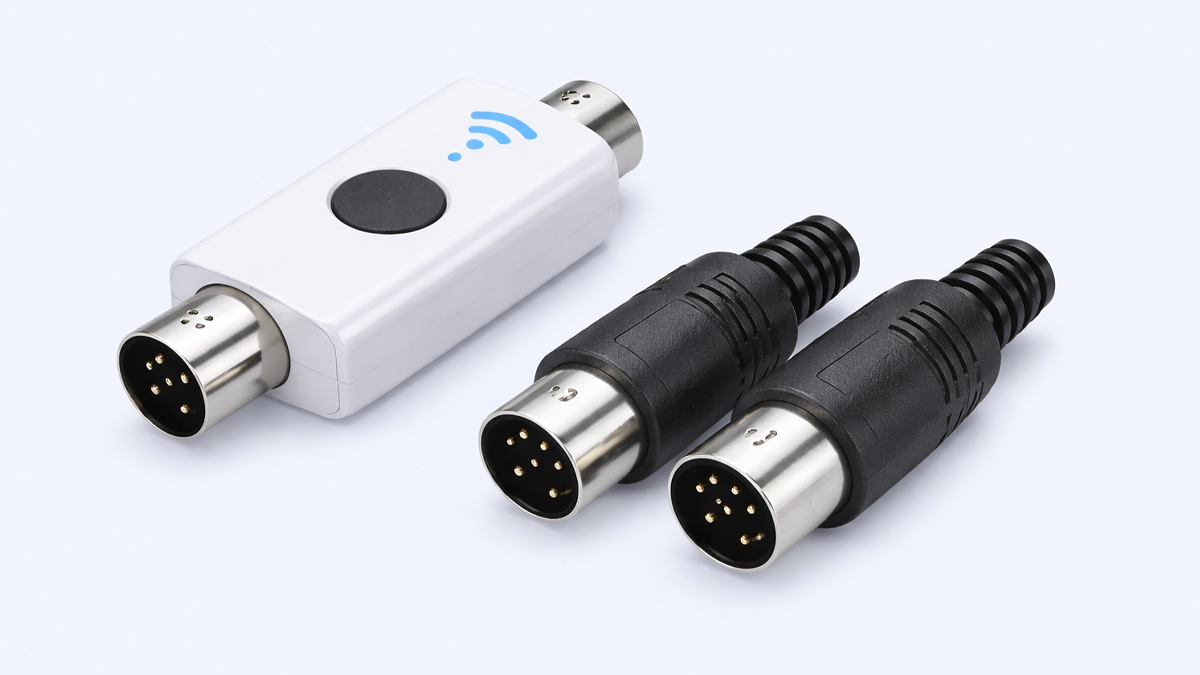
What is Wireless MIDI?
Wireless MIDI is a way to send MIDI data without using a physical cable. MIDI is a digital language that musical instruments and music software use to communicate. It does not carry audio. It carries instructions such as which note to play, when to start, when to stop, how hard the key was pressed, which sound to select, and how to change effects or parameters.
In the world of smart musical instruments, Wireless MIDI helps instruments connect to phones, tablets, laptops, stage computers, digital mixers, lighting controllers, and music apps with much more freedom. A smart keyboard can control a synthesizer app on a tablet. An electronic drum kit can trigger samples inside a laptop. A wind controller can shape the sound of a virtual instrument. All of this can happen wirelessly when Wireless MIDI is used.
Wireless MIDI matters because modern music creation and performance often involve multiple devices working together. Musicians want faster setup, fewer cables, and more flexibility on stage or in studios. Wireless MIDI is designed to support that goal while keeping timing accurate enough for real musical use.
How does Wireless MIDI Work?
Wireless MIDI works by converting MIDI messages into data that can travel through a wireless connection, then converting that data back into MIDI messages at the receiving end. The exact method depends on the wireless technology being used.
Bluetooth based Wireless MIDI: Many modern controllers and smart instruments use Bluetooth Low Energy. The instrument sends MIDI messages over Bluetooth to a receiver device such as a phone, tablet, or computer. The receiving device interprets those messages in a music app, digital audio workstation, or operating system MIDI service.
Wi Fi and network based Wireless MIDI: Some systems send MIDI over a local network. This can be a home studio network, a stage router network, or a direct Wi Fi connection. The MIDI data is packaged into network packets. The receiving computer or device then reads the network stream and exposes it as a MIDI port to music software.
Proprietary wireless systems: Some manufacturers use their own wireless transmitters and receivers. These often aim for stronger performance, longer range, or lower latency than general consumer wireless methods. They usually require a dedicated dongle or receiver connected to a computer or hardware instrument.
No matter which method is used, the purpose is the same. The sender generates MIDI messages when you play or control the instrument. The wireless link transports those messages. The receiver delivers them to the target device as if a cable connection exists.
Latency and stability: Timing is critical in music. Wireless MIDI systems focus on keeping latency low and consistent. Latency is the delay between playing a note and the receiving device reacting. Jitter is the variation in that delay. Good Wireless MIDI tries to keep both low enough that the player feels a tight response.
Pairing and routing: Most Wireless MIDI setups involve pairing devices or joining a network. Then you route the MIDI input to the correct instrument track or sound source in your software or hardware. Smart instruments often include companion apps that simplify this routing and configuration.
What are the Components of Wireless MIDI?
Wireless MIDI is not a single part. It is a system that can include hardware, software, and communication layers working together.
MIDI source device: This is the instrument or controller that generates MIDI messages. Examples include smart keyboards, MIDI guitars, electronic drum pads, smart wind controllers, and app based controllers.
Wireless transmitter: Some instruments have wireless built in. Others require an external transmitter. The transmitter takes MIDI output and sends it wirelessly. It can be integrated into the instrument, placed inside an adapter, or provided as a plug in module.
Wireless receiver: The receiver is the device that accepts the wireless signal and delivers MIDI to a target. Sometimes the receiver is a phone or tablet using built in Bluetooth. Sometimes it is a USB dongle connected to a computer. Sometimes it is a network service running on a computer.
Communication protocol: A protocol defines how data is packaged and transported. Wireless MIDI commonly uses Bluetooth MIDI profiles, network MIDI standards, or manufacturer specific protocols. The protocol impacts latency, reliability, and compatibility.
Host device and operating system MIDI service: A computer, tablet, or phone typically acts as the host. The operating system may create a virtual MIDI port once the wireless connection is established. Music apps then listen to that port.
Music software or target hardware: This is where the MIDI data is used. It can be a digital audio workstation, a synthesizer app, a sampler, a lighting control system, or a hardware synthesizer with a network interface.
Power and battery system: Wireless components often require power. Smart instruments may include rechargeable batteries or draw power from internal circuits. External transmitters may need their own power source. Battery quality affects performance time and stability.
Configuration and monitoring tools: Many systems include apps or utilities for pairing, selecting channels, mapping controls, updating firmware, and monitoring connection strength.
What are the Types of Wireless MIDI
Wireless MIDI can be grouped by the wireless transport method and by the typical use environment.
Bluetooth MIDI: This is one of the most common types for mobile and portable setups. It is popular for connecting controllers to tablets and phones. Bluetooth MIDI is typically easy to pair and does not require a router.
Wi Fi MIDI and network MIDI: This type uses a wireless network. It can support multiple devices on the same network and can be useful in studios or stage setups with several instruments and computers.
Ad hoc direct wireless: Some setups create a direct wireless link between two devices without needing a router. This can reduce network congestion and simplify configuration.
Proprietary low latency wireless systems: These are built for performance critical environments. They may use dedicated radio bands, custom receivers, and optimized firmware. They often target stage musicians who require stable timing.
Hybrid systems: Some smart instruments support both Bluetooth and Wi Fi, letting the user choose based on the situation. Bluetooth may be used for quick practice sessions, while Wi Fi may be used for multi device routing or longer range.
Wireless MIDI over USB dongle bridges: Some products convert wired MIDI from a standard MIDI port into wireless MIDI and then back to USB MIDI on the computer. This can allow older instruments to join modern wireless setups.
What are the Applications of Wireless MIDI?
Wireless MIDI is useful wherever MIDI control is needed but cables create limitations. In smart musical instruments, the applications are expanding quickly.
Mobile music production: A musician can connect a smart keyboard to a tablet running a virtual instrument app and record ideas anywhere. This is useful for travel, hotel practice, quick songwriting sessions, and portable studios.
Live performance and stage movement: Wireless MIDI helps performers move more freely. A keytar or guitar controller can trigger sounds without a cable tether. A drummer can trigger backing tracks or lighting cues from pads. A keyboard player can control multiple sound modules without long cable runs.
Classroom and music education: Teachers can set up many instruments in a room with fewer cables. Students can connect to shared tablets or computers for interactive lessons, ear training, and performance feedback. Wireless setups can reduce clutter and improve safety.
Studio workflow and clean setups: Studios often manage many instruments. Wireless MIDI can reduce cable mess for certain devices, especially controllers that are moved frequently. It can also enable quick reconfiguration during sessions.
Smart practice and training apps: Many smart instruments connect to apps that provide lessons, scores, feedback, and gamified practice. Wireless MIDI supports this connection so the instrument can send performance data to the app in real time.
Sound design and automation: Producers can map knobs, sliders, pads, and sensors on a smart controller to parameters in synthesizers and effects. Wireless MIDI allows controlling sound design tools from anywhere in the room.
Interactive installations and media control: Museums, art installations, theaters, and events use MIDI to control visuals, lighting, and interactive systems. Wireless MIDI can simplify installation and enable hidden controllers.
Film scoring and composing rigs: Composers often use multiple keyboards and controllers. Wireless MIDI can help position controllers ergonomically, though many professionals still prefer wired connections for the most critical timing tasks.
Rehearsals and band coordination: Wireless MIDI can trigger click tracks, tempo changes, backing tracks, and section markers. It can also allow a band leader to control cues from a controller without being tied to a laptop.
What is the Role of Wireless MIDI in Music Industry?
Wireless MIDI plays an important role in how music is created, performed, taught, and distributed through technology.
Enabling smart instrument ecosystems: Smart instruments often rely on companion apps, cloud libraries, and digital content. Wireless MIDI is a key link between the physical instrument and the digital ecosystem that expands its capabilities.
Speeding up creation: When connection becomes quick and simple, musicians capture ideas faster. Wireless MIDI reduces setup friction, especially for mobile creators. This supports faster songwriting and more frequent practice.
Supporting modern performance expectations: Live shows now involve more than instruments. They involve playback systems, synchronized lighting, video, and automation. Wireless MIDI helps performers control these systems in a flexible way.
Reducing hardware barriers: People entering music production may start with a phone or tablet. Wireless MIDI allows affordable controllers and smart instruments to integrate with these devices without extra interfaces.
Helping education scale: Music schools and training centers can deploy more instruments and devices with fewer cabling challenges. Wireless MIDI supports interactive learning tools and makes the learning environment more adaptable.
Encouraging new product design: Manufacturers design instruments differently when they are not constrained by ports and cable routing. Wireless MIDI encourages compact designs, modular accessories, and portable instruments.
Expanding accessibility: Wireless MIDI can help musicians with mobility challenges by enabling controllers to be placed where they are easiest to reach. It also supports alternative controllers like motion sensors and touch surfaces.
What are the Objectives of Wireless MIDI?
Wireless MIDI is designed with several key objectives that guide how it is built and why it is used.
Freedom of movement: Reduce physical restriction so musicians can play, perform, and control devices more comfortably.
Simplified setup: Reduce the time and complexity involved in connecting instruments to computers, tablets, and sound modules.
Reduced cable clutter: Minimize cable management in studios, classrooms, and stages, improving safety and organization.
Flexible routing: Enable easier control of multiple devices, including software instruments, hardware synthesizers, and stage systems.
Compatibility with modern devices: Support phones and tablets where traditional MIDI ports may not exist or may require adapters.
Portability: Make music creation more mobile and practical in non studio environments.
Support for smart instrument features: Enable real time connection to learning apps, performance analytics, and cloud based tools.
Reliable musical timing: Provide latency and jitter levels that remain usable for real playing, not just casual triggering.
What are the Benefits of Wireless MIDI?
Wireless MIDI brings practical advantages for musicians, producers, educators, and event teams.
Better mobility and stage presence: Performers can move, interact with the audience, and position instruments creatively.
Cleaner workspaces: Fewer cables can mean less clutter, fewer trip hazards, and faster troubleshooting.
Quick connection for practice: For casual practice, writing, and rehearsals, wireless can be faster than finding the right cables and adapters.
Easier multi device control: You can control different instruments and apps from one controller, especially in network based setups.
More flexible studio layout: Controllers can be placed where they feel best instead of where cables reach.
Improved learning experiences: Smart instruments can send detailed performance data to apps for feedback, scoring, and progress tracking.
Reduced wear and tear: Less plugging and unplugging can reduce connector damage over time, especially for frequently moved controllers.
Modern user experience: Wireless aligns with how people use technology today. Many users expect devices to connect without wires.
Better integration with portable devices: Phones and tablets become practical music workstations when Wireless MIDI is available.
What are the Features of Wireless MIDI?
Wireless MIDI systems vary, but many share a common set of features that define the user experience.
Wireless range options: Bluetooth often supports short to medium range, while Wi Fi based systems can support longer range depending on network strength and environment.
Low latency performance modes: Many systems optimize for responsive playing, sometimes offering settings to favor stability or speed.
Multi client connectivity: Some systems allow one controller to connect to multiple apps or devices, or multiple controllers to connect to one host.
Auto pairing and reconnection: Smart instruments often reconnect automatically after the first pairing, which improves everyday usability.
MIDI channel and routing control: Users can select channels, filter messages, and route data to specific instruments and tracks.
Controller mapping and customization: Many systems support mapping knobs, sliders, pads, and sensors to different MIDI control messages.
Firmware updates: Wireless devices often include firmware that can be updated to improve stability, add features, or fix timing issues.
Battery management: Features like sleep mode, battery indicators, and efficient wireless protocols help extend use time.
Security and device management: Network based MIDI may include password protected networks and device permissions, especially in professional environments.
Compatibility layers: Many platforms create virtual MIDI ports so that music software can use Wireless MIDI as if it were a cable connection.
What are the Examples of Wireless MIDI?
Wireless MIDI appears in many real world setups and products. Examples are best understood as use cases because the exact brand or model can change.
Smart keyboard to tablet: A Bluetooth enabled keyboard connects to a tablet running a piano app or synthesizer app. The keyboard sends note and control data wirelessly.
Electronic drum pads triggering samples: A drummer uses pads to trigger drum samples in a laptop without running a long USB cable across the stage.
Guitar controller for virtual instruments: A smart guitar or MIDI pickup system transmits MIDI data to a computer where it controls synthesizers or orchestral libraries.
Wind controller for expressive lead sounds: A wind controller sends MIDI breath and pitch data to a synth app, enabling expressive performances without cables.
Wireless MIDI bridge for older gear: A traditional hardware synthesizer with standard MIDI ports connects to a wireless transmitter module that sends its MIDI data to a computer wirelessly.
Stage control for backing tracks: A foot controller sends MIDI messages to start and stop backing tracks in a playback system, giving performers hands free control.
Lighting and visuals control: A controller sends MIDI cues to a lighting software system, allowing synchronized changes during a live show.
Classroom setup with multiple instruments: Several student keyboards connect wirelessly to a central computer lab system for lessons and group practice monitoring.
What is the Definition of Wireless MIDI?
Wireless MIDI is a method of transmitting MIDI messages between musical instruments, controllers, computers, and audio or media systems using wireless communication technologies such as Bluetooth or wireless networking, rather than physical MIDI or USB cables.
What is the Meaning of Wireless MIDI?
The meaning of Wireless MIDI is simple. It means MIDI control without a wire. Instead of using a cable to send musical instructions from one device to another, the instructions travel through a wireless connection. The receiving device behaves as if it is connected by a traditional MIDI cable, letting the musician play and control sounds and systems with more freedom and less physical setup.
In practical terms, Wireless MIDI means you can take a smart instrument, connect it to a digital music environment quickly, and use it to control sound and performance tools in real time while keeping your setup cleaner and more flexible.
What is the Future of Wireless MIDI?
The future of Wireless MIDI is strongly connected to the growth of smart musical instruments, mobile music creation, and connected performance systems.
Better latency and stability: Wireless chips, protocols, and operating system support continue to improve. This will reduce delay and timing variation, making wireless more suitable for demanding performance situations.
Wider platform support: As more devices include built in MIDI services for Bluetooth and network MIDI, setup will become easier. Musicians will expect Wireless MIDI to work smoothly across phones, tablets, and computers.
Smarter routing and auto configuration: Future systems will likely identify devices automatically, suggest routing, and remember performance templates. This will help beginners and speed up professional workflows.
Integration with cloud and collaboration: Wireless MIDI can work with cloud based music tools where performance data is shared across devices. This supports remote collaboration, practice tracking, and shared control in rehearsals.
Growth of sensor based controllers: Motion sensors, touch surfaces, wearables, and smart instruments with advanced expression will produce more data than simple note messages. Wireless MIDI will evolve to handle richer control streams efficiently.
Improved power efficiency: Battery life will continue to improve, allowing smaller controllers and longer sessions without charging.
Professional grade wireless ecosystems: More companies will build robust wireless ecosystems with dedicated receivers, stable performance modes, and optimized hardware for touring musicians.
Use in immersive and interactive media: As concerts adopt immersive audio, augmented reality, and interactive visuals, Wireless MIDI will be used more for real time control of complex show elements.
Continued relevance of wired connections: Wired MIDI and USB will still matter for ultra critical timing and environments with heavy wireless interference. The future is likely hybrid, where musicians choose wireless for flexibility and wired for maximum stability when needed.
Summary
- Wireless MIDI sends MIDI control messages without cables, helping smart instruments connect to apps, computers, and stage systems.
- It carries musical instructions like notes and control changes, not audio.
- Common types include Bluetooth MIDI, Wi Fi or network MIDI, proprietary low latency systems, and hybrid approaches.
- Key components include a MIDI source, transmitter, receiver, protocol, host device, and target software or hardware.
- Benefits include faster setup, fewer cables, better mobility, cleaner workspaces, and improved integration with mobile devices.
- Wireless MIDI supports modern music creation, education, and performance by enabling flexible routing and smart instrument ecosystems.
- The future will likely bring lower latency, easier setup, stronger multi device workflows, better battery efficiency, and more expressive controller support.

