

What is Resistance?
Resistance is the property in an electrical circuit that opposes the flow of electric current. In the simplest terms, it is the reason electricity does not move through every material with the same ease. Some materials allow current to pass very easily, while others slow it down. That slowing effect is called resistance. It is measured in ohms, which is written with the symbol Ω.
In music electronics, resistance is one of the most important concepts because nearly every audio device depends on controlled current flow. Guitar amplifiers, synthesizers, mixers, microphones, equalizers, speakers, audio interfaces, and effects pedals all rely on resistors and resistance values to shape voltage, protect parts, set signal levels, and control tone. Without resistance, music equipment would not be able to process sound in a stable and predictable way.
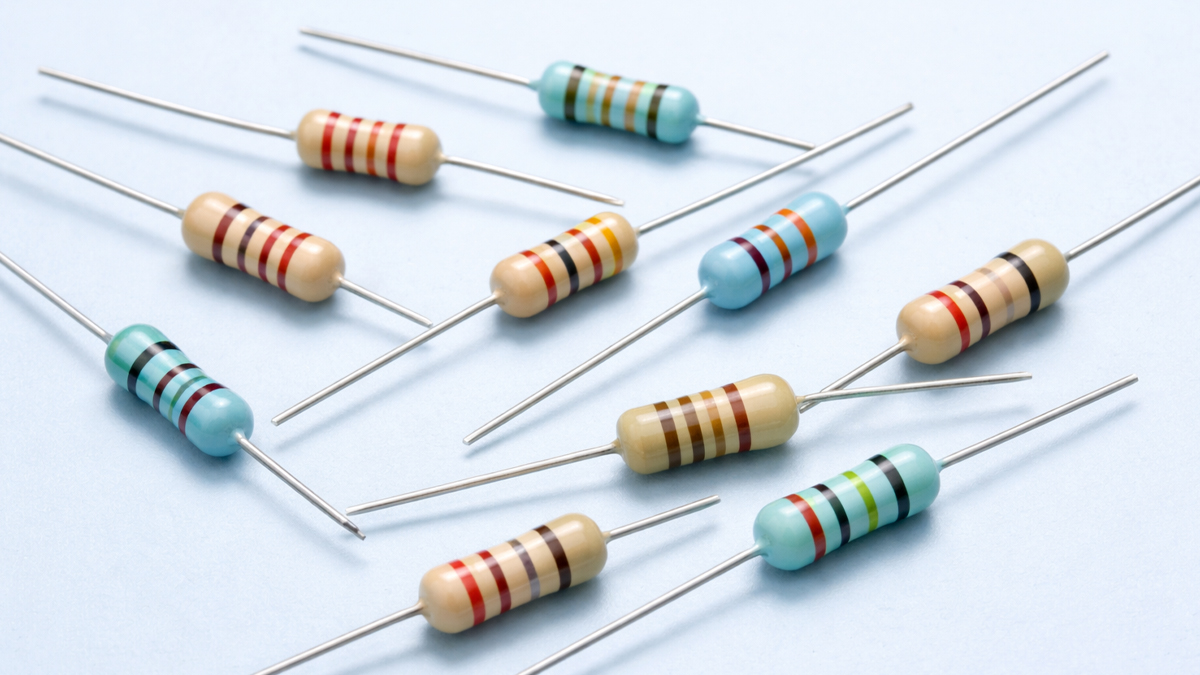
A resistor is the electronic component designed to provide resistance in a circuit. It is one of the most basic but most necessary parts in electronics. Even though a resistor looks small and simple, it performs many critical tasks. It can reduce signal level, split voltage, limit current, stabilize transistor operation, bias active components, help form filter networks, and work with capacitors and inductors to shape frequency response. In audio systems, this means resistance directly affects volume, tone, gain, clarity, noise behavior, and circuit safety.
Resistance is not only a technical concept for engineers. It also matters to musicians, studio technicians, sound designers, instrument makers, and audio repair professionals. A guitarist adjusting a tone knob is interacting with a resistance based circuit. A keyboard player using an analog synthesizer is hearing sound that has been shaped by resistor networks. A recording engineer using a mixer is sending signals through circuits filled with carefully selected resistors. So even if the user does not see resistance, the user hears its effect in almost every piece of music technology.
How does Resistance Work?
Resistance works by opposing the movement of electrons through a material. When voltage pushes electric charges through a conductor, resistance determines how much current will actually flow. This relationship is commonly explained by Ohm’s Law, which states that voltage equals current multiplied by resistance. This means that if voltage stays the same and resistance increases, current decreases. If resistance decreases, current increases.
Flow control: In music electronics, this control is essential because audio circuits must handle delicate signals without distortion or damage. A microphone signal is very small and can be easily affected by the wrong circuit conditions. A power amplifier handles much larger current and must be kept within safe operating limits. Resistance helps both kinds of circuits operate correctly.
Heat conversion: When current passes through a resistor, some electrical energy is converted into heat. This is a normal and expected part of resistor operation. In low power audio circuits, the heat may be very small. In power supply sections or amplifier output stages, resistor heating can become significant. This is why resistors are rated by power, such as 0.25 watt, 0.5 watt, 1 watt, or higher.
Signal shaping: Resistance also works together with other components to shape audio signals. When a resistor is paired with a capacitor, the combination can filter out certain frequencies. This principle is used in tone controls, crossover networks, equalizers, and timing circuits. When a variable resistor is used, the amount of resistance can be changed by turning a knob or moving a slider. This allows the user to control volume, gain, or tone in a musical device.
Voltage division: Another common function is voltage division. If two resistors are connected in series across a voltage source, the voltage can be split into smaller values. This is extremely useful in audio circuits because many parts need only a specific voltage range to work properly. Voltage divider networks are found in preamps, control circuits, and instrument electronics.
Biasing and stability: Transistors and integrated circuits in audio gear often need a fixed operating point called bias. Resistance helps create and maintain this bias. Good biasing keeps the circuit stable, reduces unwanted distortion, and ensures predictable sound. In amplifiers and analog synth circuits, proper resistance values can make the difference between clean operation and poor performance.
So, resistance works not just as a barrier to current, but as a tool for control. It manages energy, shapes signals, protects devices, and supports the musical purpose of the equipment.
What are the Components of Resistance?
When discussing the components of resistance in the context of resistors and music electronics, it is useful to look at both the physical parts of a resistor and the main electrical factors that define how resistance behaves.
Physical structure: A resistor usually includes a resistive material, a body or substrate, metal leads or terminals, and a protective coating. The resistive material is the part that actually provides opposition to current. Depending on resistor type, this may be carbon, metal film, metal oxide, wire, or special conductive compounds. The body holds the material in place and gives the resistor its form. The leads connect it to the circuit. The coating protects the resistor from moisture, heat, dust, and physical damage.
Resistance value: The most obvious component of resistance is the value itself, measured in ohms. A resistor may have a value such as 100 Ω, 1 kΩ, 10 kΩ, or 1 MΩ. In music electronics, different values are chosen depending on the task. Small values may be used for current sensing or output control, while large values may be used in input stages or bias networks.
Tolerance: Tolerance tells how close the actual resistor value is to the stated value. Common tolerances are 1 percent, 5 percent, and 10 percent. In audio equipment, tighter tolerance resistors are often preferred in sensitive circuits because they improve consistency between channels and units. For example, stereo circuits often benefit from accurately matched resistors.
Power rating: Power rating indicates how much heat a resistor can safely handle. If the resistor is forced to dissipate too much power, it can overheat and fail. In music electronics, small signal paths may use low power resistors, but power amplifiers and supply sections may require larger resistors with higher wattage ratings.
Temperature coefficient: Resistance can change slightly as temperature changes. This behavior is measured by temperature coefficient. In precision audio circuits, stable resistance over temperature is valuable because it helps maintain consistent sound and operating conditions.
Noise characteristics: Resistors can produce a small amount of electrical noise. In high gain audio circuits such as microphone preamps and studio gear, low noise resistors are desirable. Metal film resistors are often preferred over carbon composition resistors for this reason.
Voltage handling: Some resistors also have maximum voltage limits. Even if the resistance and power seem correct, too much voltage can stress the part. This is important in tube amplifiers and certain vintage music circuits where voltages may be relatively high.
Mounting style: Resistors may be through hole or surface mount. Through hole resistors are common in hand built pedals, vintage repairs, and educational kits. Surface mount resistors are common in modern digital audio gear, compact interfaces, and mass produced electronics.
All these components and characteristics combine to define how a resistor behaves in a musical circuit. A resistor is never chosen only by its ohm value. Its tolerance, power rating, material, and stability also matter.
What are the Types of Resistance?
Resistance can be understood in different categories depending on whether we are talking about resistor behavior, resistor construction, or adjustable control in music equipment.
Fixed resistance: Fixed resistors have a set value that does not change during normal use. These are the most common resistors in audio circuits. They are used in amplifiers, mixers, digital audio devices, synthesizers, and speaker crossovers. Once placed in the circuit, they provide a stable and predictable level of resistance.
Variable resistance: Variable resistors can be adjusted. These include potentiometers and rheostats. In music electronics, potentiometers are everywhere. Volume knobs, tone knobs, gain controls, pan controls, and many synthesizer parameters are based on variable resistance. Turning the knob changes resistance, and that changes the behavior of the audio signal.
Dependent resistance: Some resistors change value in response to outside conditions. These include thermistors, photoresistors, and strain related resistive sensors. Although less common in basic audio paths, they are useful in protection circuits, light sensitive controls, and special effect designs. Some vintage optical compressors and tremolo circuits use light dependent resistance to control audio behavior.
Carbon composition resistance: These are older style resistors made from carbon based material. They were widely used in vintage gear. Some musicians and technicians associate them with classic amplifier sound, though they are generally less stable and noisier than modern types.
Carbon film resistance: Carbon film resistors are more stable than carbon composition types and are used in many general purpose circuits. They are economical and widely available.
Metal film resistance: Metal film resistors are common in modern music electronics because they offer good accuracy, low noise, and stable performance. They are often preferred in preamps, studio devices, and precise analog circuits.
Metal oxide resistance: Metal oxide resistors are durable and can handle heat well. They are often used in power supply sections and circuits where reliability under stress matters.
Wire wound resistance: Wire wound resistors are made by winding resistive wire around a core. They are excellent for high power applications, but they may introduce inductive effects, which means they are not always ideal in every audio path. Still, they are useful in power stages, load networks, and some speaker related circuits.
Surface mount resistance: Surface mount resistors are small components mounted directly on printed circuit boards. They are standard in compact digital music equipment, wireless systems, and many modern production devices.
In practical music electronics, the most important types are fixed resistors for circuit design, potentiometers for user control, and precision low noise resistors for clean audio performance.
What are the Applications of Resistance?
Resistance has a very broad range of applications in electronics, and its use in music electronics is especially important because audio circuits demand both control and accuracy.
Current limiting: Resistors are used to limit the current flowing to LEDs, transistors, integrated circuits, and other components. In music devices, this protects status lights, logic circuits, and sensitive active parts from excessive current.
Voltage division: Resistance is used to divide voltage into smaller usable levels. This is common in pedal circuits, synthesizer modules, amplifier stages, and control sections. Audio electronics often require several precise reference voltages, and resistor networks help create them.
Biasing transistors and amplifiers: Many active devices need a stable operating condition. Resistors set this condition by defining the current and voltage around transistors, operational amplifiers, and tube stages. Stable bias helps improve sound quality and reliability.
Gain control: Resistance affects how much a circuit amplifies a signal. In preamps, guitar pedals, and audio processors, resistor values help determine gain level. Changing those values can change the character of the device.
Tone shaping: Resistors work with capacitors and sometimes inductors to shape frequency response. Bass, mid, and treble controls depend on resistive networks. Guitar tone circuits, equalizers, speaker crossovers, and filter sections all use resistance.
Mixing signals: In mixers and audio summing circuits, resistors are used to combine multiple signals in a controlled way. Without correct resistor values, signals may interfere with each other or load down the circuit.
Pull up and pull down functions: In digital music devices such as MIDI controllers, drum machines, and programmable effects, resistors help define logic states so that switches and chips behave predictably.
Damping and protection: In speaker systems and amplifier outputs, resistors can be used for damping, stabilization, and protection. Some circuits use resistors to prevent oscillation or reduce excessive signal peaks.
Metering and sensing: Audio units that display level, clipping, tuning, or status information often use resistors in sensing and display circuits.
Timing circuits: Resistance used with capacitance can create time constants. These are important in envelope generators, delay circuits, muting functions, attack and release settings, and oscillator design.
From silent background functions to audible tone control, resistance is deeply built into the operation of nearly all music electronics.
What is the Role of Resistance in Music Industry?
Resistance plays a central role in the music industry because the industry depends heavily on electronic tools for creating, recording, processing, amplifying, and reproducing sound. Every stage of the modern music workflow includes devices whose performance relies on resistors and carefully selected resistance values.
Instrument electronics: Electric guitars and basses use potentiometers for volume and tone control. These are variable resistors. The value of the potentiometer affects brightness, response, and interaction with pickups. Different resistance values can make the same instrument sound darker, brighter, smoother, or more open.
Effects pedals: Distortion, overdrive, fuzz, chorus, delay, reverb, compressor, and equalizer pedals all use resistors for gain structure, filtering, clipping support, LED current limiting, and control settings. In many classic pedal designs, resistor values are a major part of the signature sound.
Amplifiers: Guitar amplifiers, bass amplifiers, and studio amplifiers depend on resistors in their input stages, tone stacks, power supply networks, bias circuits, and feedback paths. Resistor choices affect headroom, gain, tone response, hiss level, and circuit stability.
Mixing consoles and studio hardware: Audio mixers, outboard gear, and recording interfaces use resistors to manage signal routing, channel balance, filtering, metering, and level control. Precision resistors are especially important in professional studio equipment because channel matching and clean low noise performance matter.
Synthesizers and drum machines: Analog synthesizers use resistor networks to control oscillators, filters, envelope generators, and modulation paths. Resistance values influence timing, pitch response, cutoff frequency, resonance behavior, and waveform shaping. Even digital music devices often rely on analog front end circuits containing resistors.
Loudspeaker systems: Passive crossovers use resistors along with capacitors and inductors to divide frequencies between drivers. Resistance may also be used for attenuation and system balancing. This affects how the audience hears bass, mids, and treble in a performance space.
Maintenance and repair: The music industry also includes manufacturing, servicing, restoration, and customization. Technicians often test resistor values, replace worn parts, and adjust resistance related components to restore original sound or improve reliability.
Creative sound character: In some cases, resistance contributes not only to technical correctness but also to artistic character. Vintage style resistor materials may slightly affect noise, response, or behavior in certain circuits. While the impact can vary, many music professionals pay close attention to resistor choice in analog gear because subtle changes can influence the feel and personality of a sound.
So, the role of resistance in the music industry is both functional and creative. It supports reliability, safety, fidelity, and control while also helping shape the sonic identity of instruments and audio equipment.
What are the Objectives of Resistance?
The objectives of resistance in music electronics are practical, protective, and tonal. Resistance is used with clear design goals in mind.
Control current: One objective is to keep current within safe limits. Many components can be damaged if too much current flows. Resistance prevents this and protects the circuit.
Set voltage levels: Another objective is to create the right voltage conditions for each part of the circuit. Audio systems often contain multiple stages, and each stage needs a suitable operating level.
Support stable operation: Resistance helps create consistent circuit behavior. Stable bias, predictable gain, and controlled frequency response all depend on correct resistor selection.
Shape sound: In music electronics, one important objective is tone shaping. Resistance is part of the reason a guitar tone control behaves as it does, why a filter cuts high frequencies, or why an equalizer responds smoothly.
Enable user control: Resistance allows knobs, sliders, and adjustable controls to work. Volume, gain, tone, blend, and parameter settings often depend on variable resistors. This gives musicians direct control over their sound.
Reduce noise and distortion: Proper resistor values and good resistor materials help minimize unwanted hiss, instability, and signal problems. This is especially important in recording and live sound equipment.
Protect audio quality: Resistance helps preserve signal integrity by preventing overload, maintaining balance, and supporting clean transfer between stages.
Assist design efficiency: Resistance allows designers to build circuits that are compact, affordable, and dependable. Resistors are simple but flexible parts, so they help engineers solve many circuit problems without excessive complexity.
The objectives of resistance are not random. Each resistor in a music device is placed there to achieve a specific technical and often musical goal.
What are the Benefits of Resistance?
Resistance offers many benefits in music electronics, and these benefits extend from circuit safety to sound control.
Safety benefit: Resistance protects components from harmful current levels. This improves device lifespan and reduces failure risk.
Precision benefit: Resistors make circuits predictable. Designers can calculate how a circuit should behave and reproduce that behavior across many units. This matters in commercial music equipment where consistency is expected.
Tone control benefit: Resistance helps shape the sound. It affects filter response, gain structure, and signal balance. This gives designers and musicians more creative options.
User interaction benefit: Many controls on instruments and audio gear are based on variable resistance. Without resistance, familiar controls such as volume and tone knobs would not exist in the same practical way.
Stability benefit: Proper resistance values help circuits remain stable over time. This reduces unwanted oscillation, distortion, or drifting behavior.
Cost benefit: Resistors are relatively inexpensive, widely available, and easy to integrate into designs. This makes them one of the most efficient tools in electronics.
Repair benefit: Because resistor behavior is well understood, troubleshooting and maintenance are easier. Technicians can measure, compare, and replace resistors with accuracy.
Scalability benefit: Resistance can be used in tiny portable devices as well as large amplifier systems. The same principle works across simple pedals and advanced studio hardware.
Audio quality benefit: Good resistor selection improves signal to noise performance, channel matching, and tonal consistency. In serious music production, these details can strongly affect the listening experience.
These benefits explain why resistance remains one of the most valuable and universal concepts in music electronics.
What are the Features of Resistance?
Resistance has several important features that make it useful in audio and music related circuits.
Measurable value: Resistance is easy to measure in ohms. This allows precise circuit design and testing.
Predictable behavior: Within normal operating limits, resistors behave in a consistent way. This reliability is essential in music equipment where signal paths must remain dependable.
Wide value range: Resistors are available in extremely small and extremely large values. This lets designers use them in many different parts of a circuit.
Available in fixed and variable forms: Some resistance values stay constant, while others can be adjusted by the user or by circuit conditions. This makes resistance useful for both internal circuit setup and external control.
Different material options: Resistors come in different materials, each with its own strengths. Some offer better accuracy, some handle more power, and some are chosen for specific vintage or modern applications.
Compact size: Many resistors are very small, which allows dense circuit layouts in pedals, synths, mixers, and portable devices.
Power handling options: Resistance components are available in many power ratings, from very small signal resistors to large power resistors.
Compatibility with other components: Resistance works closely with capacitors, inductors, semiconductors, and integrated circuits. This makes it a core building block of circuit design.
Low cost and high usefulness: Few components offer as much design value for such a low cost. That is one reason resistors are found in nearly every piece of music electronics.
These features make resistance both fundamental and highly adaptable in the music industry.
What are the Examples of Resistance?
Examples of resistance can be found both in basic electrical situations and in specific music electronics applications.
A guitar volume knob: This is one of the most familiar examples. The knob is usually a potentiometer, which is a variable resistor. As the player turns it, the resistance changes and the signal level is adjusted.
A guitar tone control: Another common example is the tone knob on an electric guitar or bass. It works with a capacitor and a variable resistor to reduce high frequencies and create a warmer sound.
An amplifier tone stack: Bass, mid, and treble controls in an amplifier use resistor networks to shape frequency response. These resistors help define how the tone controls interact.
An LED limiter resistor in a pedal: Many effects pedals have a small light showing whether the effect is on. A resistor limits the current to the LED so it does not burn out.
A mixer input network: Each channel of a mixer often contains resistors that help set input impedance, gain, and summing behavior. These values affect how the audio signal enters and moves through the console.
A synthesizer filter circuit: Resistors in filter sections influence cutoff frequency behavior and interaction with capacitors. This affects the character of the synth sound.
A speaker crossover attenuator: In a loudspeaker crossover, resistors may be used to reduce the level going to a tweeter so that the overall speaker balance sounds correct.
A bias resistor in a transistor preamp: This resistor helps set the operating point of the transistor. Without it, the stage may distort or fail to amplify correctly.
A pull up resistor in a MIDI controller: This helps switches and digital logic work reliably when the user presses pads or buttons.
Even outside music electronics, a simple heating element, a lamp filament, or a sensor based on changing resistance can serve as examples. But in the music field, the most meaningful examples are those that directly shape or support sound creation and control.
What is the Definition of Resistance?
The definition of resistance is the electrical property of a material or component that opposes the flow of electric current. It determines how easily charge can move through a circuit under an applied voltage. Resistance is measured in ohms.
In a more practical electronics definition, resistance is the designed or natural opposition that helps control current, set voltages, and influence circuit behavior. In resistors, this property is deliberately engineered so that the component can perform useful circuit functions.
In music electronics, the definition can be extended in a practical way. Resistance is the controlled opposition used to manage signal flow, shape tone, stabilize circuit operation, and protect electronic parts in audio equipment.
What is the Meaning of Resistance?
The meaning of resistance is simple at first, but deeper in practice. At the most basic level, it means opposition to electrical flow. It is the reason current does not move without limits. It creates control in a system that would otherwise be unstable or unsafe.
In the context of music electronics, the meaning of resistance becomes even more important. It means balance, precision, shaping, and protection. It means a volume knob can fade smoothly. It means a tone circuit can soften harsh frequencies. It means an amplifier can work without overheating sensitive parts. It means a mixer can combine many signals in an organized way.
So, the meaning of resistance is not just blockage. It is controlled opposition for a useful result. In music devices, that useful result is often better sound, safer operation, smoother control, and more reliable performance.
What is the Future of Resistance?
The future of resistance remains strong because resistors continue to be essential in both analog and digital music equipment. Even as music technology becomes more software driven and more compact, physical electronics still depend on resistive behavior.
Miniaturization: Modern music devices are becoming smaller and more portable. Surface mount resistors and highly integrated resistor networks will continue to support compact circuit design in audio interfaces, wireless systems, controllers, and mobile music tools.
Higher precision: Professional audio equipment increasingly demands accurate channel matching, low noise, and repeatable performance. This will encourage greater use of precision resistors with tighter tolerances and better thermal stability.
Low noise design: As recording quality standards rise, designers will keep focusing on resistor types that help reduce hiss and unwanted noise in preamps, converters, and analog front end stages.
Smart and hybrid systems: Future music products will likely combine digital control with analog sound shaping. Resistance will remain essential in the analog sections of these hybrid devices, especially for user controls, filtering, input handling, and output conditioning.
Vintage and boutique markets: At the same time, there is ongoing interest in vintage tone and hand built gear. This means traditional resistor types and carefully selected resistor materials will continue to matter for musicians who value a specific analog character.
Improved reliability: New materials and better manufacturing methods will likely make resistors even more stable and durable. This is useful for touring equipment, live sound systems, and professional studio tools that must perform under demanding conditions.
Custom control surfaces: Future instruments and audio devices may include more expressive physical controls. Variable resistance and resistive sensing technologies may continue to play a role in how performers interact with gear.
Educational importance: As new creators enter music technology, resistance will remain one of the first and most important ideas they learn. It will continue to be a foundation concept in audio electronics education.
The future of resistance is not uncertain or fading. It remains a core principle that will keep supporting innovation in music electronics, from classic analog devices to advanced digital hardware.
Summary
- Resistance is the property that opposes the flow of electric current and is measured in ohms.
- Resistors are components designed to provide controlled resistance in a circuit.
- In music electronics, resistance is essential for volume control, tone shaping, gain setting, biasing, filtering, and protection.
- Resistance works by limiting current, dividing voltage, and converting some electrical energy into heat.
- Important resistor characteristics include resistance value, tolerance, power rating, temperature stability, material type, and noise behavior.
- Common resistor types include fixed resistors, variable resistors, metal film resistors, carbon based resistors, wire wound resistors, and surface mount resistors.
- Music devices such as guitars, amplifiers, mixers, synthesizers, effects pedals, and speakers all rely heavily on resistance.
- The role of resistance in the music industry is both technical and creative because it affects reliability as well as sound character.
- The main objectives of resistance include circuit control, safety, stable operation, accurate signal handling, and user adjustable control.
- The benefits of resistance include predictable performance, improved audio quality, lower risk of damage, easier repair, and efficient design.
- Features of resistance include precise measurement, wide availability, compact size, adjustable forms, and compatibility with other electronic components.
- Everyday examples in music electronics include guitar volume knobs, tone controls, amplifier tone stacks, LED current limiters, mixer channels, and synth filters.
- The definition of resistance is the electrical opposition to current flow.
- The meaning of resistance in music electronics is controlled opposition used for sound shaping, signal management, and system stability.
- The future of resistance remains important because modern and future music equipment will still depend on precise, reliable, and low noise resistor based design.

