

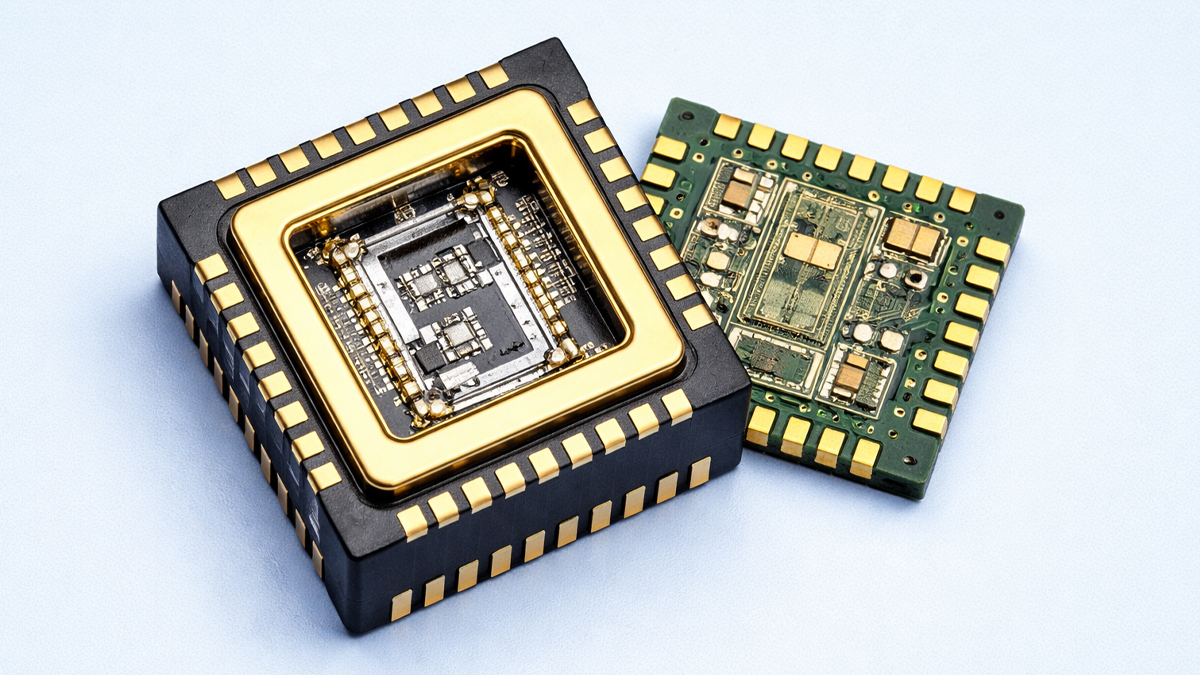
What is MEMS Inertial Measurement Unit?
A MEMS Inertial Measurement Unit is a compact motion sensing device that measures movement, rotation, and changes in position related orientation by using micro scale mechanical and electronic structures built on semiconductor materials. MEMS stands for Micro Electro Mechanical Systems, and an inertial measurement unit, often called an IMU, is designed to detect how an object moves through space. In simple terms, it tells a system whether something is speeding up, slowing down, tilting, turning, or vibrating.
Basic idea: A MEMS Inertial Measurement Unit usually combines accelerometers and gyroscopes in one small package. In many advanced designs, it may also include a magnetometer to improve heading awareness. The accelerometer measures linear acceleration, while the gyroscope measures angular velocity. Together, these sensors provide a detailed understanding of motion.
Why it matters: In the world of cinematic electronics, motion data is extremely valuable. Cameras, gimbals, drones, motion rigs, virtual production systems, and camera tracking platforms all need precise movement information. A MEMS Inertial Measurement Unit helps these systems remain stable, responsive, and intelligent.
Miniaturized design: Unlike traditional large inertial systems used in aerospace or military platforms, a MEMS based unit is very small, lightweight, and efficient. This makes it suitable for modern cinema equipment where portability, low power use, and integration with digital electronics are essential.
Practical importance: In cinema industry applications, the MEMS Inertial Measurement Unit is often hidden inside equipment, yet it plays a major role in camera stabilization, motion synchronization, equipment balancing, and real time control. Even though the device is tiny, its influence on visual quality and production efficiency can be significant.
How does MEMS Inertial Measurement Unit Work?
A MEMS Inertial Measurement Unit works by detecting physical motion through microscopic structures that react to force and rotation. These structures convert mechanical movement into electrical signals, which are then processed by embedded electronics and software to estimate orientation, speed, and motion patterns.
Acceleration sensing: The accelerometer inside the unit measures linear acceleration along one or more axes. It usually contains a tiny proof mass suspended by micro fabricated supports. When the device moves, the proof mass shifts slightly. This change alters capacitance or another measurable electrical property, and the system translates that change into acceleration data.
Rotation sensing: The gyroscope measures how fast the device rotates around one or more axes. Many MEMS gyroscopes work through the Coriolis effect. A small vibrating structure inside the sensor reacts differently when the device rotates. The resulting microscopic motion is detected and converted into an electrical signal that represents angular velocity.
Data fusion: Raw data from the accelerometer and gyroscope are useful, but their real power appears when both are combined. The accelerometer can indicate tilt relative to gravity, while the gyroscope tracks rapid rotational changes. Sensor fusion algorithms combine these signals to produce more reliable motion estimates than either sensor could provide alone.
Signal conditioning: Because sensor outputs are extremely small and can contain noise, the device includes analog front end circuits, amplifiers, filters, and analog to digital converters. These circuits clean and digitize the sensor output so that a processor can interpret it accurately.
Calibration and compensation: MEMS sensors are sensitive to temperature, vibration, bias drift, and manufacturing variation. To reduce error, the unit often applies calibration routines and compensation methods. These correct offset, scale factor variation, axis misalignment, and temperature related changes.
Real time interpretation: Once the signals are processed, the data are sent to a controller, camera system, stabilization unit, or production software platform. In cinema equipment, this real time stream may be used to stabilize a handheld rig, adjust a gimbal motor, track a camera in virtual production, or assist drone flight control during aerial cinematography.
Continuous feedback: The MEMS Inertial Measurement Unit does not measure motion once and stop. It works continuously, collecting data many times per second. High sampling rates are important in cinematic electronics because camera movement can change quickly, and even a small delay may affect shot quality.
What are the Components of MEMS Inertial Measurement Unit?
A MEMS Inertial Measurement Unit is made of several important sensing, processing, and interface elements. Each part contributes to the overall performance of the device.
Accelerometer: This component measures linear acceleration along one, two, or three axes. In most cinema related systems, a three axis accelerometer is preferred because it captures motion in all main directions.
Gyroscope: This component measures angular velocity around the X, Y, and Z axes. It helps detect pan, tilt, roll, and other rotational movement that is critical in camera and rig stabilization.
Magnetometer: Some MEMS Inertial Measurement Units include a magnetometer for directional reference. It measures the surrounding magnetic field and can assist with heading estimation, although magnetic interference in studio or equipment heavy environments must be considered carefully.
Micro mechanical structures: These are the tiny moving parts built into the silicon chip. Proof masses, springs, frames, and vibrating elements form the physical heart of the sensor.
Signal conditioning circuit: This part amplifies weak sensor signals, removes unwanted noise, and prepares the data for digital conversion. Without proper conditioning, the sensor output would be difficult to use effectively.
Analog to digital converter: This circuit changes analog sensor readings into digital values. Digital data are easier to process, store, and transmit to other systems.
Microcontroller or digital processor: Many units include embedded processing power for sensor fusion, calibration, and filtering. The processor may run algorithms that estimate orientation and motion state in real time.
Clock and timing system: Accurate timing is necessary for proper sampling and synchronization. In cinema applications, consistent timing helps align motion data with camera frames, tracking systems, and control loops.
Power management unit: Since many cinema devices are portable or battery powered, efficient power regulation is important. This part ensures stable operation while minimizing energy use.
Communication interface: The unit usually communicates through protocols such as I2C, SPI, UART, or other digital links. These interfaces allow the IMU to send data to cameras, gimbals, drones, controllers, or external processors.
Packaging and protective housing: The sensor chip and electronics are enclosed in a package that protects them from dust, moisture, and mechanical stress. Good packaging also helps thermal stability and long term reliability.
Software layer: Although not always visible as a physical component, firmware and supporting software are essential. They manage calibration, filtering, fault detection, and output formatting.
What are the Types of MEMS Inertial Measurement Unit?
MEMS Inertial Measurement Units can be classified in several ways depending on sensor combination, axis configuration, performance level, and application.
By sensor combination: The most common type is the six axis IMU, which includes a three axis accelerometer and a three axis gyroscope. A more advanced type is the nine axis IMU, which adds a three axis magnetometer. The six axis design is widely used in stabilization and motion detection, while the nine axis version can offer better directional awareness.
By axis capability: Some simple units measure motion on fewer axes, but most modern cinematic electronics use three axis sensing for both acceleration and rotation. Full multi axis coverage is important because camera movement in production is rarely limited to one direction.
By performance grade: Consumer grade units are used in lower cost devices and basic stabilization tools. Industrial grade units provide improved precision, lower drift, and better environmental resistance. High performance professional units are designed for demanding applications where long term stability and precise motion tracking are required.
By integration level: Standalone sensor modules contain only the sensing elements and basic electronics. Intelligent IMUs include onboard processing, calibration support, and sensor fusion algorithms. Fully integrated motion modules may combine the IMU with control logic, wireless communication, or positioning features.
By application environment: Some IMUs are optimized for handheld devices and compact tools. Others are designed for drones, robotics, camera tracking systems, or vibration heavy platforms. In cinema industry use, designers often select units based on stabilization needs, motion profile, and integration constraints.
By packaging style: Surface mount IMUs are common in compact electronics boards. Ruggedized packages are used where shock, vibration, and environmental protection are more critical.
By accuracy behavior: Some types prioritize low noise for smooth output, while others prioritize fast response for dynamic movement. A cinema gimbal may require a balance between both because it must react quickly without introducing unstable correction.
What are the Applications of MEMS Inertial Measurement Unit?
MEMS Inertial Measurement Units are used across many industries because motion information is central to modern electronics and intelligent machines. Their small size and high utility make them suitable for a wide range of products and systems.
Consumer electronics: Smartphones, tablets, wearables, gaming controllers, and action cameras use MEMS IMUs for screen rotation, motion sensing, navigation support, and activity recognition.
Automotive systems: Vehicles use them in stability control, rollover detection, navigation support, advanced driver assistance, and crash related sensing.
Aerospace and drones: Unmanned aerial vehicles rely on IMUs for flight stabilization, navigation estimation, and motion control. Aircraft systems also use inertial sensing in broader navigation frameworks.
Robotics: Robots use IMUs for balancing, motion planning, orientation tracking, and dynamic control. Mobile robots especially benefit from continuous motion awareness.
Medical devices: Rehabilitation systems, motion analysis tools, prosthetic control devices, and wearable health equipment often use inertial sensing to track body movement.
Industrial machinery: Equipment monitoring, vibration analysis, tilt measurement, and automated control systems frequently involve IMU technology.
Virtual reality and augmented reality: Headsets and controllers use MEMS inertial sensing for motion tracking, orientation detection, and user interaction.
Cinema technology: In the cinema industry, these units are integrated into stabilization systems, camera tracking devices, drones, handheld rigs, robotic arms, and virtual production tools. Their contribution is especially important when smooth and repeatable motion is required.
What is the Role of MEMS Inertial Measurement Unit in Cinema Industry?
The role of MEMS Inertial Measurement Unit in the cinema industry is highly significant because modern filmmaking depends on precision movement, smooth camera operation, and synchronization between physical equipment and digital systems.
Camera stabilization: One of the most visible roles of the IMU is in gimbals and stabilizers. The sensor detects unwanted shake, tilt, and rotational disturbance. The control system then commands motors to counteract that movement. This produces smoother footage during handheld, walking, running, or vehicle mounted shooting.
Drone cinematography: Aerial filming requires constant stabilization because drones are affected by wind, rapid maneuvering, and changing load conditions. The IMU helps the flight controller maintain stable motion while also assisting the camera gimbal in keeping the frame steady.
Motion controlled rigs: In advanced productions, robotic camera rigs and motion control platforms need highly consistent movement data. The MEMS Inertial Measurement Unit supports feedback loops that improve precision and repeatability.
Virtual production and camera tracking: In virtual production environments, the real camera movement must match the digital scene. IMU data can be used as part of hybrid tracking systems to estimate camera orientation and support real time rendering alignment.
Steadicam assistance: Even when a skilled operator is involved, electronic stabilization systems can support mechanical stabilization. The IMU enables responsive correction and helps reduce micro jitter.
Lens and body awareness: Some cinema tools use motion data to understand how the camera body is moving during a shot. This information may support metadata recording, post production analysis, or intelligent stabilization adjustments.
Safety and equipment balance: In cranes, jibs, and moving rigs, the IMU can help detect tilt, sudden movement, or imbalance. This can improve operational safety and protect valuable equipment.
Creative control: Not every camera movement should be removed. Filmmakers often want smooth motion with preserved intentional movement. Advanced systems use IMU data intelligently so they can distinguish between unwanted vibration and purposeful camera action.
Workflow enhancement: Because MEMS IMUs provide live motion data, technicians can tune stabilization settings, diagnose movement problems, and improve shot planning more effectively.
What are the Objectives of MEMS Inertial Measurement Unit?
The objectives of a MEMS Inertial Measurement Unit center on measuring motion accurately, supporting control systems, and improving device intelligence.
Motion detection: A core objective is to detect acceleration, tilt, and rotation across multiple axes.
Orientation estimation: The unit is designed to help determine the angular position or attitude of a device relative to its environment.
Stabilization support: In camera and cinema electronics, an important objective is to supply the real time feedback needed for stable movement control.
Navigation assistance: Even when used alongside other sensors, the IMU provides valuable inertial data that support movement estimation and positioning logic.
System responsiveness: Another objective is to allow devices to react quickly to changes in motion. Fast feedback is essential in drones, gimbals, and motion platforms.
Miniaturization: MEMS technology aims to deliver these capabilities in a very small, lightweight, and energy efficient form.
Integration: The IMU is also intended to work easily with digital electronics, control boards, and embedded software.
Reliability: Designers seek consistent performance under different operating conditions, including vibration, temperature variation, and continuous use.
Cost efficiency: Compared with larger traditional inertial systems, MEMS units aim to provide practical motion sensing at a more accessible cost.
What are the Benefits of MEMS Inertial Measurement Unit?
A MEMS Inertial Measurement Unit offers many benefits that explain its widespread use in both general electronics and cinema related systems.
Small size: The compact structure allows it to fit into slim, portable, and lightweight equipment.
Low weight: This is especially valuable in camera rigs, drones, and handheld systems where every gram matters.
Low power consumption: Battery operated devices benefit from efficient energy use, which supports longer operation time.
Fast response: MEMS IMUs can capture motion data at high rates, making them suitable for real time control.
Easy integration: Their semiconductor based design allows simple integration with digital control circuits and modern embedded systems.
Lower cost compared with traditional inertial systems: This makes motion sensing more accessible across many device categories.
Scalability: Manufacturers can produce MEMS devices in large volumes, which supports standardization and broad adoption.
Improved cinematic output: In cinema industry use, the benefit appears in smoother footage, better camera control, and enhanced production flexibility.
Support for intelligent systems: The data from an IMU can feed advanced algorithms for stabilization, tracking, automation, and motion analysis.
Versatility: The same basic technology can be adapted for consumer tools, professional camera systems, drones, and industrial production equipment.
What are the Features of MEMS Inertial Measurement Unit?
The features of a MEMS Inertial Measurement Unit define how well it performs and how suitable it is for specific applications.
Multi axis sensing: Most modern units provide three axis acceleration and three axis angular velocity measurement.
Compact form factor: The device is built for space constrained applications.
Real time data output: Continuous motion data are available for live analysis and control.
Digital interfaces: Standard communication options allow convenient system integration.
Embedded processing: Many units include internal processing for calibration, filtering, and sensor fusion.
Temperature compensation: Some devices adjust performance to reduce the effect of temperature change.
High sampling rates: Fast sampling supports rapid motion detection and responsive control.
Low noise design: Better noise behavior improves smoothness and reliability of motion estimates.
Programmable settings: Users may adjust range, bandwidth, output rate, and filtering options.
Shock tolerance: Many MEMS devices are designed to survive mechanical shock better than delicate larger systems.
Self test functions: Some units include diagnostic features that help detect faults or confirm sensor operation.
Application flexibility: Different variants are available for basic consumer products, industrial tools, and professional cinema electronics.
What are the Examples of MEMS Inertial Measurement Unit?
Examples of MEMS Inertial Measurement Unit can be understood in two ways, namely by product category and by real world device usage.
Product level examples: A six axis IMU that combines a three axis accelerometer and three axis gyroscope is a common example used in gimbals, action cameras, and drones. A nine axis IMU that adds a magnetometer is another example used in advanced tracking and navigation systems.
Cinema equipment examples: Handheld gimbals for mirrorless and cinema cameras often contain MEMS IMUs to detect unwanted motion and keep footage stable. Drone camera platforms use them for both flight control and camera orientation stabilization. Robotic sliders and motion control heads may also use IMU feedback for precision movement. Virtual production camera tracking accessories can include inertial modules to help estimate orientation in real time.
Broader device examples: Smartphones, wearable motion trackers, game controllers, automotive stability systems, delivery drones, and mobile robots all use MEMS inertial measurement technology in different forms.
Functional examples: An operator running with a stabilized camera, a drone performing a smooth reveal shot, or a virtual production camera syncing with a digital environment are all practical examples of how MEMS IMUs contribute to motion aware performance.
What is the Definition of MEMS Inertial Measurement Unit?
The definition of MEMS Inertial Measurement Unit is a compact electronic sensing device built using Micro Electro Mechanical Systems technology that measures linear acceleration and angular velocity, and in some cases magnetic field direction, in order to determine motion and orientation related information of an object or system.
Technical definition: It is an integrated module that combines inertial sensors, supporting electronics, and often embedded processing to provide real time motion data.
Applied definition: In practical use, it is a small motion intelligence component that helps machines, cameras, and control systems understand how they are moving.
Cinema oriented definition: Within cinematic electronics, it is a motion sensing unit that supports stabilization, tracking, control, and synchronization for professional filming equipment.
What is the Meaning of MEMS Inertial Measurement Unit?
The meaning of MEMS Inertial Measurement Unit can be understood by looking at each part of the term and its practical significance.
MEMS: This refers to Micro Electro Mechanical Systems, which are tiny mechanical and electrical structures fabricated using techniques similar to semiconductor manufacturing.
Inertial: This refers to motion related behavior based on inertia, such as acceleration, rotation, and resistance to changes in movement.
Measurement: This indicates that the device senses and quantifies physical motion.
Unit: This means the different sensor elements and circuits are brought together into one functional module.
Overall meaning: A MEMS Inertial Measurement Unit is a small integrated device that measures motion and orientation related changes by using micro fabricated sensors and electronic processing.
Practical meaning in cinema: It is the hidden motion awareness engine inside many modern camera technologies that helps create smoother shots, more accurate tracking, and better control over movement.
What is the Future of MEMS Inertial Measurement Unit?
The future of MEMS Inertial Measurement Unit is promising because the demand for compact, precise, and intelligent motion sensing continues to grow across electronics, robotics, mobility, and media production.
Higher accuracy: Future devices are expected to reduce drift, improve bias stability, and offer better performance over long operating periods. This is important for professional cinematic tracking and extended stabilization tasks.
Smarter sensor fusion: IMUs will increasingly work with vision systems, satellite positioning, lidar, and artificial intelligence based control methods. In cinema, this can improve virtual production alignment, camera tracking robustness, and autonomous rig behavior.
Better low light and tracking support: As productions rely more on mixed reality and digital environments, inertial sensing may help maintain motion estimation even when optical tracking conditions are weak.
Lower power with stronger performance: Continued semiconductor advancement is likely to improve efficiency while maintaining fast response and high quality output.
Smaller and more integrated packages: Future IMUs may include more onboard intelligence, enhanced diagnostics, and stronger calibration support without increasing size.
Improved vibration handling: Since cinema rigs, drones, and vehicles often operate in dynamic environments, future devices will likely manage vibration and mechanical disturbance more effectively.
Wider use in creative tools: Advanced stabilization, motion capture accessories, smart camera supports, automated dolly systems, and portable virtual production tools are all likely to benefit.
Data rich filmmaking: Motion metadata may become more important in post production, visual effects, camera matching, and shot analysis. Better IMUs can support this trend by providing cleaner and more useful movement records.
Greater accessibility: As performance improves and costs continue to mature, more creators across independent and professional filmmaking will be able to use sophisticated inertial sensing tools.
Summary
- A MEMS Inertial Measurement Unit is a compact motion sensing device that measures acceleration and rotation, and sometimes magnetic direction, through micro fabricated sensor technology.
- It mainly works by combining accelerometers and gyroscopes, then processing their signals through electronics and software to estimate motion and orientation.
- Its main components include accelerometers, gyroscopes, possible magnetometers, signal conditioning circuits, digital converters, processors, power systems, and communication interfaces.
- Common types include six axis and nine axis IMUs, along with consumer, industrial, and professional performance categories.
- It is used in many sectors such as consumer electronics, robotics, automotive systems, drones, industrial tools, medical devices, and virtual reality systems.
- In the cinema industry, it plays a major role in camera stabilization, gimbal control, drone cinematography, virtual production tracking, and motion controlled rigs.
- Its objectives include accurate motion detection, orientation estimation, stabilization support, fast system response, miniaturization, and reliable integration.
- Key benefits include small size, low weight, low power use, quick response, affordability, and strong usefulness in portable electronic systems.
- Important features include multi axis sensing, real time output, digital connectivity, high sampling rates, programmable settings, and embedded processing.
- Examples can be found in gimbals, drones, robotic camera heads, smartphones, wearables, and camera tracking systems.
- Its definition centers on being an integrated inertial sensing module built with MEMS technology for motion and orientation related measurement.
- Its meaning is closely tied to the idea of a tiny intelligent motion awareness unit that helps machines and cinematic devices understand movement.
- Its future is strong because filmmaking, automation, virtual production, and smart electronics all depend increasingly on accurate, compact, and efficient motion sensing.

