

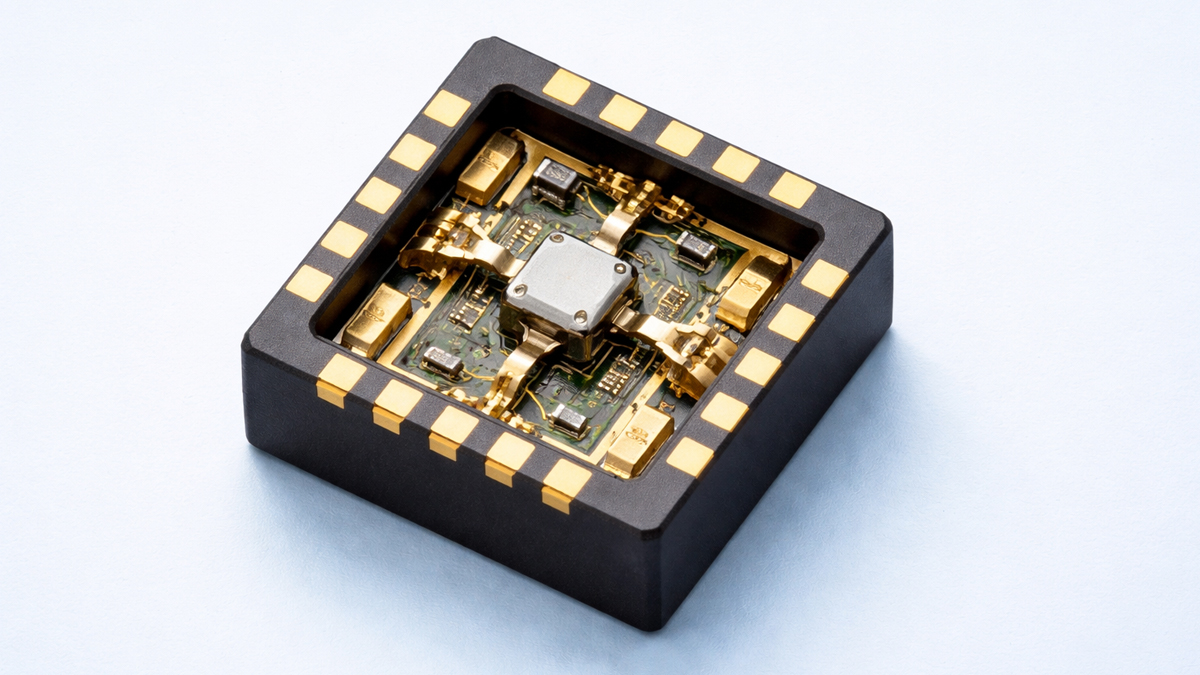
What is MEMS Accelerometer?
A MEMS Accelerometer is a miniature sensor that measures acceleration, vibration, tilt, shock, and motion. MEMS stands for Micro Electro Mechanical Systems. This means the device combines tiny mechanical structures and electronic circuits on a very small semiconductor chip. Even though it is extremely small, it can detect movement with impressive precision.
In simple terms, a MEMS accelerometer tells a system how fast an object is speeding up, slowing down, tilting, or changing direction. It can measure motion along one axis, two axes, or three axes depending on the design. Because of its compact size, low power use, and reliable output, it has become one of the most important sensing elements in modern electronics.
Within cinematic electronics, MEMS accelerometers are especially valuable because cinema equipment often needs accurate movement awareness. Cameras, gimbals, drones, motion control rigs, stabilizers, handheld recorders, virtual production tools, and wearable capture devices all benefit from sensors that can detect motion quickly and accurately. In the cinema industry, even a small vibration or shift can affect image stability, camera tracking, focus behavior, and visual consistency. A MEMS accelerometer helps reduce such problems by providing real time motion data.
How does MEMS Accelerometer Work?
A MEMS accelerometer works by detecting the displacement of a tiny internal mass when motion occurs. Inside the sensor, there is a small proof mass suspended by microscopic beams or springs. When the device experiences acceleration, this proof mass shifts slightly from its original position. The sensor then converts this tiny mechanical movement into an electrical signal.
Mechanical sensing: The internal proof mass remains balanced when the sensor is still. When the sensor moves, inertia causes the mass to resist that motion. This creates a relative displacement between the mass and the surrounding structure.
Signal conversion: The most common MEMS accelerometers use capacitive sensing. Tiny capacitor plates inside the sensor change their spacing as the proof mass moves. Since capacitance depends on distance and surface area, this movement changes the capacitance value. The electronics inside the chip measure this change and convert it into an output signal.
Axis measurement: Some MEMS accelerometers measure acceleration in one direction only. More advanced models measure two or three axes, usually X, Y, and Z. This allows the sensor to detect movement in a full three dimensional space.
Data processing: Once the raw signal is detected, internal signal conditioning circuits filter noise, amplify the signal, and convert it into analog or digital output. A connected processor can then use this data for stabilization, orientation detection, vibration analysis, shock monitoring, or motion tracking.
In cinematic electronics, this working principle supports very practical tasks. If a handheld camera shakes, the MEMS accelerometer can detect sudden movement. If a gimbal starts to tilt, the sensor reports that change so the control system can compensate. If a drone camera platform vibrates due to propeller activity, the accelerometer can help isolate the motion pattern and improve stabilization.
What are the Components of MEMS Accelerometer?
A MEMS accelerometer is made of several tiny but highly important parts that work together as a complete sensing system.
Proof mass: This is the central movable element inside the sensor. It responds to acceleration through inertia. Its movement is the basis of the measurement.
Suspension beams or springs: These micro structures hold the proof mass in position while allowing controlled movement. Their stiffness influences sensitivity and measurement range.
Fixed and movable electrodes: In capacitive MEMS accelerometers, these electrodes form micro capacitors. As the proof mass moves, the spacing between electrodes changes, which alters capacitance.
Sensing circuitry: This electronics section measures the change in capacitance or another electrical parameter and converts it into a usable signal.
Signal conditioning circuit: Raw sensor signals are often weak and noisy. Signal conditioning improves readability through amplification, filtering, and calibration.
Analog to digital converter: In digital MEMS accelerometers, this component changes the analog measurement into digital data that can be read by controllers and processors.
Temperature compensation block: Sensor behavior can change with temperature. This block helps maintain stable performance across different operating conditions.
Control interface: Many MEMS accelerometers use standard communication interfaces such as I2C or SPI so they can connect to larger electronic systems.
Package and housing: The sensor chip is enclosed in a protective package that shields it from contamination and mechanical damage while still allowing proper sensing performance.
Each of these components contributes to reliable motion detection. In cinema devices, the quality of these components affects how accurately the system can detect shake, tilt, impact, or fine motion changes during filming.
What are the Types of MEMS Accelerometer?
MEMS accelerometers can be classified in several ways based on sensing method, number of axes, and usage characteristics.
Capacitive MEMS accelerometer: This is the most common type. It measures changes in capacitance caused by motion of the proof mass. It is widely used because it offers good sensitivity, low power consumption, and strong long term stability.
Piezoresistive MEMS accelerometer: This type measures changes in electrical resistance when internal structures deform under acceleration. It can be useful in high shock applications, though it may consume more power compared to capacitive designs.
Piezoelectric MEMS accelerometer: This type generates electrical charge when subjected to mechanical stress. It is often useful for vibration measurement and dynamic motion detection.
Single axis accelerometer: Measures acceleration in one direction only. It is suitable for systems where motion along one line is the main concern.
Dual axis accelerometer: Measures acceleration in two directions. It offers better tilt and orientation information than a single axis device.
Three axis accelerometer: Measures acceleration along X, Y, and Z axes. This is the most versatile type and is widely used in cinematic electronics because camera systems and rigs move in three dimensional space.
Low g accelerometer: Designed for precise detection of small accelerations. This is useful for fine stabilization and orientation tracking.
High g accelerometer: Designed to handle strong shocks and impacts. It is used in harsh mechanical conditions or equipment testing.
Analog output accelerometer: Produces a continuous voltage signal related to acceleration. It may be preferred in some specialized signal chains.
Digital output accelerometer: Produces digital data directly, usually through a communication interface. This is common in modern cinema electronics because it integrates easily with microcontrollers and intelligent control systems.
What are the Applications of MEMS Accelerometer?
MEMS accelerometers are used across many industries because motion information is valuable in countless devices and systems.
Consumer electronics: Smartphones, tablets, wearables, and game controllers use MEMS accelerometers for screen rotation, activity tracking, gesture detection, and motion response.
Automotive systems: Vehicles use them in airbag deployment systems, stability control, crash detection, navigation assistance, and rollover sensing.
Industrial monitoring: Machines use MEMS accelerometers to detect vibration, imbalance, misalignment, and abnormal motion so that maintenance can be done before failure occurs.
Medical devices: Patient monitoring systems, rehabilitation devices, mobility tools, and portable medical electronics use motion sensing for tracking and control.
Aerospace and drones: Aircraft systems, unmanned aerial vehicles, and navigation systems rely on accelerometers for motion awareness, stabilization, and inertial guidance.
Robotics: Robots use accelerometers for balance, position estimation, motion correction, and impact detection.
Cinematic electronics: This field uses MEMS accelerometers in camera stabilization systems, gimbals, drones, motion capture units, smart tripods, handheld recorders, lens modules, and virtual production tools. The sensor helps maintain smooth visual output and supports precise motion aware control.
These applications show why MEMS accelerometers are considered foundational sensors in modern electronic design.
What is the Role of MEMS Accelerometer in Cinema Industry?
The role of MEMS accelerometer in cinema industry is highly practical and increasingly important. Modern filmmaking depends on precision. Cameras move through space on cranes, dollies, drones, gimbals, handheld rigs, body mounts, and robotic systems. Every one of these platforms creates motion data that can either enhance storytelling or introduce unwanted visual problems. MEMS accelerometers help manage that motion.
Camera stabilization: One of the most important roles is detecting unwanted shake. In handheld filmmaking or action scenes, micro vibrations can degrade image quality. Accelerometer data can be used by electronic stabilization systems to counter or compensate for these movements.
Gimbal balancing and control: Gimbals rely on motion sensors to understand orientation and sudden shifts. Accelerometers provide data about tilt and acceleration, helping motors react appropriately and keep the camera steady.
Drone cinematography: Aerial filming introduces vibration, wind disturbance, and changing movement patterns. MEMS accelerometers help drones and their camera mounts maintain stable and smooth image capture.
Motion control systems: In repeatable camera moves for visual effects, product shots, or composite scenes, motion data must remain consistent. Accelerometers support repeatability by monitoring acceleration profiles and mechanical disturbances.
Virtual production and tracking: In advanced production environments, camera movement data can be integrated with digital environments. Accelerometers support position and movement awareness, especially when combined with gyroscopes and other inertial sensors.
Equipment protection: Cinema gear is expensive and delicate. MEMS accelerometers can detect shock events, drops, or rough handling in transport cases, cameras, lenses, and recorders.
Post production support: Motion data collected during filming can be useful for image stabilization, alignment, and effects integration later in the workflow.
In cinema industry, visual precision matters deeply. A MEMS accelerometer supports that precision by turning physical movement into digital information that electronics can understand and respond to.
What are the Objectives of MEMS Accelerometer?
The objectives of a MEMS accelerometer depend on the device and system in which it is used, but several core goals remain consistent.
Motion detection: The first objective is to detect acceleration and movement accurately across one or more axes.
Tilt and orientation sensing: Another objective is to determine whether a device is level, tilted, upright, inverted, or moving in a specific direction.
Vibration analysis: Many systems use MEMS accelerometers to measure vibration patterns, identify resonance, and monitor unwanted oscillation.
Shock detection: The sensor can identify sudden impacts, drops, or collisions and trigger protective or corrective actions.
Stabilization support: In cinematic electronics, a major objective is to supply real time movement information for stabilization algorithms and motion control systems.
System awareness: MEMS accelerometers help electronic devices understand their physical state, which improves responsiveness and automation.
Safety and reliability: In transport, industrial, and camera equipment, accelerometers help detect abnormal conditions and reduce risk of damage.
Compact integration: Another objective is to provide high functionality in very small form factors so that advanced motion sensing can fit into compact devices.
Low power operation: Many applications require sensors that can run continuously without draining battery power quickly. MEMS designs support this objective effectively.
These objectives explain why MEMS accelerometers are widely adopted in both general electronics and cinema related systems.
What are the Benefits of MEMS Accelerometer?
MEMS accelerometers offer many benefits that make them highly attractive for use in cinematic electronics and the wider cinema industry.
Small size: Their compact design allows integration into cameras, lenses, gimbals, drones, wearable capture systems, and other tight spaces.
Low power consumption: Many MEMS accelerometers operate efficiently, which is essential for battery powered cinema gear and portable equipment.
High sensitivity: They can detect subtle changes in motion, tilt, and vibration, which is especially useful for smooth image capture.
Fast response: MEMS sensors can react quickly to movement, enabling real time correction and control in dynamic filming conditions.
Low cost at scale: Compared with many larger sensing technologies, MEMS devices can be manufactured in high volume at relatively low cost.
Strong integration capability: They can be combined with microcontrollers, gyroscopes, processors, and wireless modules to create smart cinema equipment.
Improved stabilization: In filmmaking applications, the use of accelerometers supports better image stability and smoother camera operation.
Better reliability: These sensors have few moving parts in the conventional sense and are designed for robust electronic integration.
Versatility: MEMS accelerometers can be used for monitoring, control, tracking, analysis, protection, and interface functions.
Support for innovation: Because they are compact and programmable, they enable new forms of cinema tools such as smart rigs, portable trackers, compact drones, and motion aware accessories.
For the cinema industry, the greatest benefit may be the balance between precision and practicality. A very small sensor can contribute to much better motion understanding, which can directly improve production quality.
What are the Features of MEMS Accelerometer?
MEMS accelerometers are known for a set of technical and functional features that define their usefulness.
Multi axis sensing: Many models provide three axis acceleration measurement, allowing complete motion awareness in three dimensional space.
Compact chip level design: The sensor is built on a miniature silicon platform, making it suitable for embedded electronics.
High measurement resolution: Good MEMS accelerometers can detect fine motion differences, which supports sensitive control applications.
Wide dynamic range: Different models can be selected for small motion detection or strong shock measurement depending on the application.
Digital or analog output: Designers can choose the output type that best fits their system architecture.
Built in filtering: Some devices include internal filters to reduce noise and improve signal clarity.
Temperature compensation: Advanced models maintain more stable performance when environmental temperature changes.
Low noise performance: This feature is especially important in cinematic electronics, where false motion signals can affect stabilization quality.
Programmable settings: Sampling rate, sensitivity range, interrupt behavior, and power modes may often be configured.
Interrupt and event detection: Some accelerometers can generate alerts for motion, free fall, tap, orientation change, or shock events.
Long term stability: Well designed MEMS accelerometers can remain dependable over extended operating periods.
These features make MEMS accelerometers suitable for both everyday devices and specialized cinema equipment where motion quality and control accuracy matter.
What are the Examples of MEMS Accelerometer?
There are many well known MEMS accelerometers from major semiconductor manufacturers. Different examples are selected based on sensitivity, axis count, power use, and intended application.
ADXL345: This is a popular three axis digital MEMS accelerometer from Analog Devices. It is known for low power use and flexible digital output. It is widely referenced in embedded systems and motion sensing projects.
ADXL355: This is a higher performance three axis accelerometer designed for better stability and lower noise. It is useful in more demanding precision applications.
LIS3DH: Produced by STMicroelectronics, this three axis digital accelerometer is commonly used in compact electronic devices and motion sensing applications.
LIS2DW12: This is a low power three axis accelerometer also from STMicroelectronics. It is suitable for battery powered devices that require continuous motion monitoring.
BMI160: While often discussed as part of an inertial measurement unit, it includes accelerometer functionality and is used in motion tracking systems.
MMA8452Q: This is a digital three axis accelerometer from NXP that has been used in orientation and motion detection systems.
BMA400: This low power MEMS accelerometer from Bosch is designed for wearables, smart devices, and continuous sensing environments.
In cinema related environments, the actual part selected depends on the product design. A lightweight camera accessory may use a low power digital accelerometer, while a high precision stabilized rig may use a lower noise and more accurate sensor. The example models above illustrate the range of MEMS accelerometers available in the market.
What is the Definition of MEMS Accelerometer?
The definition of MEMS accelerometer is a micro fabricated electromechanical sensor that measures acceleration, tilt, vibration, shock, or movement by detecting displacement of an internal mass and converting that displacement into an electrical signal.
This definition highlights four important ideas.
Micro fabricated: It is built using semiconductor style manufacturing techniques.
Electromechanical: It contains both mechanical moving structures and electronic circuitry.
Sensor: Its purpose is to measure physical motion related parameters.
Electrical output: It converts real world movement into data that electronic systems can process.
In practical use, the definition also implies that the sensor is small, efficient, and suitable for integration into modern smart devices, including cinematic electronics.
What is the Meaning of MEMS Accelerometer?
The meaning of MEMS accelerometer can be understood both technically and practically.
Technical meaning: It is a sensor device made with micro scale mechanical parts and integrated electronics that can measure acceleration and motion related changes.
Practical meaning: It is a tiny motion awareness component that helps electronic systems know when something moves, shakes, tilts, falls, or experiences impact.
For the cinema industry, the meaning becomes even more relevant. It is not just a sensor on a chip. It is a tool that helps protect visual quality, support stabilization, improve control, and provide motion intelligence to equipment used in filmmaking. In that sense, the meaning of MEMS accelerometer in cinematic electronics is closely tied to smoother operation, better tracking, and more consistent image results.
What is the Future of MEMS Accelerometer?
The future of MEMS accelerometer is strong because motion sensing is becoming more important across professional and consumer technologies. Several trends are shaping how these sensors will evolve.
Higher precision: Future MEMS accelerometers are expected to deliver lower noise, better calibration, and improved measurement stability. This will help demanding systems such as advanced camera stabilization and precision motion control.
Smarter integration: Accelerometers will increasingly be integrated with gyroscopes, magnetometers, processors, and artificial intelligence functions in compact sensor modules.
Lower power operation: Battery powered devices in cinema production, such as wireless tools, portable rigs, and wearable capture systems, will benefit from further reductions in power consumption.
Better cinematic applications: As filmmaking tools become smaller and more intelligent, MEMS accelerometers will play a larger role in compact gimbals, automated focus support systems, virtual production cameras, smart tripods, robotic mounts, and motion synchronized effects platforms.
Improved sensor fusion: Accelerometer data alone is useful, but its value grows when combined with data from gyroscopes, optical systems, and positioning modules. Future cinema equipment will use this combined intelligence for more advanced stabilization and tracking.
Stronger ruggedization: More professional devices will require sensors that can operate reliably under heat, vibration, transport stress, and difficult outdoor conditions.
Enhanced data use in post production: Motion data from on set equipment may be captured and used more systematically in post production for stabilization, scene alignment, camera matching, and visual effects support.
Miniaturization with better performance: Future designs will likely become even smaller while offering better accuracy, making them easier to embed in lenses, grips, accessories, and compact production tools.
In the cinema industry, the future of MEMS accelerometer is closely connected with intelligent production systems. As cameras and support equipment become more connected and motion aware, these sensors will continue to be central components in cinematic electronics.
Summary
- MEMS accelerometer is a miniature motion sensor that measures acceleration, tilt, vibration, shock, and movement.
- It works by detecting movement of a tiny internal proof mass and converting that movement into an electrical signal.
- Important components include proof mass, suspension beams, electrodes, sensing circuitry, signal conditioning, and output interface.
- Common types include capacitive, piezoresistive, piezoelectric, single axis, dual axis, three axis, analog, and digital versions.
- MEMS accelerometers are widely used in consumer devices, vehicles, industrial systems, robotics, medical tools, drones, and cinematic electronics.
- In cinema industry, they support camera stabilization, gimbal control, drone filming, motion tracking, equipment protection, and repeatable motion control.
- Their main objectives include motion detection, orientation sensing, vibration analysis, shock detection, and system awareness.
- Their benefits include small size, low power use, high sensitivity, fast response, affordability, and easy integration.
- Their major features include multi axis sensing, compact design, built in filtering, programmable settings, and stable long term performance.
- Examples include ADXL345, ADXL355, LIS3DH, LIS2DW12, MMA8452Q, and BMA400.
- The definition of MEMS accelerometer centers on a micro fabricated electromechanical sensor that detects motion through movement of an internal mass.
- The meaning of MEMS accelerometer in practical terms is a tiny component that gives electronics awareness of physical movement.
- The future of MEMS accelerometer includes better precision, smarter integration, lower power consumption, improved sensor fusion, and wider use in advanced cinematic systems.

