

What is Ohm?
Ohm is the unit used to measure electrical resistance. Resistance is the opposition that a material or component gives to the flow of electric current. In simple words, ohm tells us how much a resistor slows down electricity in a circuit. The symbol for ohm is Ω, and it is named after Georg Simon Ohm, the scientist who studied the relationship between voltage, current, and resistance.
Basic idea: When electricity moves through a wire or electronic part, it does not always flow freely. Some parts are designed to control that flow. A resistor is one of those parts, and its value is measured in ohms. A small resistance allows more current to pass. A large resistance allows less current to pass.
In music electronics, ohm is very important because almost every electronic music device uses resistors. Amplifiers, guitar pedals, synthesizers, mixers, audio interfaces, microphones, equalizers, and speaker networks all depend on controlled current and voltage. Without proper resistor values in ohms, these devices would not shape audio signals correctly.
Practical understanding: If a resistor has a value of 100 ohms, it offers less opposition than a 10,000 ohm resistor. This means that the 100 ohm resistor lets more current flow under the same voltage. Designers choose specific ohm values to create the exact behavior they want in a musical circuit.
Ohm is not just a number on a component. It is a guide that helps engineers, technicians, and students understand how electrical energy behaves inside sound equipment. It helps them predict signal flow, protect sensitive parts, set gain levels, divide voltage, filter frequencies, and maintain audio quality.
How does Ohm Work?
Ohm works by expressing the relationship between resistance, voltage, and current. This relationship is described by Ohm’s Law, which says that voltage equals current multiplied by resistance. It can also be written as resistance equals voltage divided by current. In formula form, this is V = I × R and R = V / I.
Electrical relationship: If voltage stays the same and resistance increases, current decreases. If resistance decreases, current increases. This simple relationship is one of the foundations of electronics. It helps explain why a resistor changes the behavior of a circuit.
Circuit control: In a music circuit, resistors are placed to limit current, reduce signal level, create bias conditions for transistors, form filters with capacitors, and set operating points in amplifiers. The ohm value of each resistor decides how much control it gives.
Audio signal shaping: Audio signals are electrical signals that rise and fall continuously. Resistors help shape these signals so that the sound coming out of a device is stable, musical, and usable. For example, in a tone control circuit, a resistor works with a capacitor to affect bass or treble. The ohm value influences which frequencies are emphasized or reduced.
Gain setting: In an amplifier or preamp, resistor values are often used to control gain. Gain is how much the signal is increased. If the wrong ohm value is used, the amplifier may sound weak, distorted, noisy, or unstable. This is why designers pay very close attention to resistance values.
Protection role: Ohm also works as a protective concept. A resistor with the correct ohm value can prevent too much current from reaching delicate parts such as integrated circuits, transistors, light emitting diodes, or input stages in audio gear. In this way, resistance is not only about signal control but also about safety and reliability.
What are the Components of Ohm?
Ohm itself is a unit, not a physical part, but when people speak about the components of ohm in practical electronics, they usually mean the elements that define, display, or influence resistance in a resistor and in a circuit.
Resistor body: The most direct component related to ohm is the resistor itself. A resistor is the physical part whose value is measured in ohms. It can be made of carbon, metal film, wirewound material, or other resistive substances.
Resistive material: The material inside the resistor affects how much it resists electric current. Different materials provide different levels of resistance and stability. In music electronics, stable and low noise materials are often preferred so the audio path remains clean.
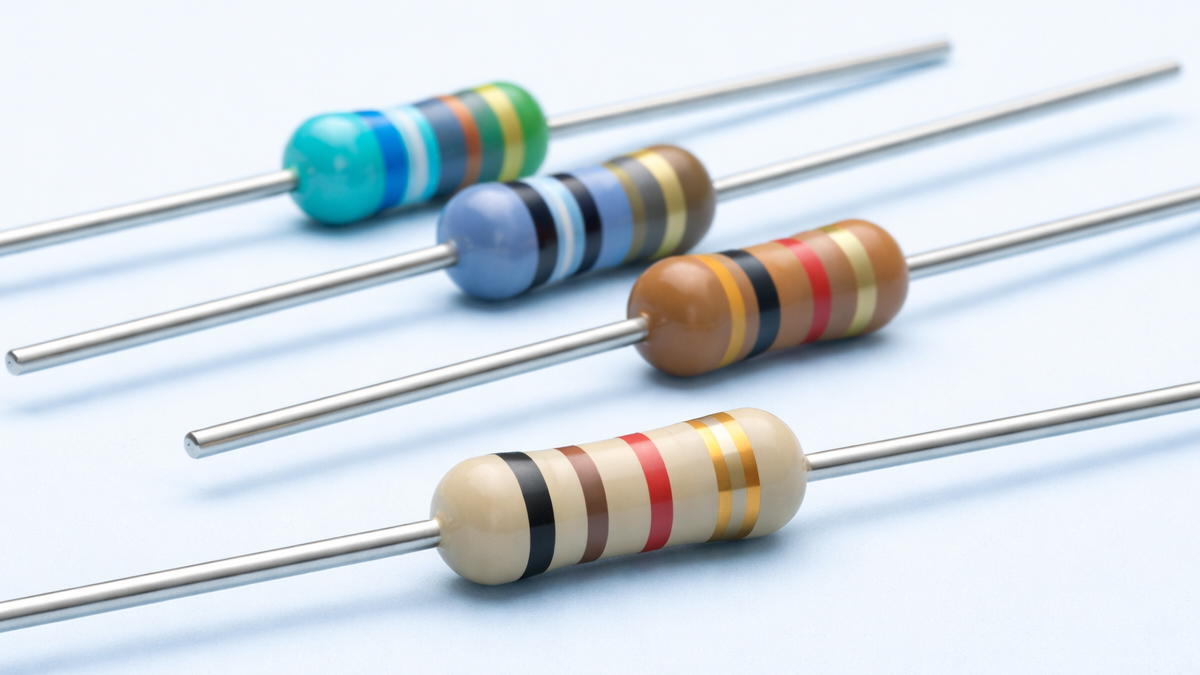
Value marking: Resistor values are often shown with color bands or printed numbers. These markings tell the user the nominal resistance in ohms. For example, a resistor may be marked as 220 ohms, 1 kilo ohm, or 1 mega ohm.
Tolerance: Tolerance shows how close the real value is to the stated value. A 10,000 ohm resistor with 5 percent tolerance may not measure exactly 10,000 ohms. It may be slightly above or below that number. In audio gear, tolerance matters because even small variations can influence tone, gain, or filter response.
Power rating: A resistor is not defined by ohm alone. It also has a power rating such as one quarter watt or one half watt. This tells how much power it can safely handle without overheating. In music electronics, a resistor may have the correct ohm value but still fail if its power rating is too low.
Temperature behavior: Resistance can change with temperature. Some resistors are designed to remain stable even when equipment heats up. This is important in amplifiers, power supplies, and stage equipment that may operate for long periods.
Measurement tools: Multimeters and test instruments also form part of the practical understanding of ohm. These tools help technicians measure actual resistor values and diagnose faults in audio equipment.
What are the Types of Ohm?
Ohm is one unit, but in real world electronics people often refer to types of ohm by the range, purpose, or application of resistor values.
Low resistance values: Low ohm resistors have small values such as 1 ohm, 10 ohms, or 47 ohms. These are often used where current sensing, protection, or output control is needed. In music electronics, low resistance values may appear in power sections, output stages, or certain speaker related circuits.
Medium resistance values: Medium values such as 100 ohms, 1 kilo ohm, or 10 kilo ohms are very common in signal circuits. These values are often used in preamps, filters, bias networks, input stages, and tone controls.
High resistance values: High values such as 100 kilo ohms, 1 mega ohm, or more are used where very little current should flow. They are common in high impedance input circuits, voltage dividers, and control sections. Guitar inputs, for example, often need high resistance values so that the instrument signal is not loaded down.
Fixed resistance values: A fixed resistor has one set ohm value that does not normally change. This is the most common type used in amplifiers, mixers, pedals, and synthesizers.
Variable resistance values: Potentiometers and trimmers are variable resistors. Their ohm value can change when adjusted. In music equipment, they are used for volume, tone, gain, pan, and calibration.
Precision values: Some circuits require highly accurate resistance. Precision resistors have tight tolerance and stable performance. These are useful in studio equipment, measuring devices, and advanced audio designs where consistent response is essential.
Power resistance values: Some resistors are built to handle more heat and power. These may have low or medium ohm values but are physically larger and stronger. They are important in amplifier power stages and protection networks.
What are the Applications of Ohm?
Ohm has many applications because resistance is necessary in almost every electronic circuit. In music electronics, the applications are especially wide because sound equipment must control weak audio signals with great care.
Current limiting: One of the main applications of ohm is limiting current. A resistor in the correct value prevents excessive current from damaging components. This is important in signal indicators, switching circuits, and active electronics.
Voltage division: Two or more resistors can divide voltage into smaller parts. This is useful in bias circuits, reference circuits, and signal conditioning stages. In audio gear, voltage dividers help create the correct level for different sections of a device.
Biasing active devices: Transistors and operational amplifiers need proper operating conditions. Resistors with specific ohm values help create these conditions. If the values are not correct, the device may not amplify properly.
Tone shaping: Resistors work with capacitors to form filters. Filters can reduce bass, reduce treble, or shape the middle frequencies. This is a core function in equalizers, tone knobs, crossover circuits, and active filter designs.
Feedback networks: In amplifiers, resistors are often part of feedback paths. Feedback helps control gain, stability, and frequency response. The selected ohm values decide how strong that feedback is.
Input and output conditioning: Audio signals coming into and out of circuits need the right loading. Resistor values determine how a circuit interacts with sources such as microphones, pickups, keyboards, and other gear.
Noise control: Proper resistor choice can also help reduce unwanted noise. Some resistor materials and values are better for low noise audio paths. This matters in recording equipment and studio electronics where clean sound is a major goal.
What is the Role of Ohm in Music Industry?
The role of ohm in the music industry is both technical and practical. It supports the design, production, maintenance, and performance of electronic sound equipment.
Sound equipment design: Engineers use ohm values to design circuits that amplify, filter, mix, and process sound. A resistor value that seems small on paper can have a major effect on tone and clarity. Because of this, ohm plays a central role in how audio products are voiced and tuned.
Instrument electronics: Electric guitars, basses, keyboards, drum machines, and synthesizers contain resistive networks. Potentiometers used for volume and tone are measured in ohms. The chosen value affects how the instrument responds and sounds.
Effects pedals: Guitar pedals and studio effect units rely heavily on resistance values. Distortion, delay, chorus, compressor, and equalizer pedals all use resistors to set gain, timing relationships, filtering behavior, and bias points. Different resistor choices can create noticeably different sonic character.
Amplifiers and preamps: Ohm is essential in preamp input stages, gain stages, tone stacks, feedback loops, and output sections. Tube amplifiers and solid state amplifiers both depend on carefully selected resistors to function correctly.
Mixers and recording devices: In mixers and audio interfaces, resistor values influence channel balance, signal routing, metering, and filtering. Accurate resistance helps maintain consistent levels and low noise performance.
Repair and maintenance: Technicians in the music industry regularly measure ohms to test resistors, speakers, cables, and circuits. Knowing the proper value helps them identify burnt parts, drifting components, or incorrect replacements.
Product consistency: Manufacturers depend on stable resistor values so that every unit of a product behaves similarly. This is important for brands that promise a certain sound quality across many units.
What are the Objectives of Ohm?
The objectives of ohm in electronics are linked to control, stability, protection, and predictability. In the context of music electronics, these objectives become even more important because sound quality depends on precise electrical behavior.
Control current flow: One key objective is to manage how much current moves through a circuit. This keeps components working within safe limits and prevents electrical overload.
Set voltage levels: Another objective is to create the right voltage at the right place. Many parts of an audio circuit need carefully controlled voltages in order to perform correctly.
Shape signal behavior: Resistance is used to shape audio signals by adjusting gain, tone, and frequency response. This objective is essential for musical expression because it affects the final sound heard by listeners.
Provide stability: Circuits need stable operation over time. The correct ohm values help prevent oscillation, unwanted distortion, and inconsistent performance.
Enable design accuracy: When engineers use precise resistor values, they can predict how a circuit will behave before building it. This saves time, improves quality, and supports repeatable manufacturing.
Support safe operation: Resistance also aims to protect sensitive components from excessive current and heat. A well designed music device depends on this safety function.
What are the Benefits of Ohm?
The benefits of ohm are seen in both theory and practice. It gives a clear way to understand and manage electrical resistance, and that creates many advantages for music electronics.
Easy measurement: Ohm provides a standard unit that technicians and designers can measure and compare easily. This common language helps people build, test, and repair equipment more efficiently.
Better audio control: With the correct resistor values, designers can shape gain, tone, and response more accurately. This leads to better sounding amplifiers, pedals, mixers, and instruments.
Greater equipment safety: Correct resistance helps prevent too much current from flowing. This lowers the risk of damage to active components and improves reliability.
Stable performance: Resistors with proper ohm values help circuits remain stable under different conditions. This means fewer unwanted changes in sound during long studio sessions or live performances.
Lower noise: Good resistor selection can reduce hiss and unwanted electrical noise. In recording and live sound, cleaner circuits mean clearer audio.
Improved troubleshooting: Because resistance is measurable, faults can often be found quickly. A technician can compare expected and actual ohm readings to diagnose problems.
Consistent manufacturing: Standard resistor values allow manufacturers to build repeatable products. This makes it easier to maintain product quality across large production runs.
What are the Features of Ohm?
Ohm has several features that make it essential in electronics and especially useful in music related devices.
Standard unit feature: Ohm is an internationally recognized unit. This makes it easy for engineers and technicians worldwide to understand each other and use the same component values.
Scalable value feature: Resistance can be expressed in very small or very large amounts. Common forms include ohms, kilo ohms, and mega ohms. This wide range allows designers to work with power circuits, signal circuits, and high impedance inputs.
Predictive feature: Ohm works directly with voltage and current through Ohm’s Law. This makes circuit behavior easier to predict before a product is built.
Practical measurement feature: Resistance can be measured with common tools such as a digital multimeter. This makes ohm useful not only in design but also in maintenance and education.
Compatibility feature: Ohm values can be used in all kinds of electronic systems, from simple guitar pedals to complex digital audio hardware.
Signal shaping feature: In audio work, resistance is not only about limiting current. It is also about shaping the sound through gain settings, filters, and feedback networks.
Reliability feature: When correct resistor values are paired with proper tolerance and power ratings, circuits perform more reliably and last longer.
What are the Examples of Ohm?
Examples help make the idea of ohm much easier to understand, especially in music electronics.
Guitar volume control: A guitar may use a 250 kilo ohm or 500 kilo ohm potentiometer for volume or tone. The chosen value affects brightness and how the pickup interacts with the circuit.
Pedal input resistor: A guitar pedal may include a 1 mega ohm input resistor so the instrument signal is not loaded too heavily. This helps preserve tone and dynamics.
Amplifier bias resistor: In an amplifier, specific resistor values help set the operating point of transistors or tubes. If the ohm value changes too much, the amplifier may become noisy or distorted.
Equalizer network: An equalizer circuit uses resistors and capacitors together to control bass, midrange, and treble. Different ohm values shift the response of the filter sections.
Light indicator resistor: A pedal or mixer may use a resistor in series with a light emitting diode to limit current. Without the correct resistance, the indicator could burn out.
Speaker crossover section: Although speakers involve impedance, resistors may be used in crossover or attenuation networks to balance levels between drivers. Their ohm values affect how much signal reaches a tweeter or other speaker element.
Repair example: A technician checks a burnt resistor in a mixer and finds that it should be 4.7 kilo ohms. Replacing it with the correct value restores proper circuit behavior.
What is the Definition of Ohm?
The definition of ohm is the standard unit of electrical resistance. It measures how strongly a material or component opposes the flow of electric current. One ohm is the resistance between two points of a conductor when a potential difference of one volt produces a current of one ampere.
Scientific definition: This formal definition connects ohm directly to voltage and current. It shows that resistance is not an isolated idea. It is part of a wider electrical relationship.
Practical definition: In everyday electronics, ohm is the value that tells how much a resistor resists current flow. This practical meaning is what most students, builders, and technicians use when working with circuits.
Audio definition: In music electronics, ohm can be understood as a key value that determines how resistors influence signal level, tone shaping, gain structure, protection, and circuit balance.
What is the Meaning of Ohm?
The meaning of ohm goes beyond a textbook definition. It represents control, precision, and understanding in electrical design.
Meaning in learning: For a student, ohm means a first step into electronics. Once resistance is understood, many other circuit ideas become easier to understand.
Meaning in building: For a circuit designer or hobbyist, ohm means choice. Each resistor value is a design decision that changes how a device behaves.
Meaning in sound: In music electronics, ohm means sonic influence. It helps shape clean tones, warm overdrive, balanced equalization, stable amplification, and dependable signal handling.
Meaning in maintenance: For a technician, ohm means diagnosis. Measuring resistance is one of the most basic and useful ways to find faults in electronic equipment.
Meaning in quality: In the broader music industry, ohm stands for dependable performance. Good products depend on correct resistance values at every stage of design and production.
What is the Future of Ohm?
The future of ohm remains very strong because resistance will continue to be a fundamental part of electronics. Even as music technology becomes more digital, analog components and resistor based design still matter.
Advanced audio devices: Modern audio products combine digital processing with analog input and output stages. These analog sections still require precise resistor values in ohms for filtering, level control, and protection.
Miniaturization: As devices become smaller, resistor technology continues to improve. Surface mount resistors allow compact music gear such as portable interfaces, pedals, wireless systems, and compact synthesizers to perform efficiently.
Precision growth: The future will likely bring even better tolerance, lower noise, and more temperature stable resistor designs. This supports high quality studio equipment and premium audio products.
Hybrid sound design: Many musicians still value analog character. Because of this, resistor based analog circuits will remain important in preamps, compressors, equalizers, and vintage style effects.
Education and repair value: Ohm will remain one of the first ideas taught in electronics. It will also remain important for repair professionals because troubleshooting still depends on understanding resistance.
Sustainable manufacturing: Future electronics may focus more on energy efficiency, durability, and serviceability. Correct resistance values support all of these goals by helping circuits run safely and consistently.
Summary
- Ohm is the unit of electrical resistance and shows how much a resistor opposes current flow.
- In music electronics, ohm is essential for amplifiers, pedals, mixers, synthesizers, microphones, and many other audio devices.
- Ohm works through the relationship between voltage, current, and resistance, often explained by Ohm’s Law.
- Resistor value, tolerance, power rating, material, and temperature behavior all affect how resistance performs in a circuit.
- Common resistor values can be grouped as low, medium, high, fixed, variable, precision, and power related applications.
- Ohm is used for current limiting, voltage division, gain setting, tone shaping, feedback control, and circuit protection.
- In the music industry, ohm helps create stable, reliable, and great sounding electronic products.
- The main objectives of ohm in circuit design are control, safety, predictability, and signal shaping.
- The benefits of proper resistance include cleaner sound, lower noise, safer operation, easier troubleshooting, and more consistent manufacturing.
- The future of ohm remains important because analog stages, hybrid devices, miniaturized electronics, and precision audio design still depend on accurate resistance values.

