

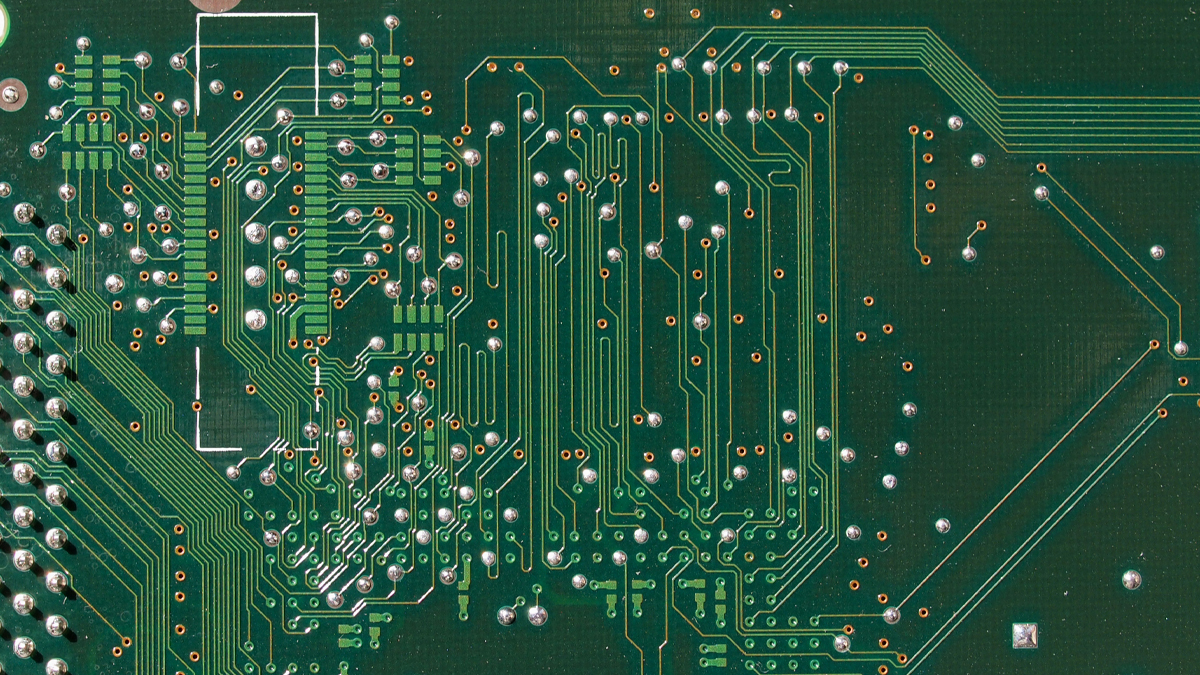
What is Printed Circuit Board?
A Printed Circuit Board, often shortened to PCB, is a flat board that mechanically supports and electrically connects electronic components through conductive pathways. These pathways are usually made from thin layers of copper that are etched or printed onto a non conductive base material. Instead of joining every component with loose wires, a PCB organizes the electrical connections into a compact, reliable, and repeatable layout.
In the field of music electronics, Printed Circuit Boards are extremely important because modern musical devices depend on precise, stable, and efficient electronic performance. Instruments and audio equipment such as synthesizers, guitar pedals, digital mixers, amplifiers, MIDI controllers, audio interfaces, drum machines, wireless microphone systems, and stage processors all rely on PCBs. These boards make it possible to turn an idea in sound design into a dependable physical product that musicians, producers, engineers, and manufacturers can use every day.
A PCB is much more than a board with parts attached to it. It is the foundation of the electronic design. It determines how signals travel, how components interact, how much space the device requires, how heat is managed, and how reliably the product performs over time. In music equipment, these concerns are especially important because audio devices must handle delicate signal paths, power regulation, noise control, user inputs, and often real time processing without failure.
In simple terms, a Printed Circuit Board is the organized framework inside electronic music gear that allows electricity and signals to move correctly from one component to another. Without it, modern music electronics would be bulky, difficult to manufacture, harder to repair, and far less consistent in performance.
How does Printed Circuit Board Work?
A Printed Circuit Board works by creating a structured route for electrical current and data signals to flow between components. Each component placed on the board performs a specific job, such as amplifying a signal, filtering noise, storing energy, processing digital instructions, or controlling timing. The PCB connects these components according to a design that matches the intended function of the device.
Circuit layout: The board contains copper traces that act like roads for electricity. These traces replace the need for many separate wires and allow connections to be accurately repeated in every unit that is manufactured.
Component placement: Electronic parts such as resistors, capacitors, transistors, integrated circuits, connectors, and switches are mounted on the board in carefully chosen locations. Their arrangement affects performance, size, heat flow, and signal integrity.
Signal flow: When power enters the board, it is distributed to the necessary components. Audio signals, control signals, and digital data move through the traces based on the circuit design. In a guitar pedal, for example, an incoming instrument signal may pass through buffering, tone shaping, gain stages, and output conditioning before leaving the device.
Layer interaction: Some PCBs use multiple layers. One layer may carry audio signals, another may carry power, and another may serve as a ground plane. This helps reduce interference and improves stability, which is especially important in music electronics where unwanted noise can seriously affect sound quality.
Soldering and connection stability: Components are attached by soldering, which creates secure electrical and mechanical connections. This helps the equipment withstand transport, vibration, and frequent use in studios and live settings.
In music devices, PCB performance directly affects sound character, noise level, durability, and responsiveness. A well designed PCB can help preserve clean signal paths, reduce hum, support accurate timing in digital systems, and allow compact designs that fit portable or rack mounted equipment.
What are the Components of Printed Circuit Board?
A Printed Circuit Board includes both the board itself and the parts mounted on it. Each element contributes to the final function of the electronic product.
Base material: This is the non conductive foundation of the board. Common materials include fiberglass reinforced epoxy. It provides strength, shape, and insulation.
Copper traces: These are thin conductive lines that connect different components. They serve as the electrical pathways of the circuit.
Pads and vias: Pads are areas where component leads or terminals are soldered. Vias are small holes that connect copper layers in multi layer boards.
Solder mask: This is a protective coating applied over the copper traces to prevent accidental short circuits and protect the board from environmental damage.
Silkscreen: This printed marking layer shows labels, component outlines, polarity indicators, part numbers, and other assembly information.
Resistors: Resistors control the flow of current and help set signal levels, bias conditions, and timing values.
Capacitors: Capacitors store and release energy. In music electronics, they are often used for filtering, coupling, decoupling, and tone shaping.
Inductors: Inductors are used in filtering, power circuits, and some audio applications, though they are less common than resistors and capacitors in many basic music devices.
Diodes: Diodes allow current to flow in one direction. They can be used for protection, rectification, clipping effects, and signal shaping.
Transistors: Transistors amplify or switch signals. They are central to many analog effects, preamps, and amplifier circuits.
Integrated circuits: These are compact chips that contain many electronic functions. In music products, they may act as op amps, microcontrollers, digital signal processors, converters, or memory devices.
Connectors: Connectors provide input and output points for power, audio, MIDI, USB, speakers, footswitches, displays, and internal cable assemblies.
Potentiometers and switches: These allow user control over parameters such as volume, gain, tone, effect depth, patch selection, or power status.
Crystals and oscillators: These provide timing references for digital circuits, helping maintain accurate clocking in synthesizers, sequencers, and digital audio equipment.
Each of these components works together on the PCB to create a complete electronic system. In music electronics, the choice and arrangement of these components can significantly affect both technical performance and artistic result.
What are the Types of Printed Circuit Board?
Printed Circuit Boards come in several forms, and each type serves different technical and commercial needs.
Single sided PCB: This type has one conductive layer on one side of the board. It is simpler and lower in cost. It is often used in basic electronics and some straightforward music accessories or simple utility circuits.
Double sided PCB: This type has conductive layers on both sides of the board. It allows more complex routing and greater component density. Many guitar pedals, compact mixers, and instrument control boards use this format.
Multi layer PCB: This type contains three or more conductive layers. It is common in advanced digital music gear such as audio interfaces, digital mixers, synthesizers, and signal processors. Multi layer boards support higher circuit complexity, better grounding, and improved noise control.
Rigid PCB: This is the most common type. It is made from solid material that does not bend. It is used in most music electronics products because it offers stability and durability.
Flexible PCB: This type can bend and fit into tight or unusual spaces. It is useful in compact music devices, wearable music technology, and equipment with moving parts or limited internal space.
Rigid flex PCB: This combines rigid and flexible sections in one design. It is helpful in advanced or compact systems where different board sections need to connect without bulky cables.
Surface mount PCB: This board is designed for surface mount components, which are placed directly on the surface of the board. This allows smaller size, automation in manufacturing, and higher circuit density.
Through hole PCB: This board uses components with leads inserted through holes and soldered in place. It is often valued for strong mechanical connection and is still common in certain audio products, especially where durability or repairability matters.
High frequency PCB: This type is designed for applications that handle fast or high frequency signals. In music industry equipment, it may appear in wireless systems, digital communication modules, and advanced control systems.
The choice of PCB type depends on cost, size, function, durability, manufacturing process, and performance requirements. In music electronics, this choice also affects serviceability, portability, and resistance to interference.
What are the Applications of Printed Circuit Board?
Printed Circuit Boards are used across a very wide range of electronic products, and their applications in music electronics are especially extensive.
Audio amplifiers: PCBs are used in power amplifiers, headphone amplifiers, and preamps to support gain stages, filtering, and output control.
Guitar pedals and effects units: Distortion, delay, reverb, chorus, compressor, equalizer, and multi effects pedals all use PCBs to organize analog or digital circuitry.
Synthesizers: Both analog and digital synthesizers rely on PCBs for oscillators, filters, envelopes, control voltage handling, keyboard scanning, and digital control logic.
Mixing consoles: Whether analog or digital, mixers use many interconnected PCBs for channel strips, routing, equalization, effects processing, power management, and display control.
Audio interfaces: These products use PCBs for analog to digital conversion, digital to analog conversion, USB or Thunderbolt communication, microphone preamps, and monitoring circuits.
MIDI controllers: PCBs handle buttons, pads, sliders, knobs, LED feedback, display modules, and communication protocols.
Electronic drums: Drum pads, trigger circuits, control modules, sound engines, and connectivity systems are all supported by PCBs.
Wireless systems: Wireless microphones and in ear monitor systems use compact PCBs for transmission, reception, signal conditioning, and power regulation.
Studio monitors and active speakers: Built in amplification, crossover control, digital signal processing, and protection systems are implemented on PCBs.
Stage lighting and show control: Although not purely audio devices, many music production environments use PCB based controllers for synchronized lighting, automation, and event management.
Portable music devices: Samplers, loopers, tuners, metronomes, compact recorders, and handheld effects units all depend on PCB design for small size and low power operation.
These applications show that PCBs are present in nearly every layer of modern music technology, from creation and performance to recording and playback.
What is the Role of Printed Circuit Board in Music Industry?
The role of the Printed Circuit Board in the music industry is both technical and strategic. It supports the physical operation of music electronics while also influencing product design, manufacturing efficiency, reliability, and user experience.
Sound production support: PCBs make it possible for instruments and audio devices to generate, shape, amplify, and process sound accurately. From analog warmth in a preamp to digital precision in a workstation, the PCB is central to signal flow.
Miniaturization of equipment: Modern musicians often need portable, compact, and lightweight gear. PCBs allow manufacturers to build smaller devices without sacrificing capability.
Consistency in manufacturing: Music brands need products that sound and perform consistently across large production runs. PCB based design allows repeatable manufacturing with less variation than hand wired systems.
Noise control and signal quality: In music electronics, poor layout can introduce hum, hiss, crosstalk, or digital interference. A well designed PCB helps reduce these problems and improves audio clarity.
Integration of digital technology: The modern music industry depends heavily on digital control, software interaction, memory storage, MIDI, USB, wireless communication, and digital signal processing. PCBs provide the structure needed to integrate all these functions into a single device.
Reliability in performance environments: Live shows, touring conditions, and studio sessions demand stable gear. PCBs support robust assembly and dependable operation under repeated use.
Innovation and product development: New music products, from smart instruments to app connected controllers, depend on advanced PCB design. This makes the board a key part of innovation in the industry.
Economic value: Efficient PCB manufacturing helps reduce production cost, improve scalability, and support competitive product pricing. This is important for both entry level and professional music equipment markets.
In the music industry, the PCB is not just an internal part. It is one of the main reasons modern devices can combine sound quality, convenience, reliability, and advanced features in practical commercial products.
What are the Objectives of Printed Circuit Board?
The objectives of a Printed Circuit Board go beyond simply holding electronic parts in place. It is designed to achieve several important goals.
Electrical connection: The first objective is to provide clear and correct electrical pathways between components.
Mechanical support: The board must securely hold components in position so that the circuit remains stable during transport and use.
Space efficiency: PCBs help reduce clutter by replacing many wires with compact trace routing. This supports smaller product design.
Performance optimization: A good PCB layout improves signal integrity, reduces noise, supports thermal balance, and helps the device function as intended.
Manufacturing efficiency: PCBs make it easier to assemble large numbers of identical units using automated production methods.
Reliability: One major objective is to reduce loose connections, wiring errors, and performance inconsistency.
Safety and protection: PCB design often includes grounding, spacing, insulation, and protective circuitry to improve operational safety.
Repair and testing support: Clear board layout and labeling can make troubleshooting, inspection, and servicing easier.
In music electronics, these objectives become even more important because the circuit must often preserve subtle details in sound, respond in real time, and remain dependable in professional environments.
What are the Benefits of Printed Circuit Board?
Printed Circuit Boards offer many benefits that explain why they are used in nearly all modern music electronics.
Compact design: PCBs allow complex circuits to fit into small enclosures. This is especially useful for pedals, portable interfaces, compact controllers, and rack units.
Lower wiring complexity: Replacing many separate wires with printed traces makes devices cleaner, more organized, and easier to assemble.
Improved reliability: Soldered connections and fixed layouts reduce the risk of loose wiring and random faults.
Consistent production quality: Every board can be manufactured to the same design, which helps maintain product consistency across units.
Better signal management: Thoughtful PCB design can reduce interference, noise, and signal loss, which is critical in audio equipment.
Faster assembly: Automated placement and soldering processes allow efficient large scale manufacturing.
Ease of integration: Multiple functions can be combined on one or more connected boards, enabling powerful feature sets in compact products.
Reduced maintenance issues: A clean and structured board design can simplify inspection and troubleshooting compared with messy point to point wiring.
Durability: Properly designed PCBs can withstand the regular physical stress of transport, stage use, and long operating hours.
Cost effectiveness: Once the design is finalized, PCBs help reduce manufacturing time and support economical production.
For the music industry, these benefits directly support better gear design, broader market access, and more dependable tools for artists and engineers.
What are the Features of Printed Circuit Board?
Printed Circuit Boards have several defining features that make them suitable for electronic devices in music technology.
Conductive pathways: The most basic feature is the etched copper trace network that provides organized electrical routing.
Layered construction: Many PCBs use multiple internal and external layers to separate power, ground, analog, and digital signals.
Component mounting options: Boards can support both through hole and surface mount components depending on the design goals.
Protective coatings: Solder mask and other finishes help protect the board from oxidation, short circuits, and environmental wear.
Marking and identification: Silkscreen labeling improves assembly, testing, repair, and orientation.
Custom layout design: PCB shape, size, hole placement, and connector arrangement can be tailored to the product enclosure and user interface.
Thermal management support: Board design can include copper pours, heat spreading regions, and strategic component placement to manage heat.
Grounding strategy: Good PCBs include careful grounding structures to minimize hum and interference, which is especially important for music electronics.
Signal separation: High quality designs keep sensitive audio paths away from noisy digital circuits or power sections.
Scalability: PCB designs can be revised, expanded, and adapted into new product versions while keeping a stable design foundation.
These features make PCBs highly versatile and valuable in music equipment where sound quality, compactness, and reliability must work together.
What are the Examples of Printed Circuit Board?
Examples of Printed Circuit Boards can be found in many products used throughout the music industry and music technology market.
A guitar overdrive pedal contains a PCB that routes the instrument signal through input buffering, clipping stages, tone shaping, and output control.
A digital synthesizer contains several PCBs, including boards for keyboard scanning, display control, audio generation, effects processing, memory handling, and power regulation.
A mixing console uses multiple interconnected PCBs for input channels, equalization circuits, fader systems, master routing, metering, and digital control functions.
An audio interface contains PCBs for microphone preamplifiers, converter chips, headphone outputs, computer communication ports, and clock management.
A wireless microphone transmitter includes a compact PCB for audio conditioning, radio frequency control, battery management, and antenna connection.
An active studio monitor has a PCB for amplifier control, crossover filtering, protection circuits, and in some cases digital room correction.
An electronic drum module includes PCBs for trigger detection, sample playback, parameter control, and output connectivity.
A MIDI keyboard controller uses a PCB to read key presses, knob movements, pad triggers, and communication signals sent to a computer or hardware instrument.
These examples show that PCBs exist in both simple and complex music products. In every case, the PCB acts as the organized electronic foundation that allows the device to perform its intended role.
What is the Definition of Printed Circuit Board?
The definition of a Printed Circuit Board is a manufactured board made of insulating material with conductive pathways, pads, and other features formed from copper or similar conductive material to support and connect electronic components in a circuit.
This definition highlights several essential ideas. First, the board is manufactured according to a planned design rather than improvised wiring. Second, it both supports and connects components, meaning it serves mechanical and electrical purposes. Third, it includes patterned conductive elements that create the circuit structure. Finally, it functions as part of an electronic system rather than as a standalone object.
Within the context of music electronics, the definition can be extended slightly for practical understanding. A Printed Circuit Board is the planned physical platform that allows musical and audio devices to process power, control, and sound related signals in a compact and reliable form.
What is the Meaning of Printed Circuit Board?
The meaning of Printed Circuit Board can be understood at both a literal and practical level.
Literal meaning: It is a board on which circuit connections are printed or formed in a planned pattern rather than connected by loose hand wiring.
Practical meaning: It is the internal structure that makes electronic devices efficient, organized, compact, and repeatable in manufacture.
In music electronics, the meaning becomes even more relevant because the PCB represents the hidden architecture behind sound technology. It is the reason a synthesizer can contain thousands of functions in a manageable size, a pedal can fit in the palm of a hand, and a digital mixer can process many channels with precision.
So, the meaning of a Printed Circuit Board is not limited to a technical object. It also represents modern electronic organization, reliability, and the ability to translate electrical design into a usable real world product.
What is the Future of Printed Circuit Board?
The future of Printed Circuit Boards is closely tied to the future of electronics, and this includes major developments in the music industry.
Greater miniaturization: Music devices are likely to become smaller, lighter, and more portable. PCB design will continue to support dense component placement and more integrated systems.
Improved signal integrity: As music gear becomes more digitally advanced, PCB layouts will increasingly focus on cleaner separation of analog and digital domains to maintain excellent audio quality.
Smarter integration: Future PCBs will support more embedded intelligence through advanced processors, wireless modules, sensors, and software driven control systems.
Flexible and wearable designs: As wearable music technology and compact performance tools grow, flexible and rigid flex PCBs will become more common.
Better manufacturing precision: Advanced fabrication methods will improve consistency, layer complexity, and the ability to build specialized audio products with high performance demands.
Eco conscious materials and processes: Sustainability is becoming more important in manufacturing. PCB development may increasingly focus on less waste, safer materials, and more efficient production methods.
Enhanced repair and modularity: Some manufacturers may move toward modular board systems that simplify replacement, upgrade, or servicing, especially in premium or professional equipment.
Support for new music technologies: Future instruments and studio systems may integrate artificial intelligence features, networked collaboration tools, immersive audio processing, and sophisticated control systems. All of these will depend on increasingly capable PCB design.
For the music industry, the future of PCBs will likely mean more powerful devices with better reliability, lower noise, smaller size, and deeper integration between hardware and software. As music technology continues to evolve, the PCB will remain one of its most essential building blocks.
Summary
- Printed Circuit Board is the physical and electrical foundation that connects electronic components in an organized and reliable way.
- It replaces loose wiring with planned conductive pathways that improve efficiency, durability, and consistency.
- In music electronics, PCBs are used in amplifiers, pedals, synthesizers, mixers, audio interfaces, MIDI controllers, electronic drums, wireless systems, and active speakers.
- PCBs work by routing power, audio signals, control signals, and digital data through copper traces between components.
- Important PCB components include the base material, copper traces, pads, vias, solder mask, silkscreen, resistors, capacitors, transistors, integrated circuits, and connectors.
- Common PCB types include single sided, double sided, multi layer, rigid, flexible, rigid flex, surface mount, and through hole designs.
- In the music industry, PCBs help improve sound processing, product compactness, manufacturing consistency, and operational reliability.
- The main objectives of PCBs include electrical connection, mechanical support, space efficiency, safety, reliability, and manufacturing ease.
- Their benefits include compact design, better signal control, lower wiring complexity, durability, faster assembly, and cost effectiveness.
- Their key features include conductive trace routing, layered construction, custom layout design, grounding strategies, thermal support, and protective coatings.
- The meaning and definition of Printed Circuit Board both emphasize its role as a structured platform for building functional electronic circuits.
- The future of PCBs in music electronics includes smarter integration, smaller devices, better audio performance, flexible formats, and more advanced manufacturing methods.

