

What is Keyboard Controller?
Basic idea: A keyboard controller is an electronic musical device that looks like a piano style keyboard and is used to control other sound producing equipment. In most cases, it does not create a full sound by itself in the way a traditional acoustic piano or a self contained digital keyboard does. Instead, it sends performance information to external devices such as synthesizers, sound modules, computers, digital audio workstations, and virtual instruments.
Place in music electronics: In the field of music electronics, a keyboard controller is an important category under MIDI controllers. MIDI stands for Musical Instrument Digital Interface, which is a technical standard that allows electronic musical instruments and software to communicate with each other. A keyboard controller is one of the most familiar and widely used MIDI devices because it gives musicians a practical and expressive way to enter notes, chords, melodies, bass lines, and harmonic ideas.
Why it matters: The keyboard layout is easy to understand, widely taught, and flexible enough to control many different types of music software and hardware. A person can use a keyboard controller to play piano sounds, string arrangements, drum kits, bass instruments, orchestral textures, sound effects, and electronic synth leads. Because of this flexibility, the keyboard controller has become a central tool in music production, live performance, songwriting, teaching, and studio composition.
Modern relevance: Today, keyboard controllers are used by beginners, students, producers, composers, arrangers, sound designers, and touring artists. They are found in home studios, classrooms, churches, concert stages, film scoring rooms, broadcast studios, and professional production houses. Their importance continues to grow because music creation is now deeply connected with digital technology.
How does Keyboard Controller Work?
Core process: A keyboard controller works by detecting a player’s physical actions and converting those actions into digital performance data. When a key is pressed, the controller senses which key was played, how hard it was played, and when it was released. That information is then transmitted to another device that generates the actual sound.
MIDI communication: The most common communication method is MIDI. When a musician presses middle C, for example, the keyboard controller sends a note message that tells the connected software or hardware which pitch to play. If the musician presses the key softly, the controller can send a lower velocity value. If the key is struck more strongly, it can send a higher velocity value. This gives the performance a more natural and expressive character.
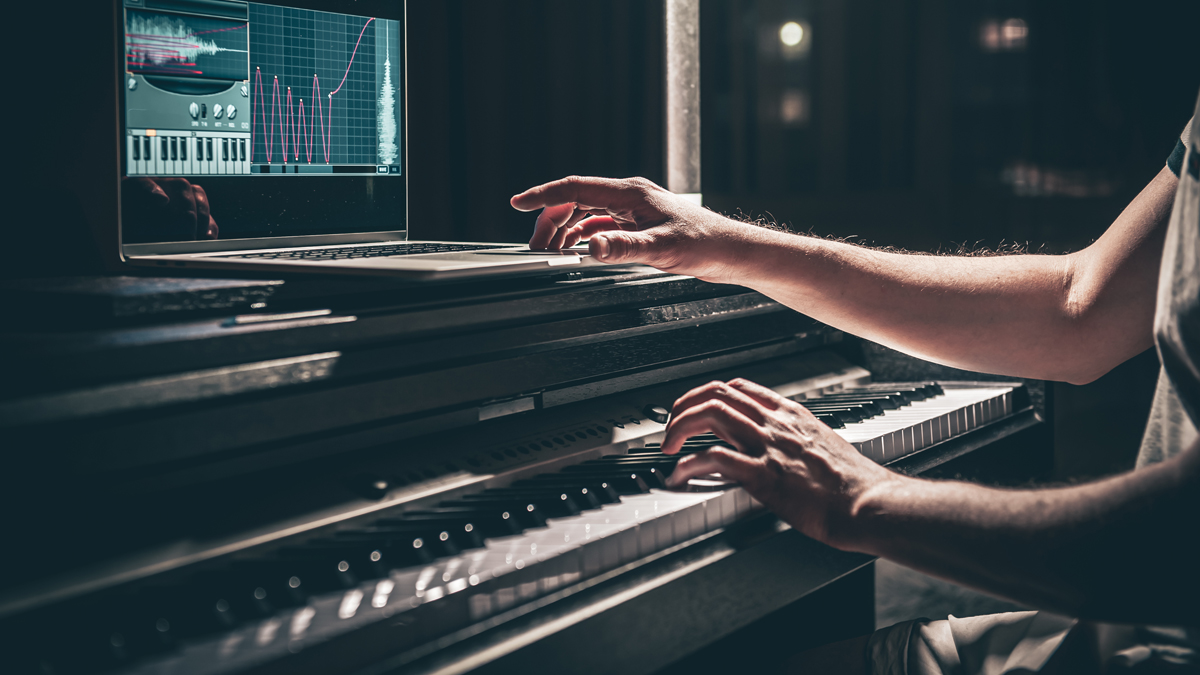
Signal flow: The controller is usually connected through USB or traditional MIDI ports. If it is connected to a computer, the digital audio workstation receives the incoming MIDI data and routes it to a virtual instrument. That virtual instrument then plays a sampled piano, a synthesizer patch, or any selected sound. If it is connected to a hardware sound module, the module receives the MIDI message and generates the sound externally.
Performance control: Many keyboard controllers do much more than send note data. They often include pitch bend wheels, modulation wheels, pads, knobs, sliders, buttons, and transport controls. These extra controls can adjust volume, filter cutoff, resonance, effects, playback commands, or automation parameters inside a music production environment. This makes the keyboard controller not only a note entry device but also a powerful performance and editing interface.
Expression and timing: Advanced models support features such as aftertouch, assignable zones, chord modes, arpeggiators, and scale functions. These features allow performers to create more expressive and controlled musical results. In a recording situation, the keyboard controller can also be used to capture precise timing information, which can later be edited inside music software.
What are the Components of Keyboard Controller?
Keyboard section: The most visible component is the keyboard itself. This section contains the white and black keys arranged in a standard piano pattern. Controllers may come with 25, 32, 49, 61, 76, or 88 keys depending on their intended use. Smaller models are portable and suitable for compact studios, while larger models are better for pianists and advanced performers.
Key action system: The key action determines how the keys feel during performance. Some controllers have synth action keys that are light and quick. Others have semi weighted keys that offer moderate resistance. Premium models may have fully weighted hammer action keys designed to simulate the touch of an acoustic piano. The type of action influences playing style, comfort, and musical expression.
Control interface: Many keyboard controllers include additional controls such as knobs, sliders, drum pads, rotary encoders, buttons, and touch strips. These components allow the user to adjust sound settings, record automation, trigger samples, and manage software functions. Drum pads are especially useful for beat making and live triggering.
Pitch and modulation controls: Most models include a pitch bend wheel and a modulation wheel. The pitch bend wheel lets the performer raise or lower pitch smoothly for expressive playing. The modulation wheel often controls vibrato, brightness, or another chosen parameter. Some modern devices replace wheels with joysticks or touch sensitive strips.
Display and navigation area: Some controllers feature small screens, LED indicators, or display panels. These help the user navigate presets, configure settings, view parameter values, and manage software integration. Although simple models may not include a display, advanced units often use visual feedback to improve workflow.
Connectivity ports: Common ports include USB, MIDI out, MIDI in, sustain pedal input, expression pedal input, and power connections. USB is widely used for both power and data transfer. Traditional five pin MIDI ports remain valuable when working with external synthesizers and legacy equipment.
Internal processing system: Inside the controller, a microprocessor interprets physical actions and converts them into digital messages. This internal system handles scanning, data conversion, control assignments, and communication with connected devices. Without this internal intelligence, the keyboard would not be able to function as a digital controller.
What are the Types of Keyboard Controller?
By key count: One major way to classify keyboard controllers is by the number of keys. Compact 25 key and 32 key models are ideal for mobile production, simple bass lines, melodies, and studio travel. Mid sized 49 key and 61 key models offer a wider playing range for general music production. Full size 76 key and 88 key models are preferred by pianists, arrangers, and composers who need greater expressive scope.
By key action: Keyboard controllers are also classified by how the keys respond. Synth action controllers are light, fast, and suitable for electronic music, quick parts, and performance techniques that require speed. Semi weighted keyboards provide a balance between portability and resistance. Weighted hammer action controllers are closer to an acoustic piano feel and are popular for realistic piano performance.
By control depth: Some keyboard controllers are basic and focus mainly on note input. Others are advanced production controllers that include many assignable controls for mixing, automation, sample launching, and deep software integration. Producers often prefer models with pads, knobs, sliders, and transport buttons because they reduce the need to rely only on a mouse and keyboard.
By software integration: Certain controllers are designed to work closely with specific digital audio workstations or virtual instrument ecosystems. These controllers can automatically map controls, display track names, and simplify setup. Other controllers are more universal and can be used with many different systems, which gives the user broader compatibility.
By intended use: Studio oriented controllers focus on recording, composition, and editing. Performance oriented controllers may emphasize durable construction, split zones, layering, and live control access. Educational controllers may be simpler, more affordable, and easier for beginners to understand.
What are the Applications of Keyboard Controller?
Music production: One of the main applications of a keyboard controller is music production. Producers use it to input melodies, chords, bass lines, drum patterns, and orchestral parts into digital audio workstations. Instead of clicking notes into a piano roll one by one, they can perform ideas in a more natural and musical way.
Film and media scoring: Composers for film, television, games, and advertising often use keyboard controllers to access large libraries of orchestral and cinematic sounds. A single controller can trigger strings, brass, percussion, ambient textures, and hybrid sound design elements, making it a practical tool for large scale composition.
Live performance: On stage, keyboard controllers can control synthesizers, virtual instruments, backing tracks, and lighting linked systems. Performers can switch sounds, layer instruments, split keyboard zones, and manipulate effects in real time. This gives live shows more flexibility and sonic variety.
Education and training: Teachers and students use keyboard controllers for music lessons, ear training, harmony practice, composition exercises, and software based music education. They are valuable because they connect traditional keyboard learning with modern digital tools.
Sound design: Sound designers use keyboard controllers to shape and test synthesized sounds. By playing notes in real time while adjusting filters, envelopes, effects, and modulation, they can create custom timbres for music, film, games, and multimedia projects.
Beat making and electronic performance: Controllers with pads and assignable knobs are common in hip hop, electronic dance music, pop production, and live remix performance. A musician can trigger samples, adjust loops, play synth parts, and record automation from a single control surface.
What is the Role of Keyboard Controller in Music Industry?
Production backbone: In the modern music industry, the keyboard controller plays a major role as a bridge between human musical ideas and digital production systems. It allows musicians to perform into software environments that have become standard in recording, arranging, and mixing.
Creative access point: Many songs begin with a melody, chord progression, bass movement, or rhythmic idea played on a keyboard controller. Because one device can access thousands of sounds, it helps songwriters move from concept to arrangement quickly. This makes it a central creative tool in commercial music production.
Studio efficiency: In professional studios, time and workflow matter greatly. A keyboard controller speeds up arrangement, editing, instrument selection, and performance capture. Instead of recording many physical instruments separately, producers can sketch entire song structures using virtual instruments controlled from one keyboard.
Live adaptability: Touring acts and stage performers rely on keyboard controllers to manage multiple sounds without carrying many large instruments. This reduces setup complexity and increases performance flexibility. A single controller can operate a large rig of software instruments and external modules during a show.
Industry standardization: Since MIDI is widely accepted across music technology platforms, keyboard controllers support interoperability. This standardization is very important in the music industry because artists, studios, educators, and technicians often use equipment from different manufacturers.
Career relevance: Knowledge of keyboard controllers is useful for producers, arrangers, composers, music programmers, session players, live keyboardists, and educators. In many areas of the music business, being able to use a keyboard controller efficiently is a practical professional skill.
What are the Objectives of Keyboard Controller?
Performance objective: One major objective of a keyboard controller is to allow musicians to perform notes and musical ideas in a familiar layout. The piano style arrangement makes it easy to visualize harmony, scales, intervals, and chord structures.
Control objective: Another objective is to give performers hands on control over software and hardware parameters. This improves expressiveness and reduces dependence on mouse based interaction. A musician can shape sound while playing, which supports a more organic creative process.
Integration objective: Keyboard controllers are designed to connect musicians with digital ecosystems. They help link physical performance to computers, digital audio workstations, virtual instruments, and synthesizer modules. This objective is essential in modern electronic and studio based music making.
Workflow objective: They also aim to improve speed and workflow. Composers can record ideas quickly, producers can test sounds instantly, and performers can manage multiple musical elements from one device. This saves time and keeps creative momentum alive.
Educational objective: Keyboard controllers support learning by making theory, ear training, sequencing, and arrangement more interactive. They help students understand how traditional musical knowledge connects with current production technology.
What are the Benefits of Keyboard Controller?
Versatility: A keyboard controller can control many different sounds and systems from one physical device. This makes it much more flexible than a single purpose instrument. A user can move from piano to strings to synthesizer to drums without changing the basic performance surface.
Space saving value: In small studios and home setups, space is limited. A keyboard controller combined with a computer can replace the need for many separate instruments. This is useful for students, independent artists, and producers who work in compact environments.
Cost effectiveness: Compared with buying multiple hardware keyboards and sound sources, using one controller with software instruments can be more affordable. Many users can build a wide sound library at a lower overall cost.
Improved creativity: Because it allows real time performance, a keyboard controller can inspire ideas that may not appear through manual note editing alone. Playing music physically often leads to more expressive timing, phrasing, and dynamic variation.
Portability: Many models are lightweight and easy to transport. This is valuable for touring musicians, mobile producers, music teachers, and creators who work in different locations.
Better control over expression: Features such as velocity sensitivity, aftertouch, modulation control, and pedal support help performers add emotional depth and realism. This is especially important when working with advanced sample libraries and expressive synthesizer sounds.
What are the Features of Keyboard Controller?
Velocity sensitivity: Most keyboard controllers detect how hard each key is played. This allows performances to feel natural and dynamic. Soft playing can create gentle tones, while harder playing can produce stronger accents.
Aftertouch support: Some controllers sense pressure applied after a key is pressed. This can be assigned to effects such as vibrato, filter movement, or volume changes, adding another layer of expression.
Assignable controls: Knobs, sliders, buttons, and pads can often be assigned to user chosen functions. This customization makes the controller more useful for different workflows and musical styles.
Pad triggering: Performance pads allow users to trigger drum samples, loops, one shot sounds, and cues. These pads are popular in beat production and live electronic music.
Arpeggiator and chord functions: Many controllers can automatically generate repeating note patterns or expanded chords from a single key press. These features help with songwriting, live performance, and electronic music composition.
Transport controls: Some models include play, stop, record, loop, and navigation buttons for direct control of music software. This improves recording efficiency and reduces interruption during creative sessions.
Split and layer support: Advanced controllers allow users to divide the keyboard into zones or layer multiple sounds. This is useful in both performance and production settings.
Pedal compatibility: Sustain and expression pedal inputs expand realism and control, especially for piano style playing and expressive orchestral performance.
What are the Examples of Keyboard Controller?
Entry level examples: Simple compact controllers with 25 or 32 keys are common choices for beginners, students, and mobile producers. These devices usually focus on portability, USB connection, and basic note input.
Studio examples: Mid range 49 key and 61 key controllers often include drum pads, knobs, sliders, transport controls, and strong digital audio workstation integration. These are popular in project studios and among modern producers.
Piano focused examples: Weighted 88 key controllers are widely used by pianists, arrangers, and film composers who need realistic keyboard response. They are especially valuable when performing expressive piano parts or detailed orchestral mockups.
Performance examples: Stage focused keyboard controllers often support multiple zones, pedal assignments, quick preset switching, and solid build quality. They are designed for reliability in live environments.
Brand level examples: Well known examples in the market have come from companies such as Akai Professional, Novation, Arturia, Native Instruments, M Audio, Nektar, Roland, Korg, and Studiologic. These brands offer models for different budgets, workflows, and performance needs.
What is the Definition of Keyboard Controller?
Formal definition: A keyboard controller is an electronic input device with a piano style key layout that sends performance and control data to external sound generating or software based systems, usually through MIDI or USB based communication, so that musical notes and expressive commands can be played, recorded, and manipulated.
Functional definition: In practical use, it is a control surface that lets a musician play and shape digital instruments without depending on the controller itself to be the primary sound engine.
Technical definition: From a music technology perspective, it is a human interface device that converts keyboard actions and assigned controller movements into digital instructions interpretable by compatible music hardware or software.
What is the Meaning of Keyboard Controller?
Conceptual meaning: The meaning of a keyboard controller lies in its role as a connection point between the musician and digital sound technology. It represents the transformation of traditional keyboard performance into a modern control method for electronic music creation.
Musical meaning: Musically, it means freedom and access. A single keyboard controller can unlock thousands of tones, styles, and creative possibilities. It allows one performer to reach beyond the sound of a single instrument.
Industry meaning: In the broader music industry, the keyboard controller symbolizes efficiency, integration, and adaptability. It reflects how music making has evolved from isolated instruments to connected digital production environments.
What is the Future of Keyboard Controller?
Technological direction: The future of keyboard controllers is likely to involve deeper software integration, smarter mapping systems, and more expressive control methods. Devices are becoming increasingly aware of the software environment they are connected to, which reduces setup time and improves workflow.
Enhanced expressiveness: Future models may offer better polyphonic expression, more advanced pressure sensing, improved motion control, and more accurate response to subtle performance gestures. This will make digital instruments feel even more natural and responsive.
Wireless and mobile growth: As mobile music production expands, more controllers may focus on wireless communication, battery operation, and compact form factors. This will support creators who work across laptops, tablets, and portable performance rigs.
Artificial intelligence support: Some future controllers may integrate intelligent assistance for chord suggestions, scale correction, performance analysis, and adaptive control mapping. These tools could help both beginners and professionals work more efficiently.
Sustainability and design evolution: Manufacturers are also likely to improve durability, material quality, and energy efficiency. Better build design can support longer product life and reduced electronic waste.
Industry impact: As music production continues to move deeper into software, the keyboard controller will remain highly important. Rather than becoming less relevant, it is likely to become more central because it gives a physical, playable form to increasingly digital workflows.
Summary
- A keyboard controller is an electronic keyboard style device used to control software or hardware sound sources.
- It is a major category under MIDI controllers in music electronics and has a strong role in the music industry.
- It works by converting key presses and control movements into digital messages such as MIDI data.
- Important components include keys, control knobs, sliders, pads, wheels, ports, pedals, and internal processing circuits.
- Main types vary by key count, key action, software integration, and intended use.
- It is widely used in music production, live performance, education, sound design, film scoring, and beat making.
- Its role in the music industry is significant because it improves workflow, expands creative options, and supports standard digital production methods.
- The objectives of a keyboard controller include performance input, expressive control, integration with digital systems, faster workflow, and music education support.
- Key benefits include versatility, portability, cost effectiveness, space saving value, and creative flexibility.
- Common features include velocity sensitivity, aftertouch, assignable controls, pads, arpeggiators, transport buttons, and pedal support.
- Examples range from compact beginner models to advanced studio and full size weighted controllers.
- The definition of a keyboard controller focuses on its function as a digital input and control device for music systems.
- Its meaning reflects the connection between human performance and modern digital sound technology.
- The future of keyboard controllers will likely include smarter integration, more expressive control, wireless use, and intelligent assistance.

